Nintendo Switch 2 Security Cracks Open: Day-One Exploits, Debug Firmware Leaks, and the Mig Switch Controversy
Executive Overview
The global launch of the Nintendo Switch 2 has delivered unprecedented excitement to the gaming community, but it has also triggered an immediate, high-stakes battleground for console security and hardware exploitation. Within days of its much-anticipated release, the new hardware has faced a barrage of security breaches, community-led investigations, and controversial marketing claims.
Chief among these developments is the emergence of a day-one usermode exploit engineered by prominent security researcher David Buchanan, widely known as "retr0id." Capitalizing on what appears to be a vulnerability within the console’s backwards-compatibility layer, Buchanan’s breakthrough highlights the continuous cat-and-mouse game between platform manufacturers and the homebrew community.
Simultaneously, the digital landscape has been flooded with unverified reports of factory and debug firmware leaks slipping into the wild on retail units, offering unauthorized glimpses into Nintendo’s internal quality assurance procedures. Adding fuel to the fire, the controversial flash-cart creators behind the Mig Switch have faced intense scrutiny. Despite bold marketing assertions regarding native Switch 2 compatibility, independent testers have thoroughly debunked these claims, proving that the device currently trips error screens rather than launching pirated or backed-up software.

This comprehensive report examines the multifaceted security events surrounding the Nintendo Switch 2 launch, analyzing the technical implications of the day-one usermode exploit, the authenticity and fallout of the leaked debug firmware, and the reality of flash-cart functionality on Nintendo’s next-generation hardware.
Detailed Chronology of Launch-Week Security Events
The timeline of security disclosures surrounding the Nintendo Switch 2 reads like a masterclass in rapid vulnerability research. Major milestones unfolded almost concurrently with the console hitting store shelves:
- T-Minus Zero (The Launch Window): As consumers unboxed their brand-new Nintendo Switch 2 units, rumors began circulating within niche forums regarding anomalous system behavior on specific hardware batches.
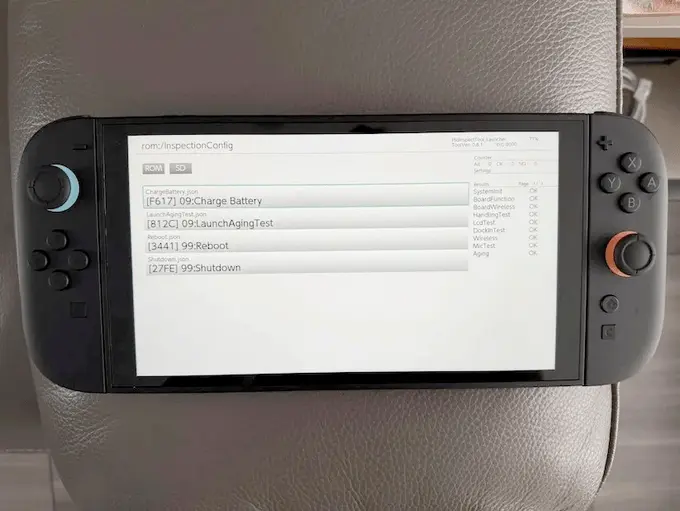
- Day One – The Debug Firmware Discovery: Screenshots emerged on community boards like GBATemp depicting retail-bound units booting directly into specialized Quality Assurance (QA) and diagnostic environments rather than standard user dashboards. This sparked immediate concern over supply chain security and factory flashing procedures.
- Day One + Hours – The Mig Switch Marketing Blitz & Debunking: Flash-cart manufacturer Mig Switch released aggressive promotional material asserting that their hardware was fully operational on the newly released Switch 2. Within hours, independent hardware testers and community members tested the devices, capturing error logs and proving that the carts fail to execute games on the new platform.
- Day Two – The Retr0id Usermode Exploit: Security researcher David Buchanan announced via social and technical platforms that he had successfully achieved a Return-Oriented Programming (ROP) chain exploit running in usermode on the Nintendo Switch 2. By referencing internal library nomenclature (
nnCompatTrampoline), Buchanan substantiated his claims, confirming that the console’s security perimeter had been breached at the software level mere hours after commercial availability.
Technical Deep Dive: The Day-One Usermode Exploit
The most significant technical development of the launch week is undoubtedly the usermode exploit demonstrated by David Buchanan (retr0id). Known within the security community for his extensive work on platforms ranging from LG webOS (RootMyTV) to legacy Nintendo Switch loaders (NXLoader) and advanced hardware-level attacks, Buchanan’s latest disclosure marks a watershed moment for modern console security.

Understanding the ROP Chain and Usermode Limitations
Buchanan was quick to clarify the nature of his breakthrough, emphasizing that the achievement represents a "usermode" exploit rather than a native kernel-level or hypervisor breach. In computer security, a usermode application runs with restricted privileges compared to the kernel (the core operating system).
However, within the lexicon of console hacking, usermode execution is often the foundational stepping stone toward complete system compromise. Buchanan deployed a Return-Oriented Programming (ROP) chain—an advanced exploitation technique where an attacker hijacks program control flow by chaining together existing snippets of machine code ("gadgets") already present in memory, effectively bypassing modern data execution prevention (DEP) mechanisms.
The Backwards-Compatibility Attack Vector
While formal technical write-ups are still unfolding, expert analysis strongly suggests that the exploit vector leverages the Nintendo Switch 2’s native retro-compatibility layer. The console is engineered to run legacy software designed for its predecessor, requiring a specialized translation and compatibility environment to interface with older game architectures.

As proof of his access, Buchanan explicitly referenced a specific internal library: nnCompatTrampoline. This library forms an integral component of the Switch 1 emulation and compatibility architecture built into the Switch 2’s system software. Because knowledge of internal, undocumented system libraries is tightly guarded by Nintendo, referencing nnCompatTrampoline served as cryptographic-level proof to the security community that Buchanan had successfully read and executed code within authorized system partitions.
Factory Firmware Leaks and Supply Chain Vulnerabilities
Beyond software-level exploitation, the hardware supply chain itself has come under intense scrutiny following the circulation of factory and debug firmware screenshots.
The Nature of the Leak
According to reports originating from community hubs such as GBATemp, a small subset of early adopters and retail buyers allegedly received Nintendo Switch 2 hardware pre-loaded with specialized Debug Firmware rather than the standard consumer user interface. Instead of landing on the traditional home menu, these units reportedly booted into low-level diagnostic dashboards designed strictly for factory testing, quality assurance (QA) validation, and hardware stress-testing.

[Retail Unit Boot Sequence]
       │
       ├─► Standard Consumer Firmware ──► Normal Dashboard (Expected)
       │
       └─► Factory/Debug Firmware ──────► QA Diagnostics & Battery Stress Tests (Leaked)
Leaked screenshots showcased deep system-level functionalities, including:
- Real-time battery charge level telemetry and thermal dissipation testing.
- Raw hardware component stress-testing options.
- Forced reboot and emergency shutdown diagnostics.
- Internal calibration tools for input peripherals and display panels.
Assessing Credibility and Implications
While the implications of units escaping the factory with debug configurations are severe—potentially handing hardware hackers direct avenues for reverse-engineering bootroms and security keys—industry analysts urge caution. At the time of reporting, independent verification of these leaks remains challenging, particularly given intermittent accessibility issues plaguing primary source forums like GBATemp.
Nevertheless, if verified, these instances point to QA oversight during manufacturing assembly lines, potentially providing security researchers with invaluable low-level access to unencrypted boot logs and firmware blobs.

The Mig Switch Controversy: Marketing Claims vs. Hardware Reality
Amid the technical breakthroughs of independent security researchers, commercial flash-cart developers have also sought to capitalize on the Switch 2 launch window, albeit with mixed results and severe pushback from the community.
The Mig Switch Assertions
The creators of the Mig Switch—a controversial flash-cart designed to dump and play backups on original Nintendo Switch hardware—released a wave of promotional material and official website updates strongly implying that their product line was fully compatible with the newly launched Nintendo Switch 2. Given the device’s history of navigating Nintendo’s security updates on the first-generation console, the announcement sent ripples through the gaming community, raising alarms among publishers and anti-piracy advocates.
Community Debunking and Technical Failure
Despite bold marketing assertions, independent testers and hardware reviewers quickly dismantled the Mig Switch claims. Multiple users shared video logs and photographic evidence demonstrating that inserting a Mig Switch into a Nintendo Switch 2 fails to yield functional gameplay.

- The User Experience: When inserted, the system’s software menu may initially recognize or display the presence of loaded titles pulled via the cartridge.
- The Execution Barrier: Upon attempting to launch the software, the Switch 2 immediately halts execution, throwing a system error message rather than booting the game.
┌──────────────────────────────────────────────┐
│            Mig Switch on Switch 2            │
├──────────────────────────────────────────────┤
│ 1. Cartridge Inserted ──► Game Icons Visible │
│ 2. Launch Attempt     ──► System Error Block │
│ 3. Result             ──► Zero Functionality │
└──────────────────────────────────────────────┘
While these failures indicate that the Mig Switch does not work "out of the box" on the new console architecture, security analysts note that flash-cart creators often iterate rapidly. Whether the team behind Mig Switch possesses undisclosed firmware workarounds or hardware revisions for future deployment remains to be seen, but current-generation consumer units reject the peripheral outright.
Comparative Security Posture: Switch 1 vs. Switch 2
To fully appreciate the gravity of a day-one usermode exploit, it is instructive to compare the security launch window of the original Nintendo Switch (2017) with its successor.
| Security Metric | Original Nintendo Switch (2017) | Nintendo Switch 2 (2025) |
|---|---|---|
| Initial Exploit Vector | Nvidia Tegra X1 Hardware Vulnerability (RCM / Fusée Gelée) | Usermode ROP Chain via Backwards-Compatibility Layer |
| Exploit Permanence | Permanent, unpatchable hardware flaw requiring physical shorting | Software-based usermode execution; patchable via firmware updates |
| Time to First Exploit | Several months (Hardware flaw discovered post-launch) | Day One (Software exploit demonstrated immediately) |
| Factory Firmware Leaks | Minimal initial leakage | Alleged factory/debug firmware units in circulation |
| Flash-Cart Integration | High long-term viability (Mig Switch) | Immediate day-one failure; compatibility blocked by system software |
While the original Switch ultimately fell to an unpatchable hardware vulnerability in its bootrom (Fusée Gelée), the Switch 2 appears to feature a hardened hardware root of trust that has thus far deflected hardware-level intrusions. However, the rapid emergence of a usermode software exploit proves that complex modern operating systems remain vulnerable to software logic flaws—particularly within legacy translation layers like nnCompatTrampoline.

Future Outlook and Industry Ramifications
As the dust settles on the turbulent launch week of the Nintendo Switch 2, the trajectory of its security ecosystem is coming into sharper focus.
Nintendo’s Counter-Offensive
Nintendo has historically adopted an aggressive, zero-tolerance stance toward hardware modification, flash-carts, and intellectual property infringement. Armed with advanced telemetry, robust digital rights management (DRM), and frequent over-the-air firmware updates, the corporate giant is expected to move swiftly.
- Rapid Patching: Engineers are undoubtedly hard at work crafting emergency patches to neutralize David Buchanan’s usermode ROP chain exploit and secure the
nnCompatTrampolinelibrary boundaries. - Account Banning: Users experimenting with unverified hardware (such as flash-carts) or attempting to run unauthorized debugging scripts on connected profiles risk aggressive console and network-level bans.
- Supply Chain Audits: Nintendo will likely investigate how factory firmware units escaped internal testing facilities into retail channels, tightening quality control protocols with manufacturing partners in East Asia.
The Homebrew Community Horizon
For homebrew enthusiasts and security researchers, a day-one usermode exploit represents an exciting starting point, but true custom firmware (CFW) remains a distant horizon. A usermode exploit allows for code execution within restricted sandboxes, but achieving full system control requires cascading vulnerabilities—typically moving from usermode to kernel access, and ultimately penetrating the console’s secure monitor or trustzone.

Whether Buchanan’s breakthrough will serve as the foundation for a robust homebrew scene similar to the legacy Switch—or whether Nintendo’s modernized security architecture will successfully contain the breach—will depend entirely on the cat-and-mouse updates deployed over the coming weeks. One thing is certain: the security lifecycle of the Nintendo Switch 2 has officially begun, and the stakes have never been higher.