Executive Overview
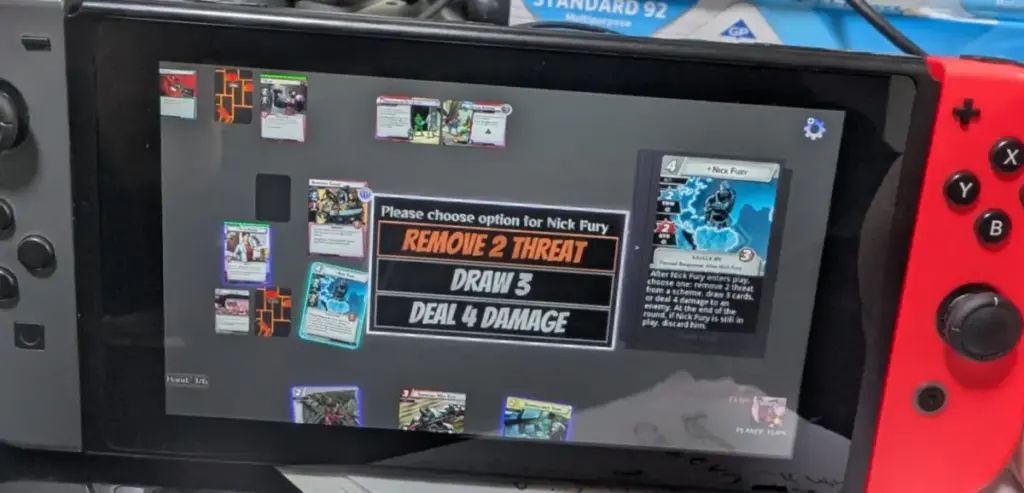
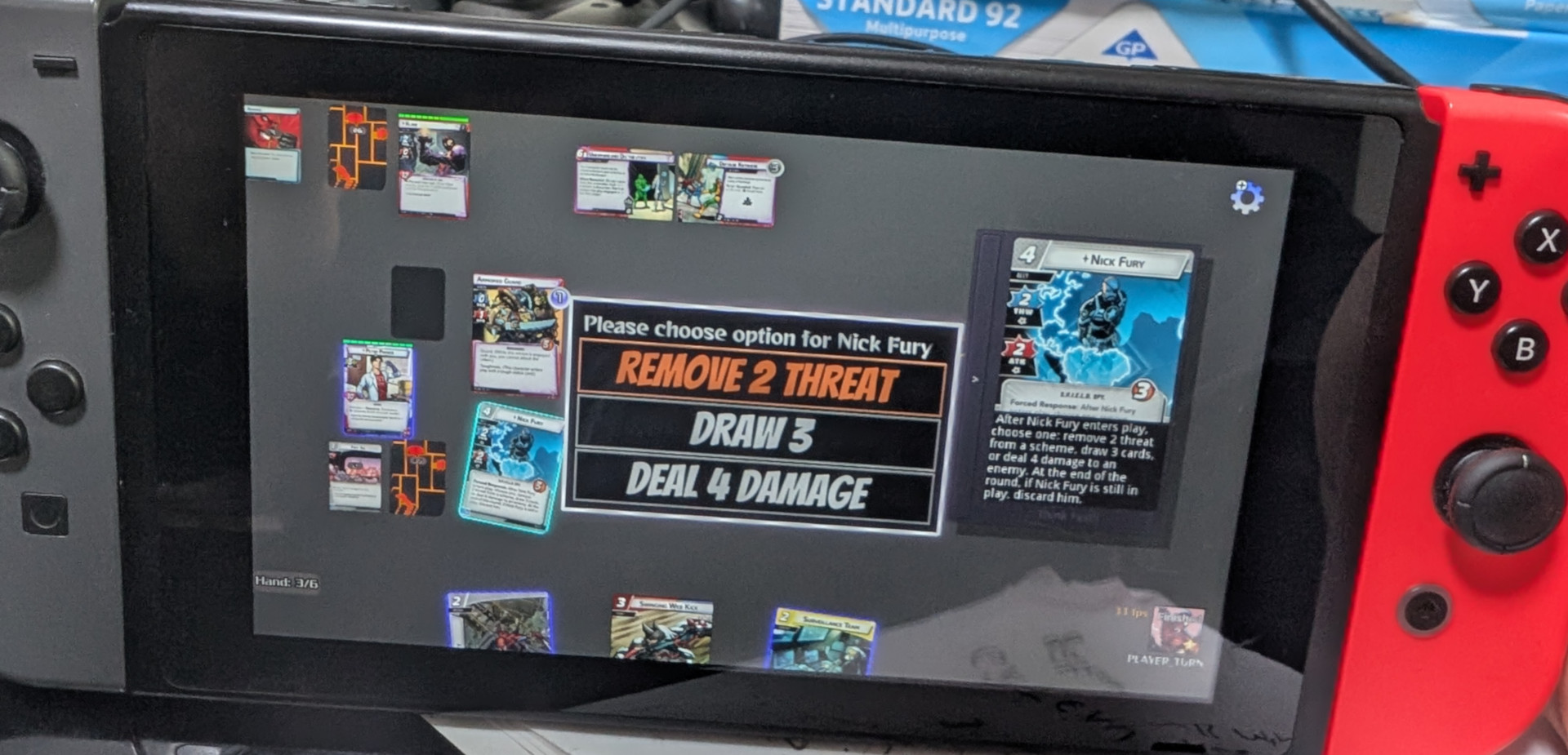
In the ever-evolving landscape of indie game development and tabletop digital adaptations, fan projects frequently bridge the gap between physical tabletop experiences and modern digital platforms. The latest milestone in this niche comes from independent developer and community stalwart Wololo, who has officially launched Version 1.0.0 of Warnel Chawpiovs (WC). Developed primarily in the Godot engine, Warnel Chawpiovs is an unofficial, fan-created digital adaptation of Marvel Champions: The Card Game, the massively popular Living Card Game (LCG) published by Fantasy Flight Games.
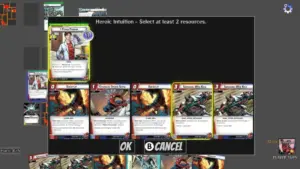
Designed out of a personal desire to alleviate the heavy cognitive load and complex rule bookkeeping inherent to solo tabletop play, WC automates the rigorous rules enforcement of the original card game while maintaining its strategic depth. Moving up significantly from its initial 0.1 prototype release, Version 1.0.0 introduces a wealth of new content inspired by the popular Rise of the Red Skull expansion box. This includes two fan-favorite heroes—Hawkeye and Spider-Woman—alongside five formidable villains. Furthermore, the update debuts a brand-new "Adventure Mode," introducing a progressive unlock system that rewards players for tactical victories.
Available across Windows, macOS, and hacked Nintendo Switch consoles, WC serves as a testament to what passionate community members can achieve through reverse-engineering, programming dedication, and cross-platform game engines. However, as an unofficial work entirely disconnected from Fantasy Flight Games, the project operates in a fascinating grey area of hobbyist software engineering, offering a unique glimpse into the demands of digital board game automation.
Detailed Chronology: From Concept to Version 1.0.0
The conceptualization and execution of Warnel Chawpiovs represent a focused, rapid development cycle driven by a single developer seeking a streamlined solo gaming experience.
The Genesis and Version 0.1
Marvel Champions: The Card Game has garnered a devoted global following since its release, prized for its cooperative mechanics, modular deck-building, and thematic immersion. However, for solo enthusiasts managing multiple heroes or complex encounter decks, the administrative upkeep can become overwhelming. Card interactions, status tokens, threat counters, and sequential triggers frequently threaten to bog down the flow of gameplay.
Recognizing this friction, Wololo set out to build a lightweight digital client that could handle the heavy computational lifting. Utilizing the flexible Godot engine, the developer laid the groundwork for Warnel Chawpiovs, culminating in an initial 0.1 release late last year. This rudimentary build established the core framework: a digital environment capable of reading rules, processing card plays, and simulating matches on both PC and homebrew-enabled Nintendo Switch hardware. Yet, the scope was narrow, limited to baseline mechanics, rudimentary asset management, and a stark lack of advanced progression systems.

The Leap to Version 1.0.0
The transition from version 0.1 to 1.0.0 marks a massive qualitative and quantitative leap for the project. Released in early January, version 1.0.0 moves past a simple rules-enforcer prototype and evolves into a structured game experience.
The core highlights of the 1.0.0 patch include:
- Expansion Integration: Drawing directly from Fantasy Flight Games’ Rise of the Red Skull campaign box, the game now features a richer roster of characters. Players can step into the combat boots of Hawkeye and Spider-Woman, testing their builds against five distinct villains from the narrative expansion.
- Adventure Mode Implementation: Moving away from a purely sandbox-style pick-and-play menu, the new Adventure Mode introduces a campaign-style structure. Players must achieve tactical victories across successive encounters to progressively unlock new heroes and villains, adding a layer of long-term engagement and reward loops absent in the 0.1 build.
- macOS Portability: Responding to community demand, an un-signed native build for macOS was finalized and published alongside the traditional Windows executable and Nintendo Switch homebrew package.
- Under-the-Hood Polish: Version 1.0.0 incorporates a sweeping suite of bug fixes, memory optimization patches, and UI responsiveness tweaks aimed at stabilizing long play sessions.
Supporting Context & Metrics: Architecture, Platforms, and Performance
Building a card game with full rules enforcement is an ambitious technical undertaking, particularly when targeting heterogeneous platforms ranging from high-performance desktop PCs to resource-constrained handheld consoles.

The Godot Engine Advantage
Warnel Chawpiovs is built using the Godot engine, an open-source framework celebrated for its lightweight footprint, robust 2D rendering capabilities, and seamless multi-platform export pipeline. Because Godot natively supports compilation across Windows, Linux, macOS, and various custom targets, Wololo was able to build a foundational architecture that could theoretically deploy anywhere Godot reaches—provided a motivated developer handles platform-specific compilation.
Cross-Platform Deployment Realities
- Windows: As the primary development environment, the Windows version offers the most stable and performant experience. Installation is entirely frictionless: users download the binary, extract the compressed archive, and execute the primary
.exefile. - macOS: Built for Apple Silicon and Intel architectures, the macOS version bridges the gap for desktop users outside the Windows ecosystem. Because the application lacks an official Apple developer signature, users must bypass Gatekeeper via a standard control-click and "Open" prompt.
- Nintendo Switch (Homebrew): The Switch port represents both the most enticing and most technically challenging way to experience the game. Running WC on Nintendo’s hybrid console requires a hardware-modded (hacked) unit capable of running custom firmware and executing the Homebrew Menu.
Performance Metrics and Hardware Constraints
While bringing a complex card game to a handheld device is an impressive feat, the Nintendo Switch port comes with notable performance caveats:
- Loading and Resource Acquisition: On its first launch, if a local
core.zipasset package is absent, the game must pull image resources, card data, and UI elements directly from remote servers. On a standard broadband PC connection, this takes moments; on a Nintendo Switch, network fetching and unpacking can stretch upwards of 15 minutes. - CPU and Memory Bottlenecks: The Switch build is noticeably slow out of the box. To achieve a smooth, comfortable frame rate and responsive touch or controller inputs, the developer explicitly recommends that players overclock their consoles using third-party utilities such as
sys-clk. Furthermore, due to memory management constraints and CPU throttling, multi-hero setups are discouraged on the Switch; solo hero play is currently the recommended baseline for handheld sessions.
Official Statements and Creator Philosophy
In his release notes and community communications, Wololo has maintained absolute transparency regarding the scope, limitations, and legal boundaries of Warnel Chawpiovs.

The Fan-Work Disclaimer
At the forefront of every release note and project repository lies a strict legal disclaimer:
"This is a fan-created work and is not affiliated with, endorsed by, or sponsored by Fantasy Flight Games. All characters, settings, and related elements are the property of their respective owners."
Wololo does not distribute copyrighted PDF rulebooks or proprietary high-resolution art assets illicitly within the core binary without a bootstrapping phase. Instead, upon its initial boot, the game self-corrects by fetching necessary web assets or utilizing pre-packaged community archives (core.zip), ensuring that the software respects the distribution boundaries of a passion project.

Design Intent: Automating the Brain-Fry
When asked about the driving philosophy behind Warnel Chawpiovs, Wololo articulated a sentiment familiar to many solo board gamers:
"See, I’m a huge fan of Marvel Champions to play solo, but the amount of rules in this game fries my brain. I badly needed a way to play with a computer doing the heavy lifting for me, so that’s what WC is about."
Crucially, the developer emphasizes that WC is not an interactive tutorial tool designed to teach absolute beginners how to play Marvel Champions from scratch. While the computer manages threat tracking, damage calculation, and trigger sequencing, the user must possess a working baseline knowledge of the underlying tabletop rules. For those uninitiated in keywords like Tough, Stunned, Confused, or the delicate balance between Hero and Alter-Ego phases, Wololo explicitly directs players to Fantasy Flight Games’ official Learn to Play documentation.

Future Outlook: Roadmap, Community, and Alternatives
As Warnel Chawpiovs settles into its 1.0.0 release cycle, the project stands at a fascinating crossroads. While it successfully serves as a robust solo-player sandbox for PC and Switch users, its long-term viability depends heavily on community contributions and the developer’s available free time.
The Multiplayer Conundrum
One of the most requested features in digital card games is online multiplayer. While WC features foundational hooks for multi-user sessions, Wololo is refreshingly candid about its current state: multiplayer "doesn’t exactly work." In the grand vision for the software, achieving seamless, crash-free online cooperative play remains the ultimate dream. However, because networking logic introduces immense programming overhead, the developer has openly invited outside engineering talent to submit Pull Requests (PRs) via the project’s GitHub repository.
For players specifically seeking an online cooperative experience with friends right now, Wololo points toward alternative fan projects, such as the Marvel Champions Digital Edition hosted on itch.io by developer irefrixs, which handles multiplayer netcode more robustly.

Content Expansion and Bug Remediation
Looking ahead, the roadmap for Warnel Chawpiovs encompasses three distinct pillars:
- Rule Enforcement Polish: Ironing out edge cases in card interactions, specific villain mechanics, and status modifier stacking.
- Content Injection: Integrating further expansions beyond Rise of the Red Skull, gradually expanding the digital catalog to match the extensive physical output of Fantasy Flight Games.
- Community Infrastructure: While formal support currently relies on GitHub issue tracking and direct email contact, a dedicated community hub—such as a Discord server—remains a distinct possibility should user interest continue to surge.
Ultimately, Warnel Chawpiovs 1.0.0 stands as a remarkable achievement in homebrew software engineering. By marrying the intellectual property of a beloved tabletop titan with the accessible multi-platform versatility of the Godot engine, Wololo has delivered a tool that transforms an exhausting rulebook administrative burden into a streamlined, portable digital adventure.