The Privacy Dividend: XGIMI’s MemoMind One Crosses $1 Million on Kickstarter, Signaling a New Era for Camera-Free Smart Glasses
Executive Overview
The consumer technology landscape is undergoing a subtle yet profound realignment regarding personal surveillance, privacy, and augmented reality. For years, the prevailing trajectory of smart eyewear has been defined by an arms race of capabilities: higher-resolution cameras, wider fields of view, more intrusive recording indicators, and heavier multi-modal artificial intelligence systems. However, this trajectory has increasingly collided with public unease, regulatory scrutiny, and user fatigue over constant environmental recording.
Enter XGIMI, a prominent China-based manufacturer traditionally celebrated for its high-performance home projectors. With its debut venture into the wearable tech market—the MemoMind One smart glasses—XGIMI has tapped directly into a burgeoning counter-movement. By intentionally omitting an onboard camera while prioritizing a vibrant heads-up display and localized artificial intelligence assistance, the company has struck a lucrative chord with privacy-conscious consumers.
Initially launched via a Kickstarter crowdfunding campaign on June 28, 2026, the MemoMind One project has officially crossed the $1 million funding milestone, buoyed by thousands of backers with 20 days still remaining until the campaign closes on August 28, 2026. This financial triumph—surpassing its initial, modest goal of $80,000 HKD (roughly $10,000 USD) in a matter of hours and clearing $500,000 in under a week—serves as a powerful vote of confidence for display-centric, camera-free smart eyewear.
As XGIMI prepares to roll out its initial shipments in August 2026, the success of the MemoMind One raises critical questions about the future trajectory of the smart glasses market. Is the industry splitting into two distinct camps—those designed for continuous visual capture and those engineered for discreet, heads-up utility without the baggage of surveillance? This report examines the chronological rise of the MemoMind One, the market dynamics driving its success, its technical architecture, and the broader implications for the future of wearable computing.
Detailed Chronology: From CES Debut to Crowdfunding Phenomenon
The journey of the MemoMind One from a conceptual hardware prototype to an international crowdfunding phenomenon offers a fascinating case study in modern product validation.
January 2026: The Las Vegas Premiere
The narrative began at the Consumer Electronics Show (CES) 2026 in Las Vegas. Amidst a sea of flashy, high-cost spatial computing headsets and heavily scrutinized camera-laden frames, XGIMI made a calculated pivot. Rather than showcasing a prototype designed to record every moment of the user’s day, the company pulled back the curtain on the MemoMind One.
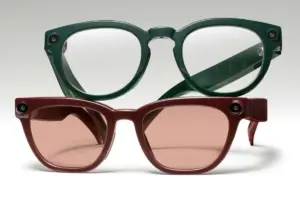
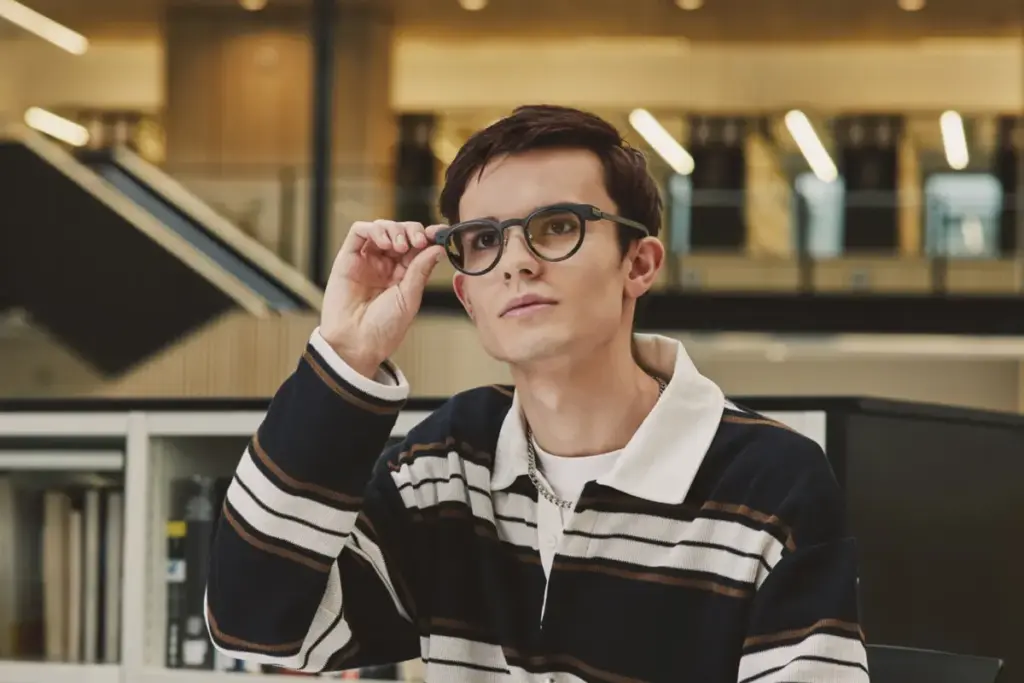
Industry analysts at the event noted the deliberate minimalism of the design. The glasses lacked the bulky optical pods typical of early augmented reality visors, favoring a classic, unassuming aesthetic. More importantly, XGIMI representatives explicitly emphasized the complete absence of any optical capture device—no front-facing lenses, no shutter buttons, and no recording LEDs. Instead, the device focused entirely on internal dual green micro-LED displays capable of projecting crisp, high-nit UI elements directly into the user’s field of view, paired with integrated directional audio and context-aware AI tools.
June 28, 2026: The Kickstarter Launch
Following the positive reception at CES, XGIMI bypassed traditional venture capital funding or exclusive corporate pre-sales, opting instead for a Kickstarter campaign launched on June 28, 2026. To manage expectations and clear initial regulatory and logistical hurdles, the company set an uncharacteristically low funding goal of $80,000 HKD (approximately $10,000 USD).
The strategy was immediately successful. Within hours of going live, the campaign smashed through its target threshold, signaling immense latent demand. By the end of its first week, the MemoMind One had already amassed an astounding $500,000 in pre-orders, catching industry observers by surprise and establishing the product as one of the summer’s most-watched hardware releases.
July to August 2026: Crushing the $1 Million Milestone
As word-of-mouth spread across tech forums, enthusiast communities, and early reviewer channels, the funding momentum accelerated rather than plateaued. With 20 days remaining before the campaign’s hard close on August 28, 2026, the project officially cleared the $1 million funding threshold.
Unlike many crowdfunding ventures that rely on complex stretch goals to maintain momentum, XGIMI has kept the campaign strictly oriented around direct product pre-orders. With manufacturing lines already rolling and an anticipated global shipping window set for August 2026, the company is bypassing the protracted developmental delays that frequently plague crowdfunded hardware initiatives.
Supporting Context & Metrics: Decoding the Anti-Camera Movement
To fully understand why the MemoMind One is resonating so deeply with consumers, one must examine the broader socio-technical climate surrounding wearable technology in 2026.
The Meta Factor and the "Poisoned Well" of Surveillance
For the past few years, the consumer smart glasses conversation has been dominated by products like the Meta Ray-Ban smart glasses. While these devices have enjoyed commercial traction, they have simultaneously catalyzed severe public backlashes regarding privacy. Because these frames incorporate prominent camera systems for recording video, snapping photos, and interfacing with multi-modal AI, they have transformed ordinary wearers into inadvertent surveillance nodes.
Public anxiety has been further exacerbated by high-profile security oversights. Incidents where bad actors successfully drilled out or masked the physical capture LEDs—the primary regulatory safeguard designed to alert bystanders that recording is underway—have turned public spaces increasingly hostile toward camera-equipped eyewear.
Industry analysts suggest that Meta may have inadvertently "poisoned the well" for camera-based smart glasses in certain social and professional environments. Cafes, offices, locker rooms, and private venues are implementing informal or formal bans on smart eyewear precisely because of the recording capabilities. By positioning the MemoMind One as a strictly camera-free alternative, XGIMI has offered consumers an escape hatch: all the ambient utility of a heads-up display and AI assistant, with zero risk of casual voyeurism or unauthorized recording.
Competitive Landscape and Pricing Dynamics
While XGIMI is not the absolute pioneer of the camera-less display smart glasses category, it is aggressively undercutting its primary rivals.

The most direct competitor in this niche is the Even Realities G2, a critically acclaimed pair of display-only smart glasses. However, the Even Realities G2 enters the market at a baseline price point of $600, before factoring in the cost of custom prescription lenses.
In contrast, XGIMI has aggressively structured the MemoMind One pricing tiers to maximize market penetration:
- Standard Edition ($400): Available across three distinct styling lines—Nomad, Gotham, and Archive. This tier provides the core display and AI functionality at a price point significantly lower than any comparable rival on the market.
- Custom Edition ($450): Offers multiple colorways and aesthetic variations for users seeking a more personalized fashion statement.
- Prescription Lens Integration ($500): Ensures that vision-impaired users can seamlessly adopt the technology without resorting to messy clip-on attachments or sacrificing aesthetic integrity.
By dropping the entry barrier to the $400 mark, XGIMI has transformed display-based smart glasses from an ultra-niche luxury gadget into an accessible consumer electronics category.
Technical Architecture & Feature Set
A lower price point and a privacy-first marketing angle would mean little if the hardware failed to deliver on day-to-day usability. The MemoMind One bridges the gap between sleek fashion eyewear and functional utility through a carefully balanced technical specification sheet.
Dual Green Micro-LED Displays
The core optical engine of the MemoMind One relies on dual green micro-LED displays capable of outputting a staggering 2,000 nits of peak brightness. This high luminance is crucial for outdoor readability, ensuring that projected notifications, navigational arrows, and text readouts remain sharp and legible even under harsh sunlight. The choice of a monochromatic green optical path—rather than a full-color spectrum—helps minimize power consumption, reduce thermal output, and keep the overall frame weight close to that of standard prescription glasses.
Integrated Audio & AI-Assisted Workflows
Without a camera to process visual data for computer vision tasks, the MemoMind One leans heavily on integrated directional audio and context-aware artificial intelligence. Key software features include:
- Real-time Translation: Instantly translating spoken foreign languages directly into the user’s field of view and audio channels.
- Note-Taking & Dictation: Allowing wearers to capture meeting notes, voice memos, and reminders hands-free through integrated microphone arrays.
- Contextual Assistance & Navigation: Delivering turn-by-turn walking directions, calendar reminders, and contextual information precisely when needed, minimizing the need to pull out a smartphone.
Official Statements and Industry Reception
While XGIMI has largely allowed the crowdfunding metrics to speak for themselves, the tech community’s reaction has been overwhelmingly analytical.
Early hardware reviewers who have spent hands-on time with pre-production units at CES and private briefing sessions have lauded the build quality, noting that the MemoMind One avoids the "cyberpunk aesthetic" that often alienates mainstream consumers. The frames look, feel, and weigh remarkably like traditional designer eyewear—a vital prerequisite for daily wear.
Industry commentators have pointed out that XGIMI’s manufacturing pedigree plays a major role in backer confidence. Unlike traditional startup tech companies that frequently stumble during the transition from prototype to mass manufacturing, XGIMI is an established heavyweight in optical projection technology with robust supply chain logistics already firmly in place. This institutional backing gives Kickstarter backers an unusual degree of security regarding the August 2026 fulfillment timeline.
Future Outlook: A Temporary Niche or the Shape of Things to Come?
As the MemoMind One campaign rushes toward its August 28 closing date with over $1 million safely in the bank, the broader tech industry is forced to reckon with the viability of the "display-only, camera-free" product category.
The Engineering Constraints of Today
From a pure engineering standpoint, combining high-resolution spatial cameras, continuous video processing, power-hungry AI accelerators, and bright optical display engines into a lightweight, all-day wearable frame remains an elusive holy grail. Current battery density and thermal dissipation limits dictate compromises. Devices that try to do everything often suffer from severe thermal throttling, abysmal battery life, and excessive weight.
By stripping out the camera system, XGIMI has effectively bypassed these hardware bottlenecks. The MemoMind One achieves respectable battery life and a featherlight chassis precisely because it offloads heavy environmental capture to the user’s existing smartphone or avoids it entirely.
Is "Display-Only" Here to Stay?
Whether camera-free display glasses represent a permanent market segment or merely a transitional stepping stone remains an open question. As edge-AI processing matures and micro-battery chemistry improves, future iterations of smart glasses will inevitably find ways to integrate cameras and displays seamlessly without thermal or social friction.
However, for the immediate future—spanning 2026 and beyond—XGIMI has proven that a massive segment of the consumer base actively does not want a camera strapped to their face. By respecting social boundaries, undercutting competitor pricing, and delivering a clean, high-brightness heads-up display, the MemoMind One has redefined what consumers expect from smart eyewear.
As long-term hands-on reviews of the retail hardware begin to roll out in the coming weeks, the tech world will discover whether XGIMI’s privacy-first gamble performs as well in daily life as it has on Kickstarter. One thing is already certain: the conversation around smart glasses has officially shifted, and privacy is no longer just an afterthought—it is the primary selling point.