
When Billions Meet the Soil: The Northern Kentucky Farming Family That Said No to a $26 Million AI Land Grab
Executive Overview
The breathless ascent of the artificial intelligence boom has minted multi-trillion-dollar corporations, secured forty-billion-dollar venture rounds, and fundamentally altered the global economic landscape. Driven by an insatiable appetite for computational power, tech giants are locked in a relentless real estate scramble, scouring the globe for vast plots of land capable of hosting the massive, humming fortresses known as AI data centers. Armed with seemingly limitless capital, these corporations operate under the assumption that every acre has a price—and that a sufficiently massive financial offer is irresistible.
However, a recent standoff in the rolling hills of Northern Kentucky has delivered a stark reminder that some things still cannot be bought. Ida Huddleston, a lifelong matriarch of a multi-generational farming family, alongside her daughter Delsia Bare, firmly rejected a staggering $26 million bid for just half of their 1,200-acre family farm. The anonymous buyer, acting on behalf of a major artificial intelligence entity, was prepared to pave over generations of agricultural heritage to construct an industrial data facility.
The offer was not merely generous; it was extraordinary. Local market valuations place the agricultural land in Mason County at roughly $6,000 per acre, making the $26 million proposal roughly ten times the actual market value. Yet, for the Huddleston-Bare family, the astronomical sum was irrelevant when weighed against historical stewardship, environmental sustainability, and food security.
This high-stakes refusal highlights a growing, grassroots resistance against the unchecked expansion of Big Tech infrastructure. As communities across the United States and the globe begin to push back against the staggering resource consumption, noise pollution, and environmental degradation associated with server farms, the Huddleston family’s defiant stance serves as a powerful symbol of a broader ideological battleground: the defense of local ecosystems against the digital gold rush.
Detailed Chronology: The Anatomy of a Mega-Offer
The events leading up to the rejection in Maysville, Kentucky, reflect a meticulously coordinated effort by corporate representatives operating with high secrecy. While the exact identity of the tech conglomerate behind the bid remains shielded behind intermediaries and non-disclosure agreements, the pattern of their approach mirrors the tactics deployed across rural America during the modern infrastructure boom.
Phase 1: The Quiet Approach
Earlier this year, representatives of the anonymous AI developer began quietly acquiring options and approaching landowners across Mason County, Northern Kentucky. Operating through proxy LLCs and real estate agents to obscure the ultimate end-user, the buyers targeted large contiguous parcels of land with access to high-voltage transmission lines and substantial water sources—the twin lifeblood of modern data centers.
Delsia Bare revealed that her family was among dozens of local landowners quietly approached by the mysterious buyer. The initial overtures began with exploratory inquiries regarding land tenure, zoning flexibility, and willingness to sell. As negotiations progressed, the corporate representatives realized they needed a massive footprint to anchor their proposed facility, leading them to table a jaw-dropping $26 million offer specifically for half of the Huddleston family’s expansive 1,200-acre farm.
Phase 2: The Standoff
For the average landowner, an offer representing a tenfold premium over market value is a life-altering windfall. Yet, when the figures were laid on the table, the response from the Huddleston-Bare household was unequivocal rejection.
"My grandfather and great-grandfather and a whole bunch of family have all lived here for years, paid taxes on it, fed a nation off of it," Delsia Bare recounted in an interview with local media outlet WKRC-TV Local 12. Explaining their steadfast refusal, Bare emphasized that the family’s commitment to agriculture transcends monetary incentives, declaring that "$26 million doesn’t mean anything" when weighed against their responsibility to "stay and hold and feed a nation."
Phase 3: The Broader Resistance
The Huddleston family’s refusal did not occur in a vacuum. Across Mason County, other farming families faced similar high-pressure overtures. As word of the massive development plans leaked into the tight-knit community, local skepticism quickly morphed into organized resistance. Residents began questioning local zoning boards, demanding environmental impact assessments, and scrutinizing the long-term viability of transforming prime agricultural acreage into industrial server yards.
Supporting Context & Metrics: The Heavy Footprint of the AI Boom
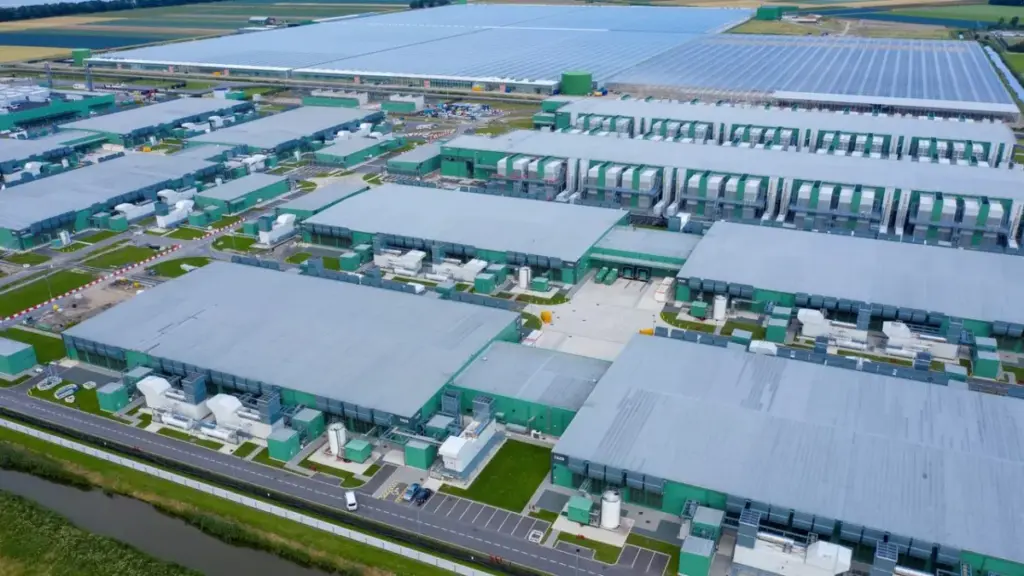
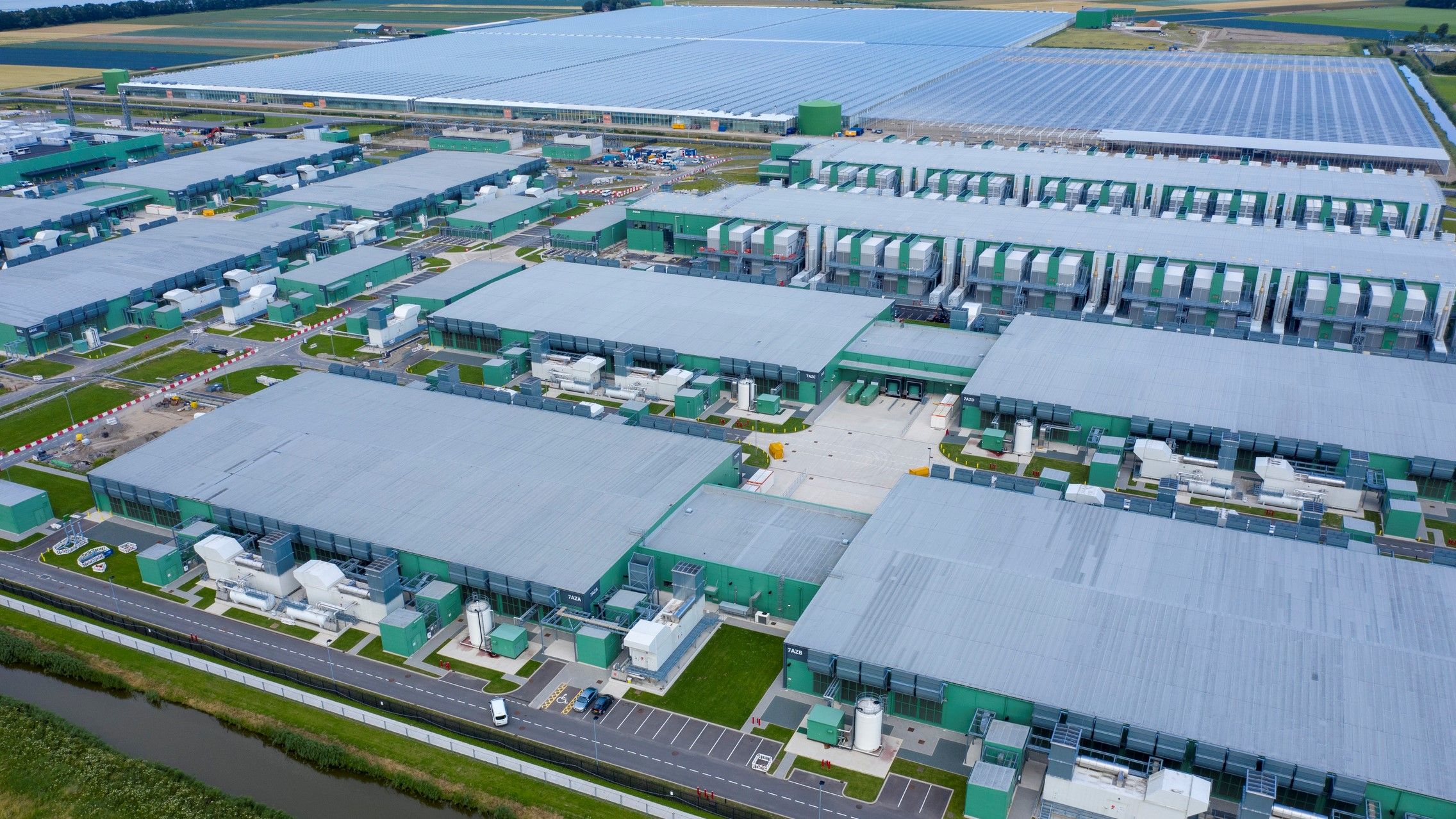
To understand the depth of the Huddleston family’s skepticism, one must examine the staggering resource footprint left in the wake of the artificial intelligence revolution. The technology driving modern Large Language Models (LLMs) and generative AI applications requires computational density on a scale never before witnessed in human history.
The Power and Water Crisis
Data centers are voracious consumers of electricity and water. A single hyperscale AI facility can draw as much electricity as a medium-sized city, straining local electrical grids and accelerating the demand for new power generation capacity—often leading to the controversial deployment of temporary fossil-fuel turbines, such as the recent friction seen in Memphis where SpaceX/xAI agreed to remove 69 temporary methane turbines following intense community backlash.

Furthermore, the liquid cooling systems required to prevent high-end AI accelerators—such as Nvidia’s coveted H100 and Blackwell GPUs—from overheating consume millions of gallons of water daily. In rural communities already vulnerable to drought and fluctuating water tables, the introduction of a massive data center poses an existential threat to local agriculture.
The Economics of the Tech Gold Rush
The financial disparity between Big Tech and rural landowners creates a profound psychological and economic gulf. Companies like Nvidia have seen their valuations touch historic milestones, while venture capital firms pour tens of billions of dollars into AI startups like OpenAI at valuations soaring past $300 billion.
At the same time, hardware components like high-bandwidth RAM, enterprise-grade storage, and specialized GPUs are bought up in massive wholesale quantities by hyperscalers, driving up costs for consumers and traditional enterprise buyers alike. In this ecosystem, $26 million is a rounding error for a major cloud provider, yet it represents the permanent erasure of centuries-old agrarian history.
+-------------------------------------------------------------------------+
|                  THE AI INFRASTRUCTURE RESOURCE EQUATION                |
+--------------------------+----------------------------------------------+
| Metric / Resource        | Typical Hyperscale AI Data Center Demand     |
+--------------------------+----------------------------------------------+
| Land Footprint           | 100 to 600+ Acres                            |
| Power Consumption        | 100 MW to 1+ GW (Equivalent to a small city) |
| Daily Water Usage        | 1 Million to 5 Million Gallons (Cooling)     |
| Capital Expenditure      | $1 Billion to $10+ Billion per facility      |
+--------------------------+----------------------------------------------+
Official Statements and Local Perspectives
The cultural friction between Silicon Valley’s hyper-accelerated ethos and the generational patience of rural America was sharply captured in the frank remarks made by Ida Huddleston and Delsia Bare to local reporters.
Addressing the dismissive attitudes sometimes harbored by urban technocrats toward rural populations, Huddleston did not mince words. "They call us old stupid farmers, you know, but we’re not," she asserted. "We know whenever our food is disappearing, our lands are disappearing, and we don’t have any water—and that poison. Well, we know we’ve had it."
Huddleston also directly challenged the standard corporate narrative that data centers bring transformative economic prosperity to host communities. Promoters of these developments frequently promise high-paying tech jobs, robust tax revenues, and indirect economic stimulation. Huddleston dismissed these promises outright: "I say they’re a liar, and the truth isn’t in them. That’s what I say. It’s a scam."

Delsia Bare added historical gravity to the family’s refusal, reminding the public of the foundational role their land played during America’s darkest economic hours. Their ancestors, she noted, "even raised wheat through the Depression and kept bread lines up in the United States of America when people didn’t have anything else." For the family, surrendering that same soil to house rows of servers processing algorithmic queries and corporate data felt like an abandonment of a sacred trust.
Future Outlook: A Turning Point for Tech Expansion
The Maysville standoff is not an isolated incident; it is a preview of the conflicts that will define the next decade of infrastructure development. As prime real estate near robust power substations becomes increasingly scarce, tech companies will be forced to look deeper into rural heartlands, agricultural belts, and environmentally sensitive areas to secure the space required for future generation data clusters.
Several key trends are likely to emerge from this growing friction:
- Heightened Regulatory Scrutiny: Local governments, previously eager to welcome any form of corporate investment, are beginning to implement stricter zoning laws, noise ordinances, and water usage restrictions specifically tailored to data center developments.
- Community Organizing and Resistance: Landowner coalitions are becoming more sophisticated, sharing strategies on how to resist corporate buyouts, demand transparent environmental impact reports, and protect local watersheds from industrial depletion.
- Alternative Siting Strategies: Driven by community pushback and grid capacity constraints, tech giants may be forced to invest more heavily in offshore data centers, brownfield conversions (repurposing defunct industrial sites rather than greenfield farming land), and localized nuclear microreactors to power their facilities independently.
Ultimately, the Huddleston family’s rejection of a $26 million payday serves as an enduring reminder that the relentless march of technological innovation cannot entirely overwrite the cultural, historical, and ecological values embedded in the land. As the artificial intelligence industry continues its meteoric expansion, it will increasingly be forced to negotiate not just with balance sheets, but with the people who tend the soil and feed the nation.