When Fiction Collides with Reality: How the Ongoing War in Ukraine is Redefining 4A Games and the Metro Franchise
Executive Overview
For over a decade, the Metro video game franchise—developed by 4A Games—has stood as a defining pillar of modern post-apocalyptic survival horror. Rooted in the hauntingly desolate, nuclear-scarred tunnels of the Moscow Metro (and later expanding into the scarred wilderness of post-collapse Russia), the series has long grappled with heavy philosophical concepts: the unimaginable human toll of nuclear war, the grim and complex moral ambiguity at the core of human nature, and the desperate struggle for survival in a world fundamentally hostile to life.
However, the devastating geopolitical reality of Russia’s full-scale invasion of Ukraine has fundamentally altered the creative lens through which 4A Games views its own work. Studio members, many of whom are based in Ukraine, have lived and worked in the shadow of active conflict for over four years. This harsh reality has brought the harrowing themes of the Metro series from the realm of speculative fiction directly into daily life—even exacting a devastating human toll, such as the tragic death of Metro Exodus animator Andrii ‘Nizrok’ Korzinkin, who lost his life fighting for Ukraine in 2022.
In interviews surrounding their latest title, Metro 2039, executive producer Jon Bloch and co-creative director Pawel Ulmer revealed that the ongoing trauma of the war has catalyzed a profound shift in the studio’s storytelling philosophy. No longer content with exploring abstract "shades of grey" in a fictional wasteland, the developers are moving toward a sharper, more resolute moral clarity regarding authoritarianism, the machinery of war, and its inescapable consequences. This article explores how a studio under duress is redefining one of gaming’s most iconic franchises, the deep intersection of art and geopolitics, and why these stories matter more now than ever.
Detailed Chronology: From Speculative Fiction to Frontline Reality
To understand the profound ideological pivot shaping Metro 2039, it is necessary to examine how the relationship between 4A Games and the real world has evolved over time.
The Pre-War Era: Abstract Warnings and Preventative Parables
When 4A Games released Metro 2033 in 2010, followed by Metro: Last Light in 2013 and Metro Exodus in 2019, the core narrative arc was framed around prevention. Inspired by Dmitry Glukhovsky’s celebrated novels, the games served as cautionary tales. They explored how human paranoia, tribalism, and militarism could push civilization off a nuclear precipice.
In these earlier titles, morality systems were deeply nuanced and often ambiguous. The games encouraged players to consider that "everyone is the hero of their own story." Resources were scarce, people were starving, and brutal choices were framed as the tragic inevitability of human survival under catastrophic conditions. While the franchise was undeniably political—tackling totalitarianism, Nazi ideologies, and religious fundamentalism—the conflict existed safely within the bounds of a post-apocalyptic thought experiment.
2022: The Turning Point
Everything changed in February 2022 when the Russian Federation launched its full-scale invasion of Ukraine. For the developers at 4A Games—a studio with deep historical and cultural roots in Ukraine—the distant horrors of their fictional universes materialized on their doorsteps.
As sirens wailed across Ukrainian cities, development pipelines were disrupted, and team members were forced to seek shelter, flee their homes, or take up arms to defend their country. The community suffered an irreparable loss when Andrii ‘Nizrok’ Korzinkin, a talented animator who worked on Metro Exodus, was killed in action on the frontline.
Facing continuous bombardment and living under the constant threat of aerial attacks, the psychological landscape of the studio shifted. As Jon Bloch noted, the team has now lived in a state of active war for over four and a half years. This lived experience made it impossible to return to abstract, detached storytelling.
Supporting Context & Metrics: The Human and Cultural Cost of Ukrainian Game Development
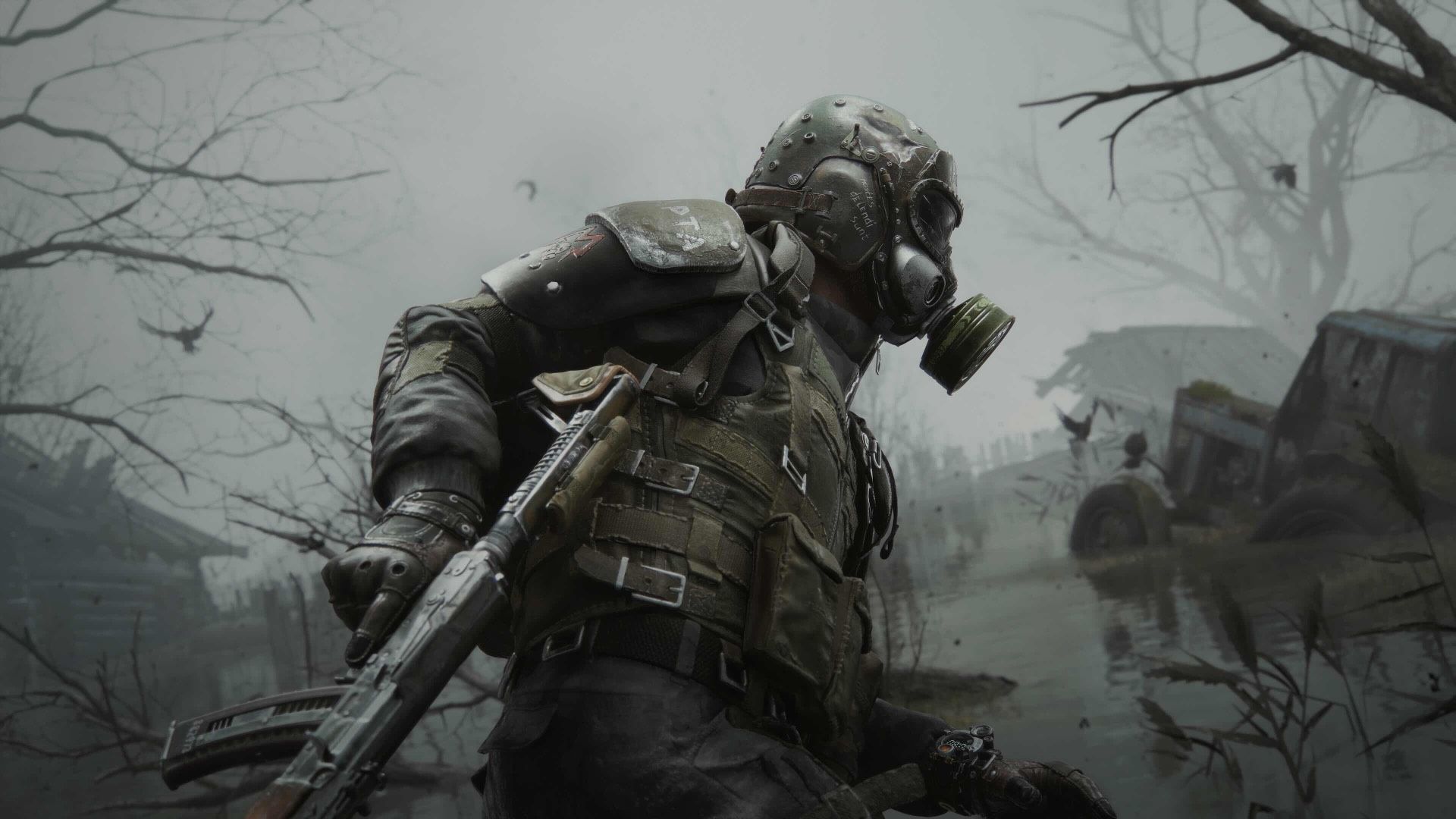
The transformation of Metro 2039 does not happen in a vacuum; it is part of a broader, harrowing chapter in Ukrainian game development. Neighboring studio GSC Game World faced identical, unimaginable challenges while finalizing S.T.A.L.K.E.R. 2: Heart of Chornobyl. Developers from both studios have spoken candidly about the exhaustion of working under nightly air-raid sirens and power blackouts.
| Milestone / Event | Impact on Ukrainian Game Development |
|---|---|
| February 2022 | Full-scale Russian invasion disrupts studio operations; teams are displaced, split across Europe, or mobilized for national defense. |
| 2022–Present | Continuous work under the shadow of war, including routine power outages, cyberattacks, and targeted disinformation campaigns. |
| The Cost of Life | Tragic losses of industry talent, including Metro Exodus animator Andrii ‘Nizrok’ Korzinkin, who died defending Ukraine. |
| Global Resonance | Major Ukrainian game releases (S.T.A.L.K.E.R. 2, upcoming Metro titles) achieve massive international acclaim despite wartime constraints, capturing the global spotlight. |
Furthermore, the cultural footprint of these games has become a battleground. Russian state-backed disinformation campaigns have actively targeted Ukrainian studios—attempting, for instance, to spark boycotts against S.T.A.L.K.E.R. 2 through fabricated claims. Yet, the resilience of these creators has shone through; the launch of S.T.A.L.K.E.R. 2 generated such immense domestic and international traffic that it temporarily strained and throttled Ukraine’s national internet infrastructure for hours. In this hostile environment, the act of releasing video games has transformed from mere entertainment into a defiant assertion of national identity and survival: “We are here.”
Official Statements: Redefining Morality in Metro 2039
The psychological weight of the war has directly translated into creative changes for Metro 2039. In a revealing interview with Eurogamer’s Dom Peppiatt, executive producer Jon Bloch and co-creative director Pawel Ulmer articulated how their perception of good and evil has evolved.
Jon Bloch on the Death of "Grey Morality"
Reflecting on the ideological shift within the studio, Bloch explained how real-world authoritarian aggression reframed the narrative approach:
"The previous games were about preventing war; the themes and the morals and all that supported this idea that revolved around ‘how do we as humans stop the cycle that we keep finding ourselves in’."
"And when Russia started its full-scale invasion of Ukraine, that brought war to our doorstep. Now, our team has been living in a state of war for the last four and a half years. And that changes things. Significantly."
Bloch emphasized that this lived trauma dismantled the luxury of false equivalence in storytelling. When examining authoritarian regimes up close, the comfortable narrative crutch of nuanced "grey morality" falls apart:
"In a situation like this, as the story explores what authoritarian regimes do, and what happens when one takes over, and what happens as they grow and take more and more power… there is nothing good about that. There is only evil involved in that."
"And so the grey morality of the past needs to be more defined now. It needs to be more specific and clear. And so our approach needed to change and, therefore, the story needed to change… Now that war is here, we need to talk about the consequences of it. We’re not building this based off of literal real-world events, but Metro has always been political and it continues to be that in the lessons and the morals that the game tries to teach."
Pawel Ulmer on the Irony of a Dead World Teaching Living Lessons
Co-creative director Pawel Ulmer echoed these sentiments, pointing out the bittersweet irony of crafting cautionary tales about societal collapse while sitting in a nation actively fighting for its preservation:
"We have this chance to show people what can actually happen if the world would stop working on preventing war. And ironically, we’re making [a game] in a world which is already dead! But our world—the real world—still has a chance."
"Metro was always about the cult of war, the propaganda, people dying, and the cost of others’ ambitions. It didn’t become politicised; it always has been. But what’s become uncomfortable is that the franchise’s very nature is getting too close to reality."
Future Outlook: The Enduring Legacy and Vital Importance of Metro
As the gaming industry looks toward the release of Metro 2039, the game represents far more than just a technical showcase for high-end graphics cards or an evolution of stealth-shooter mechanics. It stands as a testament to the unyielding spirit of Ukrainian developers who refuse to let their voices be silenced by artillery fire or geopolitical oppression.
Critics sometimes dismiss video games as escapism, questioning the cultural value of entertainment in the face of brutal, real-world crises. However, the trajectory of 4A Games proves otherwise. Art created under duress carries an authentic, unfiltered urgency. By stripping away romanticized notions of wartime ambiguity and replacing them with a stark, uncompromising examination of authoritarianism and its devastating human cost, Metro 2039 promises to be the most poignant and politically vital entry in the franchise’s history.
The real world still has a chance, as Ulmer noted. And through the courage of developers who channel their lived pain, resilience, and artistry into their work, games like Metro 2039 ensure that the world does not forget the lessons of war—long after the last controller is put down.