U.S. Army Unveils Autonomous Drone-Hunting Trucks in Project Sandhills 2.0 Live-Fire Tests
Executive Overview
In an era defined by the rapid proliferation of low-cost, high-lethal aerial threats, the United States military is continuously forced to adapt its tactical playbook. Traditional combat engineering and ground-clearing operations—long considered hazardous due to minefields, entrenched enemy positions, and heavy artillery—now face a uniquely modern peril: First-Person View (FPV) kamikaze drones and agile reconnaissance quadcopters.
To mitigate these airborne vulnerabilities and protect frontline personnel, the U.S. Army recently conducted a series of high-stakes, live-fire demonstrations at Fort Bragg. Designated as Project Sandhills 2.0, this initiative showcased a groundbreaking evolution in autonomous combat logistics: self-driving tactical trucks equipped with cutting-edge, computer-controlled counter-Unmanned Aircraft Systems (C-UAS).
At the center of these demonstrations was a modified, autonomous Ford F-250 pickup truck outfitted with Forterra’s AutoDrive autonomy system and topped with an ultra-lightweight, shotgun-armed counter-drone turret known as the "Edda." By blending commercial-off-the-shelf (COTS) automotive reliability with advanced kinetic counter-drone technology, Project Sandhills 2.0 represents a pragmatic, highly scalable leap forward for robotic warfare and modern mechanized infantry support.
Detailed Chronology of the Fort Bragg Demonstrations
The August 18 Live-Fire Exercise
The crucible for Project Sandhills 2.0 took place on August 18 at Fort Bragg, one of the premier power-projection platforms for the U.S. Armed Forces. Under the watchful eyes of military planners, defense contractors, and technology developers, the autonomous breaching vehicles were subjected to rigorous real-world evaluations designed to simulate high-threat combat engineering scenarios.
During breaching operations—where combat vehicles clear paths through minefields, wire obstacles, and anti-tank ditches to allow friendly forces to advance—units are exceptionally vulnerable. Historically, these slow-moving or stationary operations attract intense enemy fire. In the modern battlespace, this vulnerability has multiplied exponentially as adversaries deploy swarms of inexpensive FPV drones to strike clearance teams from above.
The August 18 live-fire exercise tested the vehicle’s dual capabilities: executing autonomous driving maneuvers through complex terrain while simultaneously acquiring, tracking, and neutralizing fast-moving airborne targets without human gunners needing to expose themselves to enemy fire.
Evolution from Project Sandhills 1.0 to 2.0
To understand the significance of the Fort Bragg trials, one must look at the lineage of the program. Project Sandhills 2.0 is a direct evolutionary step from the original Sandhills initiative.
The first iteration of the project yielded the Lancer Unmanned Ground Vehicle (UGV), which was built upon a Polaris Ranger 1500 utility vehicle chassis. The Lancer platform proved to be a successful proof-of-concept for agile, remote-controlled mobility, earning praise for its versatility. In fact, variations and conceptual descendants of these lightweight autonomous systems have found their way into international theaters, highlighting the global appetite for ruggedized robotic utilities.
However, feedback from modern conflicts—particularly regarding the absolute dominance of aerial reconnaissance and loitering munitions—highlighted a critical gap: lightweight utility vehicles lacked the structural payload capacity, power generation, and modular integration space required to carry robust, heavy-duty defensive systems.
Project Sandhills 2.0 addresses this shortcoming by scaling up the platform to a heavy-duty commercial truck chassis, integrating heavy computational hardware, and adding a dedicated, active kinetic defense turret specifically engineered to wipe out drone threats.
Technology Breakdown: The Vehicle, The Autonomy, and The Turret
1. The Platform: Ford F-250 and Forterra’s AutoDrive
Choosing the vehicle platform for an autonomous military system is a delicate balancing act between rugged durability, payload capacity, and logistical sustainability. Rather than designing a bespoke, hyper-expensive military vehicle from scratch, the developers behind Sandhills 2.0 opted for a commercial heavy-hitter: the Ford F-250.
According to representatives from Forterra, the firm responsible for the vehicle’s autonomy stack, utilizing a standard commercial truck platform brings massive logistical advantages. In the words of Forterra’s Vice President of Defense, the widespread availability of Ford OEM (Original Equipment Manufacturer) spare parts drastically simplifies maintenance, repair, and field logistics. When a vehicle sustains wear-and-tear or combat damage, mechanics do not need to wait for specialized, low-volume military components; standard replacement parts can be sourced globally.
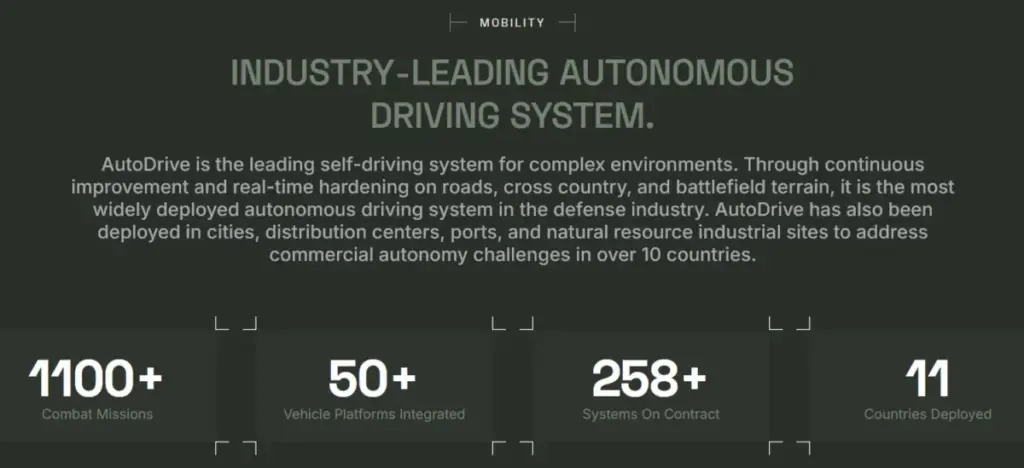
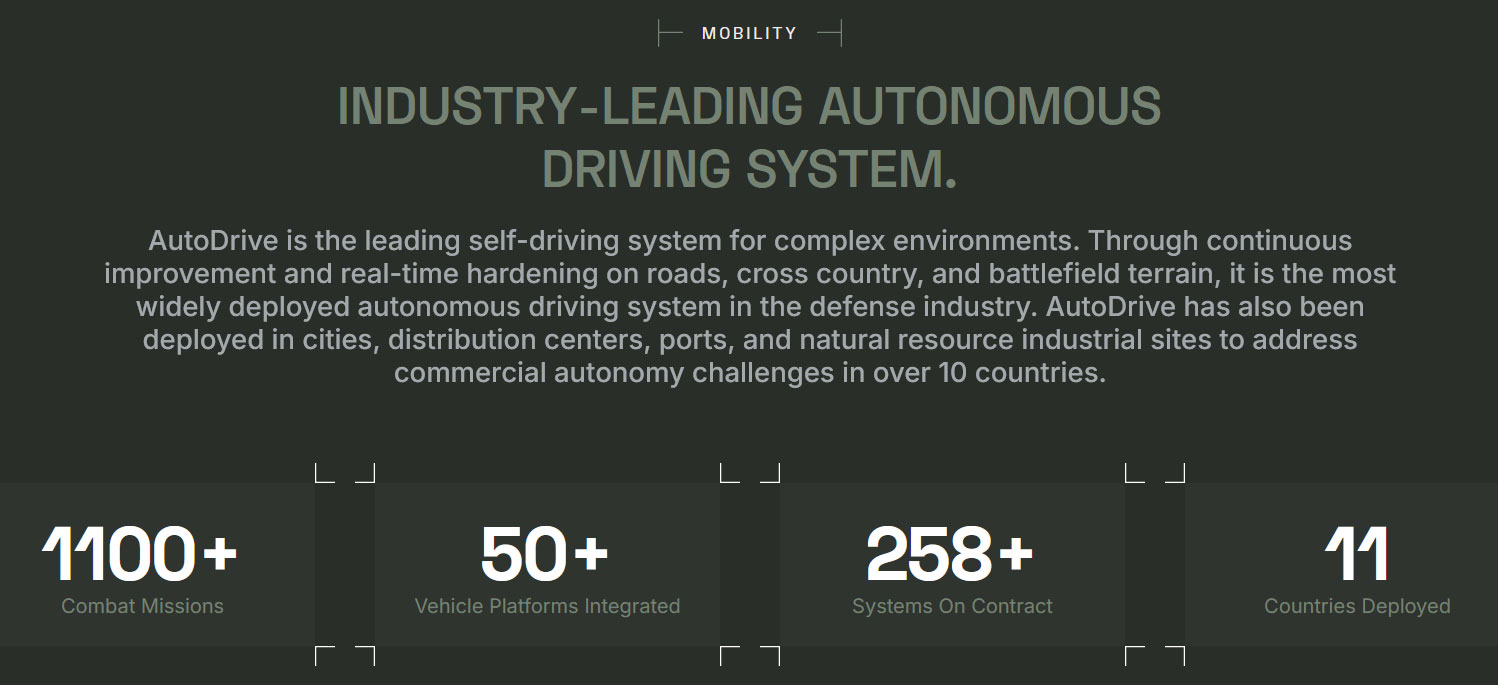
Mounted onto the F-250 is Forterra’s AutoDrive system, a mature autonomous driving software and hardware suite designed to navigate complex off-road environments, dense vegetation, and cratered terrain without human intervention. AutoDrive gives the truck the capability to lead or follow convoys, execute pre-programmed breaching paths, and operate safely in GPS-denied or electronically jammed environments.
2. The Defensive Core: The Edda C-UAS Turret
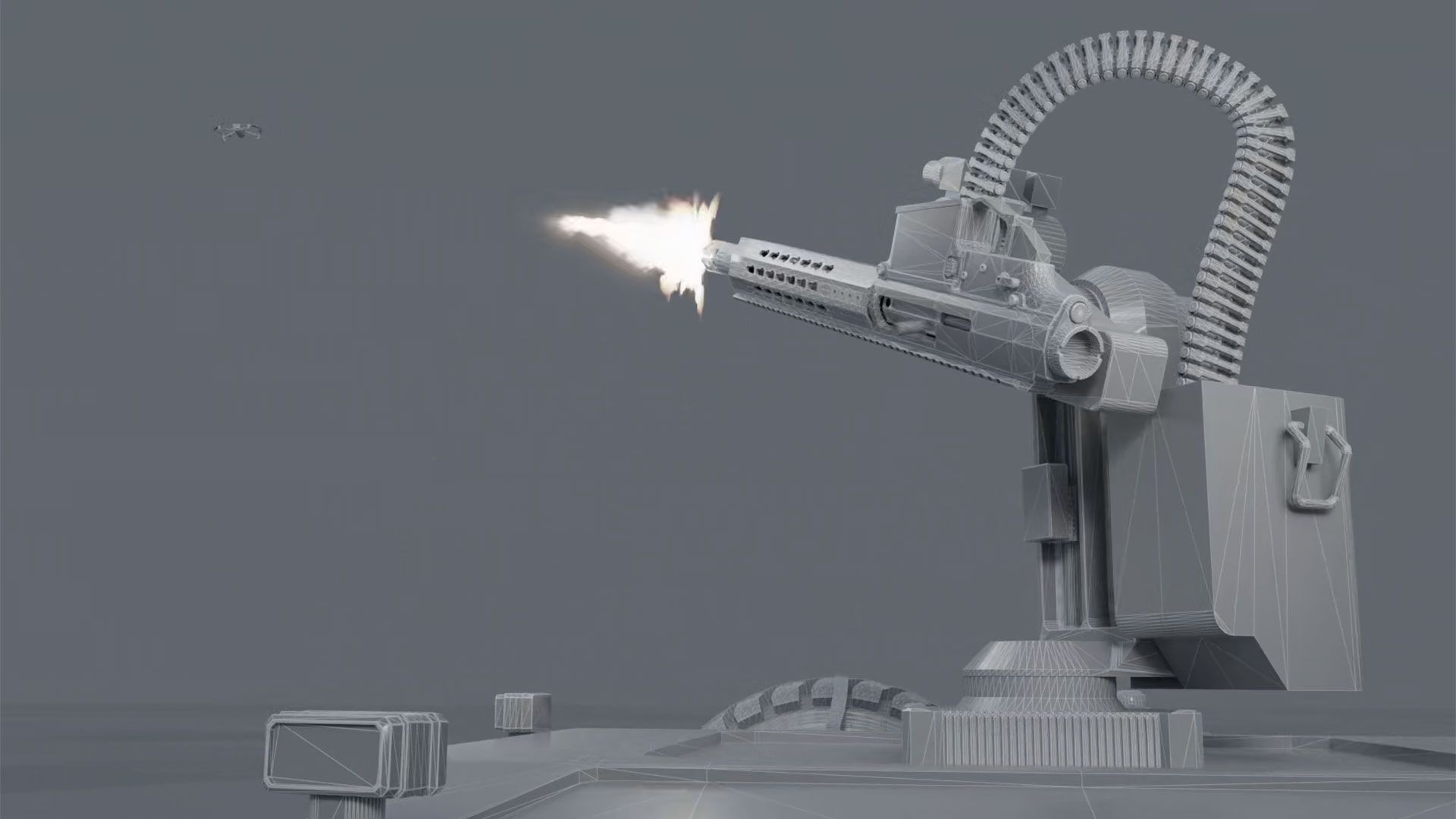
The crown jewel of the Sandhills 2.0 breaching vehicle is its counter-drone payload: the Edda C-UAS turret, manufactured by Austin-based defense tech firm 9 Mothers.
Weighing in at a remarkably light 23 kilograms (approximately 50 pounds), the Edda turret is specifically tailored to counter the modern scourge of small, agile, high-speed aerial threats. The system is engineered to engage drones measuring 7 inches in diameter or larger, operating within effective engagement ranges of 10 to 100 meters (roughly 33 to 328 feet).
Acoustic Detection and Stealth Targeting
One of the most innovative features of the Edda-equipped F-250 system is its multi-layered target acquisition methodology.
Rather than relying solely on active radar—which emits electronic signatures that can be easily detected, tracked, and triangulated by sophisticated enemy electronic intelligence (ELINT) systems—the Edda turret utilizes an acoustic detection grid as its primary early-warning mechanism. The distinct audio signature of high-RPM electric drone motors alerts the system to an incoming threat.
Once alerted by acoustic cues, an onboard electro-optical/infrared (EO/IR) visual tracking system instantly slews to the coordinates, locks onto the target visually, and prepares the weapon system for engagement. This passive-first approach ensures that the autonomous truck maintains a low electromagnetic profile, significantly reducing its detectability on the modern battlefield.
Precision Kinematic Neutralization via Shotgun Fire
While high-energy lasers and high-powered microwave (HPM) systems frequently dominate headlines regarding counter-drone technology, they come with substantial drawbacks, including massive power consumption, thermal management issues, and exorbitant per-engagement costs.
The Edda turret takes a much more pragmatic, kinetic approach: it is armed with a computer-controlled shotgun.
According to technical data published by 9 Mothers, the Edda platform functions as an "ultra-fast, ultra-light, ultra-accurate motion platform," capable of moving 5 degrees in under 15 milliseconds with an astounding 1.5-arcminute precision. The dispersion pattern of shotgun ammunition provides a distinct tactical advantage when engaging fast, erratic FPV drones, creating a localized cloud of projectiles that dramatically increases the probability of a hit compared to single-bullet precision weapons.
Supporting Context & Strategic Metrics
To fully appreciate the significance of Project Sandhills 2.0, one must analyze the broader metrics of modern drone warfare and the evolving doctrine of the U.S. Army.
| Feature / Metric | Specification / Detail | Tactical Significance |
|---|---|---|
| Base Vehicle | Ford F-250 Super Duty | Provides high payload capacity, rugged off-road durability, and global access to commercial spare parts. |
| Autonomy Suite | Forterra AutoDrive | Enables uncrewed route navigation, convoy leading, and hazardous zone mapping without risking human drivers. |
| C-UAS Turret | 9 Mothers "Edda" | Compact, lightweight counter-drone system optimized for close-range aerial threats. |
| Turret Weight | ~23 kg (50 lbs) | Low weight allows easy integration onto a wide variety of tactical and light utility vehicles. |
| Engagement Range | 10 to 100 meters (33–328 ft) | Tailored specifically to intercept terminal-phase FPV kamikaze strikes and close reconnaissance. |
| Target Acquisition | Acoustic + EO/IR Visual Tracking | Passive acoustic detection prevents the vehicle from broadcasting radar signatures to enemy sensors. |
| Turret Speed/Precision | 5° in <15 ms (1.5 arcminute precision) | Ultra-rapid actuation required to track and hit erratic, fast-moving quadcopters. |
| Primary Weaponry | Computer-controlled Shotgun | High hit probability via spread ammunition against small, high-speed maneuvering drones. |
The Changing Economics of Combat Engineering
Historically, military engineering vehicles—such as armored combat earthmovers, mine-clearing line charge (MCLIC) carriers, and bridge layers—were heavily armored, tracked behemoths designed to withstand heavy artillery and direct anti-tank fire. However, the proliferation of cheap FPV drones—often costing less than $500 to build—has turned traditional cost-exchange ratios upside down.
When a multi-million-dollar armored vehicle or a vital engineering team can be disabled by a commercial drone carrying a modified RPG round, military planners are forced to rethink force protection. Projects like Sandhills 2.0 point toward a decentralized, networked, and heavily automated future. By using expendable or uncrewed commercial trucks outfitted with automated shotguns, the Army can clear obstacles and absorb drone attacks without placing human combat engineers directly in the line of fire.
Industry Analysis and Open Questions
While the live-fire demonstrations at Fort Bragg mark a major milestone for Forterra, 9 Mothers, and the U.S. Army’s modernization cross-functional teams, defense analysts emphasize that several critical performance metrics remain unverified by public datasets.
The Need for Hard Test Data
Independent defense experts have raised several key questions regarding the operational efficiency of the Edda turret system:
- Single-Shot Kill Probability: What percentage of incoming drones are successfully neutralized on the very first shot?
- Target Velocity Limits: What is the maximum forward speed of an incoming target that the Edda system can successfully track and destroy?
- Ammo Capacity and Sustained Engagement: Given that shotguns have a limited ammunition capacity compared to chain guns or belt-fed machine guns, how many targets can the system handle before requiring a reload, and how is reloading handled in an uncrewed vehicle?
- Counter-Swarm Scalability: Can the system effectively prioritize and sequence multiple incoming drones attacking simultaneously from different vectors?
Answering these questions will determine whether the Sandhills 2.0 concept transitions from a successful technology demonstrator into a widely fielded Program of Record.
Future Outlook: The Road Ahead for Autonomous Warfare
The integration of automated counter-drone capabilities onto autonomous ground vehicles is no longer science fiction; it is an urgent operational necessity dictated by the realities of modern warfare in Ukraine, the Middle East, and potential peer-to-peer conflict zones.
As the U.S. Army continues its aggressive push toward modernization under initiatives like Project Convergence and various robotic combat vehicle (RCV) experiments, platforms like the Forterra-modified, Edda-armed Ford F-250 offer a glimpse into the future of tactical engineering.
We can expect future iterations of Project Sandhills to explore:
- Expanded AI-Targeting: Integration of advanced machine-learning vision models capable of distinguishing between decoy drones, civilian wildlife, and high-priority military threats autonomously.
- Networked Defense Grids: Allowing multiple autonomous breaching trucks to communicate via tactical data links, forming a localized, overlapping dome of kinetic and electronic counter-drone protection.
- Multi-Fuel and Hybrid Powertrains: Enhancing silent-watch capabilities and extending the operational range of robotic support vehicles in contested environments.
Ultimately, Project Sandhills 2.0 proves that the future of military engineering will rely heavily on ingenuity, commercial adaptability, and robotic autonomy. By marrying off-the-shelf automotive muscle with lightning-fast robotic defense turrets, the U.S. Army is laying the groundwork for a safer, more lethal, and highly resilient fighting force capable of dominating the skies and the ground alike.