
The Path to the Continent: CD Projekt Red Sets 2028 Target for The Witcher 4 Amid Expansions, Spinoffs, and Strategic Pivots
Executive Overview
The long-term horizon for one of gaming’s most celebrated dark fantasy franchises is finally coming into sharper focus. CD Projekt Red, the Polish powerhouse developer behind Cyberpunk 2077 and The Witcher series, has officially pointed toward a 2028 release window for the highly anticipated next mainline entry, tentatively known as The Witcher 4.
The announcement, delivered by Joint CEO Michał Nowakowski via an official studio update, marks a significant milestone in a development cycle that has been closely watched by the industry and millions of fans alike. Originally announced in March 2022 under the codename Project Polaris, the game is slated to be the vanguard of a bold new era for the studio, serving as the first major title built entirely on Epic Games’ cutting-edge Unreal Engine 5 rather than CD Projekt’s proprietary REDengine.
However, The Witcher 4 is far from the only project occupying the studio’s vast resources. CD Projekt Red is deliberately weaving a dense web of content to bridge the gap between past masterpieces and future innovations. During the upcoming Gamescom convention, the studio is poised to showcase Songs of the Past, a newly announced story expansion for 2015’s monumental The Witcher 3: Wild Hunt, scheduled for a 2027 release. This unexpected injection of new single-player content for a decade-old game underscores the enduring commercial and cultural footprint of Geralt of Rivia’s adventures, even as the franchise prepares to shift its narrative focus.
Simultaneously, the studio is navigating the complex realities of modern game development, balancing ambitious multi-project pipelines with structural adjustments. This includes managing development teams across its multiplayer ambitions—specifically Project Sirius, a cooperative spinoff set within the franchise’s universe that recently underwent strategic restructuring and team layoffs.
As CD Projekt Red charts its course through the remainder of the decade, the confluence of Project Polaris, the Songs of the Past expansion, and broader corporate shifts represents a high-stakes transition. For a company that redefined Western role-playing games only to weather a notoriously rocky launch cycle with Cyberpunk 2077, the road to 2028 is not merely about launching a sequel; it is a test of studio maturity, technological adaptation, and the enduring resilience of the Witcher brand.
Detailed Chronology: From Project Polaris to the Horizon of 2028
To understand where The Witcher 4 stands today, it is essential to trace the winding timeline of its conceptualization, technological migration, and corporate evolution.
2022: The Unreal Shift and the Teaser Era
The foundation for the next generation of The Witcher was laid in March 2022, when CD Projekt Red shocked the gaming industry by announcing that a new saga in the franchise was officially in development. Abandoning the aging, custom-built REDengine—which powered both The Witcher 3 and Cyberpunk 2077—the studio announced a strategic, long-term partnership with Epic Games to utilize Unreal Engine 5.
This decision was not made lightly. The turbulent launch of Cyberpunk 2077 in late 2020 exposed severe technical debt within the REDengine, particularly when attempting to scale sprawling, open-world environments across multiple console generations and PC hardware. By pivoting to Unreal Engine 5, CD Projekt Red aimed to streamline development pipelines, leverage out-of-the-box tools like Nanite and Lumen for hyper-realistic graphics, and tap into a vast global pool of Unreal-proficient developers, minimizing onboarding friction.
2024: The Game Awards and Visual Proof
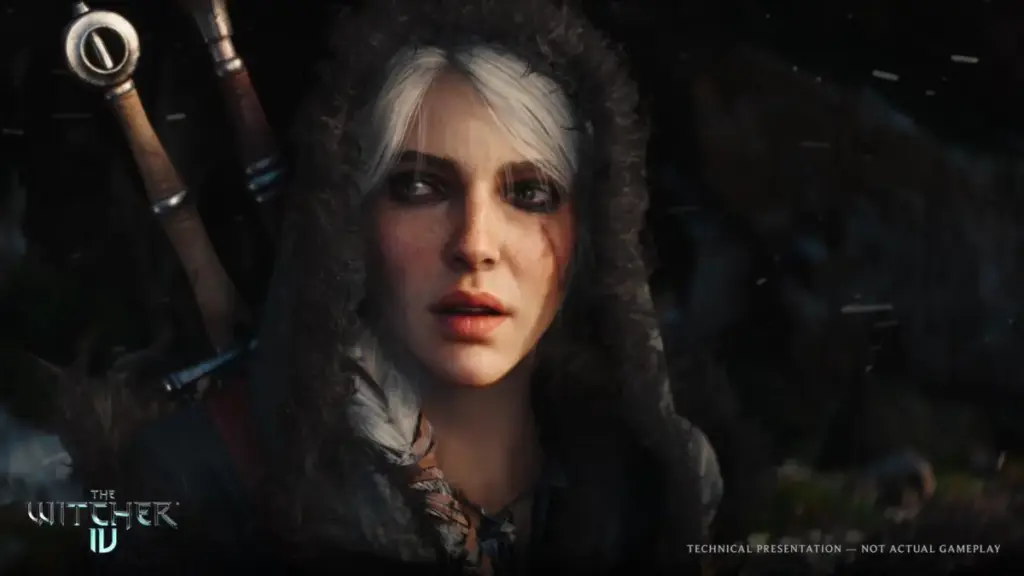
For over two years, Project Polaris remained largely a silhouette in the distance, with management offering periodic updates confirming that the game had entered early pre-production and subsequently scaled up its development staff. The silence was broken in December 2024 at The Game Awards, where CD Projekt Red delivered a stunning teaser trailer and technical showcase.
While the footage did not explicitly feature Geralt of Rivia—fueling intense speculation regarding the identity of the new protagonist and the medallion of a new lynx school—it offered a breathtaking proof-of-concept for Unreal Engine 5’s capabilities in the hands of CD Projekt’s artists. The demo showcased hyper-detailed foliage, dynamic lighting, and atmospheric depth that instantly revitalized consumer enthusiasm and set high expectations for the technical fidelity of the final product.
2025–2027: Scaling Development and Bridging the Gap
Throughout 2025, Project Polaris cemented its status as the studio’s primary focus. In recent quarterly financial briefings and executive video updates, Joint CEO Michał Nowakowski confirmed that the core development team had reached peak operational capacity, with hundreds of developers pouring their efforts into the title.
Realizing that a wait stretching into the late 2020s risked leaving a content vacuum for fans, CD Projekt Red devised a clever stopgap strategy. Rather than letting the IP lie dormant, the studio greenlit Songs of the Past, an upcoming narrative expansion for The Witcher 3: Wild Hunt. Scheduled to arrive in 2027, this expansion bridges the historical context of the wild hunt with the uncharted territories of the upcoming saga.
2028: The Target Landing Zone
With the release window now officially pinned to 2028 by executive leadership, the industry has a firmer timeline for when the next masterpiece will land. A 2028 release places The Witcher 4 roughly six years after its initial announcement, a standard development window for AAA open-world RPGs of this magnitude in the modern era, particularly when migrating to a brand-new game engine.
Supporting Context & Metrics: The Business of the Continent
The path to 2028 is underpinned by a complex web of financial commitments, technological investments, and organizational restructurings. CD Projekt Red is no longer a single-studio operation working on one monolithic release; it has transformed into a multi-project enterprise.

The Multi-Project Pipeline
Under its updated strategic roadmap, CD Projekt Red is simultaneously incubating several major initiatives:
- Project Polaris (The Witcher 4): The flagship single-player RPG and the first installment of a planned new trilogy.
- Project Orion: The fully fledged sequel to Cyberpunk 2077, being developed by CD Projekt Red’s newly established North American studios in Boston and Vancouver.
- Project Sirius: A cooperative multiplayer spin-off set in the Witcher universe, developed by Boston-based studio The Molasses Flood with support from CD Projekt Red.
- Project Hadar: A completely original, internally developed intellectual property distinct from both The Witcher and Cyberpunk.
Navigating Adversity: Project Sirius Layoffs
While the single-player pipeline commands broad optimism, the studio’s multi-player aspirations have faced turbulence. In August 2025, CD Projekt confirmed that it had enacted layoffs within the team working on Project Sirius.
The multiplayer spinoff had previously undergone a massive creative reboot in early 2023, when management opted to scrap its original framework and redefine the project’s scope to ensure it aligned with the studio’s quality standards and financial sensibilities. The subsequent August 2025 workforce reductions highlight the ongoing economic realities of modern game development, where ballooning budgets and shifting project scopes frequently necessitate painful course corrections. Despite these cutbacks, leadership has maintained that Project Sirius remains active, albeit under a more disciplined and streamlined operational model.
Gamescom 2025 and Songs of the Past
The economic engine of the franchise continues to draw immense power from the past. The Witcher 3: Wild Hunt has sold over 50 million copies worldwide, cementing it as one of the best-selling video games of all time.
Capitalizing on this enduring asset, CD Projekt Red’s upcoming presentation at Gamescom—specifically during Opening Night Live hosted by Geoff Keighley—will shine a spotlight on Songs of the Past. By introducing fresh narrative content to The Witcher 3 in 2027, the studio not only provides a lucrative revenue stream during the final stretch of Polaris development but also keeps the franchise’s lore active in the cultural zeitgeist, priming audiences for the 2028 generational handoff.
Official Statements and Industry Reception
The revelation of the 2028 target window has drawn immediate reactions from across the gaming landscape, balancing excitement with pragmatic caution given the industry’s history of delayed AAA blockbusters.
Executive Transparency
In his official video update, Joint CEO Michał Nowakowski emphasized the studio’s commitment to transparency and sustainable development.
"We have spent years laying the architectural and narrative groundwork for the next chapter of this incredible universe," Nowakowski stated. "With Unreal Engine 5, our teams are operating at a level of efficiency and creative freedom we have not experienced before. While we are targeting a launch in 2028, our absolute priority remains quality. We have learned hard lessons from our past rollouts, and we are dedicated to delivering an experience that meets—and exceeds—the expectations of our community without compromising the wellbeing of our developers."
Fan Anticipation and Community Response
The announcement has sparked fervent discussions across Reddit, X (formerly Twitter), and specialized gaming forums. The confirmation of a 2028 window gives fans a tangible date to anticipate, transitioning the discourse from speculative rumors to concrete expectation management.
At the same time, the inclusion of Songs of the Past at Gamescom has been met with universal acclaim. The prospect of returning to the shoes of Geralt—or exploring parallel narrative threads from that era—one final time before embarking on the new trilogy has provided immense reassurance to purists who feared the franchise might abandon its roots entirely.
Future Outlook: The Next Decade of CD Projekt Red
As CD Projekt Red looks past the mid-2020s, the stakes could not be higher. The studio’s transition from a regional developer of beloved PC RPGs into a global, multi-studio powerhouse has been marked by staggering creative triumphs and painful operational lessons.
The years leading up to 2028 will serve as a crucible for the company. The commercial success and critical reception of Songs of the Past in 2027 will test whether fans are still willing to engage with legacy systems on modern hardware. Meanwhile, the steady progression of Project Polaris will test the studio’s mastery of Unreal Engine 5, measuring whether the technical promise shown in late 2024 tech demos can be scaled into a cohesive, bug-free, open-world epic.
Furthermore, how CD Projekt Red manages the broader ecosystem—balancing the ambitious Western expansion of Project Orion, the structural evolution of Project Sirius, and the incubation of Project Hadar—will dictate the company’s financial stability for the next decade.
If The Witcher 4 successfully hits its 2028 target with the polish, narrative depth, and technical innovation that fans demand, it will not only revitalize the Continent for a new generation of players, but it will also fully restore CD Projekt Red’s reputation as one of the premier RPG architects in the world. Until then, the journey to 2028 has officially begun, and every step—from Gamescom to the final countdown—will be watched by a watching world.