
Garmin Unveils the Fenix 9 and Fenix 9 Pro: A Monumental Leap in Rugged Smartwatch Engineering
Executive Overview
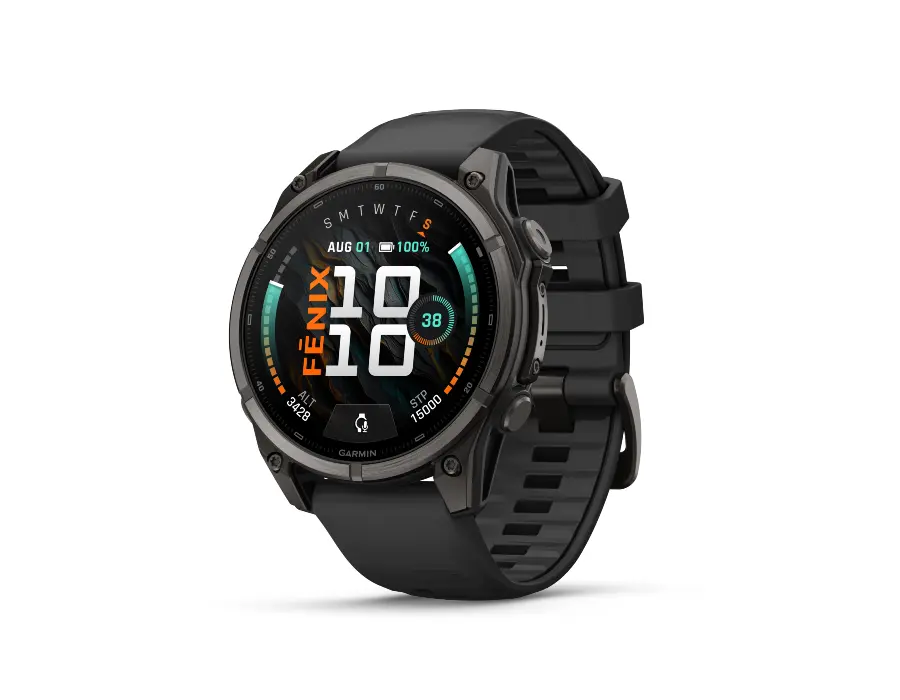
Garmin has officially taken the wraps off its flagship performance smartwatch lineup: the Fenix 9 and Fenix 9 Pro. Building upon a legacy of building some of the most reliable and capable outdoor wearables on the market, this new generation introduces massive hardware and software overhauls designed to cement Garmin’s dominance in the high-end fitness tracking and adventure tech space.
At the forefront of the Fenix 9 base model is a stunning, ultra-bright OLED display capable of hitting a blistering 3,000 nits of peak brightness—effectively doubling the luminescence of its predecessor and ensuring effortless readability under direct, blinding sunlight. Beneath the surface, the standard model packs a 50 percent increase in RAM and an entirely upgraded map engine that drastically reduces lag during map rendering and panning.
For users demanding elite-tier materials and off-grid connectivity, the Fenix 9 Pro introduces a lightweight yet ultra-durable titanium case, a massive 1.5-inch OLED display option on the largest 51mm variant, and advanced communication capabilities via optional InReach satellite or LTE connectivity.
Starting at $999.99 for the baseline 43mm Fenix 9 and climbing to $1,099.99 and beyond for the Pro variants, Garmin is targeting serious athletes, mountaineers, backpackers, and tech enthusiasts who refuse to compromise on performance, battery longevity, or durability. Pre-orders and initial availability are slated to begin on August 28th.
Detailed Chronology: The Evolution of Garmin’s Flagship Lineup
To understand the magnitude of the Fenix 9 rollout, it is helpful to examine the evolutionary trajectory of Garmin’s premier outdoor watch series. Historically, the Fenix line has served as the testing ground for Garmin’s most cutting-edge endurance technologies, transitioning over the past decade from monochrome tactical tools to full-color mapping powerhouses.
From MIP Displays to Blazing OLED
For years, Garmin relied heavily on Memory-in-Pixel (MIP) display technology for the Fenix series. While MIP screens excelled at battery conservation and sunlight visibility, they often lacked the vibrant color saturation, deep contrast ratios, and modern aesthetic appeal of mainstream consumer smartwatches utilizing OLED or AMOLED panels.
With the Fenix 8 introduction, Garmin began exploring brighter display architectures, but the Fenix 9 fully crosses the Rubicon. By integrating a 3,000-nit OLED panel into the base Fenix 9 and expanding it to a massive 1.5-inch screen on the 51mm Fenix 9 Pro, Garmin has proven that high-end outdoor watches no longer need to sacrifice visual fidelity for durability.
The Under-the-Hood Revolution
Beyond the glass and pixels, the chronological progression of the Fenix architecture has focused heavily on processing power and navigation fluidity. Early Fenix models often suffered from stuttering when rendering complex topographical maps or calculating multi-sport routing on the fly.
The Fenix 9 addresses this head-on by coupling a completely overhauled map engine with a 50 percent boost in internal RAM. Panning across intricate trail maps, zooming into elevation profiles, and recalculating off-course deviations are now nearly instantaneous. Furthermore, Garmin has doubled down on storage capacity, pushing baseline internal space to a generous 64GB. This ensures that users can load extensive global topographical maps, continuous music libraries, and software updates without worrying about memory limitations.
Supporting Context & Metrics: Under the Hood of the Fenix 9 Series
The specifications sheet for the Fenix 9 and Fenix 9 Pro reads like a wishlist for endurance athletes, tactical operators, and data-driven outdoor adventurers. Below is a comprehensive breakdown of the hardware specifications, software capabilities, and performance metrics defining this new generation.
Display and Build Specifications
- Base Fenix 9 (43mm Start): Features a brilliant OLED display hitting up to 3,000 nits (twice as bright as the previous generation), protected by a scratch-resistant sapphire lens. Pricing starts at $999.99.
- Fenix 9 Pro (43mm, 47mm, and 51mm): Elevates the build quality with an aerospace-grade titanium case. The largest 51mm Pro variation debuts a sprawling 1.5-inch OLED display, superseding the 1.3-inch and 1.4-inch footprints found on smaller variants. Pricing starts at $1,099.99.
- Solar-Charged Options: For purists who prefer extended autonomy over pixel density, the 47mm and 51mm Fenix 9 Pro models offer specialized solar-charged display configurations.
Battery Longevity and Energy Management
Battery anxiety is arguably the single greatest hurdle for modern smartwatches. Garmin continues to lead the industry in power efficiency, though real-world performance depends heavily on usage modes:

- Smartwatch Mode (Fenix 9, 51mm): Delivers up to an astounding 29 days of continuous use on a single charge.
- Solar-Powered Pro Models: Claim up to an incredible 57 days of battery life—though this peak metric requires adherence to specific environmental benchmarks, namely spending at least three hours per day outdoors under intense 50,000 lux lighting conditions.
Advanced Software Ecosystem: Garmin Epic and Stamina Tracking
Hardware is only as good as the software driving it. The Fenix 9 series debuts several sophisticated performance analytics tools:
- Garmin Epic: A revolutionary metrics aggregation tool that analyzes training logs over rolling windows of days, weeks, and months. Instead of evaluating workouts in isolation, "Epic" compiles historical data to synthesize a holistic overview of cumulative fatigue, recovery status, and overall performance trajectory.
- Enhanced Stamina Tracking: Real-time energy reserve monitoring has been significantly refined, allowing athletes to see exactly how much gas they have left in the tank during grueling endurance efforts.
- Dynamic Rucking Metrics: Recognizing the explosive popularity of weighted rucking workouts, Garmin has introduced expanded software features that allow users to actively input and adjust the weight of their pack mid-workout, ensuring accurate caloric burn and exertion calculations.
Connectivity: InReach Satellite and LTE
For those venturing far beyond cellular towers, the Fenix 9 Pro offers supreme peace of mind. All three Pro case sizes (43mm, 47mm, and 51mm) can be configured with InReach satellite or LTE connectivity for an additional $100 hardware upgrade and a $7.99 per month subscription. This enables two-way messaging, location sharing, and emergency SOS functionality directly from the wrist, independent of a smartphone.
Official Statements and Industry Reception
Garmin’s leadership has framed the Fenix 9 lineup as the culmination of decades of engineering feedback gathered from elite mountaineers, ultra-marathoners, military personnel, and everyday fitness enthusiasts.
"With the Fenix 9 and Fenix 9 Pro, we set out to eliminate the compromises traditionally associated with high-end sports watches," shared a representative during the launch rollout. "We have successfully bridged the gap between military-grade physical durability and cutting-edge display technology, all while supercharging the internal processing engines to handle the most demanding spatial and physiological data sets imaginable."
Early industry reaction has been overwhelmingly positive. Tech analysts and outdoor gear reviewers have praised Garmin for aggressively tackling the display brightness issue without sacrificing the brand’s legendary battery life thresholds. Furthermore, the inclusion of flexible InReach satellite/LTE integration on the Pro tier positions the device not just as a fitness tracker, but as a critical life-safety tool for backcountry exploration.
Future Outlook: What the Fenix 9 Means for the Wearable Market
The launch of the Garmin Fenix 9 and Fenix 9 Pro sends a clear message to competitors like Apple, Samsung, and specialized sports watch brands: Garmin is fiercely protective of its crown in the rugged wearable segment.
As consumer expectations shift toward devices that can seamlessly transition from high-fashion boardrooms to sub-zero mountain summits, Garmin has struck a delicate balance. By retaining its rugged aesthetic, introducing elite-tier titanium materials, and upgrading to eye-popping 3,000-nit OLED panels, the company has insulated itself against encroachment from mainstream smartwatch manufacturers.
Looking forward, the integration of advanced physiological tracking suites like Garmin Epic points toward an industry-wide trend: the move away from isolated daily metrics toward longitudinal, predictive health modeling. As AI-driven health insights mature, watches like the Fenix 9 will likely serve as the foundational data collection hubs for proactive personal wellness management.
For consumers eyeing an upgrade, the Fenix 9 and Fenix 9 Pro represent significant financial investments—with entry points hovering near the $1,000 mark. However, for those who demand uncompromising build quality, unrivaled battery longevity, and elite navigation tools, Garmin’s newest flagship stands undisputed at the summit of modern smartwatch engineering.
The Fenix 9 lineup will officially be available to order starting August 28th.