Minecraft for Nintendo Switch 2 Appears Imminent Following Sudden System UI Update
Executive Overview
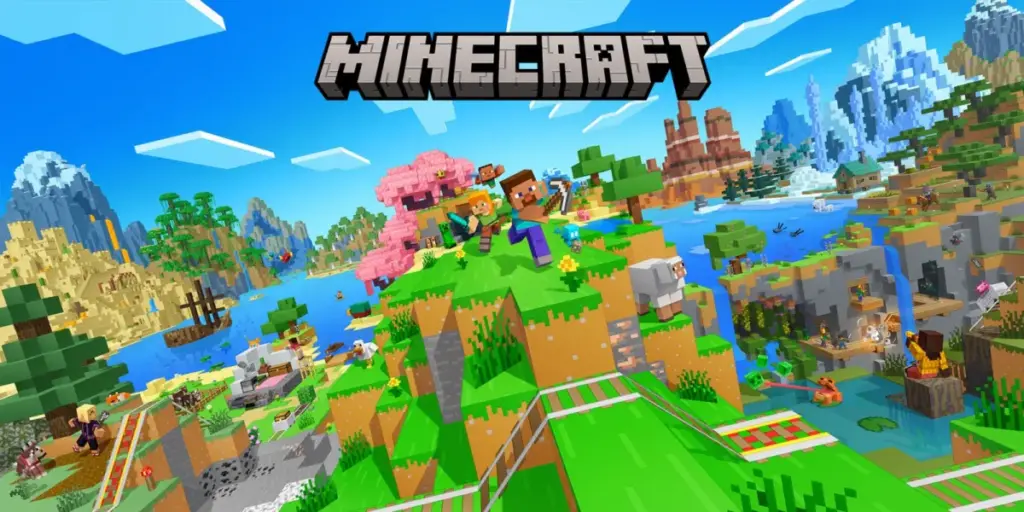
The horizon of portable and console sandbox gaming is shifting once again. For months, speculation has run rampant across community forums, data-mined files, and industry insider circles regarding the inevitable transition of Mojang’s powerhouse title, Minecraft, to Nintendo’s successor hardware, colloquially and widely referred to as the Nintendo Switch 2. Now, tangible evidence points toward an imminent release.
Recent user-submitted discoveries captured across social platforms and community hubs—such as Reddit’s dedicated hardware spaces—reveal that the game’s title on the system’s home screen has subtly shifted. When booted up, the software is now explicitly identified as Minecraft for Nintendo Switch, a slight yet deliberate nomenclature update that historical precedent suggests is a precursor to a native next-generation platform launch.
Coupled with prior ESRB ratings disclosures and ongoing software infrastructure changes, this user interface (UI) modification signals that Mojang Studios and Microsoft are laying the groundwork for a dedicated rollout. For millions of players globally who have pushed the original hybrid console’s version of Minecraft to its absolute technical limits, this next-generation iteration promises to deliver modernized performance, elevated draw distances, and potentially smoother framerates that take full advantage of more powerful underlying silicon. This report investigates the timeline of these developments, analyzes the technical context surrounding the Nintendo Switch successor, and evaluates what this impending release means for the overarching ecosystem of block-based survival gaming.
Detailed Chronology: From Rumor to Reality
To understand the weight of the recent dashboard changes, it is essential to trace the breadcrumbs left by developers, rating boards, and observant players over the past year. The journey toward a next-generation iteration of Minecraft has been defined by quiet milestones rather than bombastic announcements.
The Initial Sparks and ESRB Leak
The earliest legitimate indicators that a dedicated next-generation version of Mojang’s juggernaut was in development emerged through regulatory channels. Entertainment Software Rating Board (ESRB) listings surfaced, detailing classifications for upcoming cross-platform titles aligned with unannounced hardware iterations. While Nintendo itself has maintained measured communications regarding its upcoming hardware roadmap, third-party publishers have increasingly found themselves caught in the logistical crossfire of preparing software ahead of official platform disclosures.

Within these regulatory filings, eagle-eyed observers noted distinct entries pointing toward dedicated builds for incoming hardware generations. Although initial community reactions ranged from skepticism to cautious optimism, the pattern mirrored historical console transitions where software must clear compliance boards months before hitting digital or physical storefronts.
The Summer 2026 UI Shift
The narrative took a definitive turn when players booting up the current application noticed a quiet alteration to their home screens. Historically, the software simply read as Minecraft within the dashboard UI. However, following recent background updates pushed by the developers, the application’s formal metadata tag was modified to Minecraft for Nintendo Switch.
In the world of platform ecosystems, such adjustments are rarely arbitrary. When a publisher appends platform-specific qualifiers to a title’s identifier, it typically indicates that the existing software architecture is being bifurcated or prepared to interface with a separate, upgraded system SKU. This separation allows digital storefronts and cloud-save infrastructures to cleanly distinguish between legacy iterations and enhanced next-generation editions—a necessary technical step when managing cross-buy or upgrade paths for massive multiplayer communities.
Supporting Context & Metrics: The Evolution of Portable Building
Minecraft has enjoyed a uniquely symbiotic relationship with Nintendo’s hardware lineage. When the original Nintendo Switch port launched, it bridged the gap between mobile flexibility and console-level multiplayer functionality, eventually becoming a staple on millions of devices worldwide. However, as updates rolled out over the years introducing vast caves, towering cliffs, complex redstone mechanics, and infinite-style world generation parameters, the original Switch hardware began to strain under the heavy load.
Technical Bottlenecks of the Legacy Hardware
The original Nintendo Switch features custom NVIDIA Tegra X1 architecture, a chipset that was already mature when the console launched in 2017. While ingenious optimization by developers allowed Minecraft to run at a stable 30 frames per second at dynamic resolutions, the limitations quickly caught up:

- Render Distances: Players were frequently restricted to modest chunk-loading radiuses to prevent out-of-memory crashes.
- World Generation Times: Loading expansive survival maps or joining heavily populated public servers often resulted in protracted loading screens and stuttering chunk generation while traversing via elytra or horseback.
- Multiplayer Limitations: Split-screen play and large-scale online realms pushed the CPU and RAM allocation to their absolute thresholds, forcing compromises in entity rendering and mob density.
The Next-Generation Paradigm Shift
While official complete specifications for the Nintendo Switch 2 remain strictly guarded under corporate embargoes, recent leaks and developer datamining projects concerning other major multiplatform releases—such as Capcom’s Monster Hunter Wilds—offer a clear window into what the new hardware is expected to achieve. Datamined performance profiles suggest target operational metrics scaling up to 1080p and 1440p resolutions when docked, utilizing advanced scaling technologies, and maintaining stable performance targets between 720p and 864p in handheld mode at standard framerates.
For Minecraft, these hardware leaps translate directly into quality-of-life enhancements that the community has long desired:
- Expanded Render Distances: Players can finally expect parity with mid-range PC or current-generation console builds, allowing vistas to stretch far beyond the restrictive fog banks of the legacy Switch version.
- Ray Tracing and Visual Fidelity: While full real-time ray tracing remains resource-intensive, enhanced lighting models, improved water shaders, and higher-resolution texture packs could finally find a stable home on Nintendo hardware.
- Faster Storage I/O: The inclusion of modern, high-speed internal storage solutions on the successor console will drastically reduce world-loading times and eliminate the pop-in anomalies that plagued fast-paced exploration on older cartridges and eShop installs.
Official Statements & Industry Ecosystem
The broader gaming industry has watched Microsoft’s multiplatform strategy unfold with intense fascination. Under Xbox leadership, Minecraft has consistently served as an ecosystem-agnostic anchor, existing on virtually every screen imaginable—from PlayStation and Xbox to mobile devices, PC, and Nintendo platforms.
Microsoft and Mojang’s Unified Approach
Mojang Studios has historically prioritized feature parity across active platforms while tailoring performance profiles to match specific hardware capabilities. Representatives from Microsoft Gaming have repeatedly emphasized a vision of gaming where players can access their purchased content, cross-play with friends regardless of platform, and maintain persistent worlds through Minecraft Realms without friction.
While neither Nintendo nor Microsoft has issued a formal press release detailing the exact release date of the upgraded Switch 2 version as of this writing, industry analysts point out that silent updates of this nature frequently precede a coordinated direct-style presentation. Given the proximity of the holiday window and the inevitable wave of next-generation hardware announcements, a formal showcase appears increasingly likely.

Future Outlook: What This Means for the Player Base
The impending arrival of Minecraft for Nintendo Switch 2 represents more than just a graphical touch-up; it marks a critical bridge into the next era of hybrid gaming. For the millions of dedicated builders, redstone engineers, and survivalists who rely on Nintendo’s platform as their primary gaming ecosystem, the upgrade promises to revitalize an aging experience.
Key Considerations for Existing Players
- Save Data Migration: One of the primary concerns for long-term players is the safety of their worlds. Given Microsoft’s heavy reliance on Microsoft Account integration and Minecraft Realms, transferring existing single-player and multiplayer worlds to the new hardware version should be a seamless, cloud-backed process, though local-only saves may require specific transfer utilities provided by the system OS.
- Cross-Play Continuity: Upgrading to the next-generation client will ensure that Nintendo players can continue to play side-by-side with PC, mobile, and console users without version-mismatch lockouts.
- The Physical vs. Digital Debate: As publishers increasingly lean toward digital distribution or key-card formats for cross-generation software titles, collectors will be watching closely to see if Mojang offers a physical cartridge release optimized natively for the new hardware, or if the transition will be handled entirely via digital eShop patches and upgrades.
As the pieces continue to fall into place—from ESRB database clearances to home screen UI refreshes—the official unveiling of Minecraft on Nintendo’s next-generation hardware is no longer a matter of if, but when. For a community that has spent over a decade shaping digital landscapes block by block, a wider canvas with fewer technical boundaries is a welcome horizon indeed.