A Million-Dollar Catch: First-Print Pokémon Game Boy Titles Fetch Record-Breaking $2,000,000
Executive Overview
The retro video game collecting community has reached an unprecedented milestone. In a landmark transaction that rewrites the history books of digital memorabilia, an anonymous collector and elite U.S. brokerage firm Nostalgix have finalized the sale of a pristine, first-print Pokémon Game Boy trilogy for a staggering $2,000,000.
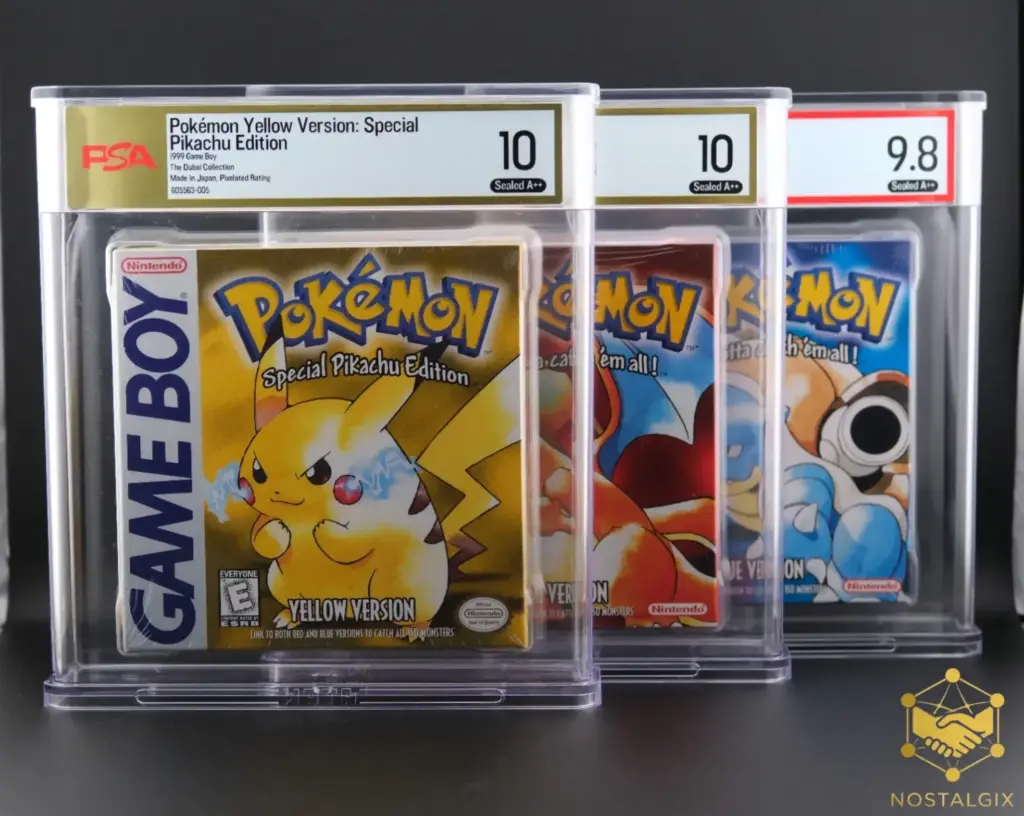
Encompassing the legendary titles that initiated the global Pokémon phenomenon in the West—Pokémon Red, Pokémon Blue, and Pokémon Yellow: Special Pikachu Edition—this bundle stands as the largest public video game transaction in the history of the franchise. More importantly, it signifies a seismic shift in how vintage video games are perceived, valued, and traded within the broader alternative asset market.
For decades, trading card games (TCGs), comic books, and sports memorabilia have commanded multi-million-dollar valuations. Video games, despite their profound cultural impact, often lagged behind due to concerns over authenticity, condition degradation, and inconsistent grading standards. However, with this historic $2,000,000 deal, retro video games have officially closed the gap, ascending to the upper echelons of high-end collectibles. This comprehensive report explores the anatomy of the sale, the grueling twenty-year pursuit behind the collection, the evolving landscape of professional video game grading, and what this monumental transaction means for the future of nostalgia-driven asset classes.
Detailed Chronology: The Anatomy of a Record-Breaking Sale
The journey toward this historic sale spans over two decades of meticulous curation, patience, and unwavering dedication. According to representatives from Nostalgix, the anonymous seller embarked on their quest at the turn of the millennium—long before retro video game collecting was recognized as a viable asset class, let alone a multi-million-dollar industry.
The Decades-Long Hunt
In the late 1990s and early 2000s, Pokémon Red and Blue were ubiquitous on school playgrounds, trading hands among millions of children on Nintendo’s gray, chunky Game Boy hardware. Few treated these cardboard boxes and plastic cartridges as future investments; most packaging was discarded, worn out, or damaged.
Finding copies in pristine, factory-sealed condition required extraordinary foresight. The anonymous consignor spent over twenty years scouring international estate sales, private collector networks, liquidation auctions, and vintage toy shops. Accumulating these items involved purchasing dozens of potential copies, many of which failed to meet rigorous condition standards upon inspection, before finally securing the cream of the crop.
The Authentication and Grading Phase
Securing the games was only half the battle; proving their authenticity and pristine condition to prospective buyers required formal third-party authentication. The collection was submitted to Professional Sports Authenticator (PSA)—the gold standard in card and memorabilia verification, which expanded into the video game sector in 2025.
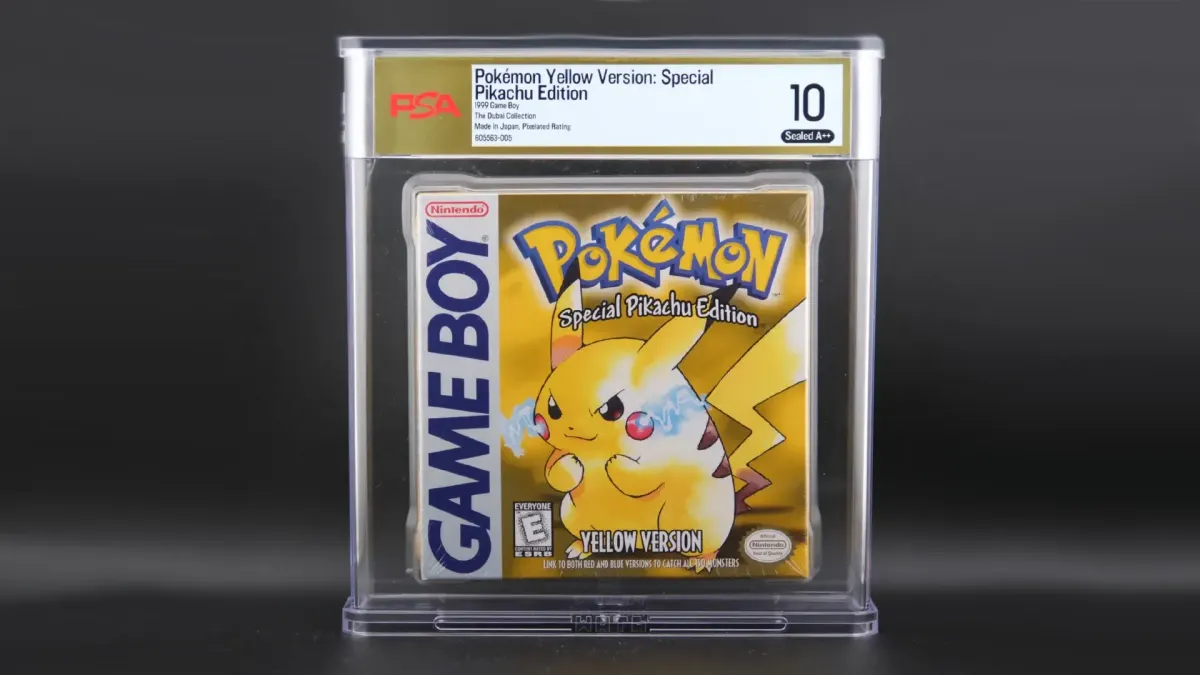
The evaluation results stunned even seasoned industry experts:
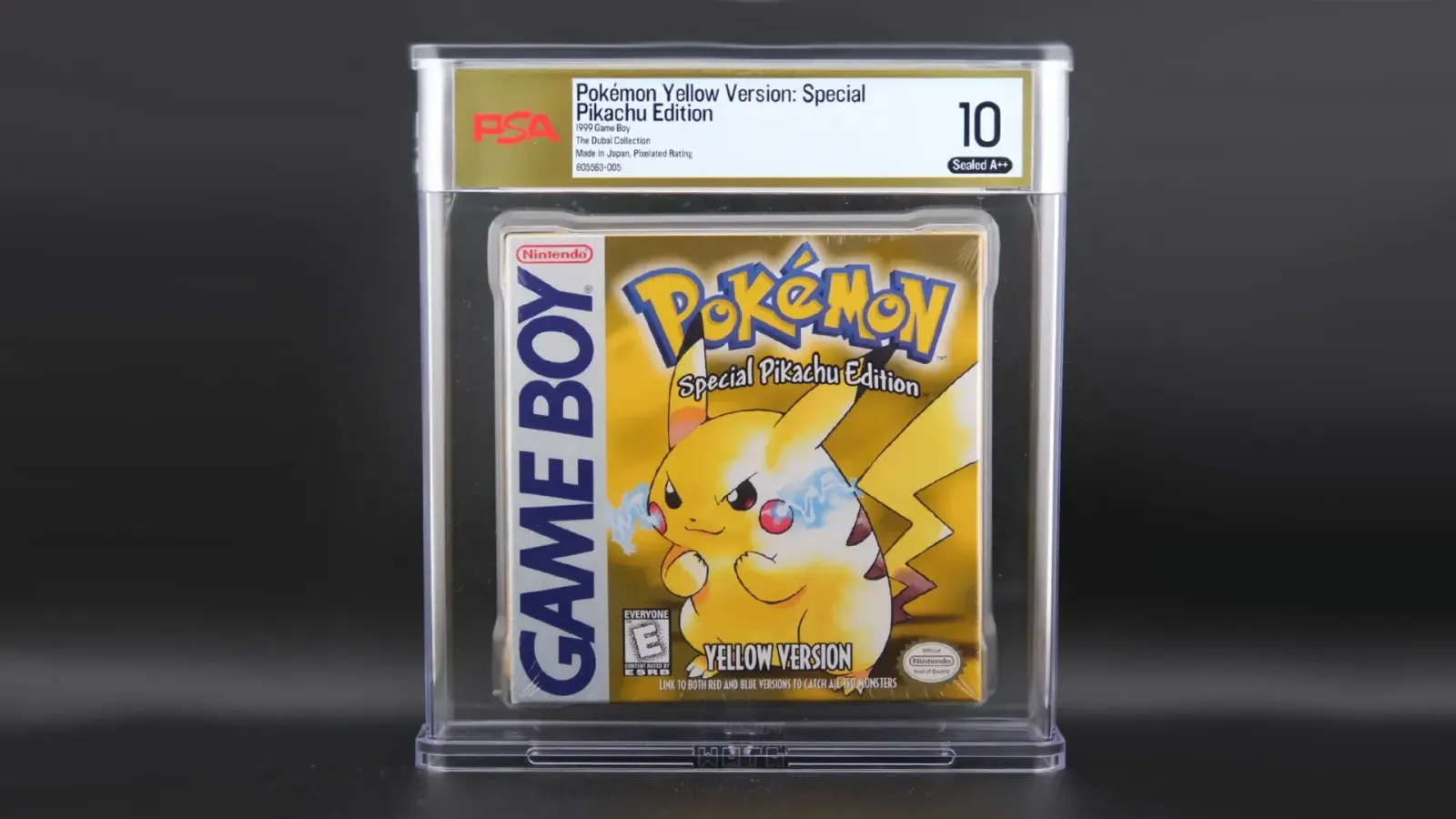
- Pokémon Yellow: Special Pikachu Edition achieved a flawless PSA 10 Gem Mint score, accompanied by a coveted "Sealed A++" box rating.
- Pokémon Red Version matched its sibling with an identical, flawless PSA 10 Gem Mint score and a "Sealed A++" box rating.
- Pokémon Blue Version secured an extraordinary PSA 9.8 Mint score—an almost unheard-of preservation level for a software package over 25 years old.
With these scores locked in, Nostalgix orchestrated a private-treaty sale to an elite buyer, bypassing traditional public auctions to protect the privacy of both parties. When the final contract was executed for $2,000,000, it instantly shattered previous benchmarks for handheld video game sales, cementing its place in pop-culture history.
Supporting Context & Metrics: The Maturation of the Retro Market
To fully grasp the magnitude of a $2,000,000 Pokémon sale, one must examine the broader economic forces shaping the retro gaming landscape. Over the past decade, alternative assets have experienced unprecedented institutional and retail interest, driven by aging generations of collectors with disposable income who wish to repurchase the touchstones of their youth.
The Evolution of Video Game Valuation
Historically, video game sales lagged far behind other collectibles. While a Super Mario Bros. NES cartridge set records at $2 million in 2021, most standard handheld and console titles struggled to break the six-figure barrier. The primary obstacle was market fragmentation: inconsistent grading criteria, historical concerns regarding counterfeit reseals, and a lack of standardized pricing indices.
The introduction of rigorous, trusted authentication protocols has fundamentally altered this dynamic. High-net-worth individuals and alternative investment funds now view rare, sealed video games as tangible assets capable of hedging against inflation.
The Pokémon Economic Engine
Pokémon occupies a unique space in global entertainment. As the highest-grossing media franchise of all time—surpassing behemoths like Mickey Mouse, Star Wars, and Marvel—its foundational software holds unmatched cultural and financial gravity.
| Title | Release Year (NA) | Grade / Rating | Estimated Value Contribution |
|---|---|---|---|
| Pokémon Yellow | 1999 | PSA 10 / Sealed A++ | ~$800,000 – $900,000 |
| Pokémon Red | 1998 | PSA 10 / Sealed A++ | ~$800,000 – $900,000 |
| Pokémon Blue | 1998 | PSA 9.8 | ~$300,000 – $400,000 |
| Total Collection | — | Assembled Set | $2,000,000 |
While Pokémon Trading Card Game (TCG) cards—such as the infamous Illustrator Pikachu or 1st Edition Charizard—have routinely commanded hundreds of thousands of dollars, the sealed video game market was slower to catch up. This $2,000,000 transaction proves that the software that birthed the phenomenon is finally receiving equal, if not superior, financial validation.

Official Statements & Industry Impact
The sale has sent shockwaves through the collecting community, drawing commentary from brokers, institutional analysts, and everyday enthusiasts alike.
The Shift in Grading Hegemony
A critical subtext of this transaction is the involvement of PSA. Following PSA’s official entry into the video game grading arena in 2025, the market has witnessed a rapid transition of power. For years, WATA Games dominated video game grading, but that monopoly was repeatedly marred by controversy, regulatory scrutiny, and allegations of conflicts of interest regarding auction house affiliations.
By utilizing PSA for this multi-million-dollar transaction, Nostalgix has signaled a major vote of confidence in PSA’s methodology and market authority. Industry insiders note that this high-profile sale will likely accelerate the migration of high-end collectors away from legacy grading companies and toward PSA, solidifying its status as the default arbiter of value in the digital asset space.
Nostalgix and Brokerage Perspectives
Speaking on condition of anonymity regarding specific client identifiers, representatives for Nostalgix emphasized the rarity of the offering:
"To find a complete, first-print Kanto trio (Red, Blue, Yellow) in this condition is essentially a once-in-a-lifetime occurrence. The amount of environmental control, luck, and dedication required to preserve cardboard packaging from 1998 in Gem Mint condition defies standard statistical probability. This sale proves that video games are no longer a niche hobby; they are blue-chip alternative assets."
Future Outlook: What Lies Ahead for Retro Collecting?
As the dust settles on this historic transaction, market analysts and collectors are already looking toward the horizon. The success of the Pokémon Game Boy trilogy raises pressing questions about the trajectory of the broader retro gaming market.
Which Franchises Are Next?
While Nintendo’s flagship properties—specifically Super Mario, The Legend of Zelda, and Pokémon—currently dominate the upper tier of the market, the generational shift in collector demographics points toward future expansions.
Millennials and older Gen Z collectors are entering their peak earning years. As these demographics mature, nostalgia cycles naturally expand into subsequent eras. Industry experts predict that early 2000s juggernauts could soon see surging valuations. Franchises such as Yu-Gi-Oh!, Dragon Ball Z, and One Piece tie-in titles, as well as early Sony PlayStation and Microsoft Xbox classics, are prime candidates for future speculative growth.
Ethical Debates and Market Skepticism
Despite the bullish economic indicators, the commercialization of retro video games remains a polarizing topic within gaming culture. A vocal segment of traditional gamers views institutional grading, encapsulation (slabbing), and multi-million-dollar valuations as antithetical to the spirit of gaming. Critics argue that pricing out everyday enthusiasts transforms video games from accessible interactive art into hyper-financialized luxury commodities locked behind acrylic cases, never to be played as intended.
Furthermore, skeptics warn of potential market bubbles. As institutional money and speculative investors enter the space, the risk of market manipulation, artificial price inflation, and volatility increases.
Conclusion
Love it or loathe it, the financialization of retro video games is an irreversible reality. The $2,000,000 sale of these first-print Pokémon cartridges marks a definitive watershed moment. It bridges the gap between childhood nostalgia and high-finance asset management, ensuring that the humble Game Boy cartridges of the late 1990s will forever be remembered not just as masterpieces of game design, but as crown jewels of the modern collecting world.