Breathing New Life into Silicon: How the AI Boom is Turning Discarded Nvidia RTX 2080 Tis Into 22GB Budget Powerhouses
Executive Overview
The relentless, globe-spanning acceleration of artificial intelligence development has triggered an insatiable hunger for compute power. In this high-stakes environment, virtually no matrix math capability—measured in floating-point operations per second (FLOPS)—is considered disposable. As machine learning engineers, hobbyists, and researchers scramble for hardware capable of running sophisticated Large Language Models (LLMs) and diffusion pipelines without breaking the bank, a fascinating cottage industry has emerged.
Older Nvidia graphics cards equipped with native Tensor Cores are being granted a remarkable second lease on life. Rather than ending up in e-waste recycling facilities or gathering dust in closets, vintage consumer GPUs are undergoing sophisticated hardware and firmware modifications to double their video RAM (VRAM) capacity.
Chief among these projects is a daring VRAM modification service for the venerable Nvidia GeForce RTX 2080 Ti. Originally launched in 2018 with a respectable 11GB of GDDR6 memory, this former flagship can now be professionally upgraded to a staggering 22GB of VRAM. For those lacking the soldering skills or hardware to modify their own cards, the secondary market has swiftly adapted. Third-party vendors—such as a prominent Hong Kong-based seller on eBay—are offering pre-modded, blower-style 22GB RTX 2080 Ti graphics cards for a competitive $499.
This development represents a fascinating crossroads of hardware modding, economic necessity, and the unique longevity of Nvidia’s CUDA software ecosystem. By sidestepping the exorbitant costs of enterprise-grade AI accelerators and high-end consumer alternatives like the RTX 3090, budget-conscious AI enthusiasts now have a viable pathway to locally host and run powerful neural networks.
Detailed Chronology: The Evolution of the RTX 2080 Ti VRAM Mod
The Architectural Foundation (2018)
When Nvidia first unveiled its Turing architecture in late 2018, led by the flagship GeForce RTX 2080 Ti, the industry was captivated by real-time ray tracing and the introduction of dedicated Tensor Cores. These specialized hardware blocks were designed specifically to accelerate matrix multiplications—the fundamental mathematical backbone of deep learning.
Equipped with 11GB of GDDR6 memory running across a 352-bit bus, the stock RTX 2080 Ti offered a formidable memory bandwidth of 616 GB/s. For years, it reigned supreme as the ultimate consumer gaming card. However, as gaming demands evolved and the generative AI boom exploded, its 11GB VRAM pool became a significant bottleneck for running modern, parameter-heavy LLMs locally.
The Modding Breakthrough
The transition from a gaming relic to an AI asset began when hardware technicians realized that the underlying printed circuit board (PCB) design of the RTX 2080 Ti possessed traces and capabilities capable of supporting higher-density memory modules.
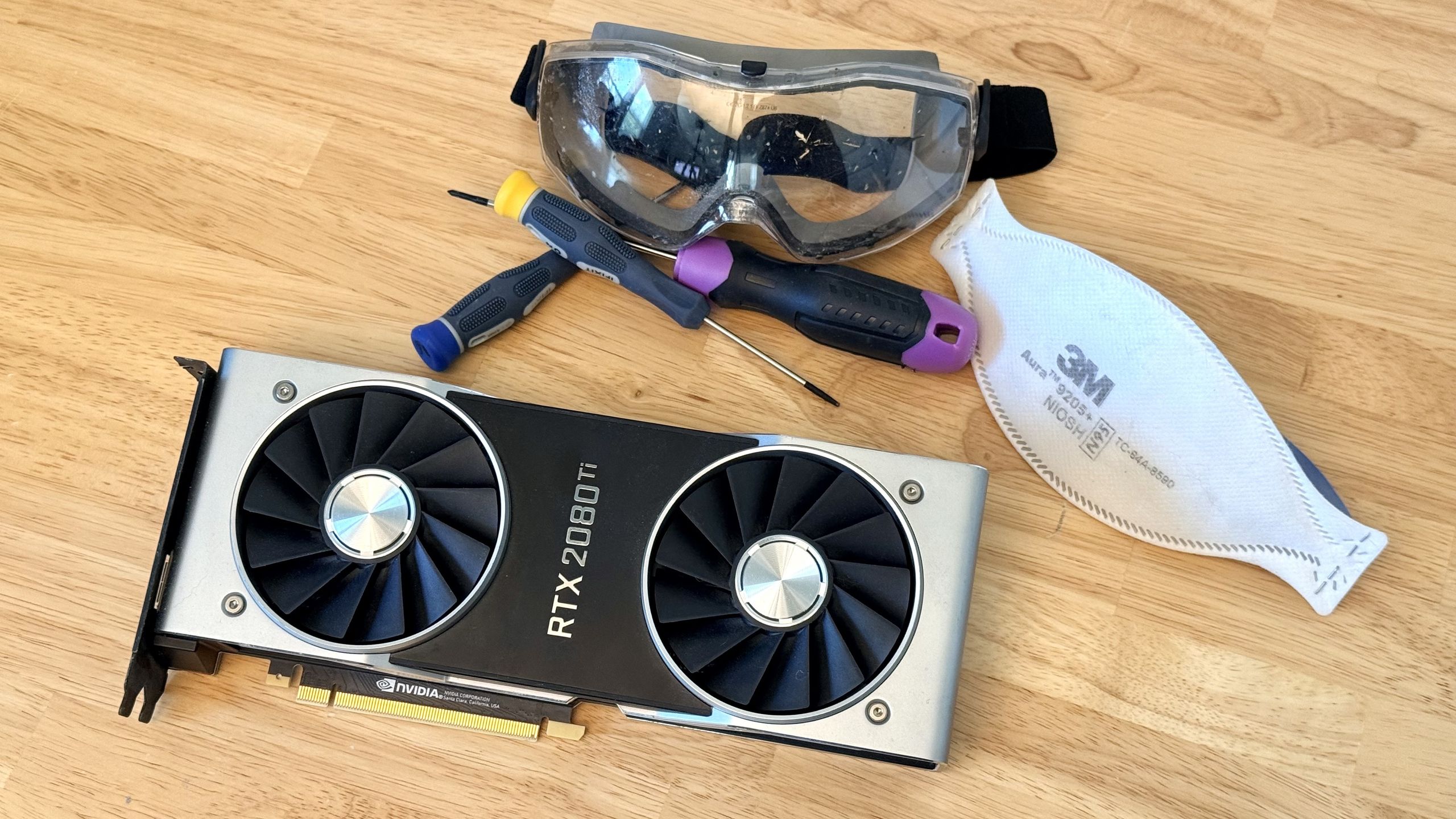
Pioneered by skilled repair shops and hardware modders, the upgrade process is far from simple. It requires physically removing the stock memory chips, replacing them with higher-density modules (doubling the capacity from 1GB per chip to 2GB per chip), and manually adjusting the strap resistors on the PCB. These physical hardware adjustments alter how the GPU communicates with its memory subsystem, allowing it to interface correctly with a custom BIOS that recognizes the expanded 22GB memory pool.
Commercialization on the Secondary Market
As proof-of-concept videos circulated within enthusiast communities like Reddit and specialized hardware forums, commercial services materialized. Independent technicians began offering mail-in upgrade services for existing card owners.
Shortly thereafter, pre-modified units began appearing on global marketplaces. A Hong Kong-based vendor captured the attention of the tech community by listing pre-modded "Turbo" (blower-style) RTX 2080 Ti cards boasting 22GB of VRAM for $499. Despite the inherent risks of buying from third-party overseas vendors—highlighted by a solid yet imperfect lifetime seller feedback rating of 99.6%—buyer adoption has been robust. At least 38 documented transactions show positive user reports confirming that the cards arrive functioning precisely as advertised, complete with GPU-Z screenshots verifying the full 22,528 MB of accessible memory.
Supporting Context & Metrics: Market Dynamics and Competitive Landscape
To understand why a modified eight-year-old GPU commands a $499 price tag, one must examine the current pricing structure of the used AI hardware market. VRAM capacity is the single most critical hardware constraint when running localized artificial intelligence workloads. If a model cannot fit entirely within the GPU’s VRAM, inference speeds drop precipitously as the system is forced to offload computations to system RAM via the relatively slow PCIe bus.
Comparative Market Pricing for High-VRAM GPUs
| GPU Model | Stock VRAM | Memory Bandwidth | Current Secondary Market Price | AI Suitability |
|---|---|---|---|---|
| Nvidia RTX 2080 Ti (Modded) | 22 GB GDDR6 | 616 GB/s | ~$499 | Excellent for mid-sized LLMs & basic diffusion |
| Nvidia Titan RTX | 24 GB GDDR6 | 672 GB/s | ~$800 | High capacity, legacy Turing architecture |
| Nvidia Quadro RTX 6000 | 24 GB GDDR6 | 672 GB/s | ~$900 | Professional workstation stability, high price |
| Nvidia RTX 3090 | 24 GB GDDR6X | 936 GB/s | ~$1,200 | The gold standard for local AI enthusiasts |
As illustrated above, acquiring a true 24GB consumer card like the RTX 3090 requires a financial commitment exceeding $1,000. Even older professional and enthusiast cards, such as the Titan RTX and Quadro RTX 6000, command premium prices between $800 and $900 simply because their expansive VRAM pools are indispensable for modern machine learning tasks.
In this context, a $500 investment for 22GB of VRAM represents an exceptional price-to-capacity ratio. While the raw compute throughput and reduced-precision data type support of the Turing architecture lag behind newer Ampere, Hopper, or Ada Lovelace generation cards, the sheer volume of memory bridges the gap for hobbyists experimenting with weights, fine-tuning, and inference tasks.
The Software Ecosystem Advantage: Why Nvidia Reigns Supreme
Hardware specifications tell only half the story. The primary reason older Nvidia cards remain intensely sought after lies in the software ecosystem—specifically, CUDA.
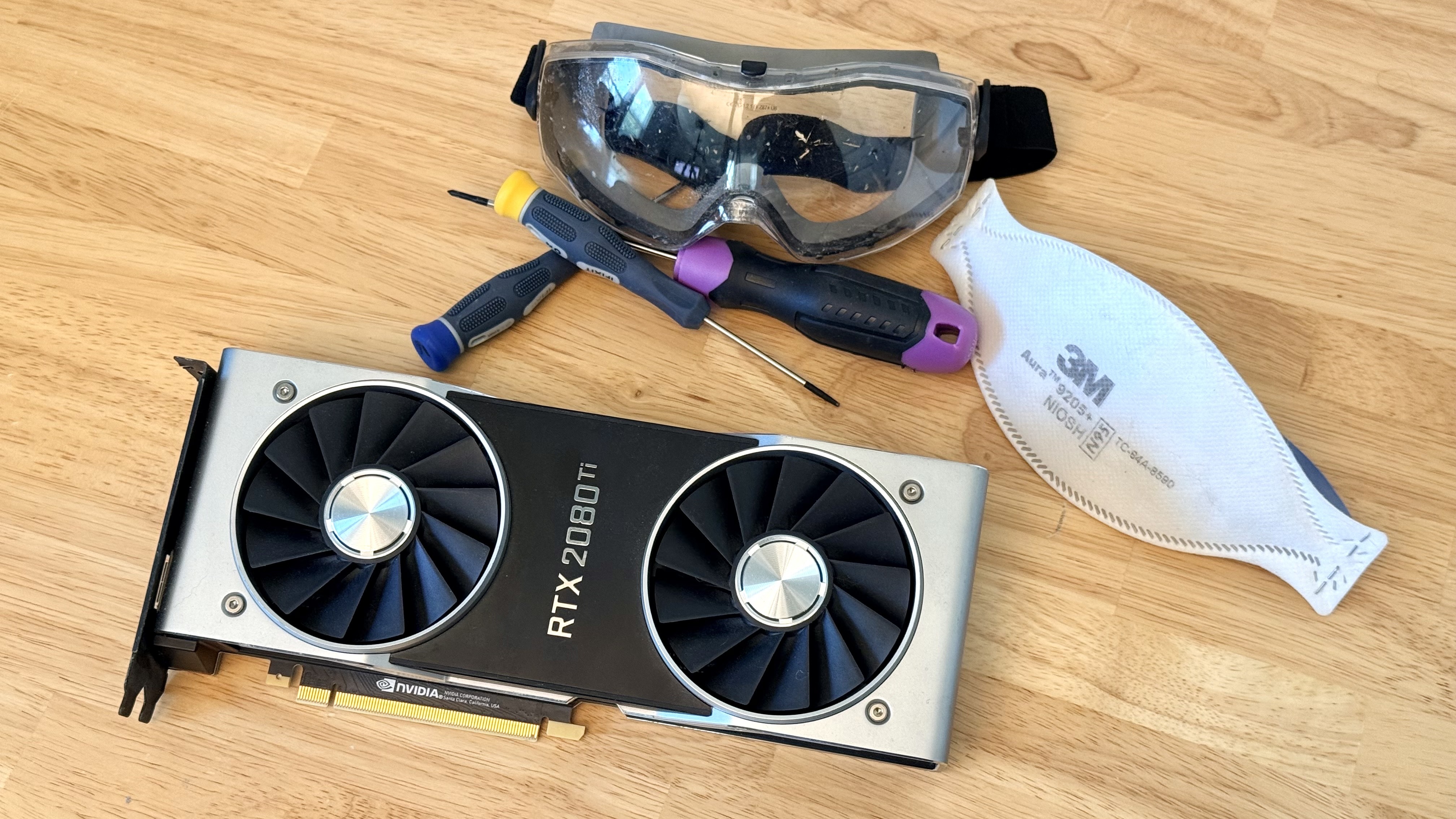
Nvidia introduced Tensor Cores into both its consumer and enterprise architectures back in 2018. Over the intervening years, the company has cultivated an ironclad monopoly on machine learning software infrastructure. Virtually all major deep learning frameworks—including PyTorch, TensorFlow, TensorRT, and countless open-source LLM inference engines like llama.cpp and Ollama—are optimized natively for CUDA.
Competitors have historically struggled to achieve software parity:
- AMD: While Advanced Micro Devices has integrated matrix math accelerators into its IP arsenal since the CDNA 1 architecture in 2020, these capabilities were strictly cordoned off within expensive Instinct data center products. It was not until the arrival of RDNA 4 architecture that consumer-grade AMD cards gained robust matrix acceleration matching modern demands, and the software ecosystem (ROCm) continues to play catch-up with CUDA in consumer adoption.
- Intel: Intel introduced its XMX matrix engines with the Alchemist architecture in late 2022. However, Arc graphics products have faced persistent driver optimization hurdles and a smaller market share, limiting their traction among independent AI developers.
- Apple: Apple Silicon relies on unified memory architectures with integrated Neural Accelerators, which excel in macOS-specific environments but lack seamless integration with the massive repositories of Windows- and Linux-based CUDA workflows.
Consequently, buying a modified RTX 2080 Ti does not just grant raw hardware capacity; it buys instant, friction-free admission into the world’s most robust and well-documented developer ecosystem.
Future Outlook: The Sustainability of Hardware Modification
The emergence of commercial VRAM modification services highlights a broader, sustainable trend within the technology sector. As electronic waste mounts globally and semiconductor manufacturing costs soar due to advanced node transitions, squeezing every ounce of utility out of existing silicon is becoming both an environmental and economic imperative.
Looking forward, we can expect several developments to stem from this phenomenon:
- Expansion of Modding Services: As the pool of aging, high-end GPUs grows, independent electronics laboratories will likely scale up services for other architectures, potentially modifying cards from the RTX 30-series or even competing vendor lines where PCB traces permit.
- Standardization of Custom BIOS: The barrier to entry for custom memory mods has traditionally been firmware development. As independent modders document and share stable BIOS files for memory-density expansions, DIY kits containing replacement chips and flashing tools may become commercially available directly to consumers.
- Pressure on the Secondary Market: While modified cards carry inherent risks—such as a lack of manufacturer warranties and potential long-term stability concerns stemming from non-standard PCB modifications—their very existence places a natural ceiling on inflated used-GPU prices.
Ultimately, the transformation of a 2018-era gaming GPU into a 22GB AI powerhouse stands as a testament to engineering ingenuity. For budget-constrained developers and artificial intelligence enthusiasts, the message is clear: innovation is not solely driven by buying the newest hardware, but by creatively unlocking the untapped potential of what is already here.