VITURE Expands Personal Computing and Gaming Horizons with the Launch of the VITURE Pro 2 AR Glasses and Mobile Dock Mini
Executive Overview
In the rapidly evolving landscape of augmented reality (AR) and personal wearable computing, consumer expectations have shifted away from bulky, tethered head-mounted displays toward sleek, everyday-use form factors. Addressing this demand head-on, VITURE has officially announced the global release of its flagship AR glasses, the VITURE Pro 2, alongside a streamlined, highly anticipated companion accessory: the Mobile Dock Mini.
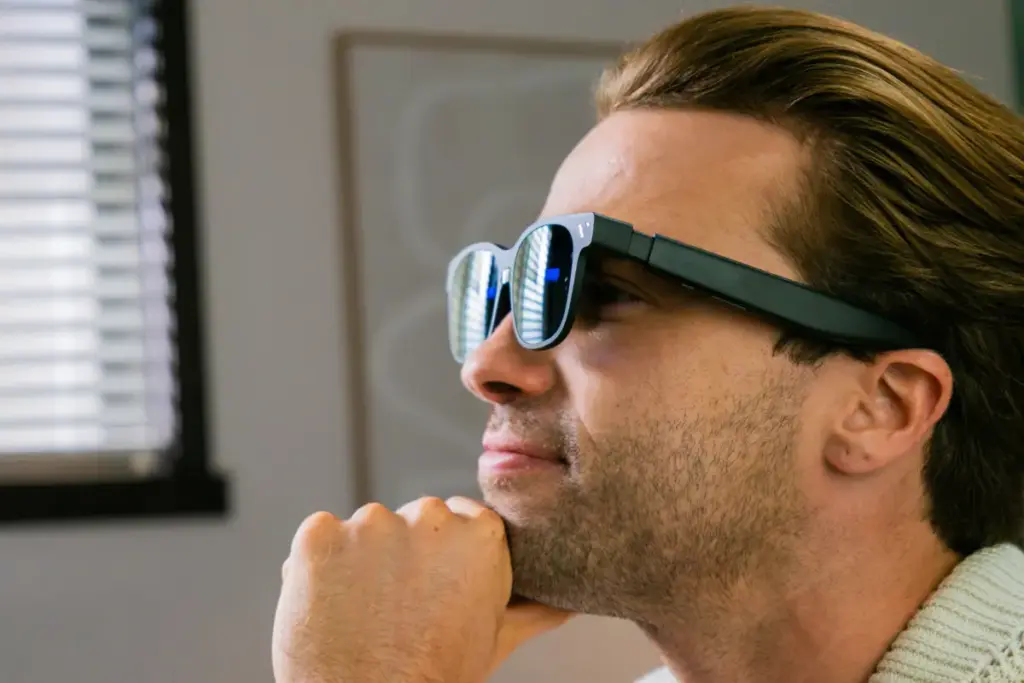
Priced competitively at $300 for the glasses and $100 for the dock, this hardware drop marks a significant milestone for the brand as it celebrates its five-year anniversary. The VITURE Pro 2 arrives as the company’s thinnest, lightest, and most optically refined eyewear to date. Weighing in at a featherlight 63 grams, the Pro 2 sheds considerable bulk compared to its 2024 predecessor, trimming its physical footprint by 16% and reducing its weight by 20%. Underneath the refined chassis lie upgraded Sony micro-OLED panels pushing a staggering 1,600 nits of perceived brightness, complemented by the proprietary "UltraClarity 3.0" optical engine designed to eliminate edge distortion and blur.
Simultaneously, the introduction of the Mobile Dock Mini addresses the ecosystem hurdles of mobile AR gaming and productivity. Shrinking its overall volume by 34% and shedding 30% of its weight compared to older iterations, the pocket-sized hub acts as an extended battery, USB-C multi-port interface, and a uniquely modular magnetic attachment designed to seamlessly integrate with next-generation hardware ecosystems, including the unreleased Nintendo Switch 2.
This comprehensive launch signals VITURE’s maturing hardware philosophy: instead of chasing isolated, ultra-futuristic mixed-reality spaceships, the company continues to double down on private, high-fidelity virtual monitors designed for traditional gaming consoles, handhelds, laptops, and smartphones.

Detailed Chronology
The Evolution of VITURE’s Ecosystem
- 2021–2023 (Foundational Era): VITURE enters the consumer technology market with an emphasis on "entertainment-first" AR wearables. By utilizing birdbath optics and partnering with major display suppliers, the company carves out a niche among digital nomads, remote workers, and Nintendo Switch owners looking for a private, giant-screen experience on the go.
- 2024 (The Pro Milestone): The launch of the original VITURE Pro sets a new benchmark for diopter-adjustable AR glasses. Boasting high refresh rates and a robust color gamut, it solidifies VITURE’s design language. However, consumer feedback notes room for improvement regarding weight distribution, edge-to-edge sharpness during rapid eye movement, and the physical footprint of external power docks.
- August 2026 (The Pro 2 & Mobile Dock Mini Debut): Celebrating its fifth anniversary, VITURE unveils the VITURE Pro 2 alongside the Mobile Dock Mini. The company completely re-tunes its optical stack, introduces UltraClarity 3.0, achieves a sub-65g chassis weight, and designs a flexible magnetic mounting mechanism ("Hug Mode") specifically tailored for modern mobile gaming powerhouses like the Nintendo Switch 2.
Engineering the Hardware: From Concept to Consumer
The path toward the VITURE Pro 2 involved a rigorous multi-year R&D cycle focused entirely on mitigating the ergonomic fatigue and optical anomalies inherent to birdbath AR optics. Early wearable displays often suffered from "swimming" artifacts—a visual distortion where text or graphics warp as the user’s pupils shift away from the exact center of the lenses.
By re-architecting the internal optical path, VITURE’s engineering teams managed to neutralize field curvature and stabilize geometry across a wide diopter correction range (0 to -5.00D). The result is a device that bypasses the need for external prescription inserts for millions of users, allowing individuals with myopia to dial in precise optical corrections directly on the device using independent per-eye adjustment wheels.
Concurrently, the development of the Mobile Dock Mini reflected a shift toward minimalist modularity. Recognizing that bulky battery banks discourage true on-the-go usage, industrial designers shrank the internal capacity slightly to 10,000 mAh (down from the 13,000 mAh of the original Pro Dock) while radically optimizing circuit board layouts, casing materials, and heat dissipation protocols to achieve a pocketable profile.
Supporting Context & Metrics
To fully appreciate the architectural leaps made in the VITURE Pro 2 and Mobile Dock Mini, it is necessary to examine the hard technical specifications and comparative metrics driving this hardware iteration.

VITURE Pro 2 Technical Specifications
- Display Panels: Dual Sony micro-OLED displays.
- Resolution: 1,920 x 1,080 pixels per eye (Full HD stereoscopic projection).
- Refresh Rate: 120Hz, ensuring buttery-smooth motion reproduction for high-framerate PC and console gaming.
- Perceived Brightness: Up to 1,600 nits (a dramatic 60% increase over the original VITURE Pro’s 1,000 nits, enabling clear visibility even in brightly lit environments).
- Field of View (FOV): Expanded to 50 degrees diagonally (up from 46 degrees).
- Form Factor & Weight: 63 grams; 16% thinner and 20% lighter than its predecessor.
- Diopter Correction: Built-in independent dual-eye adjustment rings covering 0 to -5.00D.
- Ergonomics: Ships with three distinct nose-pad sizes providing seven unique adjustment configurations to fit varied facial structures.
- Price: $300 (available via VITURE and Amazon, including a complimentary physical lens shade for blackout immersion).
UltraClarity 3.0 Optical Metrics
VITURE’s proprietary optical tuning framework addresses four critical pain points in consumer AR optics:
- Field Curvature Suppression: Eliminates the tendency for flat virtual screens to bow outward at the edges.
- Edge-to-Edge Sharpness: Ensures text remains crisp not just in the sweet spot of the center, but across the entire 50-degree FOV.
- Geometric Distortion Control: Keeps straight lines uniform and parallel, regardless of where the user adjusts their prescription diopter dials.
- Off-Axis Stability: Prevents the "swimming" or warping effect when a user’s eyes wander dynamically across the virtual canvas.
Mobile Dock Mini Technical Specifications
- Battery Capacity: 10,000 mAh lithium-ion cell (optimized for multi-device power delivery).
- Physical Reductions: 34% smaller in overall volume and 30% lighter than the legacy Viture Pro Mobile Dock.
- Operational Modes:
- Hug Mode: Utilizes an integrated magnetic mounting system to lock flush against the rear of compatible hardware (such as the Nintendo Switch 2) to function as a unified, cable-managed portable gaming rig.
- Solo Mode: Functions as an independent, pocket-sized USB-C hub and power bank capable of driving phones, tablets, handhelds, and AR glasses simultaneously.
- Price: $100 (available for pre-order).
Official Statements & Industry Positioning
In promotional briefs and official product reveals, VITURE executives emphasized that the Pro 2 is not a generational leap into untethered mixed reality, but rather a masterclass in relentless refinement.
"Sharpness holds not just at the center but into every corner," VITURE noted in technical documentation detailing the UltraClarity 3.0 rollout. "Horizontal and vertical resolve equally. Straight lines stay straight at any prescription. And the image stays put wherever the eyes wander, instead of swimming as the pupil moves off-axis."
Industry analysts have noted that VITURE’s pragmatic approach sets it apart from competitors chasing expensive, heavy standalone spatial computers (like Apple’s Vision Pro or Meta’s Quest line). By focusing exclusively on what it terms "private display technology," VITURE sidesteps the immense thermal, battery weight, and processing cost burdens of standalone chipsets.

However, tech journalists have also pointed out the physical and functional trade-offs inherent to this design philosophy:
- Wired Tethering: The VITURE Pro 2 requires a physical USB-C cable running from the left temple tip (right behind the ear) to the host device or power dock. It is not a standalone computer; it has no onboard operating system, internal processor, or battery.
- Absence of 6DOF Spatial Tracking: The glasses lack onboard camera sensors capable of Six Degrees of Freedom (6DOF) tracking. Consequently, users cannot "pin" a virtual monitor to a static point in the physical room (such as floating a screen above a desk while walking away). Instead, the virtual display is anchored directly to the user’s field of view, floating stably in front of them wherever they turn their head—acting essentially as a massive, invisible ultra-wide monitor that travels everywhere with the wearer.
Future Outlook
The launch of the VITURE Pro 2 and Mobile Dock Mini paints a clear picture of where near-term wearable tech is heading: deep integration with existing ecosystems rather than forced displacement of them.
As mobile gaming hardware advances—exemplified by the upcoming ecosystem support for the Nintendo Switch 2 and the relentless performance gains of mobile chipsets and handheld PCs like the Steam Deck—consumers increasingly demand lightweight, private, high-nit displays that can match or exceed the visual fidelity of physical desktop monitors. By upgrading its optical stack to 1,600 nits and eradicating edge distortion, VITURE has positioned the Pro 2 as a premier accessory for digital productivity on airplanes, coffee shops, and home offices alike.
Looking ahead, the primary hurdles for this product category will revolve around pushing form factors even closer to traditional fashion eyewear, reducing cable dependency through advanced low-latency wireless video transmission standards, and gradually integrating lightweight spatial positioning without sacrificing the featherlight 63g weight profile that makes the Pro 2 so comfortable to wear for hours on end. For now, at $300 for the glasses and $100 for the dock, VITURE has established an exceptionally high price-to-performance ratio that will undoubtedly pressure competitors in the consumer AR space to elevate their optical engineering standards.