Unveiling the Microscopic Wonder: A Deep Dive into Hidden Tiny Verse on iOS

Executive Overview
For generations, the nostalgic charm of intricately illustrated hidden object books—typified by the iconic Where’s Wally? (known as Where’s Waldo? in North America)—has captivated audiences of all ages. These physical pages invited readers to lose themselves in sprawling, densely populated panoramas, spending hours tracing bustling crowds, bizarre architectures, and whimsical scenarios. However, the transition of this beloved genre to digital platforms has often met with mixed results. Many mobile adaptations lean toward excessive simplification, relying on oversized items, heavy-handed hint systems, and minimalist artwork that strips away the very essence of discovery.
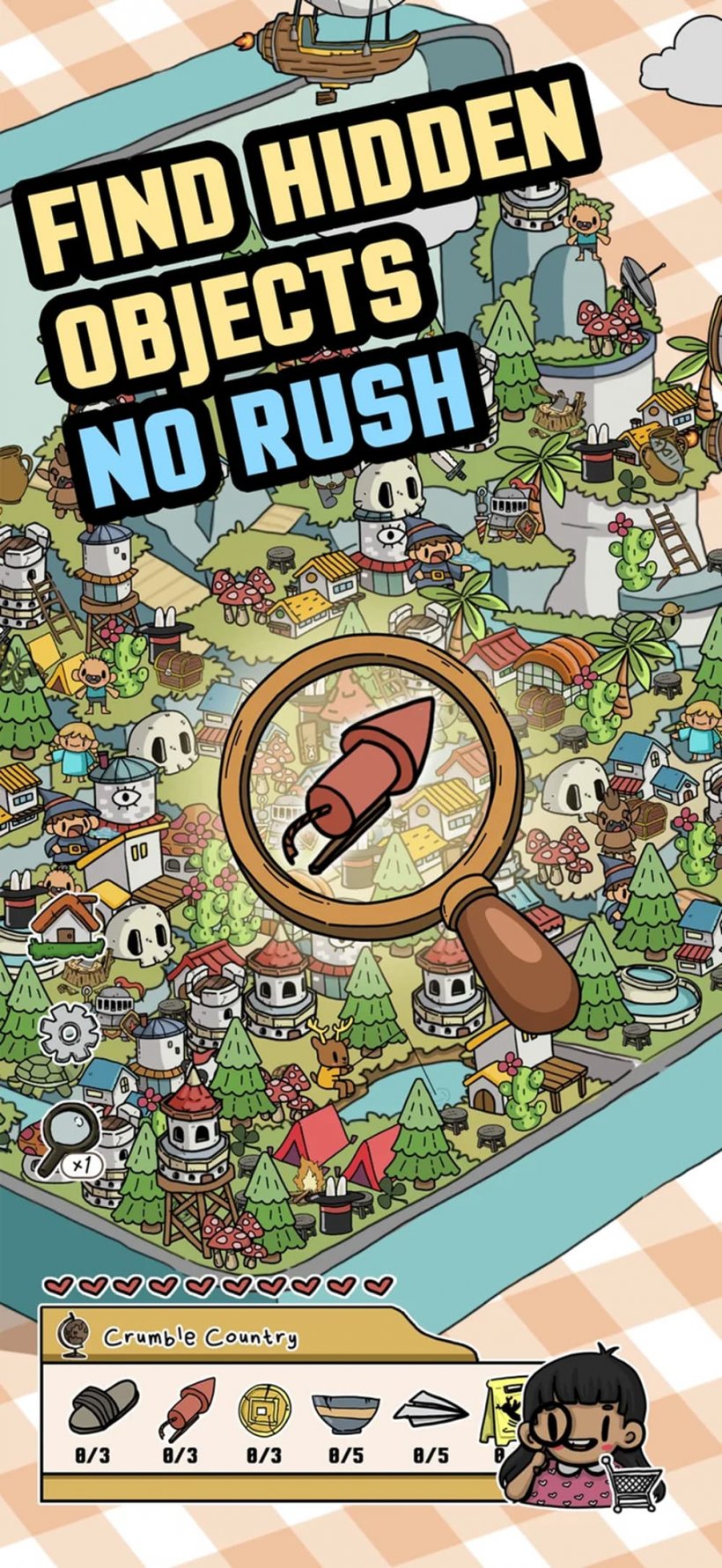
Enter Hidden Tiny Verse, a meticulously crafted, hand-drawn hidden object puzzle game developed by Jacob Israel Salazar. Launched globally for iOS devices, this title represents a deliberate and artistic corrective to the dumbing-down of the genre. Building upon the foundational design philosophy of Salazar’s previous critical success, Hidden Around the World, Hidden Tiny Verse transports players into a series of astonishing, self-contained micro-worlds. From bustling harbors nestled inside delicate teacups to entire wintery communities thriving within pristine glass snowglobes, the game redefines what mobile puzzle enthusiasts should expect from isometric, hand-illustrated design.
Available completely free-to-play—with optional monetization restricted to ad removal and extra hints—Hidden Tiny Verse merges classic book-style aesthetics with modern touch-screen mechanics. Players must use intuitive pinch-to-zoom and pan gestures to navigate vast, interconnected ecosystems. More than just a simple game of spot-the-difference, Salazar and his development team have engineered continuous, fluid illustrations where objects blend organically into their environments, challenging even the most seasoned puzzle veterans. This comprehensive report explores the genesis, mechanical depth, artistic philosophy, and broader market impact of Hidden Tiny Verse as it makes its triumphant debut on the iOS App Store.
Detailed Chronology: From Concept to App Store Release
The journey of Hidden Tiny Verse from a conceptual sketchpad idea to a polished iOS release reflects an evolving independent games industry that increasingly values tactile, slow-paced interactive art over frantic action loops.

The Conceptual Foundation and Spiritual Predecessor
The roots of Hidden Tiny Verse can be traced directly to the development and reception of Jacob Israel Salazar’s earlier project, Hidden Around the World. That title established Salazar’s signature aesthetic: sprawling, hand-drawn landscapes devoid of digital sterile edges, prioritizing organic textures and whimsical world-building. While Hidden Around the World focused on broad geographical expanses, Salazar and his team recognized an opportunity to take the scale down to the microscopic level while simultaneously scaling up the density and intricacy of the artwork.
During the pre-production phase of Hidden Tiny Verse, the core design team sought to answer a fundamental question: How do you translate the tactile, page-turning wonder of a physical puzzle book onto a flat glass mobile screen without losing the sense of scale? The answer lay in isometric perspective and hyper-detailed continuous illustrations. Unlike grid-based hidden object games that populate sterile environments with random, context-free assets, every single object, character, and creature within Hidden Tiny Verse was designed to serve a narrative purpose within its respective micro-ecosystem.
The iOS Development and Optimization Cycle
Developing hand-drawn assets for mobile devices presents a unique technical hurdle. High-resolution vector and raster artwork must be optimized to render smoothly across a vast array of iOS hardware configurations—from the latest iPad Pro displays down to legacy iPhone models—without causing stutter during rapid zooming and panning.
Throughout its development cycle, Salazar’s studio focused heavily on touch-responsiveness. The pinch-and-pan mechanics underwent rigorous user testing to ensure that navigating a village housed inside a snowglobe felt natural, fluid, and precise. The developers purposely avoided artificial barriers or hard time limits, opting instead for a meditative pacing that encourages players to study every brushstroke.

Launch and Monetization Strategy
Upon its official release on the iOS App Store, Hidden Tiny Verse adopted an accessible free-to-play distribution model designed to lower the barrier to entry while respecting player agency. Eschewing aggressive energy meters or pay-to-win mechanics, the game is entirely playable from start to finish without mandatory financial outlays. Monetization is handled through transparent, player-friendly microtransactions: users can opt to watch ads or make a nominal purchase to remove advertisements permanently and acquire additional hint packs for particularly stubborn puzzles.
Supporting Context & Metrics: The Evolution of the Hidden Object Genre
To fully appreciate the significance of Hidden Tiny Verse, one must examine the broader historical trajectory of the hidden object puzzle genre within digital gaming.
The Shift from Print to Digital
In the late 20th century, puzzle books reigned supreme. Titles like Martin Handford’s Where’s Wally? and Walter Wick and Jean Marzollo’s I Spy trained generations of children to parse visual noise. When personal computers and early mobile devices gained traction, developers rushed to digitize these experiences. However, early digital adaptations frequently suffered from technical limitations. Low-resolution screens forced developers to enlarge assets, rendering the puzzles trivial. Furthermore, many PC-era hidden object games devolved into "hidden object-adventure hybrids" cluttered with confusing inventory puzzles and disjointed horror narratives.
+-------------------------------------------------------------------------+
|                  Evolution of Hidden Object Puzzles                     |
+-------------------------------------------------------------------------+
| Era              | Primary Focus          | Core Mechanical Flaw        |
+------------------+------------------------+-----------------------------+
| Print (1980s-90s)| Macro-scale crowds     | Limited replayability       |
| Early PC/Mobile  | Item lists & narrative | Oversized assets / clutter  |
| Modern Indie     | Micro-worlds & art     | Niche market appeal         |
| (Hidden Tiny     |                        |                             |
|  Verse)          |                        |                             |
+-------------------------------------------------------------------------+
The Renaissance of Analog Aesthetics in Mobile Gaming
In recent years, independent developers have spearheaded a renaissance of tactile, art-forward mobile titles. Games like Hidden Folks demonstrated that minimalist, interactive hand-drawn worlds could achieve massive critical and commercial success on iOS. Hidden Tiny Verse builds directly upon this philosophical lineage, elevating the complexity by introducing self-contained micro-ecosystems (such as teacups and snowglobes) that demand exhaustive visual interrogation.
Market Metrics and Accessibility
- Platform Availability: Exclusive initial rollout on iOS via the App Store.
- Pricing Model: Free-to-play with optional ad-removal and hint-pack microtransactions.
- Target Audience: Ranging from nostalgic adults who grew up with 90s puzzle books to younger demographics seeking mindful, non-violent mobile engagement.
- Artistic Scope: Continuous isometric hand-drawn illustrations featuring complex, interlocking environments.
Official Statements and Design Philosophy
The creative philosophy driving Hidden Tiny Verse centers on intentional pacing and artistic integrity. In discussions surrounding the game’s design, developer Jacob Israel Salazar has repeatedly emphasized the importance of depth over superficial challenge.
"We didn’t want to create a game where players could simply breeze through by identifying what obviously doesn’t belong," Salazar noted during early previews of the game’s mechanics. "Every single element in these miniature worlds has a reason to be there. The challenge comes from truly understanding the environment, studying the intricate details, and appreciating the continuity of the artwork."
This commitment to continuous illustration marks a sharp departure from traditional hidden object templates, where items are digitally layered onto background plates after the fact. In Hidden Tiny Verse, foreground and background elements bleed into one another naturally. A tiny ladder resting against a miniature cottage is not merely a floating asset to be checked off a list; it is integrated into the structural shadows and micro-narratives of the villagers inhabiting that space.
Industry critics and early reviewers have lauded this approach. Iwan Morris of Pocket Gamer highlighted the game’s ability to recapture genuine childhood wonder, writing:

"If you’re looking for something that really evokes the sense of wonder and intrigue these books allowed, then Hidden Tiny Verse may be what you’re looking for… It’s not usually that we see these kinds of intricate illustrations being used, and Hidden Tiny Verse’s imaginative worlds are sure to offer a challenge for even experienced puzzle players."
Future Outlook: What Lies Ahead for Hidden Tiny Verse?
As Hidden Tiny Verse establishes its footprint on iOS, the gaming community is already looking toward the future of the franchise. The modular nature of the game’s design—structured around isolated, highly detailed dioramas like teacup harbors and snowglobe villages—lends itself exceptionally well to post-launch content expansion.
Potential Expansion and Platform Porting
Given the critical acclaim and positive early reception among iOS users, industry analysts anticipate several logical growth vectors for the
- Content Updates: Introduction of new themed micro-worlds (such as clockwork mechanisms, terrariums, or antique book bindings) via seasonal updates or downloadable content packs.
- Cross-Platform Migration: While the game currently shines on iOS touchscreens, the intuitive pinch-and-pan mechanics translate perfectly to Android devices, tablets, and even desktop platforms via mouse input.
- Accessibility Enhancements: Continued refinement of zoom boundaries and color-blindness assist modes to ensure that the microscopic density of the artwork remains accessible to players with varying visual needs.
The Long-Term Impact on Indie Puzzle Design
- Hidden Tiny Verse arrives at a time when mobile gamers are increasingly vocal about fatigue regarding hyper-monetized, ad-heavy casual titles. By offering an ad-optional, beautifully illustrated, and genuinely challenging puzzle experience rooted in traditional book-style wonder, Salazar’s work serves as a blueprint for how independent developers can honor nostalgic source material while innovating within modern mobile ecosystems.
As players continue to pinch, pan, and peer into the infinitesimal corners of its teacups and snowglobes, Hidden Tiny Verse cements its status as a mandatory download for anyone seeking a meditative, visually breathtaking escape on iOS. Whether you are a veteran puzzle solver looking to test your observational mettle or an admirer of fine hand-drawn art, this miniature universe is well worth exploring.