Beyond Frames Sells Publishing Rights for Combat Waffle’s VR Lineup in $1 Million Deal as Industry Turmoil Persists
Executive Overview
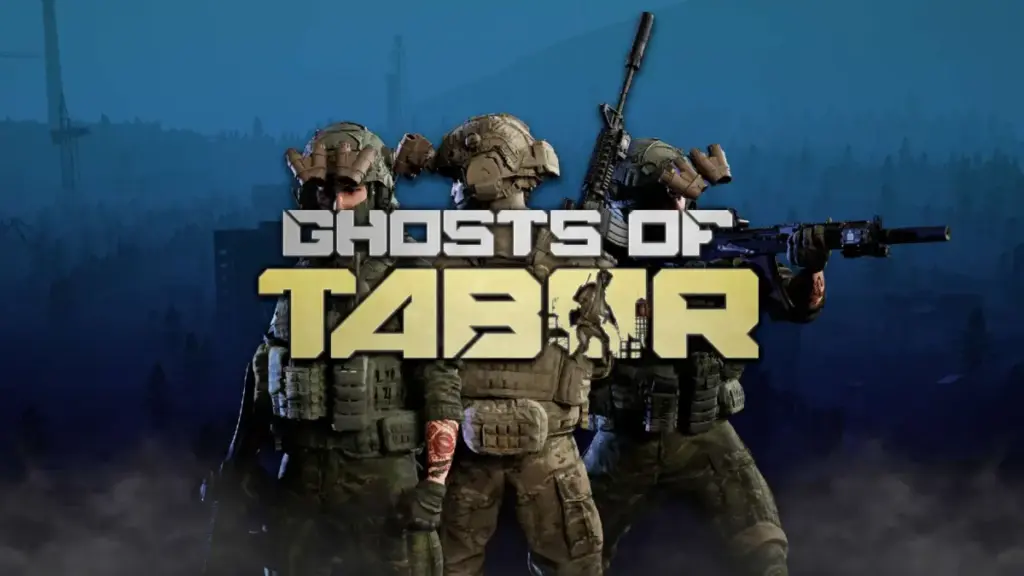
In a strategic shift that underscores the volatile economics of the modern virtual reality market, VR publisher Beyond Frames Entertainment has offloaded its publishing rights for three major titles developed by Combat Waffle Studios. The transaction, valued at $1 million, transfers the publishing portfolio for the breakout extraction shooter Ghosts of Tabor (2024), alongside upcoming survival titles Silent North (2025) and GRIM (2025), to an as-yet-unnamed buyer.
While Beyond Frames frames the divestment as a liquidity-boosting maneuver designed to pivot toward higher-margin opportunities, the move sends ripples through the independent VR development community. Combat Waffle Studios CEO Scott Albright responded with a pointed cautionary statement regarding publisher-developer alignment, highlighting the deepening structural challenges facing mid-sized studios. This transaction arrives on the heels of a turbulent year for Combat Waffle, which implemented internal restructuring and layoffs earlier in 2026 following the abrupt cancellation of an unannounced project with a major platform partner—widely believed to be Meta.
For an industry grappling with a broader contraction in venture capital and first-party funding, the Beyond Frames-Combat Waffle separation offers a revealing case study in how publishers and developers are navigating diminishing margins, shifting platform priorities, and the race for near-term financial survival.
Detailed Chronology: The Unraveling of a Partnership
The seeds of this multi-title divestment were sown over several years of rapid, high-stakes development within the burgeoning VR ecosystem. Combat Waffle Studios initially positioned itself as a premier developer of hardcore, survival-oriented multiplayer experiences, partnering with Beyond Frames Entertainment to bring ambitious concepts to mainstream standalone and PC VR headsets.
The Rise of Ghosts of Tabor and Expanding Pipelines
Ghosts of Tabor, heavily inspired by heavyweights of the PC extraction shooter genre like Escape from Tarkov and DayZ, proved to be an unexpected commercial juggernaut. Released to immense fan demand, the title quickly eclipsed internal expectations, pulling in massive player counts and paving the way for expanded multi-platform rollouts, including a highly anticipated PlayStation VR2 (PSVR 2) launch slated for 2025.
Buoyed by this success, Combat Waffle and Beyond Frames expanded their collaborative pipeline. They greenlit two additional survival-focused multiplayer games: Silent North, leaning further into the cooperative zombie survival space, and GRIM, a multiplayer survival sandbox heavily inspired by titles like Rust. These games were slated to anchor Beyond Frames’ publishing portfolio through 2025 and beyond.
The 2026 Turning Point: Layoffs and Platform Pullbacks
The market landscape shifted dramatically in mid-2026. In June of that year, Combat Waffle announced a round of structural layoffs. The studio explicitly cited the need to "align the company with the current state of the VR industry"—a euphemism for a sudden tightening of budgets across the board.
Industry analysts quickly traced the root cause of these layoffs to the cancellation of a high-profile game development contract backed by a "major platform partner." While confidentiality clauses prevented studios from naming names, the prevailing consensus pointed to Meta. Amid internal restructuring at Reality Labs and a company-wide retreat from indiscriminate third-party VR funding, Meta reportedly axed numerous external projects. This left dependent development studios scrambling to cover fixed overhead costs.
The $1 Million Divestment Announcement
Against this backdrop of financial tightening, Beyond Frames announced it was selling its entire publishing stake in the three Combat Waffle titles for a total cash consideration of $1 million. According to regulatory disclosures and a press statement first surfaced by UploadVR, the purchasing entity has not been publicly disclosed—a legal omission permitted under European Union corporate reporting standards.
The terms of the sale stipulate that the $1 million purchase price will be paid out in structured annual installments running through the first quarter of 2029. Notably, Beyond Frames noted in its financial disclosures that this total sales figure “matches the expected net revenues through 2028” and “exceeds the internally forecasted net revenues for the remainder of 2026.” In simpler terms, neither publisher projected that the three games combined would clear $1 million in net revenue (after platform commissions, taxes, and operational overhead) until at least 2028.
Supporting Context & Metrics: Analyzing the Valuation and Portfolio Performance
To understand why a publisher would willingly part ways with the publishing rights to Ghosts of Tabor—a game that has undeniably generated tens of millions of dollars in gross revenue—one must examine the nuanced difference between gross player spend and publisher net revenue, as well as the disparity in performance across Combat Waffle’s catalog.
Revenue Breakdown: Gross vs. Net Realities
Prior to its PSVR 2 launch, Ghosts of Tabor had already crossed a staggering milestone, generating more than $30 million in gross revenue. On paper, a game pulling in tens of millions looks like a goldmine. However, the VR publishing and development ecosystem is fraught with steep financial deductions:
- Platform Commissions: Stores like the Meta Quest Store, Steam, and the PlayStation Store take a standard 30% cut of digital sales.
- Co-Development & Revenue Splits: Publishing agreements often dictate tiered distribution percentages, meaning the publisher only captures a fraction of the remaining revenue after recouping initial marketing and development advances.
- Long-term Maintenance Costs: Live-service extraction shooters require constant server upkeep, anti-cheat integration, and community moderation, all of which eat into net margins.
When Beyond Frames notes that the $1 million buyout matches expected net revenues through 2028, it highlights the long-tail decay curve typical of VR titles. Once the initial hype wave and launch-window adoption settle down, daily active user numbers stabilize, resulting in a much flatter, lower-yielding revenue tail.
Disparity Across the Catalog
While Ghosts of Tabor is an undisputed heavy hitter boasting over 29,000 user reviews on the Meta Quest platform alone, its sibling titles have struggled to achieve comparable traction. Both Silent North and GRIM entered their respective development cycles with high ambitions, but neither has managed to cross the milestone of 1,000 user reviews on primary storefronts.
This stark performance gap explains why Beyond Frames chose to exit the arrangement entirely. By trading a slow-burning, lower-margin revenue tail across a mixed portfolio for a guaranteed $1 million cash injection paid out over several years, the publisher improves its immediate liquidity profile. This capital can be redeployed into newer, unannounced projects with potentially higher percentage margins.
The Content Controversy: Ghosts of Tabor Legacy Edition
Compounding the commercial shifts surrounding the franchise, community sentiment has proven volatile. On August 1st, Combat Waffle took the unusual step of self-publishing a "Legacy Edition" of Ghosts of Tabor on Quest and SteamVR.
This version essentially rolled back the game’s state to an earlier era, stripping away a number of post-2024 content updates and mechanic overhauls. Over the years, various gameplay tweaks had drawn sharp ire from core community purists who preferred the earlier, raw iteration of the extraction shooter. By bowing to community pressure and launching a legacy fork, the studio demonstrated an acute awareness of its player base, even as it navigated turbulent corporate waters behind the scenes.
Official Statements and Industry Reactions
The rupture of a publisher-developer relationship rarely occurs without friction, and the public commentary surrounding the Beyond Frames-Combat Waffle separation reflects underlying tensions regarding trust, vision, and corporate strategy.
Beyond Frames’ Corporate Justification
From the publisher’s perspective, the transaction is a textbook exercise in portfolio management and capital reallocation. In its official statements, Beyond Frames emphasized that the deal optimizes its balance sheet:
"The overall impact is a stronger cash position near-term, allowing Beyond Frames to invest in new projects."
Expanding on this, Beyond Frames CEO Ace St. Germain noted that the divestment is fundamentally forward-looking:
"This sale allows us to take advantage of new, stronger-margin opportunities with promising future upside."
For a publicly traded or investor-backed entity, securing guaranteed cash flow while shedding long-term operational exposure to a volatile live-service pipeline is a logical, if cautious, financial maneuver.
Combat Waffle’s Cautionary Stance
Conversely, Combat Waffle CEO Scott Albright utilized a widely circulated LinkedIn post to issue a sobering message to the broader independent game development community. Rather than celebrating a clean break or an administrative transition, Albright focused on the intangible value of true partnership:
"Yesterday, Beyond Frames announced the sale of the publishing rights for Ghosts of Tabor, Silent North, and GRIM. We’ll have much more to share soon, but I wanted to say one thing today. Over the last few years, I’ve learned that a publishing agreement is about far more than what’s written on paper. You can have a good contract. But what really matters is having a partner whose goals, communication, and vision align with your own. That’s something every independent studio should think carefully about before signing any deal."
Albright’s remarks highlight a chronic pain point in the games industry: the divergence of interests between financial publishers—who must answer to shareholders and prioritize liquidity or near-term margins—and creative developers, who live and die by the long-term health, community goodwill, and artistic integrity of their game worlds.
Future Outlook: What Lies Ahead for Combat Waffle and VR Publishing?
The $1 million buyout of Ghosts of Tabor, Silent North, and GRIM serves as a bellwether for the maturation and consolidation phase of the virtual reality industry. As hardware adoption plateaus in certain consumer demographics and first-party giants like Meta pull back on blank-check funding for third-party studios, the financial architecture of VR development is undergoing a painful forced evolution.
1. The Rise of Self-Publishing and Lean Operations
For Combat Waffle Studios, the immediate future will likely involve a heavier reliance on self-publishing and leaner operational structures. Having already executed layoffs to weather the cancellation of its undisclosed major-partner project, the studio must now rely on the enduring, organic popularity of Ghosts of Tabor—and the performance of its legacy editions—to fund future endeavors.
2. A Shift in Publisher Strategy
Beyond Frames’ exit from these specific titles points to a broader trend among mid-tier VR publishers: a flight to agility. Publishers are increasingly unwilling to tie up capital in long-tail live-service titles unless the margins are exceptionally high. Instead, they are pivoting toward rapid-turnout projects, mixed-reality applications, or enterprise solutions that offer more predictable return-on-investment timelines.
3. Lessons for Indie Developers
Scott Albright’s warning will likely resonate across the indie development sector for years to come. As venture capital dries up, independent studios will face increasing pressure to sign whatever funding deals they can find to survive. However, as this $1 million transition demonstrates, entering into a publishing agreement without deeply aligned long-term visions can leave a studio structurally vulnerable when market conditions inevitably turn sour.
As both companies prepare to reveal more details regarding the identity of the new publisher and the subsequent roadmap for Ghosts of Tabor, Silent North, and GRIM, the transaction will undoubtedly be studied closely by industry insiders as a defining moment in the modern economics of virtual reality game development.