The Path Ahead: CD Projekt Red Targets 2028 Release for The Witcher 4 Amid Massive Studio Scaling and Surprise DLC Reveals
Executive Overview
The horizon of modern role-playing games is shifting once more, and at the epicentre of this evolution is CD Projekt Red. In a major development update that has sent ripples through the gaming community, the Polish developer has officially zeroed in on a 2028 release target for The Witcher 4, currently operating under its working title Project Polaris.
Described by joint-CEO Michał Nowakowski as the studio’s "biggest, boldest, and most ambitious game to date," the upcoming title serves as the tentpole for an entirely fresh saga within the beloved dark fantasy universe. While a 2028 window establishes a tangible destination on the roadmap, leadership has been careful to contextualize the timeline as a target rather than a carved-in-stone guarantee, asking fans to exercise patience as the massive development apparatus scales up.
Simultaneously, CD Projekt Red is bridging the gap between generations with an unexpected, heavyweight expansion for 2015’s masterwork, The Witcher 3: Wild Hunt. Titled Songs of the Past, this surprise DLC is slated for a major showcase at Gamescom, boasting a team size rivalling—and potentially exceeding—the original development crew of The Witcher 3. With over 500 developers currently dedicated to The Witcher 4 alone, alongside a parallel crew working on the expansion and other unannounced studio surprises, CD Projekt Red is entering one of the most prolific and resource-intensive periods in its corporate history.
Detailed Chronology: From Cyberpunk 2077 Redemption to Project Polaris
To understand the weight and strategic necessity of CD Projekt Red’s 2028 target for The Witcher 4, one must trace the studio’s developmental trajectory over the past half-decade.
1. The Post-Cyberpunk Pivot (2020–2022)
Following the turbulent, highly publicized launch of Cyberpunk 2077 in December 2020, CD Projekt Red underwent a profound structural and philosophical transformation. The fallout from the game’s technical shortcomings forced executive leadership to re-evaluate internal pipelines, quality assurance methodologies, and communication strategies.
By late 2022, as the studio successfully rehabilitated Cyberpunk 2077 through systematic updates and began paving the way for its critically acclaimed expansion, Phantom Liberty, management pulled back the curtain on its long-term future. During a sweeping strategy update in October 2022, CD Projekt Red formally announced Project Polaris—the ignition point of a brand-new Witcher trilogy.
2. Unreal Engine 5 Transition and Pre-Production (2023–2024)
One of the most consequential strategic shifts announced during this period was the studio’s departure from its proprietary REDengine in favor of Epic Games’ Unreal Engine 5. Moving to UE5 marked a monumental technological pivot, requiring extensive staff retraining, workflow overhauls, and close technical collaboration with Epic Games engineers.
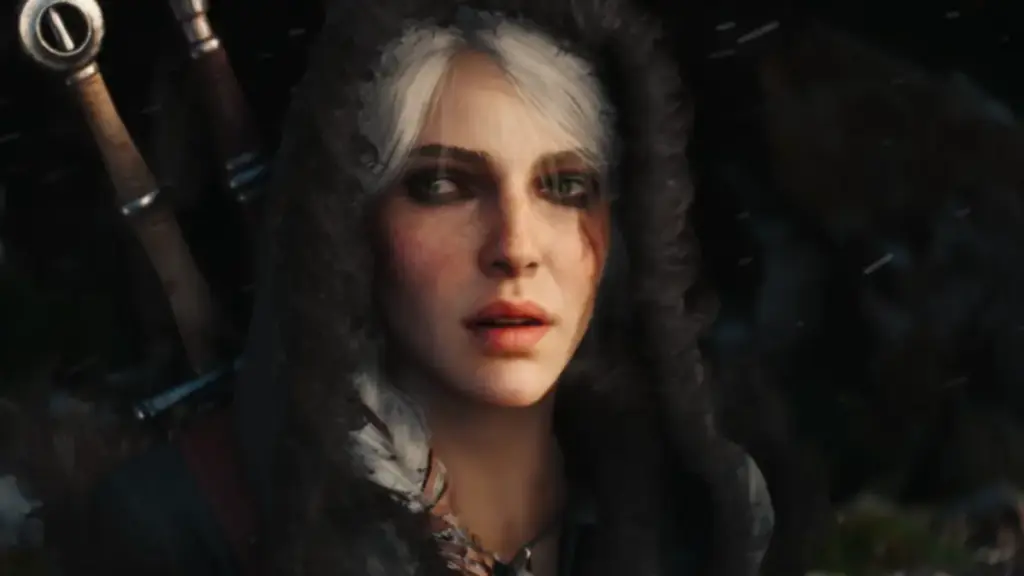
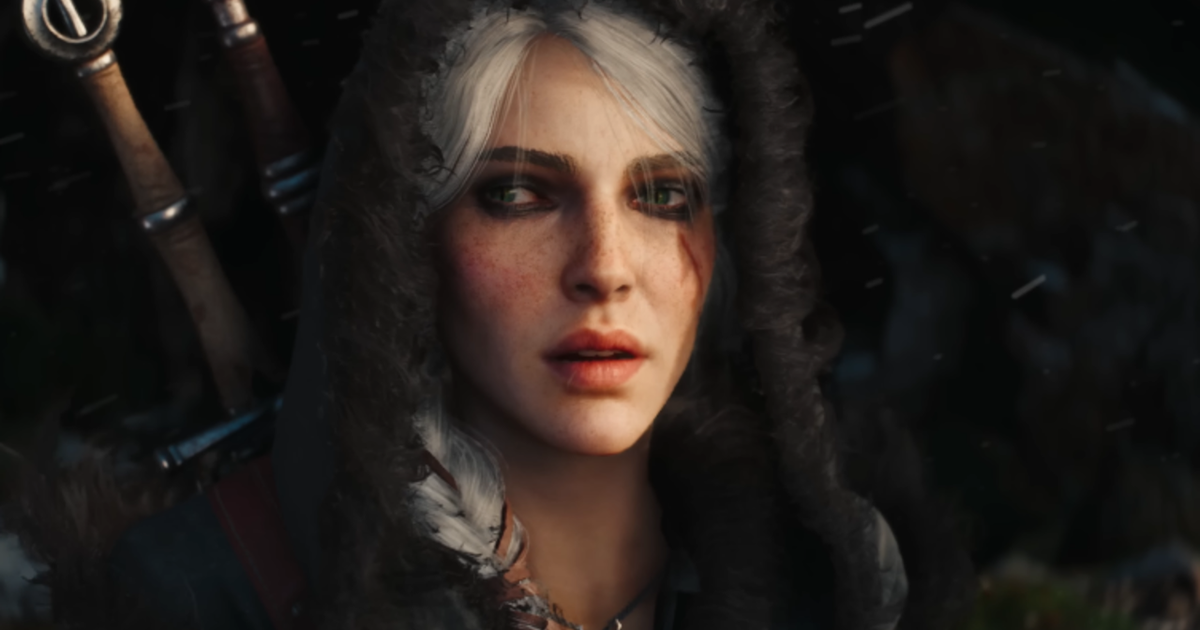
Throughout 2023, Project Polaris transitioned from a conceptual framework into active pre-production. By the end of 2024, the game had successfully crossed crucial internal development milestones, culminating in a cinematic teaser trailer unveiled at The Game Awards 2024, which confirmed that Ciri would step into the starring role for this new era.
3. Scaling Up and the 2028 Target (2025 and Beyond)
Entering 2025, CD Projekt Red has aggressively ramped up production capacity. The core development team has swelled past the 500-developer mark, supplemented by strategic high-profile external hires—including cinematic animators from critically acclaimed titles like Clair Obscur: Expedition 33.
Now, with the latest executive update pinpointing 2028, the studio has given both investors and consumers a definitive window into its multi-year production cycle. However, industry veterans note that a three-to-four-year horizon for a project of this magnitude leaves ample room for iteration, polish, and necessary schedule flexibility.
Supporting Context & Metrics: Inside CD Projekt Red’s Development Engine
The scale of CD Projekt Red’s current operations cannot be overstated. As the gaming industry grapples with ballooning budgets, escalating development times, and widespread studio layoffs, CD Projekt Red is charting a course of aggressive, calculated expansion.
Workforce Dynamics and Studio Distribution
- The Witcher 4 Team Size: Over 500 internal developers are currently assigned to Project Polaris, making it the largest single development team in the company’s history. This eclipses the peak staffing levels seen during the development of both The Witcher 3: Wild Hunt and Cyberpunk 2077.
- Global Talent Acquisition: In a bid to maintain world-class visual fidelity and cinematic storytelling, CD Projekt Red has cast a wide net across the international games industry, recruiting top-tier talent from across Europe and North America. Recent onboardings include elite animators and narrative designers renowned for work on atmospheric, story-driven indie and AAA projects.
- Dual-Project Bandwidth: Uniquely, the studio is not putting all its eggs in one basket. Alongside the massive Witcher 4 contingent, a separate, equally formidable task force—matching the manpower of The Witcher 3‘s original development team—is hard at work on the Songs of the Past expansion.
Technological Architecture: Unreal Engine 5
The decision to adopt Unreal Engine 5 is perhaps the single most important technical decision in CD Projekt Red’s modern history. REDengine, while capable of producing the stunning vistas of The Witcher 3 and the dense verticality of Night City in Cyberpunk 2077, proved notoriously difficult to maintain and update.

By leveraging Unreal Engine 5’s cutting-edge toolsets—such as Nanite for virtualized geometry and Lumen for fully dynamic global illumination—CD Projekt Red aims to construct an open world that marries breathtaking graphical fidelity with systemic complexity. For The Witcher 4, this technological foundation is designed to eliminate loading screens, deliver hyper-realistic environmental physics, and support reactive AI systems that respond dynamically to player choices.
Official Statements: "Let the Team Cook"
During a recent investor briefing and community update, joint-CEO Michał Nowakowski offered candid insights into the philosophy driving the studio forward. Recognizing the immense hunger of the fanbase, Nowakowski balanced transparency with a plea for patience.
"This is our biggest, boldest, and most ambitious game to date," Nowakowski stated, emphasizing the sheer scale of Project Polaris. "I know it’s a bit of a wait, and you’d love to play it sooner—but let the team cook. It will be worth the wait."
Addressing the narrative direction of the new saga, Nowakowski reaffirmed that the studio is committed to honoring the legacy of Andrzej Sapkowski’s literary universe while forging entirely new narrative paths. While the mantle is passing to Ciri—shifting the perspective away from the iconic Geralt of Rivia—the core pillars of the franchise remain untouched.
"We are hard at work on a brand new saga," Nowakowski continued. "Reiterating what we’ve shared previously, the game will feature a massive, immersive open world, intense action-packed gameplay, and a deep, impactful story that respects player agency."
Complementing the Witcher 4 updates, marketing and public relations teams have set the stage for an explosive Gamescom appearance, teasing not only deep dives into the Songs of the Past DLC but also "one or two surprises" guaranteed to capture headlines.

Future Outlook: Bridging the Past and the Future
As the games industry looks ahead to 2028, CD Projekt Red’s dual-pronged strategy offers a fascinating blueprint for sustaining a storied intellectual property.
Unpacking Songs of the Past
Before players step into Ciri’s boots in The Witcher 4, they will be treated to an unexpected culinary delight: Songs of the Past, a massive expansion for The Witcher 3: Wild Hunt. Star-billing Geralt of Rivia once more, this expansion represents a fascinating narrative bridge.
Because details regarding its placement on the timeline remain tightly under wraps, speculation is running wild within the community. Does Songs of the Past take place in the interim between the base game and its previous expansions, or does it explore untold exploits from Geralt’s decades-long career prior to the events of the Northern Wars? Furthermore, given Ciri’s impending prominence in the franchise, narrative theorists are eager to see if the DLC drops subtle narrative breadcrumbs or direct foreshadowing leading straight into Project Polaris.
The Road to 2028
With a concrete 2028 target now established, CD Projekt Red faces the delicate task of maintaining public momentum over a multi-year development cycle without succumbing to premature hype fatigue. By interspersing major milestones—such as the upcoming Gamescom deep dive into Songs of the Past and episodic updates on Project Polaris—the studio is orchestrating a masterclass in modern games marketing.
For millions of fans worldwide, the path of the witcher is far from over. Whether revisiting the windswept plains of Velen through Geralt’s eyes in the upcoming expansion or preparing to explore an entirely uncharted continent under Ciri’s guidance in 2028, the future of dark fantasy gaming rests safely in the hands of a studio that has learned hard lessons and emerged stronger, bolder, and more ambitious than ever before.