Executive Overview
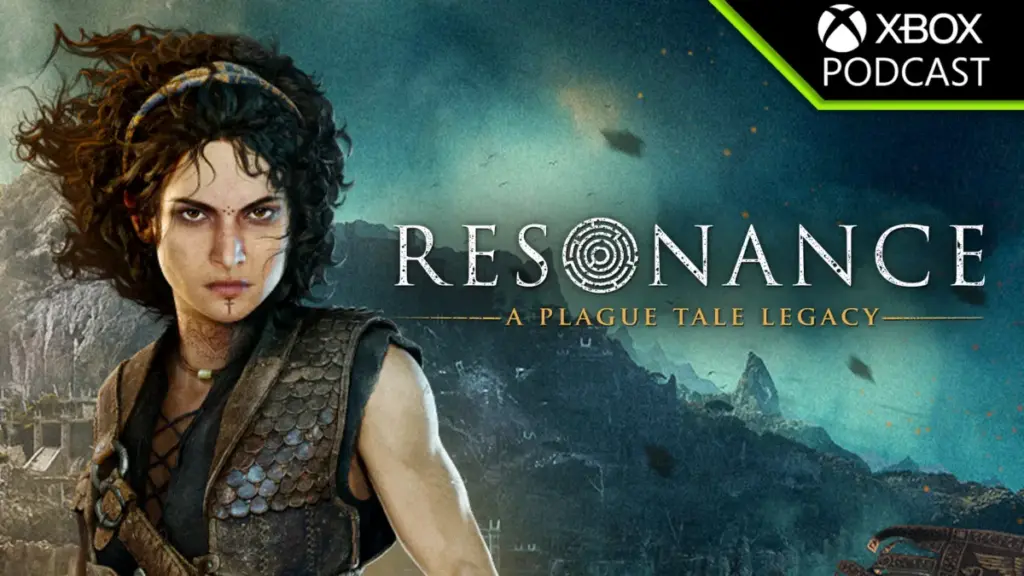
The A Plague Tale franchise has long been synonymous with visceral dread, quiet desperation, and the oppressive, medieval mud of 14th-century France. However, with the upcoming release of Resonance: A Plague Tale Legacy, developer Asobo Studio is pivoting away from its survival-horror stealth roots to deliver a fast-paced, action-heavy prequel.
Scheduled for release on August 27, 2025, for Xbox Series X/S, Xbox on PC, and day-one availability on Xbox Game Pass, Resonance introduces a radical departure for the series. Following the emotional conclusion of 2022’s A Plague Tale: Requiem, the Bordeaux-based development team chose to sideline siblings Amicia and Hugo de Rune in favor of Sophia, the cunning seafaring smuggler who aided them in their quest.
This installment trades the claustrophobic alleys of medieval French towns and the eternal, swarming tides of plague-bearing rats for the sun-drenched, myth-laden shores of the Mediterranean and Venice. Complete with a newly minted, high-stakes combat system heavily inspired by titles like Ghost of Tsushima, Resonance aims to challenge both players and developers alike. In a recent episode of the Official Xbox Podcast, Lead Producer Eric Chort sat down with host Jeff Rubenstein to discuss the creative evolution of the franchise, the incorporation of ancient Greek mythology, and why aggressive offense is the key to survival in this new era of the series.
Detailed Chronology
The Aftermath of Requiem and the Birth of a New Direction
When Asobo Studio wrapped up production on A Plague Tale: Requiem in 2022, the development team was emotionally and physically exhausted. Crafting the harrowing journey of Amicia and Hugo required seven to eight years of continuous storytelling, culminating in an emotionally devastating finale.
Yet, despite the definitive close of the de Rune siblings’ arc, the studio’s passion for the Plague Tale universe remained undiminished. The primary dilemma facing the team was twofold: how to continue the franchise without its core protagonists, and how to challenge themselves mechanically.
During Requiem, Amicia evolved into a capable stealth operative, but her physical limitations and the narrative context of protecting a young child prevented Asobo from implementing full-scale melee combat. When the team evaluated potential protagonists for a more dynamic, action-oriented spin-off, Sophia emerged as an immediate, logical choice. Her established background as a resourceful, hardened smuggler provided a clean slate for a faster, more aggressive gameplay loop, setting the wheels in motion for Resonance.
Unveiling the Myth: The Xbox Games Showcase 2025
The gaming community received its first major look at Resonance: A Plague Tale Legacy during the Xbox Games Showcase 2025. The reveal trailer immediately captured attention through its striking visual motifs: labyrinthine corridors, a glowing rope, and the ominous presence of a Minotaur.
Tapping directly into ancient Greek mythology, the developers drew parallels between classical tales—such as Theseus navigating the Labyrinth with the help of Ariadne’s golden thread—and the 14th-century historical framework of the franchise. While games like God of War have recently popularized similar mythological sandboxes, Asobo’s approach anchors these myths in historical reality. Just as the studio utilized real-world historical records of the 14th-century Black Death as a foundation for the previous games, Resonance blends real Mediterranean archaeological sites—spanning Roman, Greek, and Egyptian influences—with dark fantasy lore, reinterpreting ancient legends through the lens of the Plague Tale universe.
Supporting Context & Metrics
Reinventing the Blade: The Combat System of Resonance
The most seismic shift in Resonance is the complete overhaul of moment-to-moment gameplay. While Innocence and Requiem forced players to hide, run, and meticulously manage limited resources to avoid direct conflict, Resonance embraces the chaos of full combat.
Asobo Studio built the combat system around three core pillars:
- Responsiveness: Fluid inputs ensure that dodges, parries, and attacks feel instantaneous and exact.
- Agility: Sophia is designed for high-mobility traversal, utilizing dual blades, a grappling hook, distracting throwable bottles, and lethal daggers.
- Asymmetric Risk/Reward: Sophia is physically outmatched by the bulkier enemies populating the early game. Players operate on a tight health pool where a handful of hits will result in death.
Drawing inspiration from acclaimed melee action games like Ghost of Tsushima, Asobo incorporated a mechanical loop that flips traditional defensive strategies on their head. Rather than rewarding passive blocking—which features no stamina depletion but leaves the player vulnerable—the game encourages relentless aggression. Each successful kill restores a block of health to Sophia. Consequently, the more injured a player becomes, the more aggressively they must press the offensive, turning every encounter into a desperate dance of life and death.
Progression and Skill Trees
To further customize this aggressive playstyle, Resonance introduces a comprehensive progression system powered by Resonance points. During playtests, developers and players experimented with various builds, such as a high-risk, high-reward upgrade that grants an invincibility frame during charged critical attacks. This system ensures that no two players approach encounters identically, moving the franchise away from linear puzzle-stealth and into the realm of tactical action-RPG mechanics.
A Study in Contrasts: From Gloom to Sun-Drenched Dread
The visual identity of A Plague Tale has historically relied on oppressive, rain-slicked misery and overwhelming darkness. Resonance turns this aesthetic convention on its head by setting large portions of the game in sun-drenched Mediterranean locales, including the vibrant, shimmering canals of Venice and sunlit Greek islands.
According to Eric Chort, this design choice is rooted in contrast. By placing players in breathtakingly beautiful, luminous environments, the subsequent descent into horror feels all the more jarring. As players push deeper into the heart of the islands and uncover their hidden secrets, the atmosphere steadily darkens, proving that paradise often conceals the deepest horrors.
Official Statements
"When we finished The Requiem, we were like… pretty much exhausted because it was quite a journey for us, not only for the players with all the emotions… but also for us as a team. It was like seven or eight years that we are working on a game with Hugo, with Amicia… So at the end, we were like, okay, it’s a chapter that is closed for us, but we still like Plague. So how do we continue to make a Plague game without Hugo and Amicia?"
— Eric Chort, Lead Producer, Asobo Studio
Discussing the mechanical evolution of the series, Chort elaborated on the introduction of melee combat:
"Amicia was not the good character to use a sword and have melee combat. So definitely with Resonance, it was a good opportunity to make melee combat… We wanted something very reactive. It has to be very smooth when you take it with your controller… Sophia needed to move very fast and very quick, but also because she will face a lot of enemies. So the idea of one against an army was really appealing for us."
Addressing the thematic balance between historical reality and myth, Chort explained:
"For Plague, we use the dark plague that already happened in France… So it’s a base for us. And then we twist it with our own lore. What we did there is use the Greek mythology, which is more fantastic because we still have some historical sites… that exist and that you can visit. But all the other things… are more a myth, a story. We don’t know if it’s real or not. So we use that as a base. And then we twist it with our lore."
Finally, regarding the game’s title, Chort noted the dual meaning of the word:
"The name arrived pretty late in the production. So we already had both significations in mind… On the emotion side, it’s a real resonance because you will discover it in the story. But yeah, with the sound also, there are a lot of things that will happen with the dark part of the island. As I said, when you go really to the heart of the darkness of the island, you will discover that the sound resonance is really important, too."
Future Outlook
As the August 27 release date approaches, Resonance: A Plague Tale Legacy stands as one of the most intriguing upcoming titles on the Xbox ecosystem. By successfully transitioning a narrative-driven stealth franchise into a dynamic action-combat experience, Asobo Studio is demonstrating a rare willingness to reinvent its own intellectual property without losing the atmospheric identity that fans fell in love with.
With its blend of Mediterranean beauty, Greek mythological undertones, and a razor-sharp combat loop that rewards relentless offense, Resonance promises to expand the boundaries of what a Plague Tale game can be. Whether long-time fans will embrace the absence of Amicia and Hugo remains to be seen, but early gameplay footage indicates that Sophia’s standalone journey will deliver a thrilling, emotionally resonant chapter when it arrives on Xbox Series X/S, PC, and Xbox Game Pass later this year.