The Evolution of VR Dungeoneering: Ancient Dungeon Adds Steam Frame Support Amid Growing Hardware Anticipation
Executive Overview
The virtual reality landscape is currently experiencing a quiet yet profound paradigm shift, driven by hardware innovations and the relentless dedication of independent developers. Ancient Dungeon, the critically acclaimed, fast-paced roguelite dungeon crawler developed by EricVR, recently received a significant pre-weekend update. While ostensibly packaged as a routine collection of bug fixes and performance optimizations, the patch introduced a major milestone: formal, direct developer support for Valve’s highly anticipated, yet still unreleased, Steam Frame hardware platform.
Although Ancient Dungeon had previously appeared on Valve’s curated "Great on Frame" compatibility landing page, this latest update marks the transition from passive compatibility to active, optimized developer backing. This move signals a growing trend among early access titles preparing for the next wave of VR hardware integration.
Simultaneously, the "Great on Frame" initiative itself is steadily gaining momentum. Recent telemetry from Steam reveals that the catalog of verified and compatible titles has climbed to 89 games. Despite this steady accumulation of software support, Valve remains tight-lipped regarding an official release date or a definitive retail price point for the hardware, leaving both consumers and developers in a state of eager suspense.
This article explores the technical and strategic implications of Ancient Dungeon’s new update, examines the current mechanics and community reception of the game, analyzes the expanding ecosystem surrounding the Steam Frame, and evaluates what this burgeoning hardware ecosystem means for the future of immersive PC VR gaming.
Detailed Chronology
To fully understand the significance of Ancient Dungeon’s recent integration with Valve’s hardware initiative, it is essential to trace the trajectory of both the game and the platform ecosystem in which it operates.
November 3, 2021: The Inception of Early Access
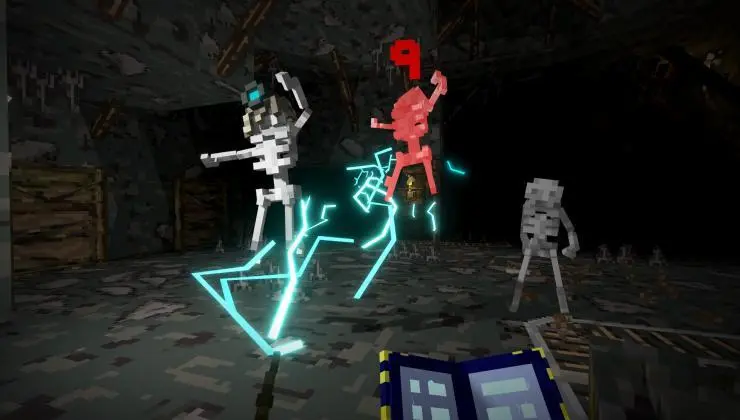
Ancient Dungeon first entered the public consciousness when it launched into Steam Early Access on November 3, 2021. Built from the ground up exclusively for virtual reality, the title immediately captivated players with its distinct visual style—combining retro-inspired voxel graphics with modern, atmospheric lighting and visceral physics-based combat. Unlike many flat-screen ports adapted for VR, Ancient Dungeon was designed around the spatial limitations and interactive potential of head-mounted displays (HMDs).
The Journey Through Early Access: Iteration and Expansion
Over the subsequent years, the development team consistently refined the core gameplay loop. Procedurally generated dungeons ensured high replayability, while tight melee combat, ranged weapon mechanics, and environmental hazards demanded quick reflexes and strategic thinking.
A pivotal moment in the game’s lifecycle arrived with the introduction of optional online co-op support for up to four players. Crucially, the developers implemented cross-platform multiplayer, bridging the gap between SteamVR users and Meta Quest standalone players. This widened the active player base and cemented the title’s status as a cooperative staple in the VR community.
Mid-2023 to Present: The Horizon of Steam Frame
As rumors and datamined leaks surrounding Valve’s next-generation hardware initiatives began to solidify, Valve introduced the "Great on Frame" storefront category. Initially populated by a handful of forward-thinking titles, the list served as a barometer for developers looking to optimize their software for upcoming Valve hardware standards.
Ancient Dungeon was initially spotted on this registry as a passively compatible title. However, the release of the pre-weekend update changed this dynamic entirely. By directly integrating Steam Frame support into their codebase, the developers moved beyond mere compatibility, signaling that the game is actively tuned to leverage the specific architectural advantages of Valve’s forthcoming device.
Supporting Context & Metrics
To contextualize the weight of these developments, one must examine the metrics governing both the game’s current standing and the broader hardware environment.
Ancient Dungeon: Core Metrics and Design Philosophy
- Release Date: November 3, 2021 (Early Access)
- Genre: VR Roguelite Dungeon Crawler / Action RPG
- Multiplayer: Up to 4-player online co-op with full cross-platform support (SteamVR and Meta Quest)
- Visual Style: High-contrast voxel art paired with dynamic, eerie dungeon lighting
- Development Status: Ongoing Early Access refinement
The game’s design philosophy centers on high-intensity physical engagement. Players wield swords, crossbows, and thrown weapons within fully interactive, physics-driven environments. Enemies react dynamically to impacts, and traps require spatial awareness. This reliance on precise tracking and responsive frame rates makes hardware optimization paramount.
The "Great on Frame" Ecosystem Metrics
- Current Verified/Compatible Game Count: 89 titles
- Hardware Status: Unannounced launch window, undisclosed pricing model
- Ecosystem Goals: Establishing forward compatibility, ensuring streamlined input mapping, and optimizing performance scaling for next-generation Valve VR hardware.
With 89 titles now listed on the Great on Frame portal, the software library is growing at a steady, calculated pace. Independent studios are spearheading this adoption, utilizing Early Access phases to test and refine their builds ahead of consumer hardware rollouts. However, the absence of a concrete release date or pricing strategy continues to foster a climate of speculation within the PC gaming community.
Official Statements & Developer Insights
While Valve has maintained a characteristically guarded posture regarding the overarching specifications and commercial rollout of the Steam Frame, statements from independent developers like the team behind Ancient Dungeon shed light on the collaborative nature of this ecosystem transition.
In recent community update logs, the Ancient Dungeon developers emphasized their commitment to hardware agility:
"Our goal has always been to ensure that Ancient Dungeon feels at home wherever players choose to experience it. By integrating direct support for emerging platforms like the Steam Frame, we are ensuring that our community experiences zero friction when new hardware hits the market. Early Access gives us the unique flexibility to adapt alongside Valve’s hardware innovations rather than playing catch-up after launch."
Industry analysts note that this proactive stance is becoming a hallmark of successful VR development. Because VR hardware ecosystems are notoriously fragmented—spanning standalone headsets, PC-tethered units, and hybrid streaming devices—developers who establish early compatibility often secure a distinct advantage in visibility and user retention.
Valve’s curation of the Great on Frame page further underscores this philosophy. By providing clear technical guidelines and developmental frameworks, Valve allows studios to optimize their rendering pipelines, control schemes, and performance overhead well in advance of consumer unboxings.
Future Outlook: What Lies Ahead for VR Dungeoneering and Steam Frame?
The integration of Steam Frame support into Ancient Dungeon is more than a simple patch note; it represents a harbinger of where PC VR is heading. As developers continue to test the boundaries of procedural generation, cross-platform co-op, and next-generation hardware compatibility, several key trajectories emerge.
1. The Maturation of Cross-Platform Co-Op
Ancient Dungeon has proven that deep, physics-based dungeon crawling can successfully bridge the hardware divide between standalone ecosystems (like Meta Quest) and high-end PC platforms. As new hardware standards like the Steam Frame emerge, the expectation for seamless, cross-ecosystem multiplayer will only intensify. Future updates to the game will likely leverage these new hardware capabilities to enhance netcode performance, visual fidelity, and player count scalability.
2. Anticipation and Uncertainty Surrounding Valve’s Hardware
The broader gaming community remains suspended in a state of high anticipation regarding the commercial reality of the Steam Frame. With 89 games now officially cataloged on the compatibility portal, the software library is arguably outpacing hardware announcements. This dynamic suggests that Valve may be preparing for a more comprehensive ecosystem reveal in the near future. Until then, players and developers alike are left monitoring patch notes, store updates, and developer blogs for the slightest hint of a release date.
3. The Enduring Value of Early Access in VR
Ancient Dungeon serves as a textbook example of how the Early Access model can benefit VR development. By inviting the community into the development cycle years before a definitive "1.0" launch, the team has been able to iteratively shape the mechanics, incorporate player feedback, and pivot swiftly toward emerging hardware standards like the Steam Frame.
As the virtual reality market continues to mature, titles that embrace this level of adaptability will likely define the standard for immersive gaming. For fans of Ancient Dungeon, the message is clear: the depths of the dungeon are about to become even more immersive, provided your hardware wallet is ready for what comes next.