The Breaking of the 7.xx Wall: Complete PS5 Kernel Exploit and ‘kstuff’ Support Reaches Firmwares 3.00 Through 7.61
Executive Overview
The PlayStation 5 homebrew and modding scene has reached a monumental milestone that many hardware security enthusiasts and developers thought would take years to systematically conquer. Developer EchoStretch has officially confirmed full implementation and integration support for kstuff across a broad spectrum of the console’s operating system iterations, spanning from Firmware 3.00 up to and including Firmware 7.61.
This breakthrough effectively bridges the gap for all 7.xx firmware versions, providing the definitive backbone for native homebrew execution, custom unsigned code dispatch, and backup compatibility on a jailbroken PlayStation 5. For an ecosystem historically bottlenecked by Sony Computer Entertainment’s aggressive, multi-layered security architecture—which includes a hardened hardware hypervisor and an "eXecute Only Memory" (XOM) kernel policy—this development represents a staggering leap forward.
Accompanying the expansive rollout of kstuff is the release of kstuff-toggle, a specialized runtime utility designed to give users granular control over their console’s resource allocation. Because kstuff operates essentially as a real-time kernel execution debugger, it introduces a noticeable performance and resource footprint. The toggle utility permits users to disable the subsystem at runtime, allowing them to enjoy their jailbroken consoles in a "normal" performance state without sacrificing their root-level privilege state.
This report provides a deep dive into the technical hurdles overcome by the development community, a detailed chronology of the kstuff expansion, the complex mechanics of Prosper0GDB and XOM evasion, and an analysis of what this means for the future of PlayStation 5 security research.

Detailed Chronology of the 7.xx Firmware Breakthrough
The path to achieving comprehensive 7.xx kstuff support has been a methodical, highly technical campaign fought firmware by firmware, signature by signature. Because the layout of the PlayStation 5 kernel shifts across distinct system software updates, generic payloads are ineffective. Each kernel version requires individual reverse engineering, signature identification, and custom patch mapping.
The Groundwork and Early Iterations
The foundations of modern PlayStation 5 kernel exploitation were initially laid down during the era of lower firmware versions (1.xx and 2.xx), which infamously benefited from more potent hypervisor-level exploits capable of bypassing significant portions of Sony’s virtualization sandbox. However, as Sony patched these initial vectors with successive updates, developers had to pivot toward user-space entry points combined with runtime debuggers.
The strategy shifted drastically when developer Sleirsgoevy introduced Prosper0GDB, a breakthrough runtime debugger that allowed hackers to modify registers and the stack on the fly. This laid the groundwork for kstuff—a collection of specialized functions designed to intercept and patch critical execution paths just before instructions are processed by the CPU.
The 2025 Acceleration
The momentum toward complete 7.xx coverage accelerated rapidly in early 2025:

- March 2025: EchoStretch successfully deployed preliminary kstuff support targeting Firmwares 5.10 and 5.50, proving that the debugger methodology could be scaled upward to mid-generation system software.
- Mid-March 2025: Developers quickly followed up by bridging the gap to Firmware 6.50, proving that the signature mapping techniques could handle the complexities of later 6.xx kernels.
- April 19, 2025: The homebrew community received its most significant validation yet when EchoStretch officially announced complete, end-to-end support for all 7.xx firmware versions, culminating in a stable release that covered everything from 3.00 up to 7.61.
This multi-month cadence underscores the painstaking manual labor required to adapt the exploit chains to individual kernel binaries, reinforcing why the community celebrates each firmware milestone as a major engineering feat.
Supporting Context & Technical Mechanics: Navigating the PS5 Security Fortress
To truly appreciate the significance of the 7.xx kstuff rollout, one must understand the unprecedented depth of Sony’s PlayStation 5 security model. Unlike previous generations where kernel access often equated to total, uninhibited control of the hardware, the PS5 was architected from the ground up to isolate breaches and neutralize traditional jailbreak methodologies.
The Hypervisor and the Virtualization Wall
The PlayStation 5 operating system does not run directly on bare metal in a traditional sense. Instead, critical system functions and OS layers are sandboxed within a hardware-enforced Hypervisor. This virtualization mechanism ensures that even if an attacker successfully executes a privilege escalation attack—achieving root-level access or a standard kernel exploit—the hypervisor boundary remains intact. Consequently, the breach is structurally contained, preventing total compromise of secure boot chains and root-of-trust components.
The Enigma of "eXecute Only Memory" (XOM)
Compounding the hypervisor challenge is Sony’s implementation of eXecute Only Memory (XOM) within the PS5 kernel space. Under an XOM policy, memory pages containing kernel instructions are strictly configured to permit execution while completely denying read operations. Even with elevated root privileges, security researchers cannot read the contents of the kernel in RAM.

This architectural constraint yields two major roadblocks:
- No Kernel Dumping: Because the kernel cannot be read, traditional memory-dumping techniques fail, leaving researchers blind to the raw binary structure of newer firmware versions.
- No Static Patching: Standard custom firmware (CFW) workflows—which rely on reading the kernel, modifying bytes in RAM, and writing them back to disable DRM checks or system protections—are fundamentally blocked because writing to XOM memory spaces is prohibited.
Prosper0GDB and kstuff: JIT-Style Kernel Patching
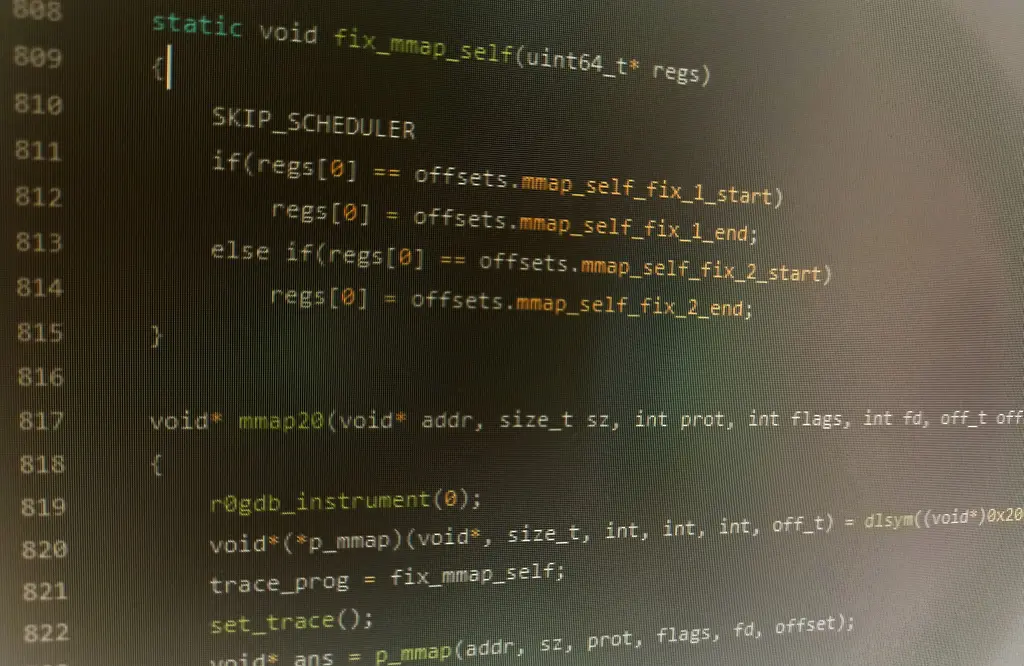
To bypass the reading and writing blocks enforced by XOM, hackers turned to runtime interception. Sleirsgoevy’s Prosper0GDB acts as a live runtime debugger capable of monitoring CPU execution states, registers, and the stack in real time.
Because developers cannot alter the kernel statically in RAM, kstuff uses Prosper0GDB to intercept instructions at the last possible microsecond—just before they are executed by the processor. By dynamically rewriting or redirecting instructions on-the-fly (in a manner conceptually similar to Just-In-Time compilation patching), kstuff effectively deactivates digital rights management (DRM) checks, relaxes system restrictions, and establishes the foundational "building blocks" required to run native homebrew applications and system backups.
Entry Points: BD-JB vs. LUA Exploits
Deploying kstuff on modern firmware (such as 6.xx and 7.xx) requires a viable entry point to execute the initial payload. Currently, users have two primary avenues:

- The Blu-Ray (BD-JB) Exploit: Universally recognized as the most reliable and accessible entry point for the vast majority of users. It requires burning a custom ISO containing the base exploit and an ELF loader onto a rewritable Blu-Ray disc (BD-RE) using a dedicated Blu-Ray burner.
- LUA Engine Exploits: These require users to own specific, vulnerable games utilizing the Artemis engine (such as Hamidashi Creative). However, this method remains impractical for many users—particularly those on digital-only PS5 editions—since acquiring and installing the target game requires prior access to the PlayStation Network (PSN) while the console was still on an unpatched system software version.
Official Statements and Community Reception
The release of universal 7.xx kstuff support sent waves through the global console modification community. EchoStretch took to social media platform X (formerly Twitter) to share the breakthrough with followers:
"Great news, everyone! We now have complete support for all 7.xx firmware versions—covering everything from 3.00 up to 7.61!"
— Echo Stretch (@StretchEcho), April 19, 2025
Developers and end-users alike praised the integration of the kstuff-toggle plugin. Because kstuff functions as an active runtime debugger monitoring kernel execution, it consumes a significant amount of system resources, occasionally impacting overall performance during normal dashboard navigation or legitimate application usage. By introducing a toggle that safely disables the debugging subsystem on demand while keeping the underlying jailbreak intact, the development team has solved a major quality-of-life issue for daily users.
Prominent hardware scene content creators, such as Modded Warfare, quickly updated their community guidance, noting that established installation pipelines—such as those demonstrated in previous 6.50 firmware walkthroughs—remain fundamentally relevant for deploying the expanded kstuff framework across the newly supported 7.xx range.

Future Outlook and Horizon Analysis
The successful porting of kstuff across firmwares 3.00 through 7.61 marks a watershed moment for the PlayStation 5 scene, yet it also highlights the ongoing cat-and-mouse game inherent to modern console security.
What This Means for End Users
For owners of PlayStation 5 consoles sitting on firmware versions up to 7.61 who have meticulously preserved their software state, the ecosystem is rapidly maturing. The availability of robust kernel patching tools shifts the scene away from isolated proof-of-concept demonstrations and toward a standardized homebrew environment. We can anticipate an influx of ported homebrew utilities, expanded backup loaders, and community-driven applications optimized to run natively within this newly unlocked firmware bracket.
The Road Ahead for Firmware 8.00 and Beyond
Despite this massive victory, the reality of hardware security research dictates that newer firmware versions—namely Firmware 8.00 and above—remain protected behind unexploited hypervisor vectors and hardened kernel implementations. Sony has continuously patched the specific entry points and vulnerability chains exploited by the BD-JB and LUA methods, meaning users on modern, up-to-date hardware remain entirely secure against these specific vectors.
Furthermore, as developers look toward the horizon, the immense resource overhead required to maintain real-time debugging via kstuff emphasizes the ultimate desire for a true, lightweight Custom Firmware (HEN) that does not rely on continuous debugger overhead. Until deeper hypervisor compromises are discovered for later firmware branches, however, kstuff and Prosper0GDB will undoubtedly remain the crown jewel of PS5 kernel exploitation—turning an unreadable, locked-down architecture into a playground for homebrew innovation.