The $500,000 Holy Grail: Inside the History, Controversy, and Valuation of the Ultra-Rare Pokémon Red Prototype Box
Executive Overview
In the high-stakes world of alternative asset collecting, few franchises command the financial gravity and cultural reverence of Pokémon. From multi-million-dollar trading cards to pristine, factory-sealed vintage games, the market for pocket monster memorabilia has evolved from a nostalgic subculture into a playground for high-net-worth investors. Now, a newly publicized artifact is poised to test the absolute upper limits of this market: an incredibly rare, pre-production prototype box for the North American release of Pokémon Red on the Nintendo Game Boy.
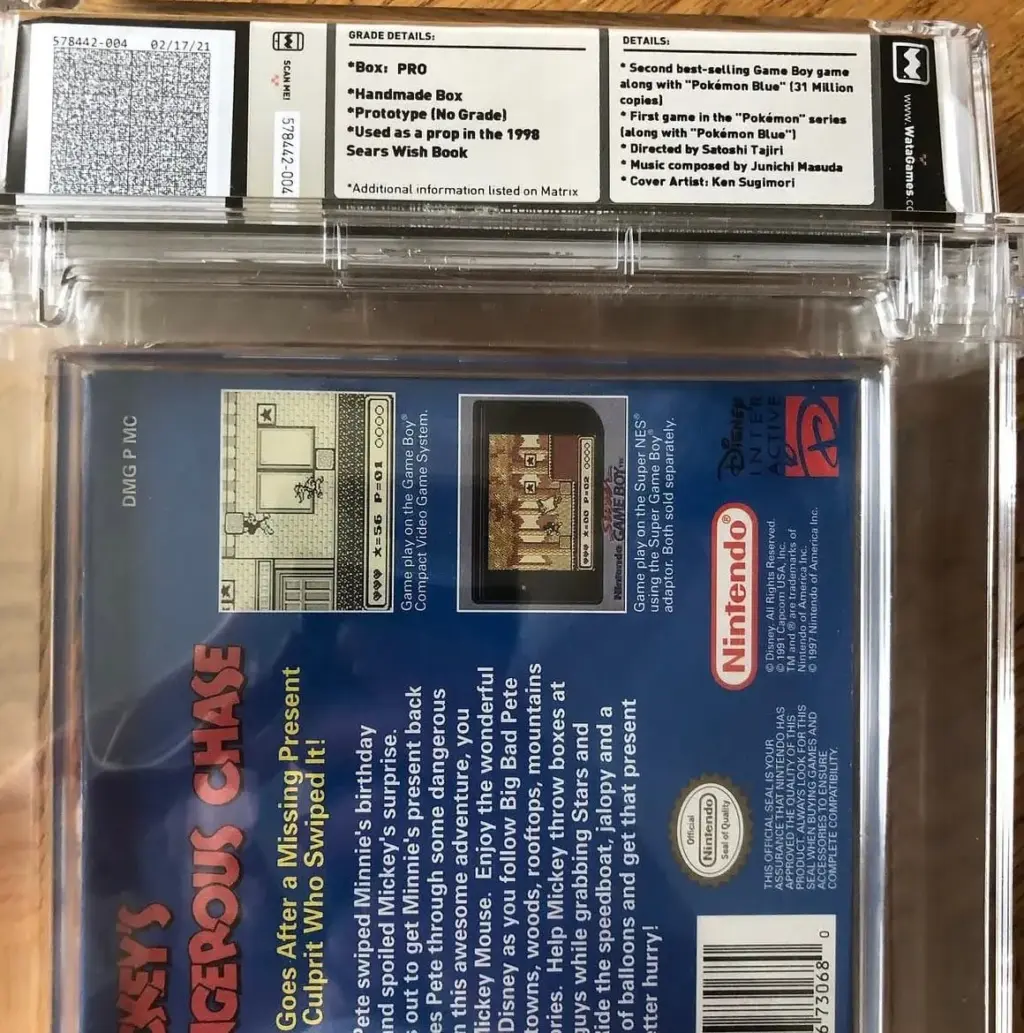
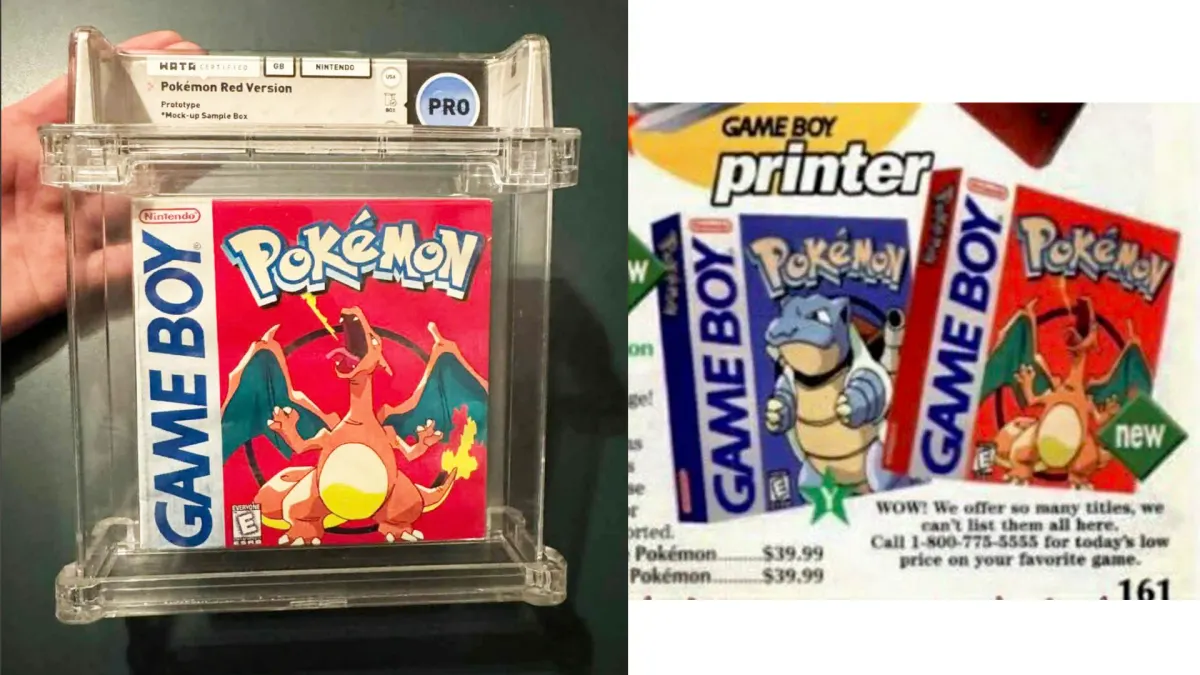
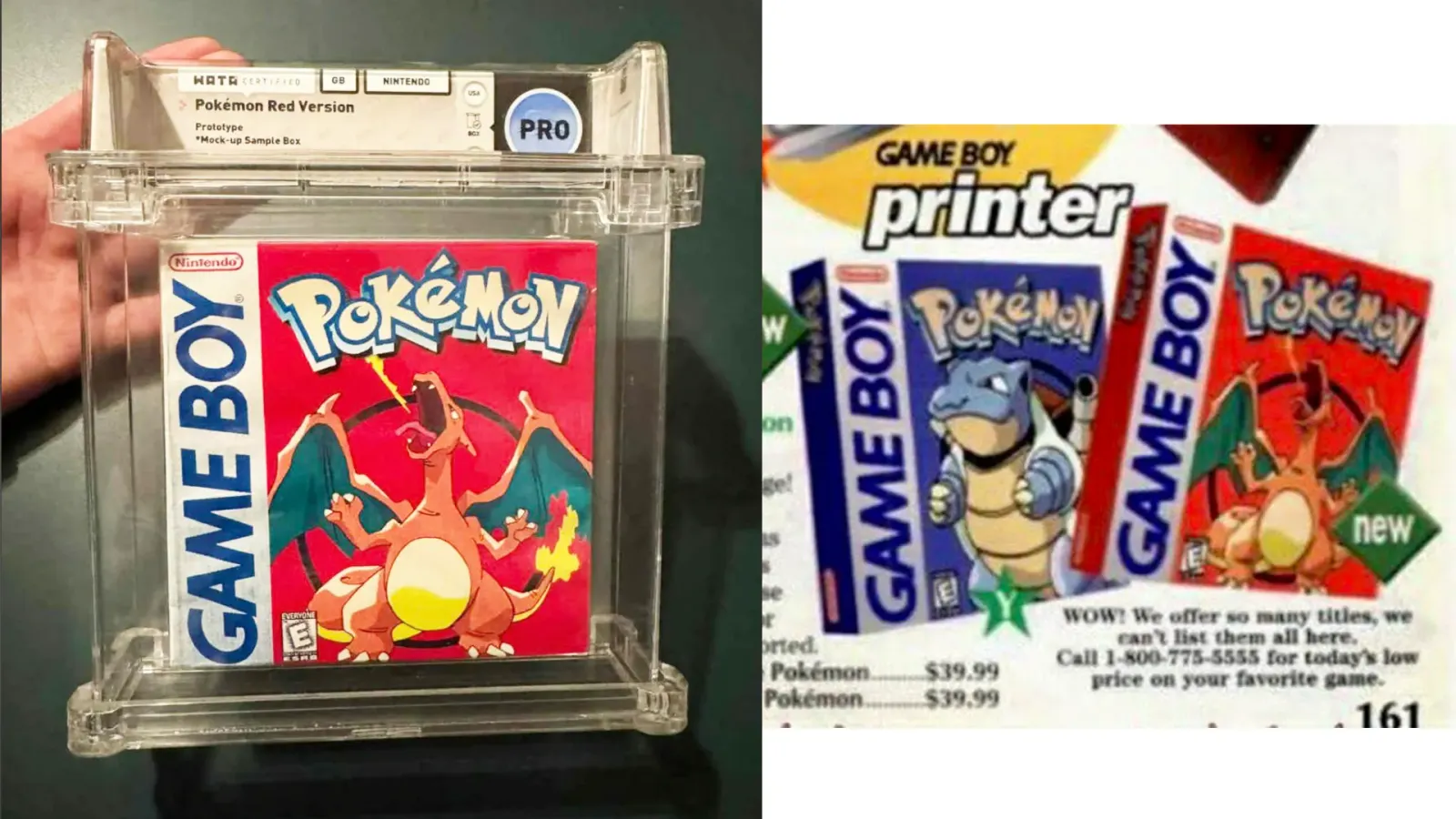
Owned by prominent collector Mike DeRuggiero, who quietly acquired the piece on eBay in 2019, this prototype box represents an extraordinary missing link in video game localization history. Featuring unfinalized English packaging layout on the front—complete with the original Japanese watercolor artwork of Charizard—and the back layout of Capcom’s 1991 release Mickey’s Dangerous Chase, the box is a physical testament to the frantic, late-90s localization pipeline at Nintendo of America.
Currently authenticated and encapsulated by the controversial third-party grading firm WATA Games, DeRuggiero is reportedly entertaining offers in the neighborhood of $500,000. As the retro gaming community dissects this development, the item has sparked intense debate. This investigative report explores the detailed chronology of this artifact, the technical printing processes that explain its bizarre "Frankenstein" construction, the institutional challenges of authenticating pre-production ephemera, and the broader economic implications for the video game collecting market.
Detailed Chronology
To understand the historical significance of this prototype, one must trace the timeline of Nintendo’s localization efforts in the late 1990s, a period when the company was attempting to translate a Japanese cultural phenomenon for a highly skeptical Western audience.
[1991] Mickey's Dangerous Chase releases on Game Boy (Source of the back-box printing template)
  │
[1996] Pocket Monsters Red & Green launch in Japan (Featuring Ken Sugimori's classic watercolor art)
  │
[1997-1998] Nintendo of America begins localization; graphic designers create initial packaging mockups
  │
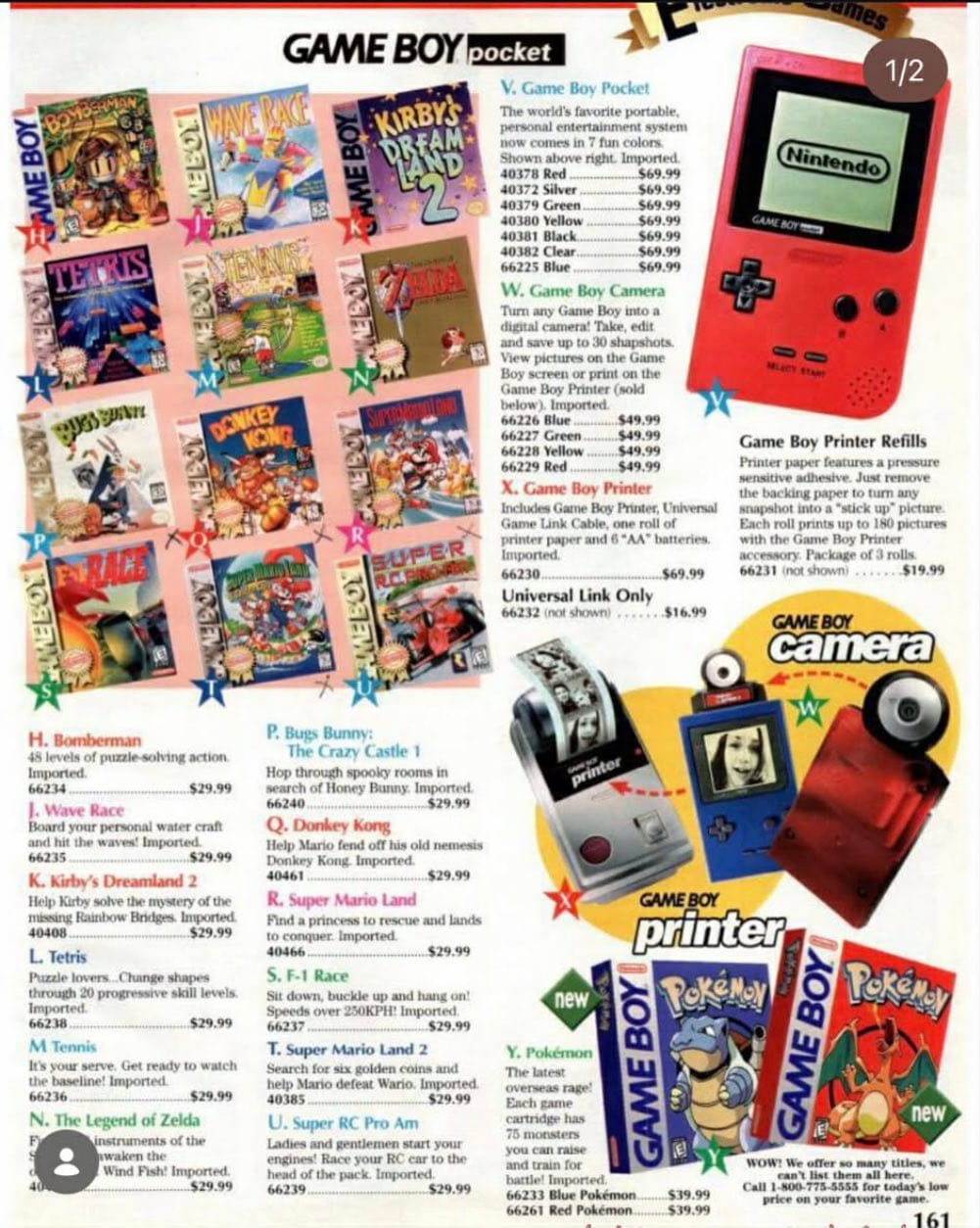
[Mid-1998] Prototype box sent to retailers for promotional layouts; featured in the 1998 Sears Wish Book
  │
[Sept 1998] Pokémon Red & Blue officially launch in NA with redesigned, high-contrast cover art
  │
[2019] Collector Mike DeRuggiero purchases the undocumented prototype box on eBay
  │
[Post-2019] Box is submitted to WATA Games; authenticated and sealed in archival acrylic
  │
[August 2026] Public disclosure via PCStop on X reveals the item is being shopped for ~$500,000
1. The Pre-Localization Era (1991–1996)
In 1991, Capcom released Mickey’s Dangerous Chase for the Nintendo Game Boy. The packaging assets, layout templates, and physical cardboard cutting dies for this game were archived within Nintendo’s production facilities. Five years later, in February 1996, Game Freak and Nintendo launched Pocket Monsters Red and Green in Japan, featuring soft, watercolor character illustrations by lead designer Ken Sugimori.
2. The Western Localization Bridge (1997–1998)
When Nintendo of America (NoA) began the monumental task of importing the franchise, executives feared the cute, whimsical Japanese aesthetic would not resonate with Western children, who preferred gritty, action-oriented media. While NoA designers experimented with aggressive marketing campaigns, the packaging design team began drafting English-language boxes.
During this transitional phase, designers utilized Sugimori’s original Japanese Pocket Monsters Red Charizard illustration. This version of Charizard was drawn in a less aggressive, more rounded, and painterly style compared to the fierce, high-contrast, dynamic sprite that ultimately graced the finalized North American retail box.
3. The Retailer Catalog Pipeline (Mid-1998)
Major retail giants like Sears, Montgomery Ward, and J.C. Penney required product imagery months in advance to compile their massive holiday catalogs. Because final retail packaging for Pokémon Red was not yet manufactured, Nintendo sent physical mockups—constructed using preliminary front artwork pasted or printed onto existing structural templates—to catalog photographers. The 1998 Sears Wish Book featured this exact early layout, providing contemporary proof of the prototype’s design.
4. Discovery and Authentication (2019–Present)
In 2019, before the explosive, pandemic-era boom in retro game valuations, Mike DeRuggiero discovered the unclassified box listed on eBay. Recognizing the historical anomaly of the Japanese Charizard artwork paired with English text, DeRuggiero secured the item. He subsequently submitted the piece to WATA Games for forensic examination, grading, and encapsulation, preserving the fragile cardboard in a protective acrylic holder. In August 2026, collector news outlet PCStop revealed that DeRuggiero was actively seeking offers of half a million dollars.
Supporting Context & Technical Analysis
The Anatomy of a "Frankenstein" Printing Proof
To the untrained eye, a box featuring Pokémon Red on the front and Mickey’s Dangerous Chase on the back looks like a crude counterfeit. However, to print historians and packaging engineers, this structural juxtaposition is the hallmark of a genuine pre-production folding dummy or "progressive proof."

+------------------------------------------+
|                 FRONT                    |
|  - English "Pokémon Red" Typography      |
|  - Japanese-style Watercolor Charizard   |
|  - Unfinalized ESRB "Kids to Adults" Logo|
+------------------------------------------+
|                 BACK                     |
|  - "Mickey's Dangerous Chase" Assets     |
|  - 1991 Capcom Legal/Copyright Text      |
|  - Standard Game Boy Layout Template     |
+------------------------------------------+
During the prepress phase of printing in the 1990s, creating entirely new physical mockups from scratch was highly inefficient and expensive. When testing the physical dimensions, paperboard weight, fold tolerances, and ink absorption of a new Game Boy box design, factory press operators would use existing, pre-configured printing plates for the reverse side.
By utilizing the back-plate of an older, out-of-print title like Mickey’s Dangerous Chase, the printer could run a test sheet through the press to verify that the front-facing Pokémon graphic aligned perfectly with the physical cutting dies without wasting time setting up a completely new double-sided layout.
The Art Style Divergence
The visual discrepancies between the prototype and the retail release of Pokémon Red are striking:
- The Charizard Illustration: The prototype utilizes Sugimori’s original Japanese artwork, which features softer gradients, a slightly different anatomical structure, and a more passive stance. The final US release used a highly stylized, saturated, and aggressive illustration of Charizard breathing fire directly toward the viewer, designed to capture the attention of Western consumers on crowded retail shelves.
- The ESRB Rating: The prototype features an early iteration of the Entertainment Software Rating Board (ESRB) logo, which would undergo minor typographical adjustments before the game’s official September 1998 launch.
The Controversy Surrounding Third-Party Authentication
The valuation of any one-of-a-kind collectible hinges entirely on its perceived authenticity. For this prototype, the certification of legitimacy comes from WATA Games, a company that has found itself at the center of fierce controversy within the retro gaming community.
       ┌────────────────────────────────────────────────────────┐
       │               WATA Games Grading Process               │
       └───────────────────────────┬────────────────────────────┘
                                   ▼
       ┌────────────────────────────────────────────────────────┐
       │   Forensic Analysis: Cardboard stock, ink, & printing   │
       └───────────────────────────┬────────────────────────────┘
                                   ▼
       ┌────────────────────────────────────────────────────────┐
       │  Provenance Check: Cross-referencing 1998 catalogs     │
       └───────────────────────────┬────────────────────────────┘
                                   ▼
       ┌────────────────────────────────────────────────────────┐
       │  Encapsulation: Sealed in UV-resistant acrylic case     │
       └───────────────────────────┬────────────────────────────┘
                                   ▼
       ┌────────────────────────────────────────────────────────┐
       │    Market Reaction: Institutional trust vs. Skepticism  │
       └────────────────────────────────────────────────────────┘
Critics of third-party grading (TPG) companies point to a history of perceived conflicts of interest, class-action lawsuits, and allegations of artificial market inflation. In the case of pre-production prototypes, standard grading metrics (such as sub-grades for corners, edges, and seal quality) are largely irrelevant. Instead, the grading company acts as an administrative authenticator.
The primary risk with ultra-rare prototypes is the potential for sophisticated "homebrew" counterfeits. With high-end digital printers, vintage cardboard stocks sourced from sacrificial donor games, and digital restoration software, bad actors can create highly convincing replicas.
To combat this, authenticators must conduct destructive or highly specialized non-destructive testing, including:
- Halftone Pattern Analysis: Examining the circular dot patterns of the offset lithography under high magnification to ensure they match 1990s industrial printing presses rather than modern inkjet or laser printers.
- Chemical/Spectrometric Testing: Analyzing the chemical composition of the paperboard, clay coating, and inks to verify they are historically accurate to the factories utilized by Nintendo of America in the late 1990s.
- Provenance Verification: Tracing the chain of custody from former Nintendo, Capcom, or retail catalog employees to the open market.
While WATA has declared the DeRuggiero prototype genuine, some preservationists argue that sealing such a historically significant piece in a permanent plastic tomb prevents the very physical and scientific analysis required to establish absolute, undeniable authenticity.
Market Dynamics: Can a Cardboard Box Worth $500,000 Find a Buyer?
To assess the viability of Mike DeRuggiero’s $500,000 asking price, we must contextualize it within the broader landscape of high-end Pokémon and retro video game sales.
| Collectible Item | Grade / Status | Sale Price | Sale Date |
|---|---|---|---|
| Pikachu Illustrator Card | PSA 10 | $5,275,000 | 2022 |
| Super Mario Bros. (NES) | WATA 9.8 A++ Sealed | $2,000,000 | 2021 |
| Pokémon Blue (Game Boy) | WATA 9.8 A++ Sealed | $84,000 | 2021 |
| Pokémon Red Prototype Box | WATA Authenticated | $500,000 (Asking) | Current |
The "One-of-a-Kind" Premium vs. Liquidity
Standard retail releases, even in immaculate condition, have an established baseline of transaction history. An investor knows approximately how many sealed, high-grade copies of Pokémon Red exist in the wild.
A prototype, however, is a non-standard asset. It lacks liquidity because there is no historical sales data to establish a fair market value. The valuation of $500,000 is speculative, relying on the concept of "extreme scarcity." For a billionaire collector or a sovereign wealth fund looking to acquire the ultimate piece of Pokémon history, the price tag may be secondary to the bragging rights of owning a unique artifact. For traditional collectors, however, the lack of a competitive bidding market makes a half-million-dollar purchase highly risky.
Future Outlook
The emergence of the Pokémon Red prototype box highlights a growing trend in the collecting space: the shift from collecting production-line retail items to acquiring pre-production, archival, and developmental ephemera.
As the first generation of gamers who grew up with Pokémon reach their peak earning years, the demand for items that represent the "genesis" of the franchise will likely intensify. This prototype is not merely a game; it is a physical monument to the moment Pokémon crossed the Pacific to become a dominant global brand.
Whether Mike DeRuggiero secures his $500,000 asking price or is forced to negotiate down, this artifact has officially entered the annals of video game lore. Its sale—and the scrutiny that accompanies it—will undoubtedly shape how pre-production video game assets are preserved, authenticated, and valued for decades to come.