Pico Set to Rival Apple Vision Pro with the Upcoming ‘Space Pro’ Headset Debut in Beijing
Executive Overview
The augmented and virtual reality (XR) landscape is bracing for a major competitive shift. Pico, a prominent player in the standalone headset market, has officially confirmed plans to debut its highly anticipated high-end mixed-reality device—reportedly named the Pico Space Pro—at an upcoming special event in Beijing early next month.
Initially teased under the developmental banner "Project Swan" earlier this year, the Space Pro is widely regarded as Pico’s direct, formidable response to the Apple Vision Pro. While the standalone headset market has largely focused on mainstream accessibility and price-to-performance ratios via devices powered by Qualcomm Snapdragon XR2 chips, Pico is taking a sharp pivot toward ultra-premium territory.
Leaked specifications and industry insider reports suggest that the Pico Space Pro will not merely match existing market standards, but actively redefine them. Armed with ultra-dense microOLED displays, an advanced dual-chip processing architecture, and cutting-edge perception capabilities, the headset is designed for consumers and enterprise professionals demanding uncompromising visual fidelity and processing power.
As the tech world turns its eyes toward Beijing for the official September 2nd unveiling, questions regarding pricing, global availability, and comprehensive technical specifications are expected to be answered. This article provides a deep dive into the evolution of Project Swan, an analysis of its hardware architecture, and what this launch means for the future of the competitive XR market.
Detailed Chronology: From Project Swan to Pico Space Pro
The trajectory of Pico’s next-generation flagship headset has been a slow-burn reveal, characterized by calculated teasers, industry leaks, and strategic positioning within the global XR ecosystem.
March 2026: The Inception of Project Swan
Pico first shook the virtual reality community when it subtly teased its next-generation flagship standalone headset under the internal codename Project Swan. At the time, details were sparse, but the company made it clear that the device would represent a massive technological leap forward compared to its previous iterations, such as the Pico 4 series. Rather than targeting the casual gaming market alone, Project Swan was framed as a holistic spatial computing device capable of bridging high-end productivity, immersive entertainment, and advanced mixed-reality (MR) experiences.
June 2026: The Leak That Stirred the Community
As development progressed behind closed doors, the first tangible look at the headset surfaced via social media. Noted hardware leaker Luna shared a purported setup video showcasing the physical design and software onboarding process of the device. Although the video consisted largely of digital renderings rather than raw footage of a physical prototype, it provided enthusiasts with their first glimpse into the industrial design philosophy of Pico’s upcoming flagship.
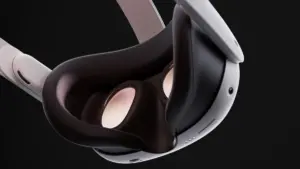
The leaked video highlighted a sleek, balanced visor geometry, signaling a concerted effort by Pico to minimize front-heaviness—a common pain point in standalone headsets laden with heavy battery cells and compute hardware. Shortly after the initial virality of the post, the video was removed entirely from X (formerly Twitter) at the request of rights holders or due to intense regulatory pressure, but screen grabs and textual breakdowns had already circulated widely across Asian and Western tech forums.
August 2026: Naming and Official Confirmation
Speculation reached a boiling point when prominent Chinese tech publication Nweon broke the news that the device would officially carry the retail moniker Pico Space Pro. This report aligned closely with subsequent promotional hints dropped by Pico, setting the stage for a physical showcase.
Pico officially announced that it would host a dedicated launch event in Beijing early next month. Industry analysts immediately deduced that the Pico Space Pro is indeed the commercial evolution of Project Swan. With the event date locked in for September 2nd, anticipation has reached a fever pitch, as developers and consumers alike await the formal lifting of the veil.

Supporting Context & Metrics: Unpacking the Hardware Architecture
While Pico has kept its complete technical data sheet tightly under wraps until the official keynote, enough information has leaked through supply chain channels and official teasers to construct a comprehensive picture of what lies beneath the hood of the Space Pro.
Visual Mastery: MicroOLED and Spatial Sharpness
The standout feature of the Pico Space Pro lies in its display technology. Moving away from standard LCD panels, Pico has opted for advanced microOLED displays.
- Pixel Density: The panels are slated to boast an astonishing 4,000 pixels per inch (PPI).
- Angular Resolution: This translates to an average of roughly 40 pixels per degree (PPD).
To put these metrics into perspective, a higher PPD dramatically reduces or eliminates the "screen-door effect"—the visible grid lines separating individual pixels—resulting in text that is razor-sharp, graphics that mimic real-world clarity, and video passthrough that feels astonishingly lifelike. This positions the Space Pro directly in competition with Apple’s Vision Pro, which similarly leverages high-density microOLED tech to achieve a superior visual baseline.
Dual-Chip Architecture: Redefining Performance and Latency
Processing power is arguably the most critical bottleneck in standalone spatial computing. To handle the immense computational load of high-resolution microOLED passthrough and advanced spatial tracking, Pico has abandoned the single-chip paradigm in favor of an innovative dual-chip architecture:
- Perception and Imaging Silicon: A dedicated custom XR coprocessor optimized exclusively for sensor fusion, spatial mapping, and hand-eye tracking. Pico claims this custom silicon achieves an ultra-low ~12 ms perception latency. By offloading tracking and camera processing from the main CPU, the headset ensures that passthrough video and virtual overlays remain synchronized with minimal motion-to-photon lag, drastically reducing the likelihood of motion sickness.
- Flagship Main SoC: Operating alongside the perception chip is a separate flagship System-on-Chip (SoC). While specific branding has not been officially confirmed, Pico boasts that this main processor delivers "more than 2× CPU and GPU performance vs. XR2 Gen 2." This immense graphical and computational headroom will allow developers to port complex PC VR-grade titles directly to the standalone ecosystem and support intensive multitasking environments akin to desktop operating systems.
Official Statements and Industry Perspectives
Although comprehensive interviews and press releases will accompany the September 2nd event, industry insiders have shared plenty of insights regarding Pico’s strategic pivot.

Market analysts view the Pico Space Pro not merely as a hardware refresh, but as an existential statement for the company. Ever since Apple entered the spatial computing market with the Vision Pro, competitors have scrambled to validate whether consumers are willing to adopt ultra-premium headsets. While Meta has focused on the sub-$1,000 market with its Quest lineup, Pico appears willing to test the upper echelons of pricing and performance.
According to preliminary briefings shared with select regional media outlets in China, Pico’s engineering team focused heavily on ergonomic weight distribution and thermal efficiency. High-performance dual-chip setups generate substantial heat; managing this thermal dissipation within a slim, wearable form factor has been one of the primary engineering triumphs highlighted by Pico insiders ahead of the Beijing showcase.
Furthermore, localization and ecosystem development remain key pillars of Pico’s strategy. By hosting the debut event in Beijing, the company acknowledges its strong domestic roots in China while preparing for a subsequent global rollout that will target Western markets where high-end enterprise and enthusiast VR users are actively seeking alternatives to Apple’s ecosystem.
Future Outlook: What to Expect on September 2nd and Beyond
The upcoming Beijing launch event is expected to be a watershed moment for the spatial computing industry. As we look ahead to September 2nd, several key developments remain on the horizon:
1. Pricing and Regional Availability
The elephant in the room for any high-end spatial computer is the price tag. The Apple Vision Pro launched at a barrier-to-entry price of $3,500, which limited its adoption primarily to enterprise developers and deep-pocketed enthusiasts. Industry watchers will be scrutinizing Pico to see if the Space Pro undercuts Apple significantly, potentially capturing the "prosumer" sweet spot in the $1,500 to $2,500 range. Additionally, clarity on global availability—specifically whether the headset will see a simultaneous launch in Europe and North America or remain exclusive to Asian markets initially—will dictate its global impact.

2. Software Ecosystem and Developer Support
Hardware specifications are only as good as the software driving them. With more than double the performance of the XR2 Gen 2 chip and high-density microOLED screens, developers will need robust software development kits (SDKs) to harness the Space Pro’s dual-chip capabilities. Expect Pico to showcase strategic partnerships with productivity suite providers, streaming media giants, and game developers during the keynote.
3. Livestream and Global Coverage
Pico typically streams its major product unveilings globally, complete with English dubbing or subtitles to accommodate international audiences. Industry observers, reviewers, and technology journalists are preparing for a deep dive into the technical capabilities of the device as soon as the event concludes.
Conclusion: The Pico Space Pro represents a bold escalation in the spatial computing wars. By combining microOLED displays with a sophisticated dual-chip processing architecture, Pico is signaling that it refuses to be left behind in the race for ultra-premium XR dominance. Be sure to check back soon for comprehensive post-event coverage, including official pricing, confirmed specifications, and early hands-on impressions straight from Beijing.