Soaring Above the Clouds: Paradox Arc and Blue Isle Studios Announce Guardians of the Wild Sky for a 2027 Release
Executive Overview
The landscape of open-world survival crafting and creature-collection games is undergoing a profound renaissance. Into this fiercely competitive arena steps Guardians of the Wild Sky, a visually striking, ambitious new title slated for a launch window in 2027. Announced jointly by publisher Paradox Arc—the indie-focused publishing arm of strategy titan Paradox Interactive—and developer Blue Isle Studios, the game immediately commands attention.
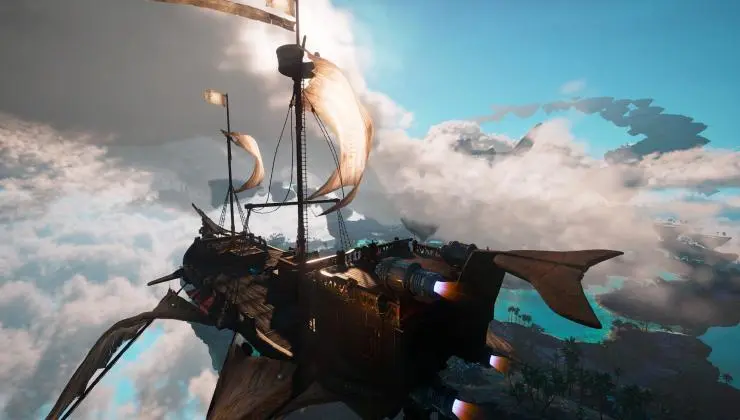
Eschewing traditional terrestrial or subterranean biomes, Guardians of the Wild Sky transports players to a breathtaking archipelago suspended in the clouds. Blending elements of deep survival mechanics, base building, intricate crafting, and cooperative exploration, the game introduces a core gameplay loop centered around befriending and commanding magical elemental companions known as "Guardians."
While early visual and structural comparisons to runaway hits like Palworld are inevitable, Guardians of the Wild Sky promises a distinctly ethereal, high-fantasy aesthetic. It aims to deliver a refined experience tailored for both solo adventurers and online cooperative groups of up to four players.
With Blue Isle Studios leveraging its diverse development history—ranging from atmospheric horror in Slender: The Arrival to magical sandbox survival in Citadel: Forged with Fire—and Paradox Arc providing publishing muscle and community-driven backing, this project is poised to become one of the most closely watched survival titles of the coming years.
Detailed Chronology: From Concept to Collaboration
Understanding the genesis of Guardians of the Wild Sky requires examining the long-term trajectory of Blue Isle Studios and its evolving partnership with Paradox Arc.
The Development Genesis
Behind closed doors, Blue Isle Studios spent years iterating on the core concepts that would eventually form Guardians of the Wild Sky. For a studio renowned for pivoting across disparate genres—having built a reputation on narrative-driven walking simulators and survival sandboxes—crafting a cohesive, sprawling magical ecosystem in the sky was a monumental undertaking.
The studio’s previous projects provided vital technical stepping stones:
- Slender: The Arrival (2013): Taught the team tension management, atmospheric lighting, and environmental storytelling.
- Valley (2016): Showcased their ability to design sweeping, vertical landscapes where movement, speed, and exploration were primary mechanics.
- Citadel: Forged with Fire (2019): Proved their capability in handling magical combat systems, base building, and multiplayer server architecture.
Synthesizing these lessons, Blue Isle envisioned a world where verticality was not merely a traversal mechanic, but the definitive architectural feature of the game universe. Islands drift on perpetual thermal currents; resources are scarce and distributed across shifting aerial landmasses; and navigation requires mastering both mechanical tools and magical companions.
The Partnership with Paradox Arc
As the scope of Guardians of the Wild Sky expanded beyond the internal limits of an independent studio, the search for a publishing partner began. Enter Paradox Arc, the label established by Paradox Interactive to nurture deep, highly replayable indie games with strong systemic loops.
The collaboration represents a strategic alignment. For Blue Isle, partnering with Paradox provides financial stability, rigorous quality assurance infrastructure, and access to Paradox’s robust community engagement apparatus. For Paradox Arc, adding Guardians of the Wild Sky to its portfolio diversifies its offerings, bridging the gap between grand strategy and immersive, action-oriented survival crafting.
According to internal milestones, the collaboration has already borne fruit, solidifying the game’s production pipeline ahead of its anticipated Early Access release.
Supporting Context & Metrics: The Mechanics of the Skies
To truly evaluate the potential of Guardians of the Wild Sky, one must dissect its mechanical ecosystem, technical ambitions, and the demographic landscape of the survival-crafting genre it seeks to conquer.
Gameplay Pillars: Survival, Crafting, and Companionship
At its core, Guardians of the Wild Sky operates on a five-pillar framework: Survive, Build, Craft, Explore, and Capture (or Befriend).
- Survival: Players must manage resource depletion, environmental hazards unique to high-altitude living—such as severe weather phenomena and oxygen-thin plateaus—and hostile wildlife.
- Building: Utilizing architectural systems likely refined from their work on Citadel, players can construct elaborate sky-fortresses, aerial outposts, and logistical hubs across different floating landmasses.
- Crafting: From primitive tools to advanced magitech apparatuses, the crafting tree is designed to scale with player progression, opening up new methods of transportation and defense.
- Exploration: The world is not a static map; rather, it is a dynamic, procedurally influenced or meticulously hand-crafted expanse of islands where secrets, dungeons, and rare resources wait to be uncovered.
- The Guardians: The beating heart of the game. These elemental companions are not merely combat pets; they possess distinct traits, personalities, and utility skills. Some may serve as flying mounts, others as automated laborers for your base, and others as devastating combat assets against rival creatures and environmental bosses.
Cooperative Scalability
Recognizing that modern survival games thrive on social interaction, Blue Isle Studios has engineered Guardians of the Wild Sky to support two distinct modes of play:
- Solo Offline Mode: For players who prefer a solitary, immersive journey through the clouds at their own pace.
- Online Co-op (Up to 4 Players): A seamless multiplayer experience that allows small groups of friends to pool their resources, divide labor roles (e.g., base architect, tamer, explorer), and conquer high-tier cooperative dungeons.
Market Positioning and Aesthetic Identity
While comparisons to Pocketpair’s Palworld are inevitable given the creature-collection and base-building intersection, Guardians of the Wild Sky distinguishes itself through its artistic direction. Where Palworld leans heavily into a chaotic, tongue-in-cheek sandbox aesthetic, Blue Isle’s title opts for a much "prettier," high-fantasy visual fidelity. Utilizing modern rendering engines, the game boasts dramatic volumetric clouds, radiant lighting systems, and meticulously designed creature models that evoke a sense of wondrous fantasy rather than chaotic parody.
Official Statements
The formal announcement of Guardians of the Wild Sky brought forth illuminating commentary from the leadership at both Blue Isle Studios and Paradox Arc, highlighting the synergy driving the project.
Alex Tintor, Co-Founder at Blue Isle Studios:
"We’ve spent years building Guardians of the Wild Sky into the game we’ve always wanted it to be, and partnering with Paradox gives us the opportunity to take that vision even further. They understand how to work closely with the community, share our ambition for where it can go, and bring the experience and resources to help us deliver something truly exceptional. For a small team like ours, this partnership is a huge milestone, and we couldn’t be more excited about what comes next."
Tintor’s remarks underscore the classic indie developer dilemma: balancing unbridled creative vision with the logistical realities of production. By integrating Paradox’s publishing ecosystem, Blue Isle aims to sidestep the common pitfalls of scope creep that plague independent survival games.
Denis Komatina, Business Developer at Paradox Arc:
"Guardians of the Wild Sky is shaping up to become something truly special, built by a fantastic team that shares our passion for creating lasting games with endless replayability. The feedback from players has been strong so far, and we look forward to working with Blue Isle Studios to build on that momentum ahead of the game’s planned early access launch next year."
Komatina’s focus on "endless replayability" speaks directly to the Paradox Arc ethos. The label does not look for one-and-done narrative experiences; it invests in systemic sandboxes capable of retaining active player communities for years through regular content updates, modding support, and emergent gameplay loops.
Future Outlook: The Road to 2027 and Early Access
As the gaming industry looks ahead toward the 2027 release window—preceded by targeted Early Access phases—several critical milestones remain on the horizon for Guardians of the Wild Sky.
The Early Access Strategy
Releasing via Early Access has become the gold standard for survival-crafting titles, allowing developers to test server stability, balance complex crafting trees, and iterate based on real-time community telemetry. For Blue Isle Studios, this phase will be crucial. The integration of cooperative multiplayer mechanics across shifting aerial environments presents unique netcode challenges that only a broad player base can thoroughly stress-test.
Community Engagement and Wishlisting
With the initial press release circulating across major gaming portals like GamingOnLinux, community response has been markedly positive. The game has already begun populating digital storefront wishlists, a vital metric that publishers use to gauge consumer interest and allocate marketing budgets.
Moving forward, prospective players can anticipate deep-dive developer diaries, closed alpha or beta playtests, and extensive technical showcases detailing how the Guardian taming and base-building mechanics function in practice.
Final Assessment
Guardians of the Wild Sky represents a calculated, highly promising evolution for Blue Isle Studios. By marrying the vertical exploration of Valley with the magical combat and crafting of Citadel, all under the seasoned publishing guidance of Paradox Arc, the project avoids feeling like a mere genre-chaser. Instead, it positions itself as a distinct, beautifully rendered atmospheric sanctuary for survival enthusiasts.
As the industry counts down the months toward its early access debut and ultimate 2027 launch, this is unequivocally a title to keep firmly planted at the top of your wishlist.