For tabletop enthusiasts, few cooperative card games match the kinetic energy, tactical depth, and thematic immersion of Fantasy Flight Games’ Marvel Champions: The Card Game. However, managing the sprawling decks, tokens, counters, and rule interactions can sometimes present a logistical barrier to a casual evening of superhero action. Enter Warnel Chawpiovs (WC)—a meticulously crafted, fan-made homebrew digital adaptation designed to bridge the gap between physical tabletop gaming and automated digital play.
Spearheaded by independent developer frwololo, Warnel Chawpiovs has officially reached version 1.2.0, marking a massive leap forward for the project. Available across multiple platforms including Windows, Linux, macOS, and a dedicated homebrew port for the Nintendo Switch, WC automates the exhaustive book-keeping of rules enforcement while leaving core tactical decision-making entirely in the hands of the player.
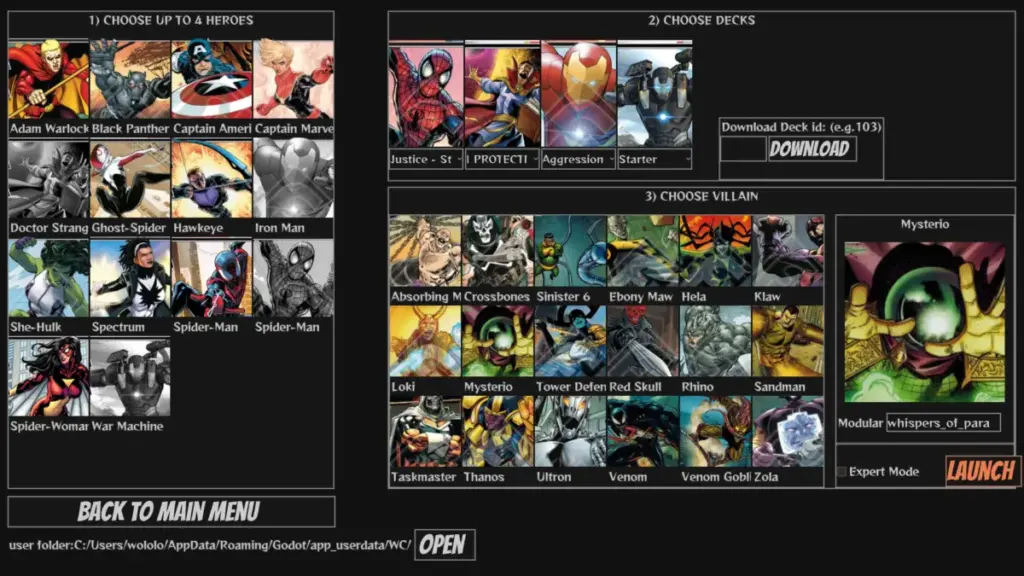
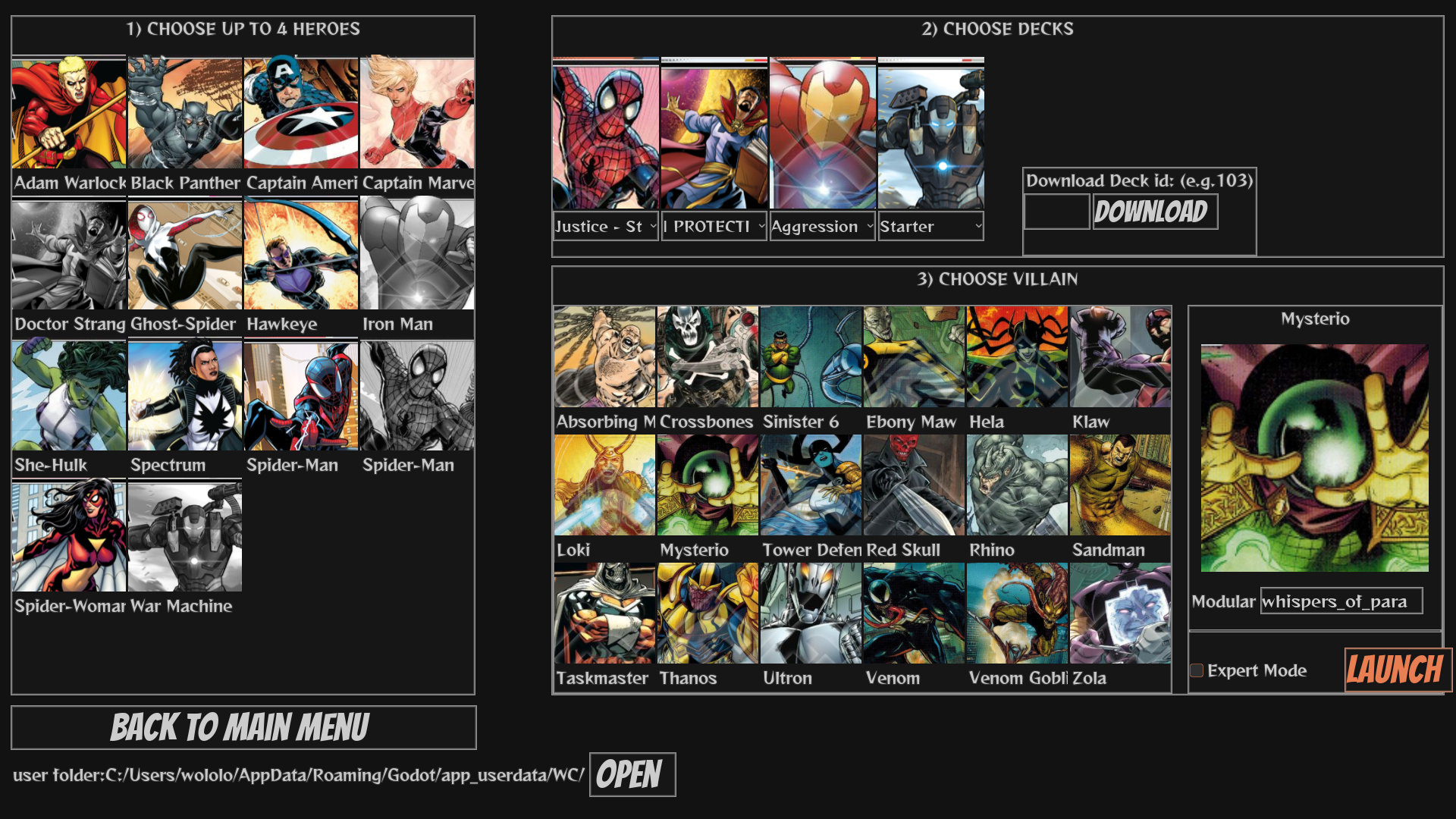
Version 1.2.0 introduces the highly anticipated content from the Sinister Motives campaign expansion box, alongside the Doctor Strange and War Machine Hero Packs. This latest patch brings the total roster to a robust 14 heroes and 18 distinct scenarios, complete with under-the-hood quality-of-life updates such as background image downloading and critical bug fixes. While fan-created and entirely unofficial, Warnel Chawpiovs stands as a masterclass in independent reverse-engineering and digital card game architecture, offering a fascinating window into the challenges of translating physical board game logic into executable software.
Detailed Chronology & Development Evolution
The journey of Warnel Chawpiovs from a conceptual rules engine to a multi-platform release has been defined by steady, iterative growth. Development challenges have continually tested the limits of the software’s underlying architecture, forcing the creator to rethink how digital engines interpret complex card game mechanics.
The Evolution of the Game Engine
Building a digital rules-enforcement engine for a Living Card Game (LCG) is no small feat. Unlike traditional digital card games (such as Hearthstone or Magic: The Gathering Arena), which were built from the ground up for screens, Marvel Champions relies heavily on a complex state-machine of player turns, phase transitions, interrupt windows, and resource management.
In earlier iterations, the WC engine operated under standard foundational assumptions common to most cooperative card games: one active villain and one primary scheme. However, as expansion boxes introduced unconventional scenarios—such as the multi-villain Tower Defense encounter from Mad Titan’s Shadow—the engine began to strain at the seams.
With the arrival of version 1.2.0 and the inclusion of Sinister Motives, these architectural hurdles multiplied.
The Sinister Six Scenario: Introducing multiple villains simultaneously fundamentally shattered the engine’s original single-villain assumptions. Managing distinct target priorities, staggered activations, and distributed health pools required a total overhaul of encounter card targeting logic.
Venom-Goblin: Similarly, managing multiple main schemes concurrently meant rewriting how event cards, threat tokens, and player triggers interact with "the main scheme" when multiple variants are active on the board.
According to the developer, while Fantasy Flight Games has published various erratas and official clarifications to handle these edge cases, many complex interactions remain open to interpretation. Translating ambiguous tabletop rules into definitive, binary programming logic required countless hours of trial, error, and playtesting.
The Hero Roster: Triumphs and Pitfalls of Digital Adaptation
Version 1.2.0 introduces four new heroes into the digital ecosystem, each offering unique developmental anecdotes that highlight how certain playstyles translate better to a screen than others.
1. Doctor Strange (The Solo Powerhouse)
Status: Implemented.
The Experience: In the physical board game, Doctor Strange is widely regarded as one of the single strongest heroes for solo play. Translating him into WC made him an immediate priority. However, the developer noted an unexpected side effect of digital automation: Doctor Strange’s core gameplay loop became too mechanical. The relentless cycle of drawing cards via Windows of Watoomb to unleash massive damage with Crimson Bands of Cyttorak highlighted a unique quirk of the digital format. Notably, Crimson Bands deals damage rather than executing a formal "attack," bypassing specific villain abilities (such as Venom’s reactive boost card triggers). While phenomenally powerful, the streamlined digital inputs made his supreme mastery feel somewhat routine.
2. War Machine (The Tactical Gunner)
Status: Implemented (Community Requested).
The Experience: War Machine was added following direct requests from community members, having never been thoroughly tested by the developer in the physical format. Surprisingly, he emerged as a digital standout. Because War Machine relies heavily on managing ammunition counters to deal high volumes of damage entirely outside of his basic hero activations, his toolkit feels uniquely engaging and fluid within the WC framework.
3. Ghost-Spider (The Interrupt Dilemma)
Status: Implemented.
The Experience: Ghost-Spider proved to be the development cycle’s most surprising disappointment. While the developer loved playing through the Sinister Motives physical campaign with her (using customized decks), her default out-of-the-box deck felt lackluster in solo play. More critically, her mechanics rely heavily on a dense network of interrupts and responses—including reactive "interrupts of interrupts." While the WC engine does support these to an extent, programming recursive interrupt windows introduced a wave of stubborn bugs and created a stilted, stop-and-go gameplay flow that hampered the game’s overall pacing.
4. Spider-Man / Miles Morales (The Crowd Pleaser)
Status: Implemented.
The Experience: In stark contrast to Ghost-Spider, Miles Morales was the crown jewel of the 1.2.0 update. Armed with venom blasts and camouflage, his ability to stun opposing villains nearly every single turn provided an immensely satisfying gameplay loop. This hyper-reliable crowd control also contextualized why Fantasy Flight implemented keywords like Stalwart and Steady in later Sinister Motives encounters—villainous countermeasures designed specifically to curb characters like Miles from locking down the board indefinitely.
Supporting Context & Metrics
Content Scope as of Version 1.2.0
Total Playable Heroes: 14 (Featuring newly added Spider-Man Miles Morales, Ghost Spider, Doctor Strange, and War Machine).
Total Playable Scenarios: 18 (Featuring newly added Sandman, Venom, Mysterio, The Sinister Six, and Venom-Goblin).
Supported Platforms: Windows (x64), Linux (x86_64), macOS (unsigned application bundles), and a dedicated homebrew port for the Nintendo Switch.
Key Technical Improvements in v1.2.0
Asynchronous Asset Management: Card artwork and high-resolution graphical resources are now downloaded dynamically in the background, minimizing startup friction for new users.
Rule Engine Patching: Dozens of targeted bug fixes have been deployed across legacy and newly added cards to ensure accurate rule enforcement.
Adventure Progression Mode: Features an optional campaign progression system where players must secure victories to unlock subsequent heroes and scenarios organically (with an option to bypass via gameplay settings).
Official Statements & Developer Insights
Reflecting on the realities of independent homebrew development, the creator of Warnel Chawpiovs has maintained a transparent and community-centric philosophy:
"Programming-wise, most new cards in Marvel Champions push me to rethink how I originally implemented parts of the game… At the end of the day, I do hope my engine stays faithful to the rules of the game, but what matters the most is that the game is fun to play. For me, it certainly is the case."
Addressing the complexities of rule adaptations in multi-villain encounters like Venom-Goblin and The Sinister Six, the developer did not mince words regarding tabletop design consistency:
"IMO this is a miss on FFG’s part when they designed those scenarios; they should try to keep things fairly consistent… It’s kind of a mess to be honest, and although I know Fantasy Flight has published erratas and clarifications, a lot of those things remain open to interpretation."
Future Outlook & Community Engagement
As Warnel Chawpiovs pushes past version 1.2.0, the roadmap ahead focuses on refinement and stability rather than rapid feature expansion.
What Lies Ahead
Solo Play Optimization: The primary developmental focus remains centered on polishing single-player experiences, ensuring that upcoming card pools integrate seamlessly without breaking legacy encounter logic.
Performance Tuning: Noticed performance regressions in version 1.2.0 (particularly regarding frame rates and UI responsiveness) have prompted the developer to prioritize engine optimization in upcoming patches.
Multiplayer Challenges: While network and local co-op infrastructure technically exists within the codebase, the developer openly cautions that multiplayer functionality remains unstable and incomplete. Programmers and open-source contributors with expertise in netcode are actively encouraged to submit Pull Requests via GitHub to help resolve these persistent hurdles.
Installation & Compatibility Guide
For players looking to dive into Warnel Chawpiovs v1.2.0, installation varies by platform:
PC (Windows & Linux): Download the release binary from GitHub, extract the contents to a preferred directory, and launch WC.exe (Windows) or WC.x86_64 (Linux).
macOS: Due to unsigned application packaging, users must hold Control while clicking the application icon and select Open to bypass Gatekeeper security prompts.
Nintendo Switch: Requires a modified (hacked) console. Extract the WC folder directly into the switch directory on the SD card. It is highly recommended to launch the Homebrew Menu in Full Speed Mode (by holding the R shoulder button while booting a legitimate cartridge game) and utilize overclocking utilities (such as sys-clk) to ensure stable performance during extended sessions.
(Note: For players specifically seeking robust online multiplayer coordination for Marvel Champions, the developer recommends exploring the alternative fan project Marvel Champions Digital Edition on Itch.io.)
Disclaimer: Warnel Chawpiovs is an independent, non-commercial, fan-created homebrew project. It is not affiliated with, endorsed, supported, or sponsored by Fantasy Flight Games, Asmodee, or Marvel Entertainment. All original characters, intellectual properties, card templates, and game designs remain the copyrighted property of their respective legal owners.