The Rise of AI-Assisted Static Recompilation: Inside "RingOut," the Native PC Port of SoulCalibur II
By Sebastian Santabarbara
Updated: August 25, 2026
Executive Overview
The landscape of retro game preservation and reverse engineering is undergoing a tectonic shift. For decades, breathing new life into classic console titles meant relying on traditional emulation—interpreting hardware instructions on the fly through software layers like Dolphin, PCSX2, or Nestopia. However, the last few years have introduced a revolutionary paradigm: static recompilation (recomp).
By translating original PowerPC or MIPS assembly code directly into native architecture binaries (such as x86_64 or ARM64), developers can package classic console games into standalone, native applications. Players no longer need to boot up complex emulator interfaces; they simply launch an executable, drop in a legally acquired ROM, and experience the game with modern enhancements like high-framerate support, native widescreen, and improved fidelity.
Yet, a new frontier in software development is colliding with this retro renaissance: Generative Artificial Intelligence.
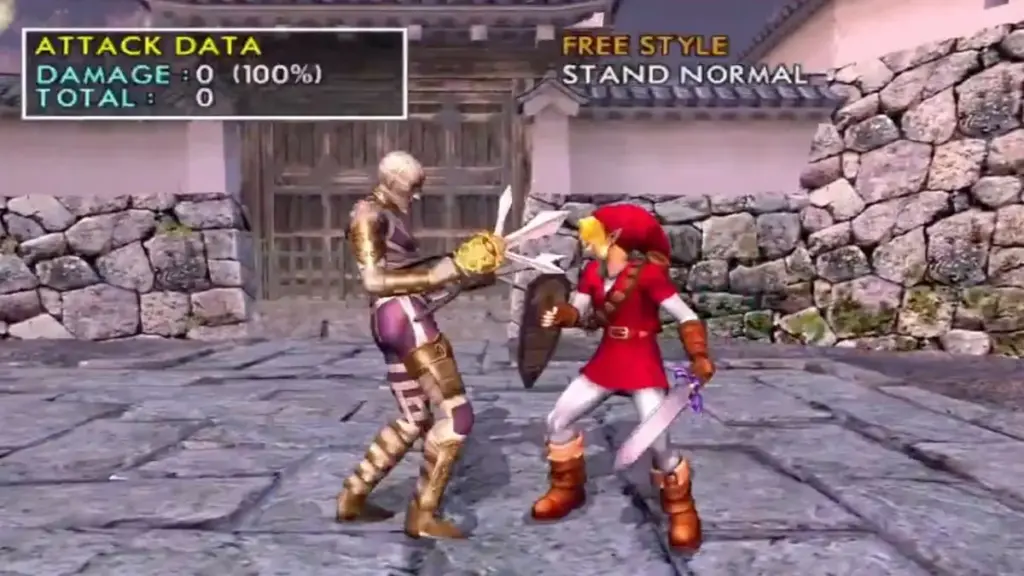
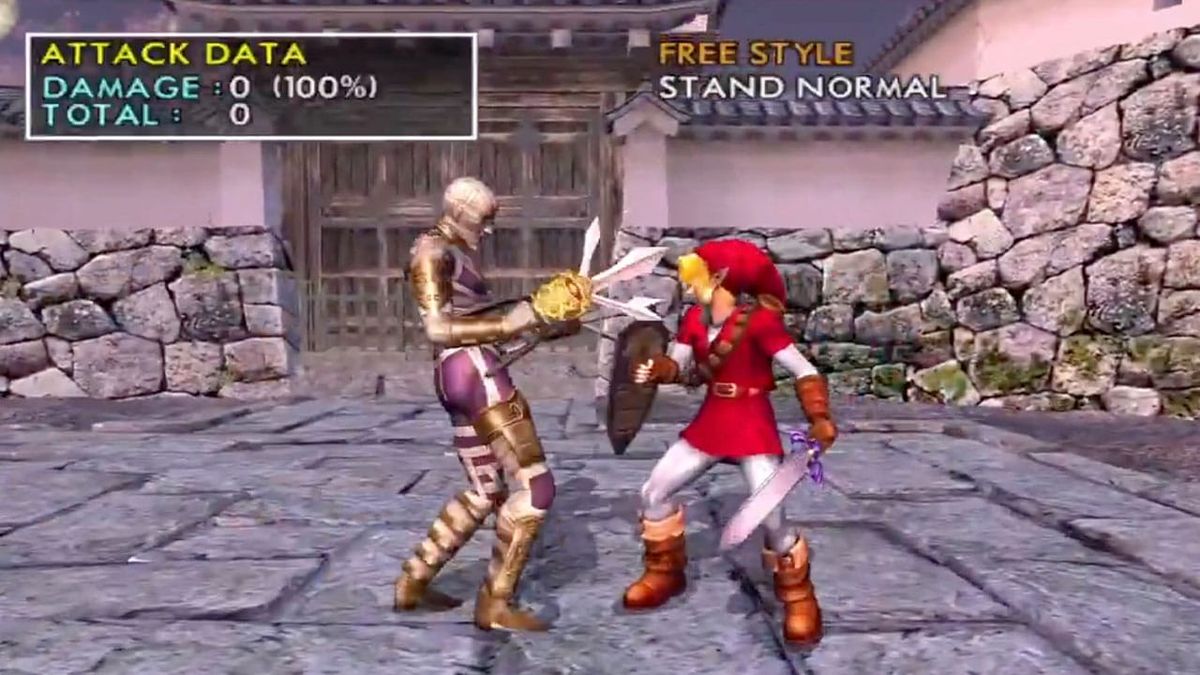
A recent project making waves across the emulation and retro-gaming community is ‘RingOut’, a static re-compilation of SoulCalibur II for the Nintendo GameCube, hosted on GitHub by developer jackpoison-prog. Widely regarded by fans as the "quintessential" console version due to its exclusive inclusion of Nintendo’s legendary hero, Link, this GameCube masterpiece can now run natively on Windows PCs and handheld hardware like the Steam Deck.
While technical demonstrations shared by communities like Renpou.com showcase breathtaking performance—including zero-glitch gameplay and fully functional Netplay—the project has sparked a fierce debate across developer circles. Under the hood, RingOut relies heavily on AI programming assistance, specifically Anthropic’s Claude. While the human creator steered the project, debugged critical logic, and made overarching architectural decisions, a staggering portion of the codebase—from user interface overlays to memory-hook mechanics—was entirely generated by machine learning models.
This deep dive explores the technical achievements of the RingOut project, evaluates the ethical and practical implications of AI-assisted software recompilation, and examines what this watershed moment means for the future of video game preservation.
Detailed Chronology: The Making of ‘RingOut’
To understand how SoulCalibur II made the leap from a 2003 GameCube disc to a native PC application, it is essential to trace the chronology of the project and the rising trend of AI-integrated reverse engineering.
The Recompilation Wave
Over the past twenty-four months, the retro gaming scene has witnessed an unprecedented influx of static recompilation projects. Following pioneering efforts for titles like The Legend of Zelda: Ocarina of Time and Super Mario 64, developers realized that static recompilers could bypass the massive CPU overhead associated with dynamic binary translation (JIT emulation).
By parsing original assembly instructions and outputting clean C or C++ source code, developers could recompile games to target modern hardware natively. However, writing a recompiler is an astronomical undertaking. It requires mapping hundreds of undocumented system functions, rewriting graphics pipelines, and handling audio-visual loops that were tightly bound to proprietary console silicon.
To accelerate this grueling process, modern reverse engineers have increasingly turned to AI large language models (LLMs) like Claude and GPT-4. These systems excel at pattern recognition, parsing complex assembly syntax, and translating low-level routines into modern high-level programming languages.
The Genesis of ‘RingOut’
Enter jackpoison-prog and the RingOut repository on GitHub. Aiming to bring SoulCalibur II (specifically the GameCube variant featuring Link) to modern Windows PCs and Linux-based handhelds, the developer set out to build a static recompilation pipeline.
Instead of traditional emulation, RingOut operates via a hybrid architecture:
"The port runs as native code inside a Dolphin-derived runtime that provides the graphics, audio, input and hardware emulation around it."
While the core game logic is recompiled into native machine code executed directly by the host CPU, it relies on a stripped-down, specialized runtime derived from the Dolphin emulator to handle hardware abstraction layers. This clever middle-ground bypasses the heavy CPU emulation of the GameCube’s "Gekko" PowerPC processor while still leveraging proven wrappers for graphics (Vulkan/OpenGL/DirectX), audio streaming, and controller inputs.
The AI Integration Discovery
While early technical previews shared in August 2026 highlighted smooth 60 FPS combat, crisp texture filtering, and seamless Netplay functionality, eagle-eyed community members analyzing the GitHub repository uncovered a controversial reality: the commit history and credits page revealed heavy reliance on Claude.
Rather than being a purely human-crafted reverse-engineering feat, the project’s infrastructure features significant AI-generated components. According to disclosures on the repository’s README, Claude was not merely used as a syntax checker; it was the primary architect for several critical user-facing and backend subsystems.
Supporting Context & Metrics: What Did AI Actually Build?
The involvement of artificial intelligence in software development is no longer novel, but its application in low-level systems programming and game decompilation represents a massive leap forward. In the case of RingOut, the distribution of labor between human ingenuity and machine generation highlights a fundamental shift in how complex software projects are assembled.
Breakdown of Human vs. AI Contributions
The developer transparently outlined the specific modules constructed and debugged by Claude under human supervision:
- The Settings Overlay: All graphical configuration menus, audio sliders, and profile management screens.
- Controller Remapping Systems: The backend logic and frontend UI allowing players to map modern gamepads (Xbox, PlayStation, Switch Pro, and Steam Deck layouts) to original GameCube inputs.
- Cheat Pages & Memory Hooks: The architecture for injecting custom game modifications, action replay codes, and debugging flags.
- Free-Camera Wiring: Code structures allowing players to detach the camera from locked cinematic angles for cinematic screenshots and inspection.
- FMV (Full Motion Video) Replacement Paths: The streaming and decoding pipeline designed to handle original cutscene playback within the native environment.
- Recompiler Codegen Fixes: Automated identification and correction of broken assembly-to-C translation anomalies.
- Packaging & Deployment: The scripts responsible for bundling assets, compiling binaries, and formatting the release for end-users.
Feature Set of the Port
Despite the unconventional development methodology, the resulting feature set of RingOut is undeniably impressive. For players willing to supply their own legally dumped GameCube ROM, the port offers:
- Native Execution: Runs as an independent executable (.exe) without requiring a full emulator frontend setup.
- Steam Deck Optimization: Fully playable out-of-the-box on Valve’s handheld hardware.
- Netplay Functionality: Built-in network netcode allowing for peer-to-peer online multiplayer matches.
- HD Texture Packs: Support for community-made high-definition asset replacements.
- Save States & Memory Card Management: Modern convenience features absent from the original 2003 hardware.
Official Statements & Community Reactions
The release of RingOut has divided the retro gaming community into two distinct camps: those celebrating an incredible technical milestone, and those expressing unease over the opacity and unpredictability of AI-driven codebases.
The Developer’s Transparency
To their credit, jackpoison-prog did not attempt to hide the project’s reliance on generative AI, though critics noted that the disclosure was initially tucked away near the bottom of the credits section rather than prominently featured in the primary overview.

In documentation accompanying the release, the creator emphasized the collaborative nature of the work:
"The AI wrote and debugged a large share of the code—under direction, with testing and decisions made by a human."
This framing champions the concept of the developer as an "orchestrator" or "director," using AI as an advanced digital assistant capable of writing boilerplate code, untangling messy compilation errors, and accelerating development timelines by months or even years.
Community Backlash and Ethical Concerns
Conversely, online forums, GitHub issue threads, and social media platforms have erupted with discussions regarding the long-term implications of AI-assisted reverse engineering.
- Code Maintainability & "Black Box" Risks: Critics point out that when large language models generate complex systems like free-camera wiring or recompiler codegen fixes, the human developer may not fully understand every edge case within the logic. This introduces potential instability, memory leaks, or unpredictable crashes that are difficult to debug manually.
- Attribution and Credit: Purists argue that placing AI tools in the credits rather than acknowledging them as core contributors distorts the historical record of software development.
- The Philosophy of Preservation: Retro game preservation has historically been viewed as an act of digital archaeology—a painstaking, human-led labor of love requiring deep technical mastery. Introducing LLMs into the process, some argue, dilutes the human craftsmanship that defines the scene.
Future Outlook: The Intersection of AI and Retro Gaming
As we look toward the remainder of the 2020s, RingOut serves as a crystal ball for the future of software development, emulation, and game preservation. Whether purists embrace or reject machine-learning tools, the economic and time-saving realities of AI-assisted coding ensure that projects like RingOut are only the beginning.
Scaling Up Game Preservation
Reverse-engineering massive sixth-generation console libraries (PlayStation 2, GameCube, Xbox) has historically been bottlenecked by human bandwidth. There are thousands of classic titles trapped on aging hardware, and too few developers capable of writing manual decompilation pipelines.
If tools like Claude can successfully automate the translation of assembly code, wire up modern UI overlays, and resolve compilation errors under human direction, the rate at which classic libraries are preserved and ported to modern hardware could accelerate exponentially.
The Persistent Challenges of AI Code
However, significant hurdles remain. AI models are notoriously prone to "hallucinations"—generating code that looks correct syntactically but contains subtle, deeply hidden logic flaws. In low-level systems programming, a single miscalculated memory pointer can result in catastrophic crashes or security vulnerabilities. As projects grow in scale, human oversight will remain the ultimate bottleneck, requiring elite-level engineers just to verify and debug what the AI produces.
Final Verdict for Players
For the average gamer, the arrival of RingOut represents a thrilling opportunity to experience one of the greatest fighting games ever made in unprecedented fidelity. Running SoulCalibur II natively on a Steam Deck with Link swinging his sword at a crisp 60 FPS is a dream come true.
At the same time, the project forces the community to confront complex philosophical questions about authorship, code integrity, and the soul of digital preservation. As you weigh whether to download and test AI-assisted projects for yourself, one thing is certain: the rules of reverse engineering are being rewritten in real-time.
To explore the technical specifications, review the source code, or check compatibility guidelines for ‘RingOut’, you can visit the official GitHub repository.