Intel Unveils Next-Gen Xeon 7 ‘Diamond Rapids’ at Hot Chips 2026: A Paradigm Shift in Data Center Architecture
Executive Overview
At the Hot Chips 2026 conference, Intel lifted the veil on its highly anticipated next-generation enterprise processor family: the Intel Xeon 7, codenamed Diamond Rapids. Slated for a commercial data center rollout in 2027, this processor line represents a monumental leap forward in server architecture. Boasting up to 256 performance cores (P-cores) and a staggering 1.28 GB of last-level cache (LLC), Diamond Rapids is engineered to dominate modern, compute-intensive enterprise workloads, including the exponential surge in demand for agentic artificial intelligence and large-scale cloud analytics.
Rather than being an iterative refresh, Diamond Rapids overhauls Intel’s traditional server design philosophy. It adopts a disaggregated, tile-based approach that shifts high-performance cores to the outer perimeter of the package while centralizing memory, input/output (I/O), and fabric controllers in the core. By leveraging Intel’s advanced 18A-P process node, cutting-edge 3D and 2D packaging technologies (Foveros Direct 3D and UCIe-S), and native support for architectural game-changers like AVX 10.2 and Intel Advanced Performance Extensions (APX), Intel is positioning Diamond Rapids as a direct, aggressive counter to AMD’s dominant EPYC processor line.
Detailed Chronology & Architectural Breakdown
The path to Diamond Rapids has been shaped by years of strategic roadmap adjustments, culminating in the deep technical disclosures shared during Intel’s recent presentations.
The Evolution of Intel’s Datacenter Roadmap
Intel first began teasing its next-gen enterprise architectures years ago, mapping out a future where advanced nodes and hybrid packaging would reclaim performance leadership. Following the transitionary steps seen in predecessors like Granite Rapids and the Clearwater Forest (Xeon 6+) series, Diamond Rapids brings together the maturity of Intel’s Foundry ecosystem.
While the precise microarchitectural details of the underlying "Panther Cove" core were kept tightly under wraps during the Hot Chips presentation, Intel provided an exhaustive physical and logical blueprint of how these microscopic components assemble into a cohesive, high-performance computing beast.
Compute Building Blocks (CBBs) and 3D Packaging
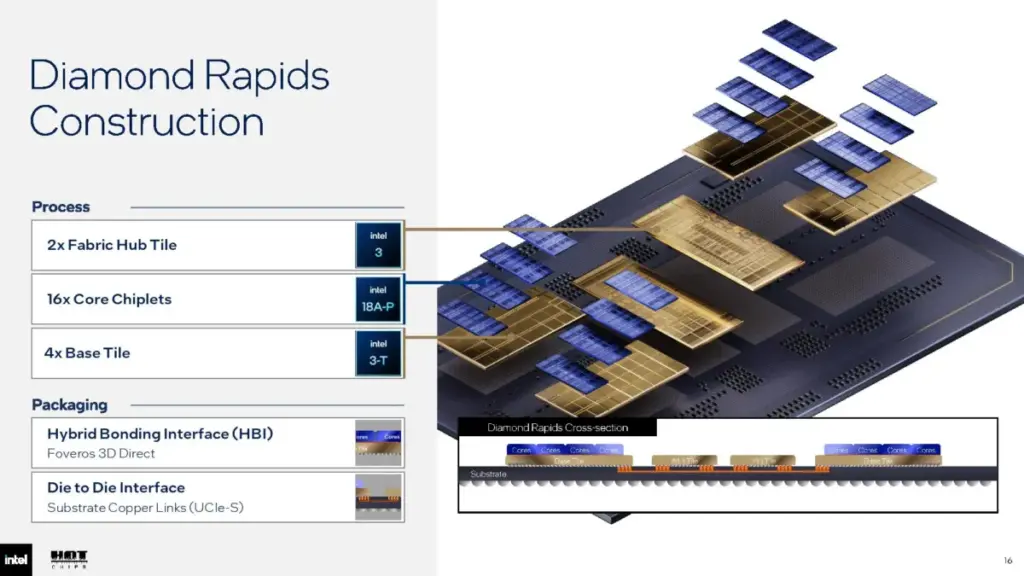
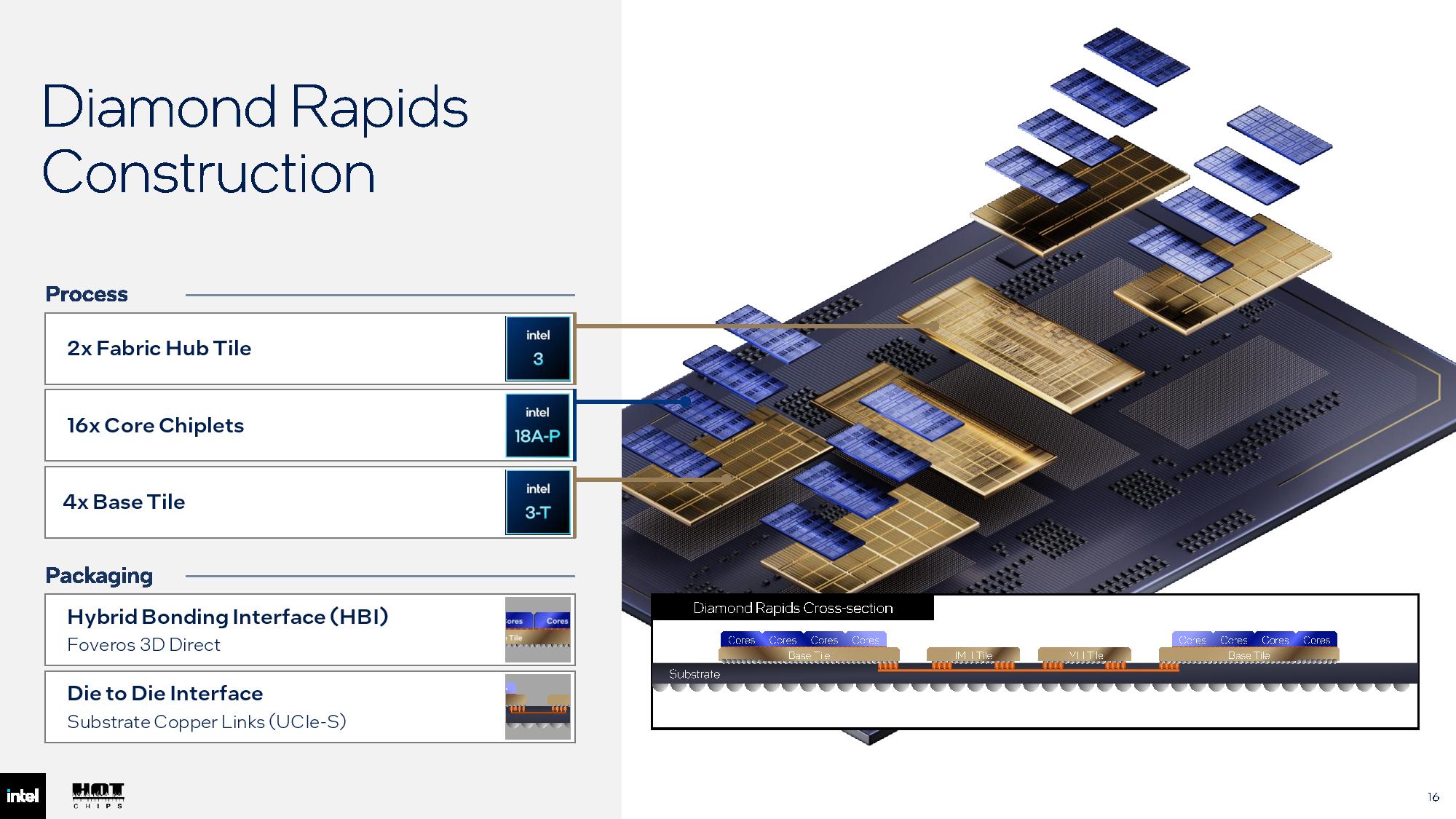
The foundation of Diamond Rapids rests on modular design principles. Intel organizes the processor using what it terms Compute Building Blocks (CBBs).
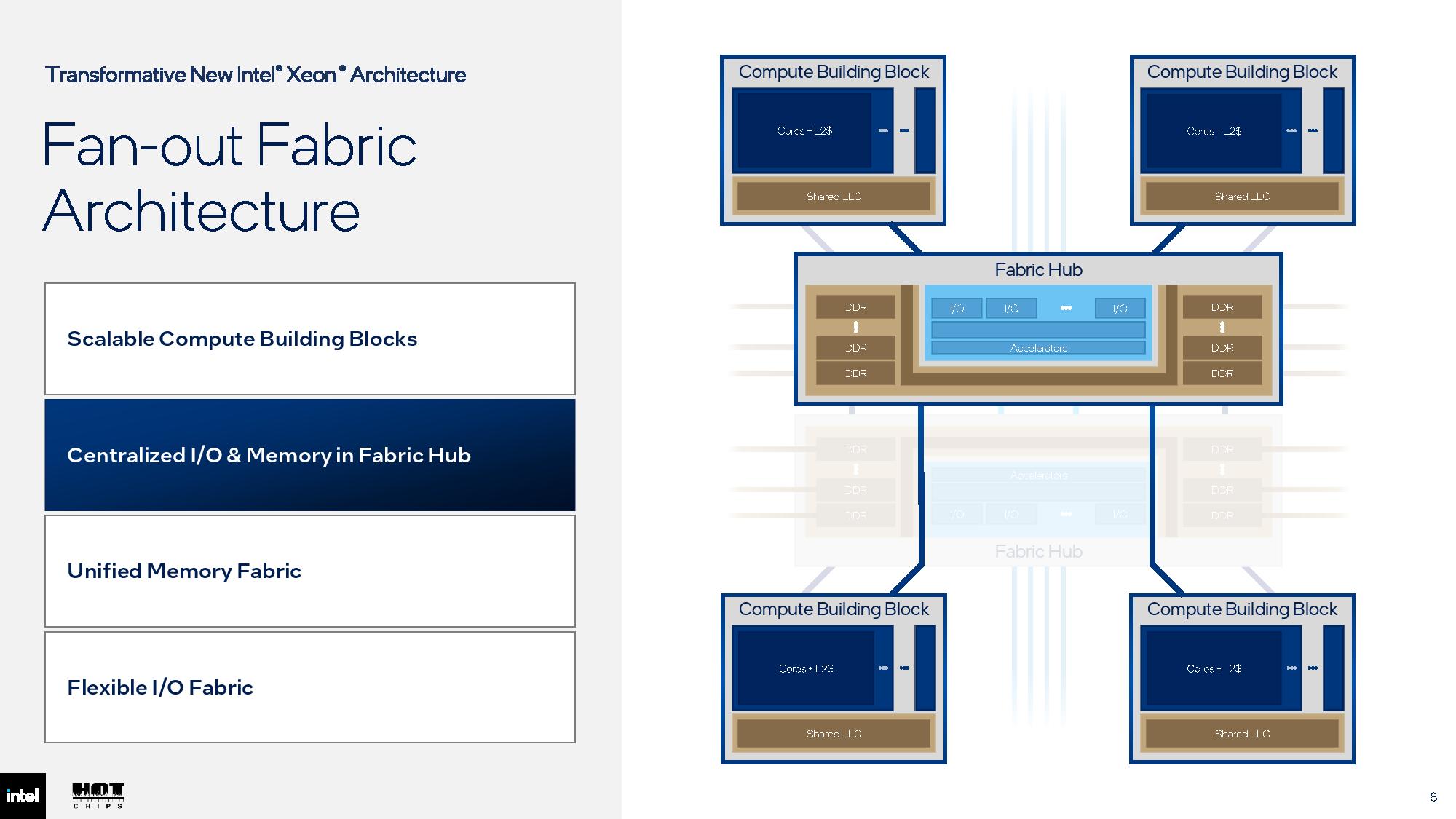
- Core Chiplets: Each CBB houses multiple core chiplets—built on the performance-enhanced Intel 18A-P node—with each individual chiplet packing up to 16 P-cores. These cores have access to private L2 caches.
- Base Tiles: Stacked directly beneath the core chiplets are base tiles fabricated on the Intel 3-T process, which house the expansive L3 Last-Level Cache (LLC).
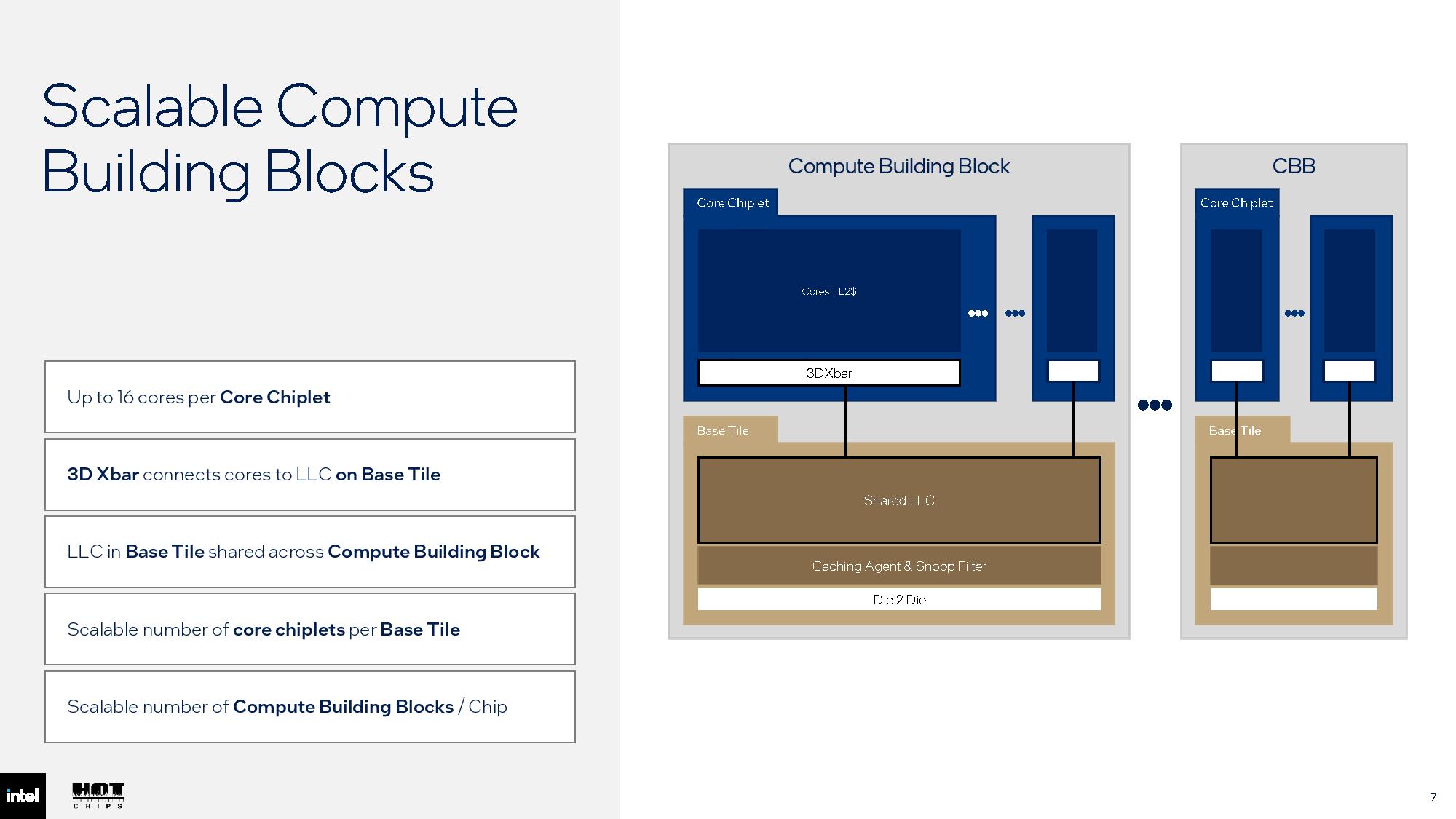
- Interconnects: Intel employs its proprietary Foveros Direct 3D packaging technology to bond the compute chiplets to the base tiles via a high-density 3D crossbar (3D Xbar). A fully configured Diamond Rapids system scales this out dramatically, integrating 16 core chiplets, 4 base tiles, and 2 central fabric hub tiles (built on standard Intel 3).
Flipping the Layout: The Move to Perimeter Cores
Perhaps the most visually and mechanically striking change in Diamond Rapids is its layout. In previous architectures like Granite Rapids-AP, the high-density compute cores were clustered centrally on the die. This configuration frequently created intense thermal hotspots right in the middle of the processor, complicating cooling solutions.
With Diamond Rapids, Intel has effectively inverted the paradigm. By pushing the high-powered, high-clocked P-cores out to the absolute edges of the package and centralizing the memory and I/O subsystems, Intel mimics the layout philosophy long championed by AMD. This perimeter-core arrangement vastly improves thermal dissipation profiles, mitigating centralized heat accumulation and allowing for sustained peak performance under heavy loads.
Supporting Context, Metrics & Technical Innovations
Diamond Rapids is not just a triumph of physical layout; it represents a massive upgrade in memory bandwidth, I/O capability, and instruction set architecture (ISA) modernization.
Memory and I/O Subsystem Scaling
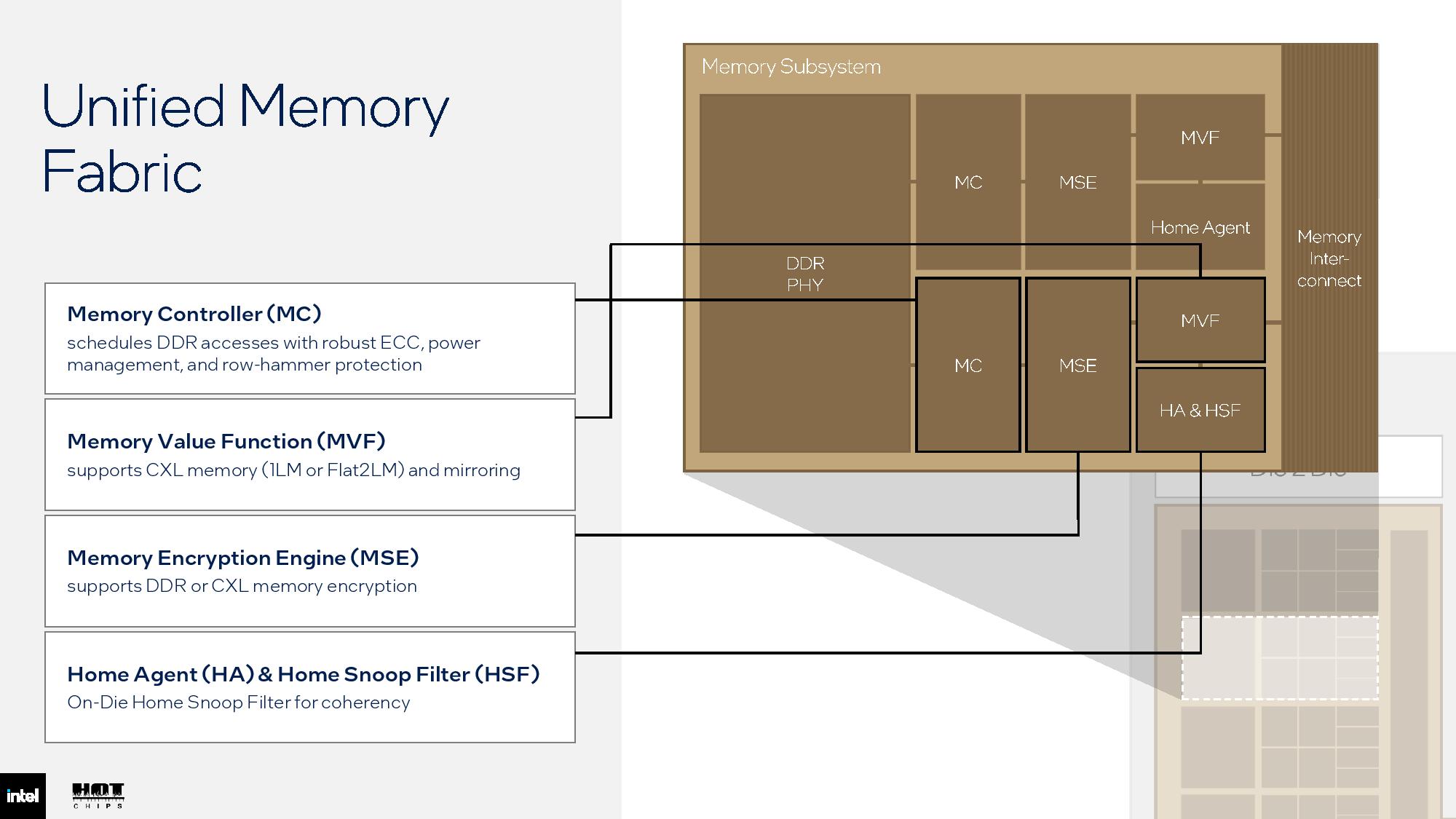
Modern enterprise workloads are frequently starved not for raw compute, but for memory bandwidth and latency. Diamond Rapids addresses this head-on with a massive 16-channel memory architecture—a notable step up from the 12 channels found in Granite Rapids.
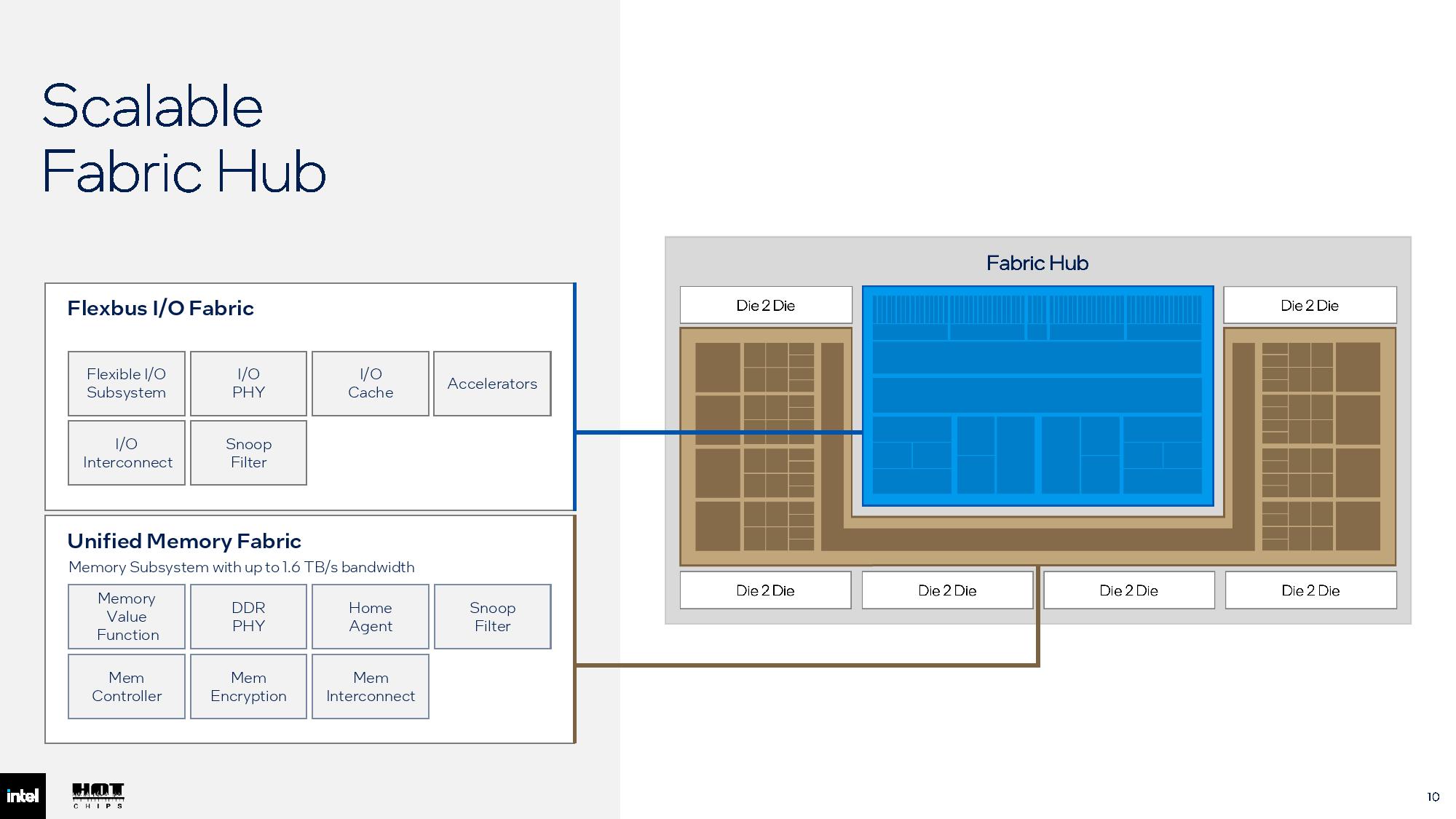
- Memory Speeds: The platform natively supports DDR5 memory speeds up to 8,000 MT/s and blistering MRDIMMs scaling up to 12,800 MT/s.
- On-Die Snoop Filters: Integrated directly into the memory fabric are dedicated on-die snoop filters. By embedding this cache-coherency directory straight onto the CPU, Intel relieves the memory controllers of directory storage and cross-checking overhead, significantly streamlining latency.
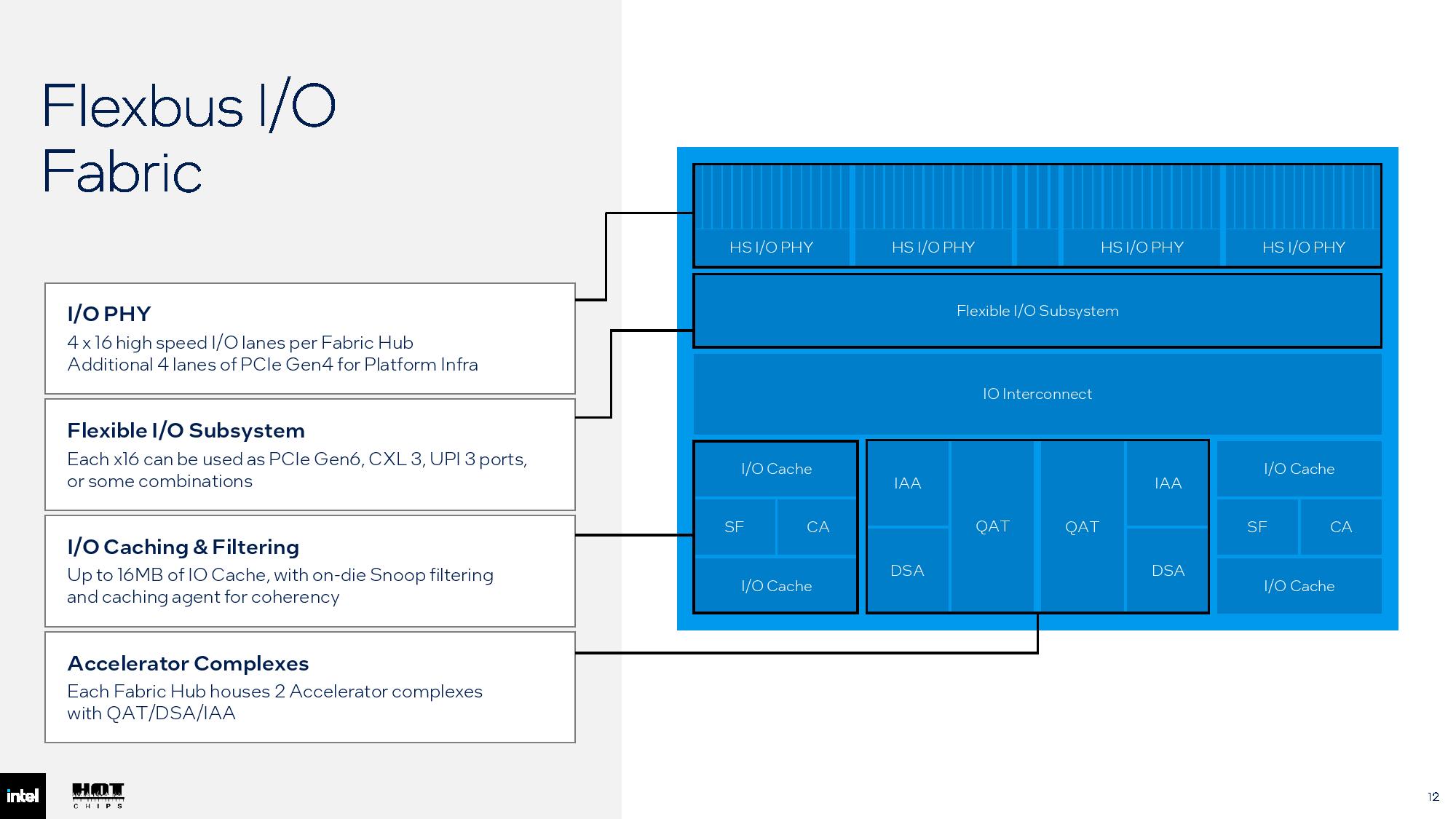
- Flexible I/O Connectivity: The centralized fabric hub tiles coordinate a massive pool of high-speed connectivity. Diamond Rapids supports 128 lanes of PCIe 6.0, CXL 3.0, and UPI 3 in flexible configurations, alongside eight dedicated PCIe 4.0 lanes designated for platform infrastructure management. Specialized on-chip accelerators—including Intel QuickAssist Technology (QAT) for cryptography and compression and the In-Memory Analytics Accelerator (IAA)—are also hardwired into the I/O fabric.
The Packaging Debate: UCIe-S Over EMIB
An unexpected revelation in the architecture of Diamond Rapids is Intel’s choice of die-to-die interconnect. Rather than relying heavily on its universally deployed Embedded Multi-die Interconnect Bridge (EMIB), Intel opted for a standardized UCIe-S (Universal Chiplet Interconnect Express – Standard) copper connection in the substrate to link the fabric hub tiles to the Compute Building Blocks.
When questioned about why they bypassed advanced packaging techniques like UCIe-A, Intel engineers noted that distance was the deciding factor. UCIe-A can require multi-hop routing depending on physical separation across a massive server socket, whereas UCIe-S delivers uniform, low-latency access over longer physical spans across the entire chip layout.
AVX 10.2 and the Modernization of x86 with APX
Software efficiency is just as critical as raw hardware horsepower. Diamond Rapids marks a pivotal milestone for Intel’s vector and general-purpose instruction extensions:
- AVX 10.2: Expanding upon the transitionary AVX 10.1 (which was restricted exclusively to P-cores and focused entirely on 512-bit vectors), AVX 10.2 introduces converged 256-bit vector capabilities. This allows execution across both P-cores and efficiency cores (E-cores), bridging a crucial software compatibility gap.
- Intel Advanced Performance Extensions (APX): APX represents one of the most substantial modernizations of the x86 instruction set architecture in decades. By doubling the number of general-purpose architectural registers from 16 to 32 (introducing new encodings for registers 16 through 31), APX slashes memory overhead. According to Intel benchmarks, applications recompiled with APX require 10% fewer load operations and 20% fewer store operations. Crucially, this is achieved with full backward compatibility, allowing legacy codebases to run seamlessly while unlocking performance gains when recompiled.
Official Statements & Industry Context
While Intel has been careful not to over-promise given the turbulent market rollout of its previous data center hardware, the tone surrounding Diamond Rapids is one of calculated confidence. Company executives and technical leads emphasized that the convergence of the 18A-P node (which entered risk production in mid-2026, offering a 9% performance boost at iso-power over baseline 18A) and the modular CBB design creates an unyielding foundation for the future of cloud computing.
Independent semiconductor analysts note that Diamond Rapids arrives at a critical juncture. The explosive adoption of agentic AI frameworks—autonomous systems that require continuous background context-switching, massive memory pools, and intense parallel processing—has fundamentally altered data center purchasing criteria. By absorbing key design principles from rival architectures while retaining proprietary Intel innovations like AMX (Advanced Matrix Extensions) and QAT, Intel is attempting to recapture the enterprise mindshare it lost during previous node delays.
Future Outlook
As the industry looks ahead to the 2027 commercial deployment of the Xeon 7 ‘Diamond Rapids’ family, the overarching narrative is clear: Intel is executing on a rigorous, multi-generational recovery plan for its data center division.
While questions regarding the fine-grained details of the Panther Cove core microarchitecture will undoubtedly be answered in upcoming technical deep-dives ahead of launch, the macro picture is striking. Diamond Rapids successfully synthesizes bleeding-edge process technology, sophisticated 2.5D/3D hybrid packaging, and a modernized x86 instruction set.
Looking even further down the line, Intel has already confirmed that subsequent architectures following Diamond Rapids—such as the planned Coral Rapids lineage—will reintroduce simultaneous multithreading (SMT) to Xeon processors. For now, however, Diamond Rapids stands as Intel’s definitive answer to the modern enterprise computing crisis, promising unprecedented core densities, thermal efficiency, and computational throughput when it lands in server racks two years from now.