Unlocking the Ghost in the Machine: How Developer m-cid Shattered Sony’s Decades-Old PSP Architecture Myths
By Acid_Snake | June 16, 2026
Executive Overview
For nearly two decades, the PlayStation Portable (PSP) has occupied a legendary, well-understood space in the pantheon of handheld gaming history. Launched by Sony in late 2004, the device was universally understood by developers, enthusiasts, and hardware modders to run on a single-core MIPS architecture—a lean, efficient, 32-bit machine that pushed the boundaries of mobile graphical fidelity. However, foundational technical narratives are rarely bulletproof.
Recent breakthroughs spearheaded by prominent PSP scene architect m-cid—creator of the celebrated PSP True Overclocking utility and VSHGU—have fundamentally upended our understanding of Sony’s iconic handheld. Contrary to official specifications and decades of accepted developer documentation, the PSP is not a single-core machine. It is a dual-core setup.
At the heart of this revelation is the device’s long-misunderstood Media Engine (ME) and its highly elusive co-processor, the Virtual Mobile Engine (VME). For years, these hardware components remained locked behind a wall of official firmware restrictions, designated strictly for internal kernel-level multimedia decoding tasks. Now, thanks to m-cid’s exhaustive reverse-engineering efforts, developer-friendly abstraction libraries, and meticulously compiled technical documentation, the homebrew community has unlocked unprecedented access to this secondary core.
This technological leap is not merely an academic exercise in hardware archaeology. It is already yielding tangible performance gains in demanding modern homebrew projects, such as complex first-person shooter ports. By circumventing historic hardware limitations—such as the lack of a hardware spinlock and user-mode access restrictions—developers can finally tap into the latent processing power that Sony kept hidden for twenty years. This article explores the depths of this discovery, tracing its history, technical complexities, and profound implications for the future of PSP homebrew development.
Detailed Chronology: From Hidden Silicon to Modern Reverse-Engineering
To understand the magnitude of m-cid’s recent achievements, it is necessary to retrace the timeline of PSP hardware exploration. The journey from shrouded corporate secrecy to open-source liberation spans more than twenty years of hacking, tinkering, and architectural excavation.
2004–2006: The Illusion of Single-Core Supremacy
When the PSP debuted, Sony’s official software development kits (SDKs) presented developers with a unified programming model anchored around the primary 32-bit MIPS R4000-based CPU core (known as the Allegrex). While early hardware teardowns and chip-die analyses hinted at additional silicon structures on the main processor die, Sony’s official firmware (OFM) strictly cordoned off these auxiliary components.
In retail environments, developers could not execute arbitrary user-mode code on the Media Engine. Instead, the ME was treated as a glorified hardware accelerator managed exclusively by the kernel. If a game needed to decode an MP3 audio file, a JPEG image, or an MPEG video stream, it had to issue a high-level system call to the operating system, which would then dispatch the workload to the ME.
2007–2015: Early Tinkering and the "Wild West" of Kernel Hacks
As the PSP scene matured through custom firmware (CFW) developments by pioneers like Dark_AleX, early hardware enthusiasts began probing the boundaries of the system. Veteran developers on forums such as ps2dev—including community figures like crazyc—managed to execute basic code on the Media Engine.
However, these early triumphs were severely bottlenecked. Without a reliable hardware spinlock or granular synchronization mechanisms between the main CPU and the ME, attempting to run concurrent, asynchronous tasks often resulted in catastrophic system crashes, memory corruption, and deadlocks. Consequently, early tinkering remained largely experimental, failing to materialize into practical tools or stable libraries that everyday homebrew developers could utilize.
2024–2026: The m-cid Breakthroughs
Following years of relative dormancy regarding deep low-level hardware exploration, developer m-cid entered the scene with a series of paradigm-shifting releases. Building upon their prior success with PSP True Overclocking—widely regarded as one of the most innovative breakthroughs in PSP software modification history—m-cid turned their attention toward the sleeping giant within the handheld’s architecture.
Rather than merely executing proof-of-concept code, m-cid systematically reverse-engineered the communication pipelines between the primary CPU and the Media Engine. By developing low-level synchronization primitives, custom task dispatchers, and robust abstraction layers, m-cid transformed the ME from a dangerous, volatile black box into a stable, accessible co-processor. This culminated in the release of foundational GitHub repositories, including psp-media-engine-custom-core and psp-media-engine-safe-task, providing the community with the keys to the kingdom.
Supporting Context & Metrics: Architecture and the VME Enigma
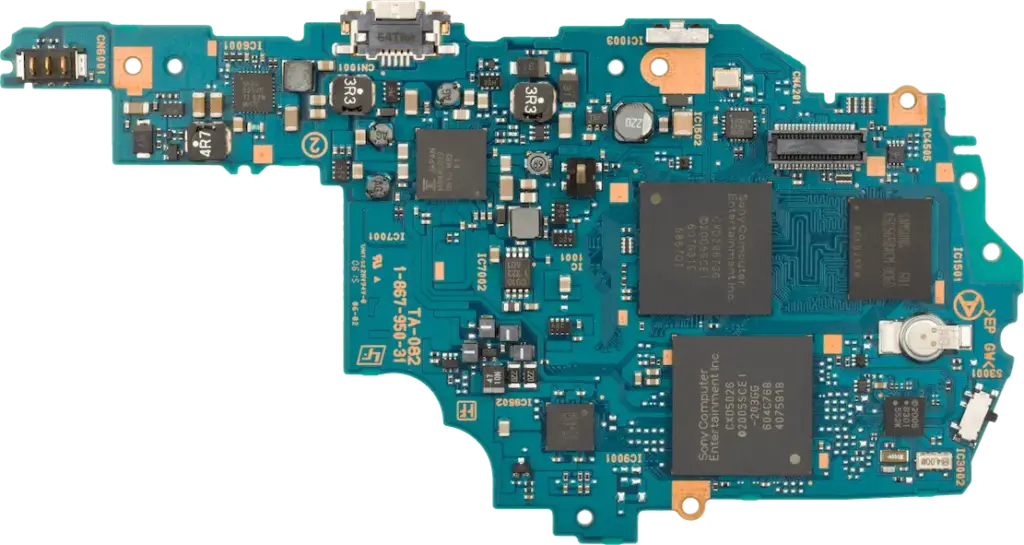
To fully appreciate the technical hurdles m-cid overcame, one must examine the structural makeup of the PSP’s secondary processing units: the Media Engine and the Virtual Mobile Engine.
+---------------------------------------------------------------+
|                       PSP Motherboard                         |
|                                                               |
|   +-----------------------+       +-----------------------+   |
|   | Primary CPU (Allegrex)| <---> |  Media Engine (ME)    |   |
|   |    32-bit MIPS Core   |       |  Secondary MIPS Core  |   |
|   +-----------------------+       +-----------------------+   |
|                                               |               |
|                                               v               |
|                                   +-----------------------+   |
|                                   | Virtual Mobile Engine |   |
|                                   |     (VME Co-Proc)     |   |
|                                   +-----------------------+   |
+---------------------------------------------------------------+
The Media Engine (ME): The Sleeping Giant
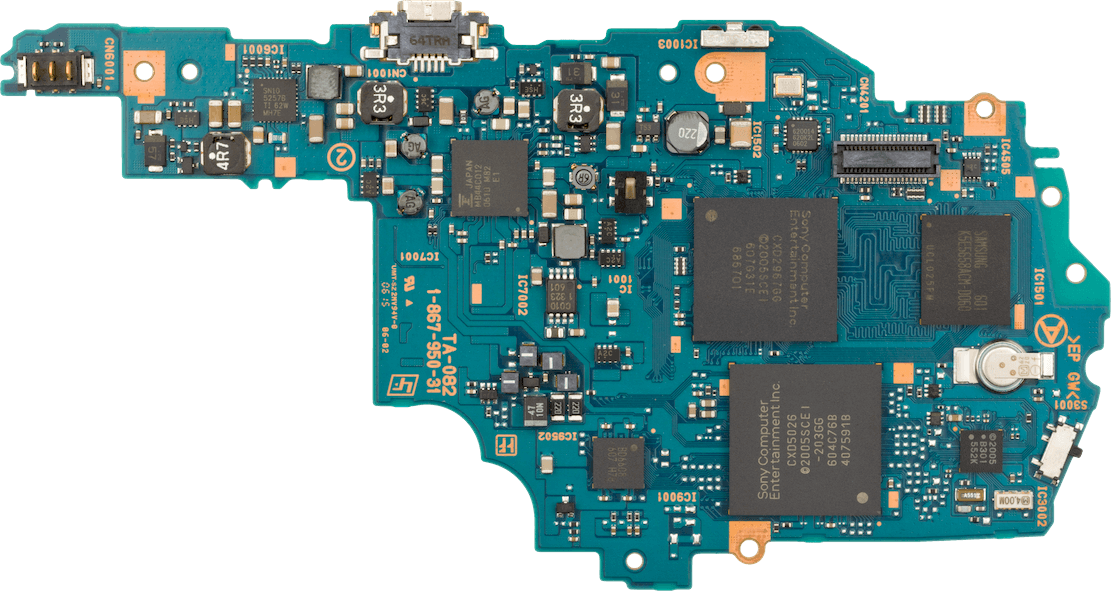
The ME is, fundamentally, a secondary MIPS core integrated directly onto the PSP system-on-chip. In official firmware configurations, its duties were strictly compartmentalized for real-time multimedia parsing:
- Audio Decoding: Hardware acceleration for MP3, ATRAC3 (AT3), and advanced audio codecs.
- Image and Video Processing: Rapid decoding of JPEG textures and MPEG-4 video streams necessary for XMB (XrossMediaBar) animations, movie playback, and game asset streaming.
By locking the ME behind kernel-mode access, Sony successfully insulated the hardware against fragmentation. This architectural strategy bought Sony immense flexibility; it allowed them to alter or drop internal auxiliary components in future hardware revisions without breaking backwards compatibility for retail software (which relied solely on abstract system calls).
The Real-World Legacy: PSP vs. PS Vita
While Sony never removed the Media Engine during the various hardware iterations of the PSP itself (from the original PSP-1000 through the PSP-3000 and PSP Go), this philosophy heavily influenced subsequent hardware designs. Most notably, the PlayStation Vita notoriously omitted a dedicated Media Engine compatible with legacy PSP architecture. This hardware omission is the primary culprit behind why certain complex PSP homebrew applications, advanced emulators, and ports fail to run natively on Vita’s PPSSPP-adjacent or adrenaline emulation layers without specialized software workarounds.
The Virtual Mobile Engine (VME): Cracking the Unknown
Arguably even more fascinating—and infinitely more obscure—is the Virtual Mobile Engine (VME). Acting as an auxiliary co-processor to the Media Engine, the VME is responsible for providing the raw computational muscle required for real-time multimedia decoding loops.
According to m-cid’s recent documentation (available via repositories such as psp-media-engine-cracking-the-unknown), the VME is composed of a complex, highly configurable micro-network of Processing Elements (PEs) linked via an internal data path. Furthermore, preliminary investigations indicate that the VME exhibits capabilities tailored for hardware-accelerated 64-bit integer mathematics—a notable boon, considering the primary PSP CPU is strictly limited to 32-bit MIPS operations.
While real-world benchmarks and practical use cases for the VME (such as offloading heavy mathematical routines to squeeze out extra frames per second in high-end emulators) are still in their infancy, the mere fact that this undocumented co-processor is being mapped out represents a monumental leap in console reverse engineering.
Official Statements and Industry Context
While Sony Computer Entertainment has long since sunsetted support for the PlayStation Portable—having officially shuttered the PlayStation Store for the device and wound down hardware repairs years ago—corporate philosophy regarding the PSP’s architecture has historically centered on security, power efficiency, and hardware abstraction.
In legacy developer interviews and official Sony documentation from the mid-2000s, the company emphasized that the PSP’s internal subsystems were engineered to balance high performance with strict battery preservation. By offloading intensive decoding tasks to dedicated hardware pipelines (the ME and VME), the primary CPU was freed up to handle game logic, physics, and rendering pipelines.
However, industry analysts and architectural historians have noted that Sony’s decision to gatekeeper these components was equally driven by security and DRM (Digital Rights Management) concerns. Restricting media decoding pipelines to the secure kernel environment prevented early exploit developers from easily leveraging low-level hardware access vectors to compromise the system’s cryptographic boot chain.
Now, decades after the commercial life cycle of the console has ended, independent developers like m-cid have dismantled those corporate security boundaries, proving that the hardware was capable of far more flexible, general-purpose computing than Sony ever officially sanctioned.
Future Outlook: Empowering the Next Generation of Homebrew
The uncovering and harnessing of the PSP’s dual-core capabilities mark the beginning of a renaissance for the console’s homebrew community. By packaging complex low-level synchronization logic, task queues, and memory management into clean, accessible abstraction libraries, m-cid has democratized access to the Media Engine.
Practical Applications: Beyond Academic Theory
The impact of these discoveries is already leaving the realm of theoretical documentation and entering practical application. Recent high-profile projects—most notably advanced, demanding ports such as the newly engineered Perfect Dark port for the PSP—have begun successfully integrating ME-backed routines to distribute processing loads.
By offloading heavy data-streaming, background asset decompression, and auxiliary computations to the Media Engine, developers can reserve the primary MIPS core entirely for rendering frames and executing complex game logic. This task-splitting architecture effectively sidesteps the traditional clock-speed bottlenecks that have historically plagued ambitious porting projects on the handheld.
What Lies Ahead?
As the homebrew community continues to digest m-cid’s documentation and experiment with the newly released safe-task and custom-core libraries, we can anticipate several exciting developments in the near future:
- Enhanced Emulation Performance: CPU-heavy emulators (such as SNES, CPS2, and early 3D systems) may leverage the ME and VME to handle audio processing and ROM decompression asynchronously.
- Advanced Source Ports: Complex PC game ports from the late 90s and early 2000s will benefit immensely from parallel processing capabilities, achieving smoother framerates and reduced stuttering during heavy asset streaming.
- Deeper VME Exploitation: As researchers map out the bitstream and data paths of the Virtual Mobile Engine, utilizing hardware-accelerated 64-bit integer math in user-mode homebrew could open entirely new avenues of computational efficiency.
The PSP may be a vintage platform by modern standards, but thanks to the relentless ingenuity of developers like m-cid, the hardware still has plenty of secrets left to reveal.
Further Reading & Technical Resources
For developers, researchers, and hardware enthusiasts wishing to dive deeper into the technical specifications, source code, and architectural documentation surrounding these discoveries, m-cid’s official repositories provide an invaluable starting point:
- Custom Core Implementation: m-cid’s PSP Media Engine Custom Core
- Safe Task Management: PSP Media Engine Safe Task Library
- Hardware Archaeology & VME Analysis: Cracking the Unknown: The VME Bitstream and Datapath
- System Control Utilities: ARK-5 VSHGU Source Code