Soaring Above Kanto: How the Gen 1 Recompilation and Voxel Mod Are Rewriting Pokémon History
Executive Overview
For millions of gamers who grew up huddled beneath bedsheets with a Game Boy Color, the original Pokémon Red and Blue were masterpieces of imagination. Released in the late 1990s, Game Freak’s seminal role-playing games defined a generation, transforming tiny pixel-art sprites and 4-bit midi tracks into sprawling, vivid adventures in our minds. Yet, as hardware evolved over the decades, a persistent daydream lingered among the fanbase: What would it look like to truly inhabit that world? What if Kanto wasn’t just a grid of static tiles viewed from a rigid top-down perspective, but a living, breathing three-dimensional space?
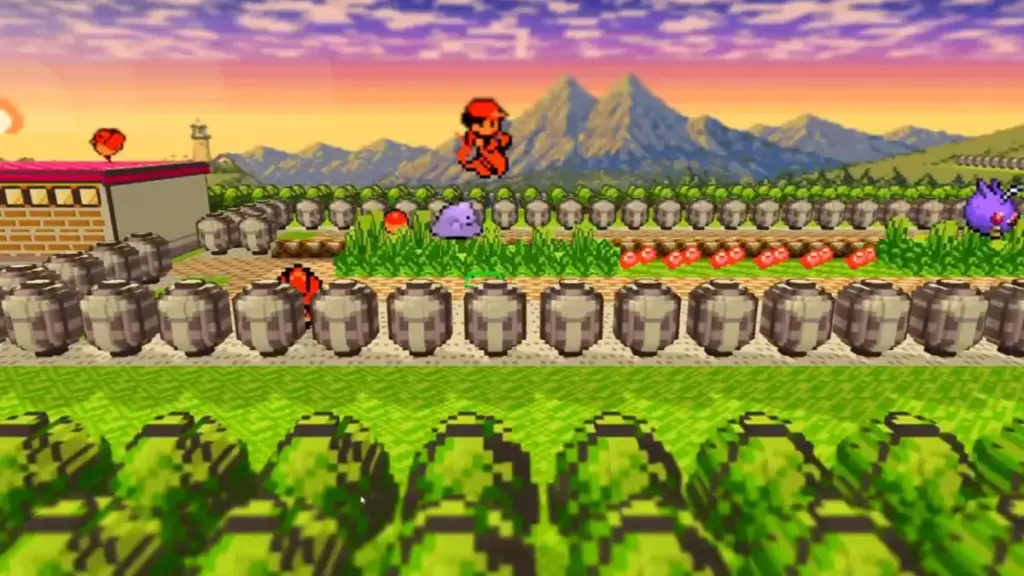
In August 2026, that decades-old daydream transformed into reality. Thanks to a groundbreaking collaboration of modders, reverse-engineers, and community developers, the combination of the Generation 1 Native Code Recompilation (Gen 1 Recomp) and the Dramatic Shape Voxel Mod has fundamentally shattered the physical and visual boundaries of the original Game Boy titles. The crowning achievement of this movement—showcased recently in viral footage shared by community member CameronRitz—allows players to summon a Charizard and free-fly across the entirety of Kanto in real-time 3D, complete with a dynamic first-person flight mode.
What began as ambitious hobbyist code tinkering has evolved into a full-scale revitalization project. It marries retro nostalgia with modern technical innovation, introducing features that Game Freak could not have dreamed of implementing on 1996 portable hardware. From third-person follow cameras reminiscent of 3D platformers to curved horizons, fully animated 3D battles, and customizable color palettes, this modded ecosystem is redefining what is possible in the retro-modding sphere. This report provides a comprehensive examination of the technical marvels, community milestones, and future horizons driving the most exciting retro gaming phenomenon of the decade.
Detailed Chronology: The Evolution of the Pokémon 3D Modding Phenomenon
To understand the magnitude of the recent free-flight breakthrough, one must trace the evolutionary chain of technical milestones that led the modding community to this juncture. The journey from static 2D sprites to fully rendered, immersive voxel environments was neither swift nor straightforward; it represents years of meticulous reverse-engineering, decompilation, and creative problem-solving.
The Foundation: Native Code Recompilation and Decompilation
For years, playing Pokémon Red and Blue in anything other than their original formats meant relying on emulation. While emulators allowed for fast-forwarding, shaders, and upscaling, the underlying game engine remained bound to the rigid limitations of the original Game Boy’s Z80-derived CPU architecture.
The paradigm shift began with the public release of static game code recompilation projects. Instead of interpreting the game via emulation, recompilation tools translate the original ROM’s assembly code directly into native C or C++ source code. This process strips away the emulator middleman, allowing the game to compile and run natively on modern operating systems at lightning-fast speeds, while unlocking unprecedented access to memory addresses, rendering pipelines, and game logic hooks.
Once the code was unchained from the Game Boy architecture, modders gained the structural freedom required to manipulate how the game’s assets were drawn to the screen.
Enter the Voxel Era: Dramatic Shape’s Vision
While recompilation provided the engine, the visual transformation required an artistic catalyst. Enter the Dramatic Shape Voxel Mod.
Initially conceptualized as a way to give flat 2D tiles and sprites a sense of physical depth without losing the charming, chunky aesthetic of retro graphics, the Voxel Mod began converting Kanto’s flat environments into volumetric 3D blocks. Trees, buildings, NPCs, and terrain features were rendered as three-dimensional voxels. Suddenly, Pallet Town, Viridian Forest, and the sweeping slopes of Mt. Moon possessed tangible height, depth, and volume.
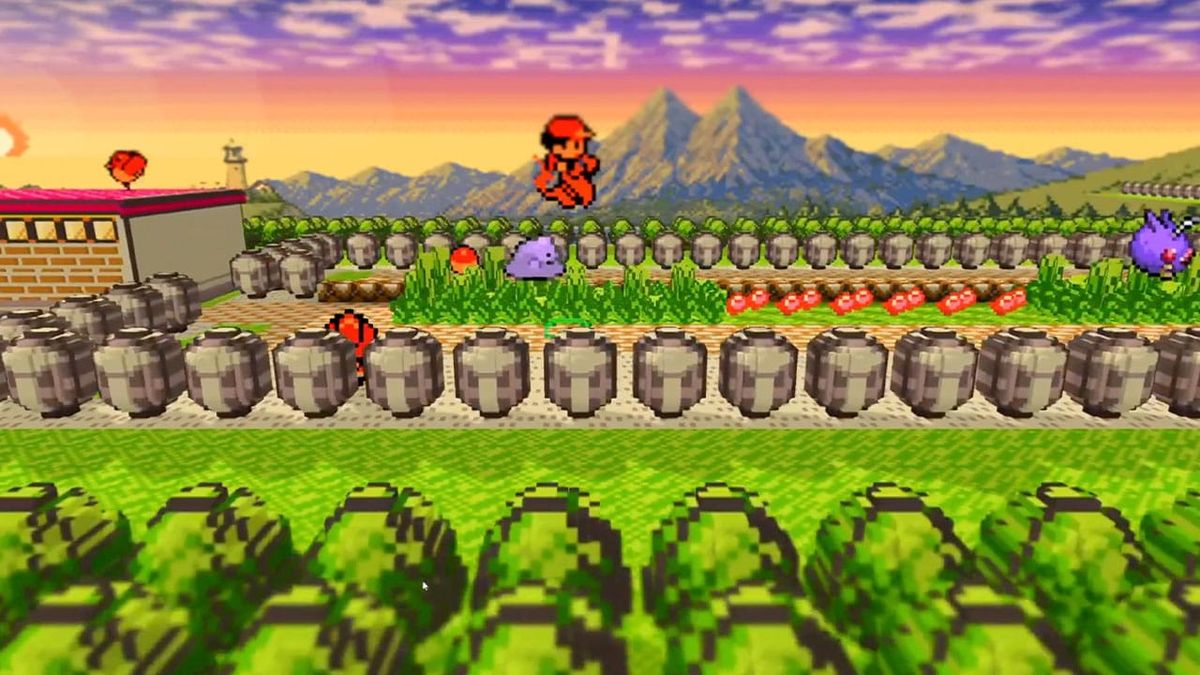
Early iterations of the Voxel Mod focused primarily on isometric or fixed-perspective exploration. Players marveled at seeing their sprites walk past three-dimensional Pokémon centers and climb volumetric stairs. However, the modular nature of the recompilation framework meant that developers could continuously push the envelope, introducing dynamic camera controls, real-time lighting adjustments, and perspective shifts.
The Third-Person Revolution and the Flight Breakthrough
The turning point arrived in early August 2026, when developers rolled out comprehensive updates to the Voxel Mod framework. These updates discarded the traditional overhead perspective in favor of a fluid, third-person follow-cam style—bringing to mind classic 3D platformers like Super Mario 64 or The Legend of Zelda: Ocarina of Time.
Players could now rotate the camera 360 degrees around their character, observing the world from dynamic angles as they navigated routes and towns. Alongside camera improvements came horizon-curving options, adjustable zoom levels, and a suite of palette-shifting tools that allowed users to completely overhaul the visual mood of Kanto.
The crescendo of this update cycle occurred on August 7, 2026, when community developer and content creator CameronRitz published video footage on X (formerly Twitter). The clip captured an unbelievable sight: a player atop a fully rendered 3D Charizard, soaring seamlessly into the upper atmosphere above Kanto. Breaking free from the ground-level confines of Routes 1 through 25, the player navigated the skies with complete freedom of movement. Better yet, the mod included a toggleable first-person flight mode, granting users a pilot’s-eye view of the sprawling continent below—complete with recognizable landmarks shrinking into the distance as they climbed higher into the clouds.
Supporting Context & Metrics: Technical Breakdown and Community Impact
The technical achievement of turning a 1996 Game Boy cartridge into a fully realized 3D flight simulator cannot be overstated. When Pokémon Red and Blue were developed, storage space was measured in megabits, and memory allocation was ruthlessly restricted. The original map of Kanto was not a continuous 3D coordinate space, but a collection of discrete, connected map matrices loaded dynamically as the player crossed boundary thresholds.
+-------------------------------------------------------------------------+
|                  COMPARATIVE TECHNICAL SPECIFICATIONS                   |
+---------------------------+---------------------+-----------------------+
| Metric                    | Original Game Boy   | Modern Recomp + Voxel |
+---------------------------+---------------------+-----------------------+
| Resolution                | 160 x 144 pixels    | Scalable HD / 4K+     |
| Color Depth               | 4-shade Monochrome  | True Color / Palettes |
| Dimension                 | 2D Orthographic     | Full 3D Voxel Engine  |
| Perspective               | Top-Down Grid       | 360° Third-Person /   |
|                           |                     | First-Person Flight   |
| Movement Freedom          | 4-Way Cardinal Grid | Analog / Free Roam    |
+---------------------------+---------------------+-----------------------+
Bridging 2D Data with 3D Rendering Pipelines
To achieve free-flight and third-person exploration, the modding toolkit performs several heavy computational tasks behind the scenes:
- Memory Hooking: The native recompilation engine exposes game state variables (such as player coordinates, active Pokémon, and map IDs) to a modern graphics wrapper.
- Voxel Tessellation: 2D tile graphics are dynamically mapped onto volumetric voxel structures, generating height maps for terrain that previously possessed no vertical data.
- Camera Matrix Injection: By overriding the original game’s static camera positioning logic, the mod introduces a virtual camera vector capable of smooth interpolation, rotation, and distance scaling.
- Asset Expansion: While core data structures remain faithful to the original ROM, external asset loaders allow for high-definition 3D models (such as the mountable Charizard) to be injected into the rendering pipeline without crashing the underlying game logic.
The Rise of Accessibility Guides and Community Adoption
As word of the mod spread across platforms like Reddit, X, and retro gaming hubs such as Retro Dodo, demand for installation tutorials skyrocketed. Because setting up native recompilation builds and applying complex asset mods often requires command-line familiarity and precise file management, community contributors stepped up to author step-by-step installation guides. These resources have democratized access, allowing thousands of casual fans to experience Kanto in 3D without requiring a degree in software engineering.
Official Statements and Community Reception
While Nintendo and The Pokémon Company have historically maintained a strict zero-tolerance policy toward unauthorized software modifications and fan projects—frequently issuing DMCA takedowns and cease-and-desist letters to high-profile ROM hacks and remakes—the technical community surrounding the Gen 1 Recomp and Voxel Mod operates in a distinct legal and philosophical gray area. Because native recompilation tools often require users to supply their own legally dumped ROM files, developers frame the project as an exercise in source-code preservation and accessibility rather than piracy.
Prominent figures within the retro gaming journalism and modding spaces have been vocal in their praise. Sebastian Santabarbara of Retro Dodo encapsulated the collective sentiment of the fanbase, writing:

"This mod is becoming the version of Pokémon Red/Blue that I always hoped for back in the 90s… It’s like someone just entered every cheat known to gaming-kind in this game and made it run perfectly."
On social media, the reaction from the broader gaming community has been overwhelmingly enthusiastic. CameronRitz’s showcase video garnered hundreds of thousands of impressions within days, with commenters drawing favorable comparisons between the mod’s soaring mechanics and modern open-world titles like Pokémon Legends: Arceus or The Legend of Zelda: Tears of the Kingdom.
"We spent twenty-five years imagining what was behind the trees at the edge of Route 1," wrote one prominent community member on X. "Now, we can finally fly right over them."
Future Outlook: What’s Next for Retro Pokémon Modding?
The success of the Gen 1 Recomp and Voxel Mod partnership opens up a Pandora’s box of possibilities for the future of retro game preservation and enhancement. As developers continue to refine the underlying code, several exciting avenues of expansion are already underway or being actively discussed within community development channels.
1. Expanding Beyond Generation 1
With the technical framework for native recompilation and voxel rendering successfully established for Kanto, modders are already casting their eyes toward subsequent generations. While Pokémon Gold, Silver, and Crystal (Generation 2) run on a similar hardware architecture, adapting the voxel pipeline to handle the sprawling scale of both Johto and post-game Kanto represents an even greater logistical challenge. Nevertheless, the successful mapping of Gen 1 provides a replicable blueprint for future ports.
2. Enhanced Multiplayer and Co-Op Exploration
Historically, trading and battling in Gen 1 required physical Link Cables or simulated peer-to-peer connection protocols. With native recompilation transforming the game into a modern application running on PC and other platforms, developers are exploring the viability of expanded online networking features. Imagine a version of Pokémon Red and Blue where multiple players can meet up in a shared 3D rendering of Cerulean City, trade Pokémon in real-time, or soar across the Kanto skies side-by-side on Charizard back.
3. Deeper Quality-of-Life and Gameplay Overhauls
Beyond visual enhancements, the modding ecosystem paves the way for deep systemic overhauls. While purists prefer to experience the original storyline with updated graphics, the decoupling of the game code allows for integrated bug fixes (such as resolving the infamous Psychic-type balancing issues or catch-rate glitches), modern physical/special attack splits, and expanded difficulty settings.
Conclusion
The evolution of Pokémon Red and Blue from cramped, monochrome Game Boy cartridges into fully realized, 3D voxel-rendered environments is a testament to the ingenuity, passion, and technical brilliance of the retro gaming community. By bridging the gap between 1990s assembly code and modern graphics pipelines, projects like the Gen 1 Recomp and the Dramatic Shape Voxel Mod have achieved the impossible: they have updated our childhood memories without losing their soul.
Whether you are an old-school veteran eager to experience Kanto from the dizzying heights of a Charizard’s back, or a newcomer discovering the birthplace of the franchise through a modern lens, one thing is certain. Kanto has never looked this good—and the sky is literally no longer the limit.