National Security Breach: Chinese Components in Royal Navy’s K3 Scout Drones Spark International Alarm
Executive Overview
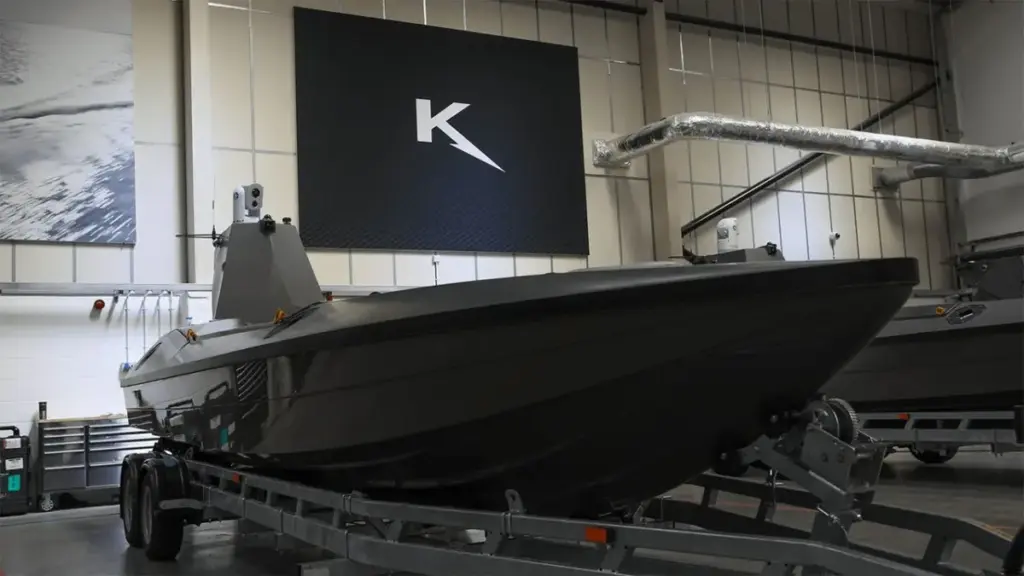
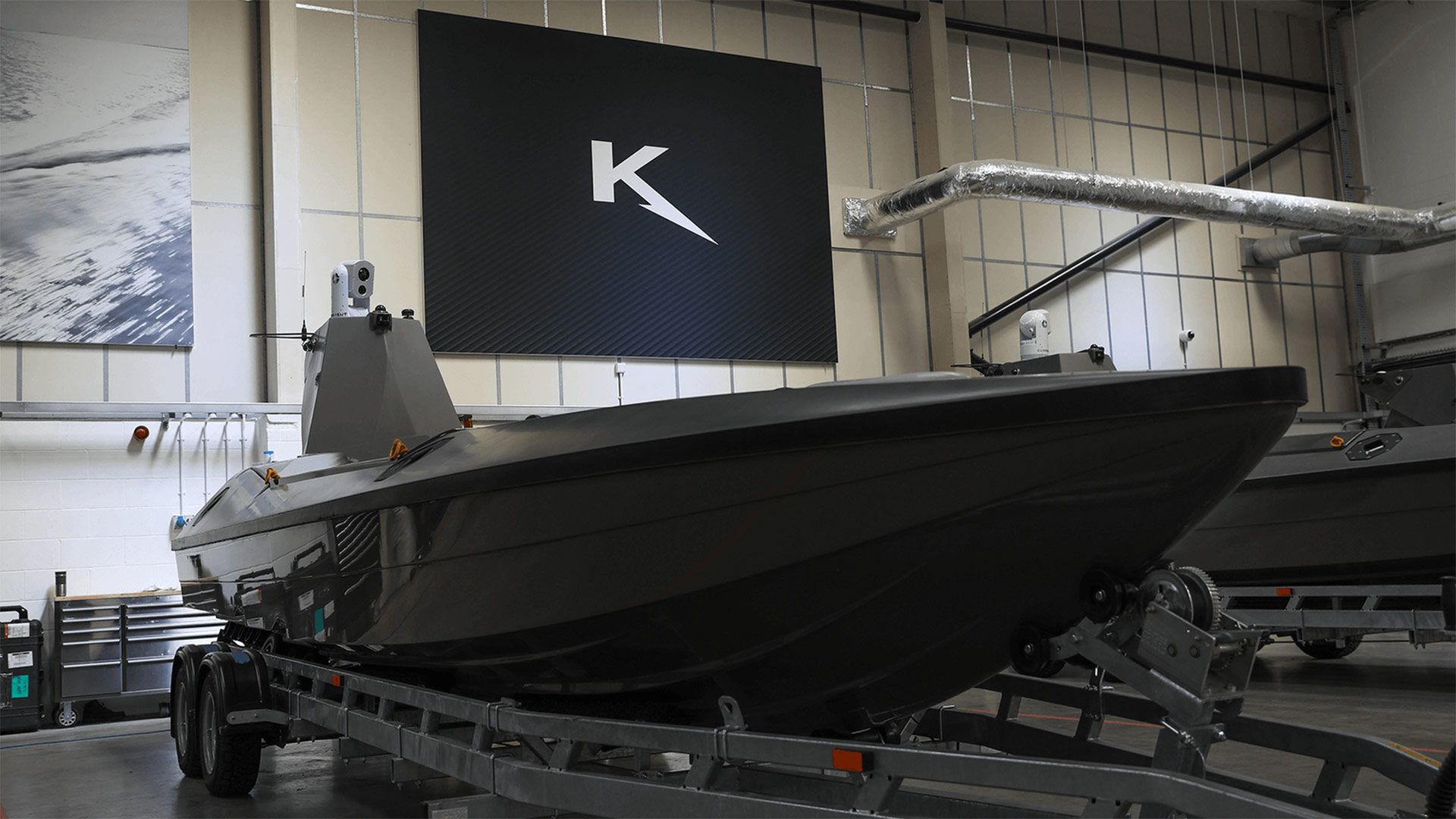
In what is rapidly evolving into one of the most significant defense-technology security lapses of the decade, advanced surveillance sea drones operated by the United Kingdom’s Royal Navy have been found to contain components secretly transmitting data back to China. The revelations, initially brought to light by The Telegraph, center on the high-performance K3 Scout autonomous surface vessels (ASVs)—platforms integral to modern British naval reconnaissance, marine asset protection, and tactical operations.
The breach involves unauthorized camera components embedded within the drones, which were discovered to be piping telemetry and status signals to external servers linked to Chinese infrastructure. While the United Kingdom’s Ministry of Defence (MoD) has moved swiftly to sever all internet connectivity to the compromised hardware and downplay the severity of the leaked information, the political and strategic fallout has been immense. Opposition ministers and defense analysts have expressed profound fury, citing a systemic failure in supply chain vetting that puts critical military intelligence at risk.
This incident is not an isolated event; rather, it highlights a deeply entrenched vulnerability plaguing defense contractors across the Western world. As modern military hardware becomes increasingly dependent on sophisticated commercial-off-the-shelf (COTS) subassemblies, the pervasive reach of Chinese manufacturing continues to challenge global defense integrity. From telecommunications giants like Huawei and ZTE to consumer and military-grade drone makers such as DJI, Western governments have spent years attempting to purge untrusted hardware from critical infrastructure. Yet, as this latest Royal Navy scandal demonstrates, the intricate, globalized nature of tech supply chains leaves even elite military projects exposed to covert surveillance risks.
Detailed Chronology of the Discovery
The unmasking of the security flaw within the Royal Navy’s uncrewed surface fleet unfolded through a combination of routine internal oversight and investigative journalism.
Phase 1: Routine Cyber Audits and Vulnerability Assessments
According to official statements released by the MoD, the anomaly was first flagged during a routine cyber vulnerability assessment. As part of standard operating procedure, military cybersecurity teams continually probe connected defense platforms for anomalous outbound traffic, unauthorized background processes, and unrecognized handshake protocols. During these diagnostic sweeps, analysts noticed that specific camera hardware integrated into the K3 Scout drones was maintaining persistent, unprompted contact with external network nodes.
Phase 2: Sourcing via Third-Party Contractors
Subsequent investigations traced the origin of the compromised hardware. The £12 million K3 Scout fleet was acquired through Kraken Technology Group, a major British defense contractor specializing in high-performance maritime systems. According to defense reports, Kraken Technology Group did not manufacture the camera modules in-house; instead, the components were sourced from an external third-party supplier.
Crucially, this third-party vendor had provided explicit, written assurances regarding the hardware’s security compliance, data privacy measures, and lack of foreign subversion vectors. Trusting these assurances, Kraken integrated the cameras into the K3 Scout architecture without deep-level hardware reverse-engineering—a vulnerability gap that defense critics are now calling a "major failure" in quality assurance.
Phase 3: Public Disclosure and Official Triage
When The Telegraph published its exclusive exposé on the breach in August 2026, the story triggered immediate crisis management protocols within Whitehall. The MoD scrambled to reassure the public and international allies, confirming that the vulnerability had indeed been isolated. Officials stated that all internet connectivity linked to the compromised camera systems had been permanently severed, effectively blinding any potential data conduit before it could be weaponized or exploited for deep intelligence gathering. Furthermore, the MoD insisted that extensive forensic audits of internal networks "found no evidence of MoD data or systems being accessed, compromised, or transmitted externally."
Supporting Context & Metrics: Anatomy of the K3 Scout and the Global Supply Chain Crisis
To fully grasp the gravity of the K3 Scout incident, one must examine the operational capabilities of the drone itself and the broader geopolitical landscape surrounding hardware security.
The K3 Scout: Specifications and Operational Footprint
Commissioned by the Royal Marines as part of a £12 million fleet acquisition starting in March, the K3 Scout is a formidable asset in modern littoral warfare. Engineered for extended deployments, the autonomous sea drone boasts impressive operational metrics:
- Payload Capacity: Capable of carrying up to 600 kilograms (approx. 1,322 lbs) of specialized cargo, weaponry, or sensor suites.
- Endurance: Designed to operate continuously at sea for up to 30 days without human intervention.
- Strategic Utility: The platform was recently slated for deployment to secure freedom of navigation in volatile maritime corridors, such as the Strait of Hormuz—a critical global shipping chokepoint.
Beyond the UK, the K3 Scout’s footprint extends to key international allies. The United States Special Operations Command (SOCOM) utilizes variants of the drone, and NATO forces have actively integrated the platform into multi-national naval trials designed to safeguard vulnerable undersea cable infrastructure in the Baltic Sea. The realization that units deployed in such sensitive theaters contained covert data-transmitting components has sent shockwaves through NATO planning committees.
Defining the Breach: "Heartbeat Communications" vs. Full Espionage
In its defense, the MoD has sought to categorize the unauthorized transmissions as minimal in scope, describing them as "heartbeat communications." In cybersecurity terminology, a heartbeat signal is a periodic message generated by a hardware device or software application to verify that it is online, responsive, and functioning normally.
However, cybersecurity experts caution that even seemingly benign heartbeat communications pose severe tactical risks. By continually pinging an external server, these modules effectively broadcast the precise location, operational status, and telemetry of the host drone. In a theater of war or covert surveillance operation, an adversary equipped with this metadata can track asset movements, predict deployment patterns, and infer strategic intent. Moreover, industry insiders speaking anonymously to The Telegraph voiced deeper anxieties: concerns that compromised camera modules could theoretically retain local capture capabilities or act as persistent listening posts, potentially snooping on classified military briefings even when the primary systems appear to be powered down.
The Macro View: Western Tech Purges and Global Dependency
The K3 Scout scandal is the latest chapter in a protracted technological cold war between Western democracies and state-backed Chinese manufacturing ecosystems.
- Telecommunications: The pushback began over a decade ago when governments scrutinized networking equipment providers like Huawei and ZTE, eventually banning them from 5G rollouts due to fears of state-mandated espionage backdoors.
- Consumer and Military Drones: More recently, the spotlight has shifted squarely to the drone industry. Following the dramatic demonstration of uncrewed aerial and marine systems in the Russia-Ukraine war, Western defense ministries have scrutinized drone supply chains. Notable legal and regulatory battles—such as those involving DJI, which remains on the Pentagon’s list of Chinese military-affiliated companies—highlight the ongoing struggle to decouple military supply chains from foreign dependencies.
- The Taiwan Paradox: The deep integration of Chinese manufacturing is so pervasive that even Taiwan—China’s fiercest geopolitical rival and the epicenter of global semiconductor fabrication—recently admitted that its domestic drone-making operations remain inextricably dependent on mainland Chinese components. This sobering reality underscores how difficult, if not impossible, it is to achieve a completely sovereign tech supply chain in the modern era.
Official Statements and Political Fallout
The fallout from the Telegraph revelations has created intense friction between defense authorities, political opposition figures, and military contractors.
Shadow defense ministers and opposition politicians have expressed open fury over the lapse, questioning how a foreign-sourced component with external network capabilities could bypass procurement vetting for frontline British military assets. Critics argue that relying on contractor-provided assurances without independent, deep-level hardware audits is an unacceptable security gamble that compromises national sovereignty.
Conversely, MoD representatives have defended the department’s internal processes, emphasizing that the discovery itself is proof that modern cybersecurity protocols are functioning as intended. By catching the anomaly during a routine vulnerability assessment—rather than suffering an active, high-consequence data leak—the military demonstrated proactive oversight.
Kraken Technology Group, the prime contractor at the center of the controversy, has faced intense pressure to overhaul its supply chain verification protocols. While the third-party vendor who supplied the cameras is facing civil and potentially contractual liability, the reputational damage to all parties involved is substantial.
Future Outlook: Securing the Next Generation of Defense Tech
As militaries around the globe increasingly pivot toward autonomous systems, artificial intelligence, and uncrewed platforms, the K3 Scout incident serves as a glaring wake-up call.
Moving forward, defense procurement agencies across the UK, the United States, and NATO are expected to enforce draconian supply chain transparency laws. Key shifts will likely include:
- Zero-Trust Hardware Audits: Mandatory, government-led forensic teardowns of all commercial-off-the-shelf (COTS) components integrated into military hardware, moving away from reliance on vendor self-certifications.
- Air-Gapping and Hardened Firmware: Stricter enforcement of isolated network architectures, ensuring that peripheral devices like cameras, sensors, and navigational aids are physically incapable of unauthorized outbound communication.
- Reshoring Critical Manufacturing: Accelerated investments in domestic and allied manufacturing ecosystems to reduce reliance on adversarial supply chains, particularly for microelectronics, sensors, and autonomous guidance systems.
The Royal Navy’s encounter with compromised sea drones demonstrates that the battlefield of the 21st century extends far beyond kinetic warfare. In an interconnected world, the microchips, lenses, and circuit boards sitting quietly inside our most advanced defense platforms may well prove to be the most critical battleground of all.