Engineering for Orbit: How NASA Standardized Space Station Laptops, and Why Internet History Is Slipping Away
Executive Overview
When the International Space Station (ISS) was taking shape in the late 1990s, the intersection of consumer technology and aerospace engineering was an exercise in improvisation. Personal computing was dominated by bulky chassis, dial-up connectivity, and proprietary power bricks. However, operating consumer-grade hardware in microgravity—where every gram of payload counts, and power management is a matter of critical life support—demanded unprecedented levels of modification.
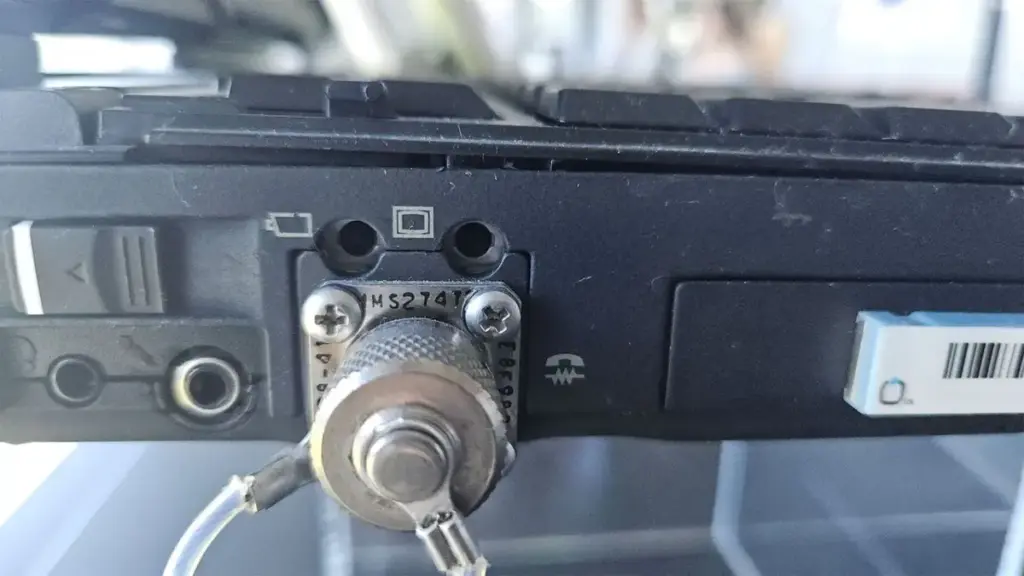
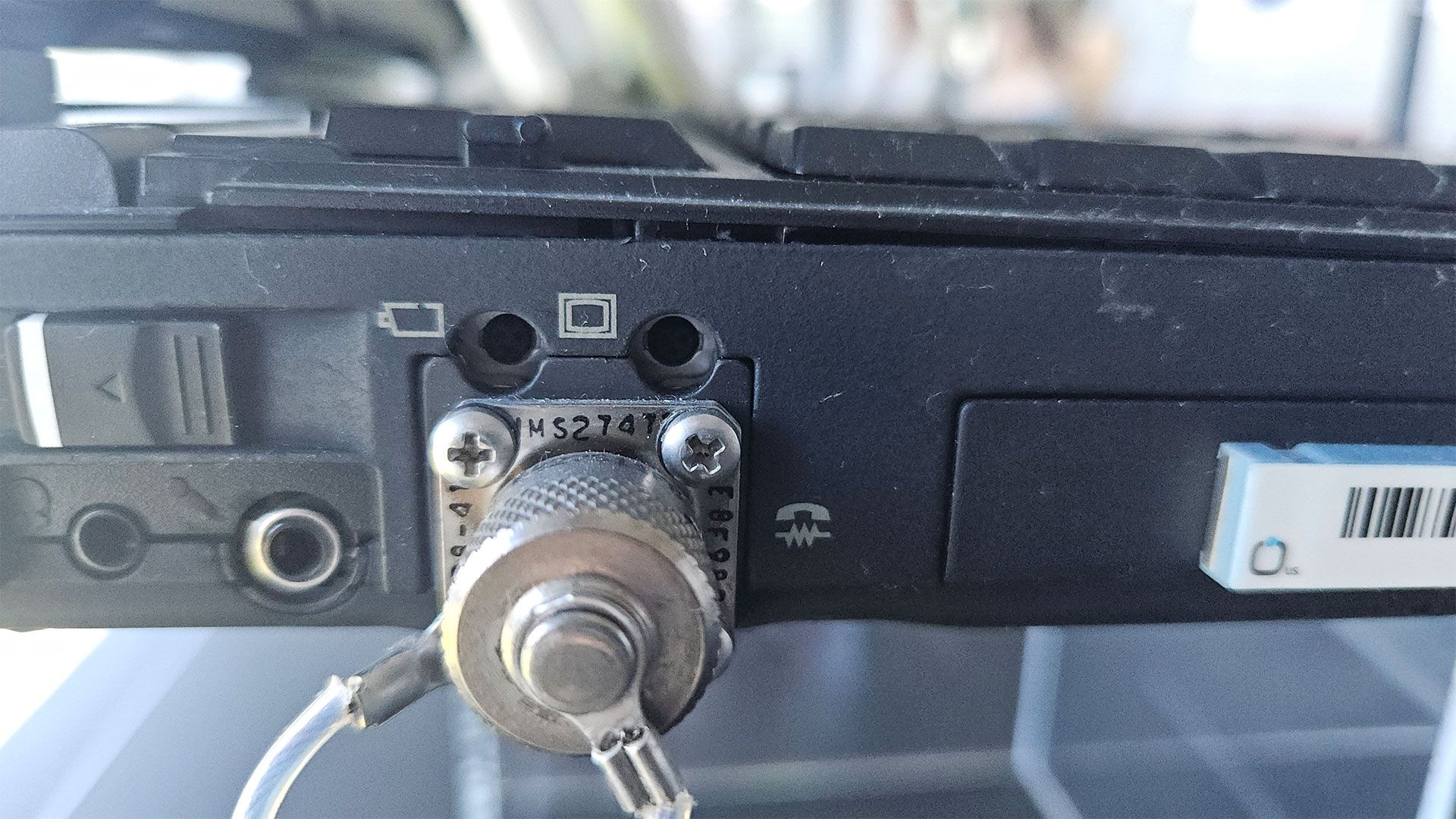
Recently, space enthusiast and engineer George Roush brought a fascinating relic of this era back into the public eye. During a visit to the NASA Stennis Visitor Center, Roush examined historical artifacts detailing how NASA altered commercial laptops—such as legendary IBM and Lenovo ThinkPads—for orbital deployment. Most notably, engineers stripped out useless terrestrial features like telephone modem ports and replaced them with ruggedized "cannon plugs" to establish a single, universal power standard.
Yet, this trip down memory lane sparked a broader, more sobering realization: the digital record of early spaceflight engineering is quietly vanishing. As the infrastructure of the early web degrades, foundational technical documentation is disappearing behind dead links and unmaintained servers. Compounded by a modern storage crisis driven by the artificial intelligence boom, preserving the history of how humanity conquered the cosmos is becoming harder by the day.
This article explores the mechanics of NASA’s ingenious hardware adaptations, the evolution of ISS computing from vintage ThinkPads to modern HP Z Workstations, and the alarming fragility of our digital historical record.
Detailed Chronology: From Dial-Up Relics to Modern Workstations
The Late 1990s: Adapting Consumer Hardware for the Void
The genesis of the ISS computing environment dates back to an era when the internet still screeched through analog telephone lines. When the station’s first permanent crews docked in November 2000, the onboard systems relied heavily on modified commercial-off-the-shelf (COTS) laptops.
Lockheed Martin was frequently contracted to prepare these machines—predominantly enterprise-grade laptops like the IBM ThinkPad—for the grueling realities of low-Earth orbit. Engineers faced a logistical nightmare: astronauts could not possibly haul a mismatched collection of nine different proprietary power adapters into space. Weight constraints, cable management hazards, and the risk of failure modes meant that uniformity was paramount.
To solve this, engineers devised a clever physical hack. They removed the built-in telephony modem ports, which were entirely useless aboard the space station, and repurposed that exact physical chassis footprint to install a standardized DC power connector, colloquially known as a "cannon plug." This uniform port allowed any laptop to connect seamlessly to the ISS’s onboard direct current power infrastructure using a single, reliable cable type. Furthermore, communication and data transfer relied heavily on the robust MIL-STD-1553 military standard bus system rather than conventional consumer Ethernet.
April 2026: The HP Fleet Refresh
Fast forward to April 2026, and the landscape of orbital computing has drastically evolved. The vintage, modified ThinkPads witnessed in museum displays are long gone from active duty. In their place, space agencies have integrated cutting-edge commercial powerhouses.
HP officially deployed over 100 HP Z Workstations to the ISS. These modern marvels are packed with high-end silicon, featuring a mixture of Intel Core Ultra 9 processors and RTX Pro Blackwell graphics. According to HP, these systems underwent two rigorous years of testing before receiving clearance for flight.
Remarkably, the core engineering philosophy established decades ago remains unchanged: power standardization is non-negotiable. HP supplies custom universal AC/DC power adapters designed to function flawlessly across both terrestrial electrical grids and the unique power architectures of the orbital outpost.
Supporting Context & Metrics: The Physics and Preservation of Space Tech
The Economics of Mass and Failure Modes in Microgravity
In aerospace engineering, every single gram matters. Launch costs per kilogram to low-Earth orbit (LEO), while decreasing with modern reusable rocketry, remain high enough that redundant hardware must be ruthlessly pruned.
Consider the logistical footprint of supporting multiple laptop models without a unified power connector:
- Cable Clutter: Multiple power bricks and proprietary cords increase weight and create physical hazards in a zero-gravity environment where loose items can drift into critical ventilation or electrical panels.
- Failure Modes: Every unique connector introduces a new point of electrical failure, short-circuiting risk, or mechanical wear.
- Interchangeability: By standardizing the physical interface, any crew member could swap a dying battery or plug in a replacement laptop without searching for a matching charger.
The Vanishing Web: Archives Under Pressure
While investigating the history of these laptop modifications, Roush encountered an unexpected roadblock: the digital trail had gone cold. The NASA Stennis visitor center featured minimal contextual information about the cannon plug modifications, and online technical forums and documentation sources he had relied on in the past had vanished entirely.
"The old internet is dying, and with it, we risk losing a lot of useful history," Roush noted, expressing concern over the pervasive myth of the "eternal" internet. When web servers shut down and domain registrations lapse, decades of specialized engineering knowledge risk being erased overnight.
This issue is exacerbated by systemic hardware economics. While organizations like the Internet Archive (operator of the Wayback Machine) strive to snapshot the web, they are facing unprecedented financial strain. As reported previously, the explosive global demand for AI infrastructure has triggered a severe storage crisis. Skyrocketing prices for both NAND flash storage and high-capacity mechanical hard drives have punished non-profit archival initiatives, making the preservation of digital history increasingly expensive and precarious.
Official Statements and Industry Insights
The intersection of legacy aerospace engineering and modern enterprise hardware highlights a continuous dialogue between reliability and innovation.
Reflecting on the digital decay of technical history, independent engineers and archivists have increasingly sounded the alarm. The assumption that information published online will persist indefinitely has led to widespread complacency in institutional digital preservation. Without active intervention and sustained funding for digital archives, humanity’s recent technological history remains vulnerable to the whims of corporate server maintenance and hosting costs.
On the hardware front, manufacturers launching modern systems into orbit emphasize rigorous pre-flight validation. HP’s deployment of its Z Workstations underscores that space-readiness is not merely about raw processing power—such as Core Ultra 9 chips and Blackwell graphics—but about environmental hardening, thermal management in microgravity, and electrical compatibility. Ensuring that modern workstations can interface cleanly with spacecraft power grids proves that the lessons learned from the "cannon plug" era of the late ’90s continue to guide mission architects today.
Future Outlook
As commercial spaceflight accelerates and lunar or Martian exploration transitions from theory to execution, the lessons of the ISS computing environment will only grow more vital.
- Modular Standardization: Future deep-space missions to the Moon (via NASA’s Artemis program) and eventually Mars will demand even stricter hardware standardization. Tele-operations, localized data processing, and AI-driven telemetry will require powerful mobile workstations, but power budgets will be tighter than ever.
- The Battle for Digital Memory: The vulnerability of early web history serves as a cautionary tale for modern software-driven engineering. Moving forward, the aerospace and tech industries must invest in robust, decentralized archival strategies to ensure that the step-by-step evolution of space technology is not lost to digital rot.
The modded ThinkPads of the late 20th century—stripped of their modems and retrofitted with heavy-duty cannon plugs—symbolize the ingenuity of human adaptation. They remind us that conquering space requires not just massive rockets, but meticulous attention to the smallest details of daily living among the stars.