Shifting Paradigms in Standalone VR: Valve Quietly Adjusts Performance Benchmarks for the Steam Frame
Executive Overview
In the fast-evolving landscape of extended reality (XR) hardware, platform standards can make or break a device’s software ecosystem before it even hits the consumer market. Valve, a company renowned for its deliberate, methodical hardware strategies—as evidenced by the iterative rollouts of the Steam Controller, the Valve Index, and the revolutionary Steam Deck—has once again adjusted its trajectory.
Without a formal press release or a high-profile developer conference keynote, Valve recently updated its official documentation regarding native application performance for the Steam Frame, its long-awaited standalone virtual reality headset.
Initially, when Valve introduced the Steam Frame at the Game Developers Conference (GDC) earlier this year, the company drew a hard line in the sand for developers seeking the coveted "Steam Frame Verified" badge. At that time, native VR applications were required to hit a minimum and uncompromising threshold of 90 frames per second (fps). For flatscreen titles ported to the platform, the baseline stood at a modest 30 fps at a 1,280 x 720 resolution.
However, as revealed by industry analysis from VR.org and confirmed via official developer documentation updates, Valve has quietly recalibrated these VR-specific thresholds. The strict 90 fps native floor has been relaxed to 72 fps, introducing a new mandatory per-eye resolution standard of 1,728 x 1,728 pixels "during normal play." Furthermore, Valve has introduced strict boundaries for software categorization, establishing an "Unsupported" tier for titles falling below 1,440 x 1,440 per eye.
This silent pivot represents far more than a simple tweak to a checklist. It is a strategic acknowledgment of the delicate engineering compromises inherent in standalone mobile VR hardware. By easing the raw frame-rate burden while tightening visual fidelity expectations and leaning heavily into advanced reprojection techniques, Valve is attempting to clear a smoother path for third-party porting—all while safeguarding the visual integrity of its nascent standalone ecosystem.
Detailed Chronology: From GDC Revelations to Quiet Documentation Shifts
The GDC Baseline: Reaching for the 90 FPS Standard
When Valve first pulled back the curtain on the Steam Frame at GDC, the announcement sent ripples through the VR developer community. Developing standalone VR hardware is an exercise in managing extreme thermals, power draw, and compute limitations. At the time, Valve’s baseline specification for a "Steam Frame Verified" title demanded a native 90 fps rendering target.
For context, the prevailing industry standard for standalone headsets—most notably Meta’s Quest lineup—has hovered around a 72 Hz baseline for casual or demanding standalone titles, occasionally scaling to 80, 90, or 120 Hz depending on the optimization and content complexity. Valve’s initial demand for 90 fps meant developers porting existing Quest titles would need to extract an immediate 25% performance overhead increase just to secure the platform’s stamp of approval.
It was understood that "Verified" did not imply a hard block for non-compliant software; rather, it functioned as a consumer-facing trust mark indicating that an application had been rigorously tested and guaranteed to run smoothly without inducing motion sickness or technical hitches. Nevertheless, the psychological and technical barrier of 90 fps weighed heavily on developers accustomed to more forgiving optimization targets.
The Quiet Pivot
Months after the GDC buzz subsided, Valve made a subtle, unannounced adjustment to its developer portal guidelines (partner.steamgames.com). Eschewing the traditional fanfare of a Steam Community blog post or a developer newsletter, the company altered the performance metrics required for the Verified badge.
The revised documentation revealed two crucial changes:
- The Framerate Floor: The mandatory native framerate ceiling was lowered from 90 fps down to 72 fps, aligning more closely with contemporary standalone hardware norms.
- The Resolution Mandate: A strict per-eye resolution requirement of 1,728 x 1,728 during normal gameplay was formally introduced—a metric that was notably absent from the initial VR content guidelines revealed at GDC.
In tandem with these shifts, Valve codified the penalty for failing to meet baseline standards. Games and experiences incapable of rendering at least 1,440 x 1,440 per eye are now automatically tagged with an "Unsupported" badge upon submission. Crucially, Valve is maintaining an open-ecosystem philosophy: unsupported titles are not barred from the platform entirely. Instead, they remain downloadable and playable at the user’s discretion, leaving the ultimate risk-assessment in the hands of the consumer rather than a heavy-handed corporate gatekeeper.
Supporting Context & Metrics: Hardware Capabilities and Engineering Realities
To fully understand why Valve made this quiet adjustment, one must analyze the underlying silicon powering the Steam Frame and weigh it against competing hardware architectures.
Under the Hood: Snapdragon 8 Gen 3 vs. Quest 3
The Steam Frame is powered by Qualcomm’s Snapdragon 8 Gen 3 mobile platform. When placed side-by-side with the Meta Quest 3—which utilizes the Snapdragon XR2 Gen 2—the Steam Frame enjoys a distinct architectural advantage. The Snapdragon 8 Gen 3 boasts a significantly faster central processing unit (CPU) and graphics processing unit (GPU), offering superior general compute performance and memory bandwidth efficiency compared to its dedicated XR-branded sibling of the previous generation.
However, raw processing power does not translate to infinite overhead. Mobile chipsets, regardless of their generational leaps, are ultimately bound by passive or active thermal dissipation limits inside a wearable head-mounted display. Pushing a high-resolution, dual-panel display natively at a rock-solid 90 fps requires aggressive optimization, frequent dynamic resolution scaling (DRS), or drastic reductions in graphical fidelity.
The Power of Eye-Tracking and Foveated Rendering
Compensating for the demanding workloads of standalone VR, the Steam Frame features built-in eye-tracking. This hardware inclusion is a game-changer. Eye-tracking unlocks foveated rendering—a rendering technique that drastically reduces the GPU workload by rendering the image at full resolution only where the user is actively looking, while decreasing the peripheral resolution.
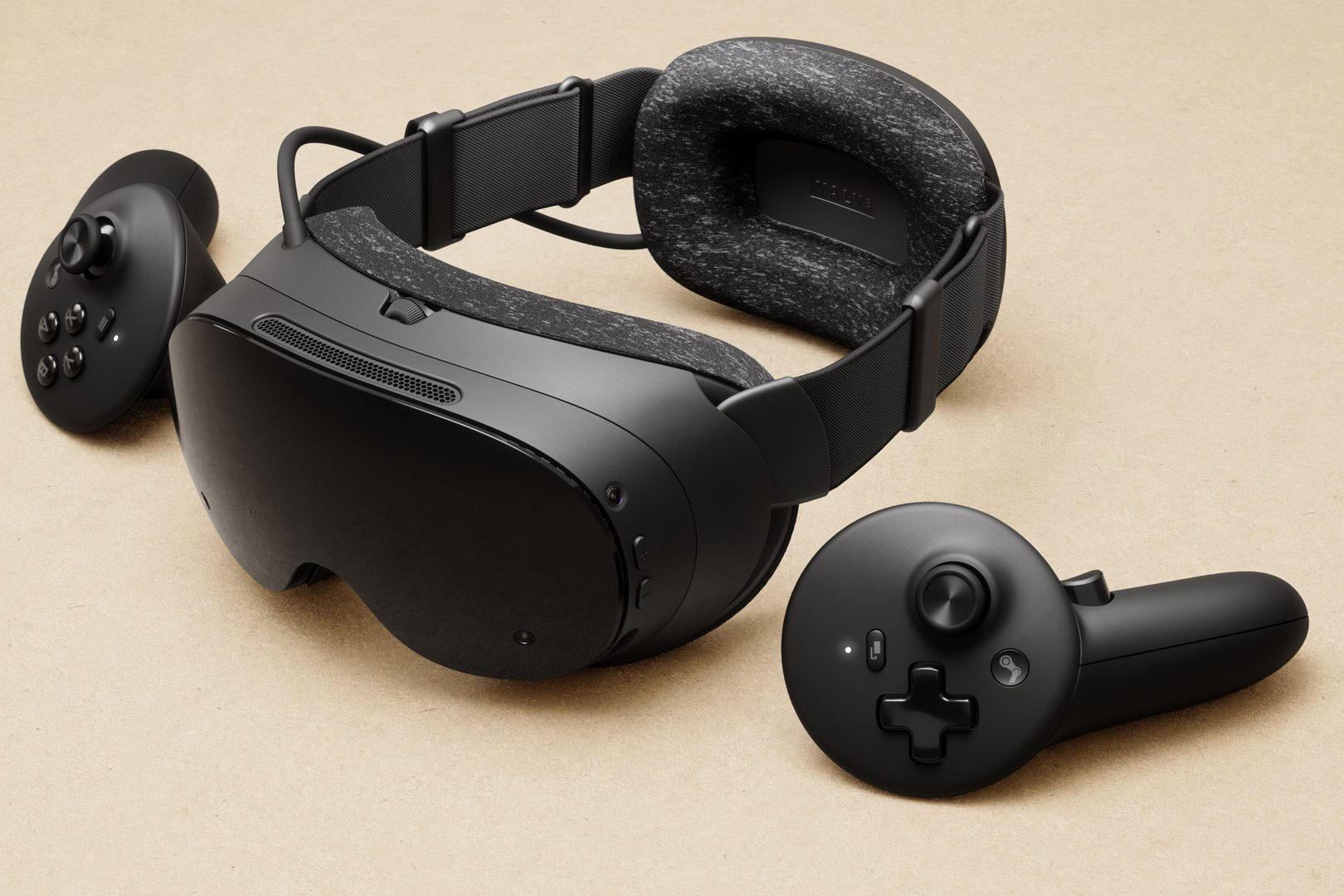
This technology theoretically bridges the gap between Valve’s original 90 fps aspiration and the practical realities of mobile rendering. Yet, relying entirely on foveated rendering as a crutch for every incoming port can introduce development friction, particularly for legacy titles built without eye-tracking integration in mind.
By lowering the native frame-rate requirement to 72 fps while simultaneously introducing the 1,728 x 1,728 per-eye resolution standard, Valve is signaling a shift in philosophy: fidelity over sheer refresh rate. Rather than forcing developers to sacrifice visual sharpness just to hit an arbitrary 90 fps target, Valve is encouraging a more balanced visual experience where pixels are preserved, and motion smoothness is achieved through alternative software engineering pathways.
Official Statements and Technical Specifications
A closer examination of Valve’s updated documentation highlights a heavy emphasis on advanced rendering pipelines, particularly reprojection.
In its updated partner guidelines, Valve explicitly encourages developers to submit comprehensive motion-vector and depth data alongside their builds. This data allows the Steam Frame runtime to execute advanced asynchronous space warp and reprojection techniques, enabling users to optionally experience content at higher refresh rates even if the application’s native render loop is operating at the baseline 72 fps.
The Badging Breakdown
To summarize the tiered verification structure for developers targeting the Steam Frame:
-
Steam Frame Verified:
- Frame Rate: Minimum 72 fps (relaxed from 90 fps).
- Resolution: Minimum 1,728 x 1,728 per eye during normal gameplay.
- Status: Guaranteed smooth operation, optimal performance, and adherence to Valve’s highest user-experience standards. Reprojection data strongly encouraged.
-
Playable / Standard Titles:
- Applications meeting intermediate performance benchmarks that function reliably without breaking core interactions, though they may require manual user configuration or experience occasional performance dips.
-
Unsupported Badge:
- Resolution Threshold: Falls below 1,440 x 1,440 per eye.
- Status: Visible to the user as non-compliant with baseline performance targets. Crucially, users retain the freedom to download and run these titles, upholding Valve’s long-standing commitment to platform openness and anti-walled-garden principles.
Future Outlook: Valve’s Long-Term Hardware Play
To view the Steam Frame and its evolving certification requirements in isolation is to miss the broader corporate strategy that Valve has systematically deployed over the past decade.
The Steam Deck Playbook, Adapted for VR
When Valve launched the Steam Deck, skeptics questioned whether a Linux-based handheld gaming PC could carve out a viable market against entrenched console ecosystems. Valve answered that skepticism by treating the Steam Deck not as a closed, proprietary console, but as an open conduit to the user’s existing Steam library.
The Steam Frame is following an identical strategic blueprint. It is designed to be the ultimate hardware vessel to make an entire, sprawling Steam library portable—bridging the gap between standalone untethered convenience and PC VR power via robust streaming capabilities.
By lowering the native framerate barrier for the Steam Frame, Valve is actively greasing the wheels for third-party developers. Porting a game from standalone competitors (such as Meta’s ecosystem) to Steam OS becomes an appreciably less daunting task when developers do not have to squeeze an extra 15 to 20 frames per second out of mobile silicon at the expense of visual clarity.
The Ultimate Question: Will Third-Party Hardware Makers Follow?
The true test of the Steam Frame—and Valve’s broader push into SteamOS for third-party VR headsets—will not be determined solely by its launch-day specs or its quiet documentation updates. The ultimate question is whether the revenue potential and user engagement of the Steam platform are enticing enough to convince external hardware manufacturers to adopt SteamOS, build compatible devices, and fall in line with Valve’s standards.
Valve is playing a patient, long-term game. By balancing developer accessibility with strict visual quality floors (via the new 1,728 x 1,728 resolution mandate), Valve is attempting to prevent the Steam Frame store from devolving into a wasteland of blurry, poorly optimized ports.
As the XR industry watches for the official consumer rollout of the Steam Frame, Valve’s quiet pivot serves as a reminder of the company’s pragmatism. In the crucible of hardware development, rigid dogmatism is a liability; listening to the realities of software engineering is how platforms survive and conquer.