Breathing New Life Into the Valley: The Unofficial Dual-Screen Port of Harvest Moon 64 That is Revolutionizing Retro Farming on Android Handhelds
Executive Overview
The intersection of retro video game preservation and modern portable hardware has reached a fascinating new milestone. For decades, fans of the seminal farming simulation genre—specifically those who lost countless hours tending digital crops and wooing townsfolk in the late 1990s—harbored a singular, seemingly impossible wish: the seamless, uninterrupted interface management made possible by dual-screen hardware, applied directly to Nintendo 64 classics.
Back in the era of CRT televisions and chunky cartridges, constantly pausing gameplay to shuffle through inventory menus, equip tools, or check item descriptions was simply an accepted part of the experience. While later handheld iterations like the Nintendo DS and 3DS revolutionized titles such as The Legend of Zelda: Ocarina of Time 3D by permanently anchoring inventories and maps to a secondary touch-display, older classics remained bound to single-screen limitations.
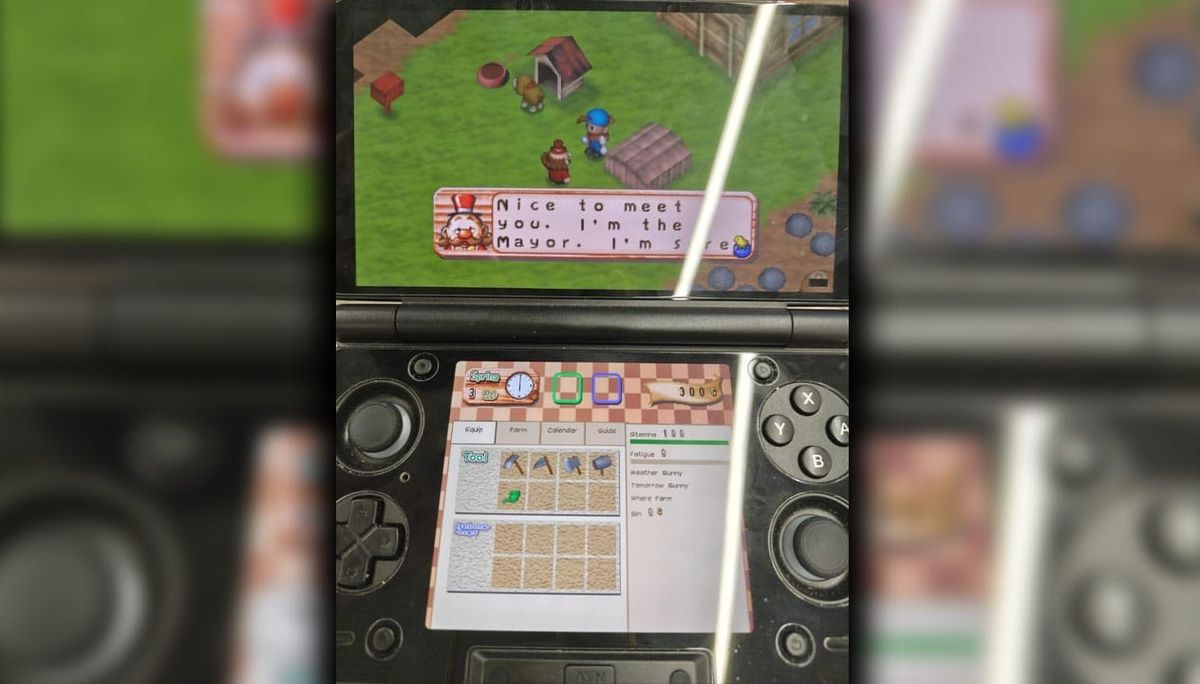
That narrative has officially changed. Thanks to an impressive engineering feat by developer iwaga6, Harvest Moon 64—the beloved 1999 masterpiece developed by Victor Interactive Software—has been given a second wind. Through an ingenious unofficial native recompilation project, the classic farming RPG has been adapted specifically for modern Android-powered dual-screen gaming handhelds (such as the AYN Thor).
This unofficial release does far more than just stretch pixels or upscale resolutions. By introducing native widescreen support and, crucially, locking a permanent menu interface onto a secondary lower screen, this project fundamentally streamlines the core gameplay loop. Inventory management, item selection, and time-tracking are transformed from tedious pauses into fluid, glanceable actions. This comprehensive report explores the technical implications of the Harvest Moon 64 dual-screen port, its impact on the retro handheld community, the mechanics of game recompilation, and what this means for the future of nostalgic gaming preservation.
Detailed Chronology: From N64 Cartridges to Modern Recompilations
To understand the magnitude of iwaga6’s project, one must trace the timeline of Harvest Moon 64 and the technological evolution that made this recent port possible.
1999–2010s: The Era of Single-Screen Friction
When Harvest Moon 64 launched in North America in December 1999 (following its Japanese debut earlier that year), it was widely praised as a massive leap forward for the franchise. Transitioning the top-down farming formula from the Super Nintendo (SNES) into full 3D environments created an immersive, vibrant world filled with memorable characters, seasonal festivals, and complex relationship mechanics.
However, the hardware limitations of the Nintendo 64 controller and the single-screen architecture meant that players spent a significant portion of their in-game days staring at static inventory screens. Watering crops, talking to villagers, and organizing tools required constant navigation through sub-menus. While players accepted this as standard for the time, the release of dual-screen systems like the Nintendo DS in 2004 established a new gold standard for role-playing and simulation titles. Suddenly, having a persistent map, inventory, or status screen visible at all times transitioned from a luxury to an essential quality-of-life expectation.
The Rise of Native PC and Android Recompilation
Fast-forward to the 2020s, a new trend in retro gaming emerged: static source code recompilation (often referred to as "source ports" or "recomps"). Rather than relying purely on traditional, resource-heavy CPU emulation, developers began reverse-engineering console binaries into native C or C++ source code. This allowed games to run natively on modern operating systems—including Windows, Linux, and Android—with frame-rate unlacking, bug fixes, mod support, and native widescreen patches.
Projects like the Super Mario 64 PC port and subsequent recompilations for The Legend of Zelda: Ocarina of Time paved the way. Developers realized that older games could be structurally modified far beyond simple graphical enhancements.
August 2026: The Harvest Moon 64 Dual-Screen Breakthrough
On August 6, 2026, the retro gaming community experienced a surge of excitement when developer iwaga6, highlighted by tech trackers like Renpou.com and reported by outlets like Retro Dodo, released version 0.1.0 of the Harvest Moon 64 Recompilation project on GitHub.
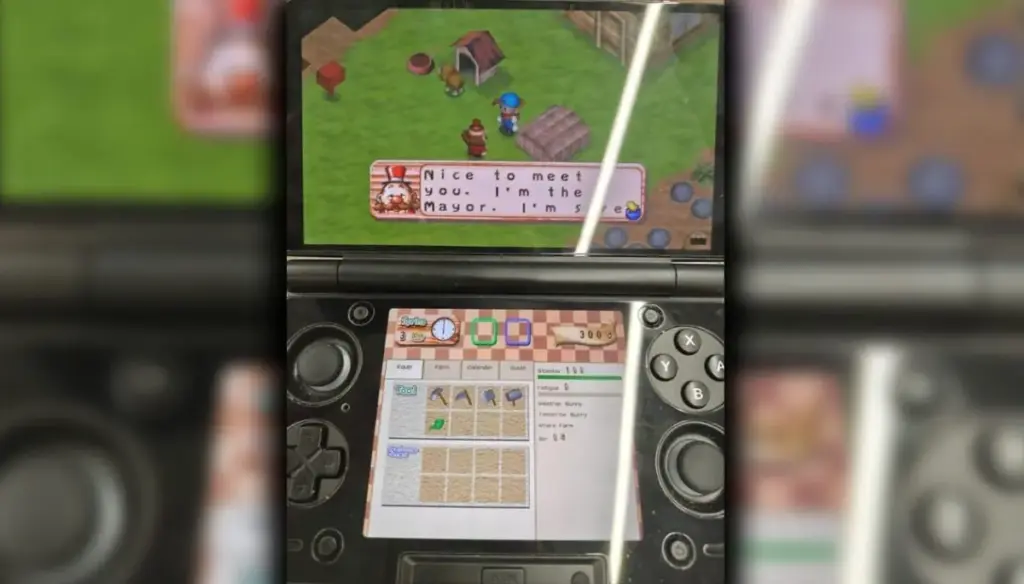
Unlike previous attempts to play the game on mobile devices—which typically involved standard emulators overlaid with awkward virtual touch controls or single-screen display layouts—this project was specifically tailored for modern dual-screen Android handhelds. By splitting the rendering pipeline, iwaga6 achieved the long-dreamt-of dual-screen setup: the main gameplay runs in pristine widescreen on the primary display, while the inventory, tools, and menu systems remain open and static on the secondary screen.
Supporting Context & Technical Metrics
The technical framework driving this unofficial port highlights the ingenuity of modern independent developers. Running a 1999 console game on a 2026 mobile chipset requires bridging multiple layers of hardware and software architecture.
Hardware Synergy: The Rise of Dual-Screen Android Handhelds
Over the past several years, the retro gaming handheld market has expanded dramatically. While single-screen vertical and horizontal devices (such as those from Retroid, Anbernic, and Powkiddy) dominate sales volumes, a distinct niche has formed around dual-screen hardware designed specifically to emulate Nintendo DS and 3DS libraries natively.
Devices like the AYN Thor and similar clamshell or dual-screen Android form factors feature two distinct panels capable of independent touch input and display rendering. However, until recently, developers had to jump through immense configuration hoops to get non-native games to utilize both screens effectively.
By targeting Android handhelds directly via GitHub (igawa6/HarvestMoon64Recomp), iwaga6 bypassed traditional emulation bottlenecks. Key technical metrics and features of release 0.1.0 include:
- Native Widescreen Rendering: Eliminating the classic 4:3 pillarboxing, allowing the lush pastoral environments of Flower Bud Village to stretch across modern aspect ratios without distorting core sprites.
- Asynchronous Dual-Screen Output: Allocating game viewport rendering to screen one while projecting the static user interface (UI) management panels directly onto screen two.
- Touch-Enabled UI Integration: Transforming traditionally controller-bound menu navigation into direct, touch-responsive interactions reminiscent of official DS/3DS titles.
- Performance Optimization: Running natively rather than through nested emulation layers, ensuring stable frame rates and minimal battery drain on modern mobile processors.
The Impact on Gameplay: Quality-of-Life Redefined
To truly appreciate what iwaga6 has accomplished, one must analyze how the dual-screen layout fundamentally alters the rhythm of Harvest Moon 64.

Farming simulations rely heavily on time management. Every second counts as players wake up at 6:00 AM, feed livestock, water crops, forage in the mountains, and chat with villagers before stores close. In the original 1999 release, checking how much stamina you had left, swapping between a hoe and a watering can, or checking recipe ingredients meant pausing the clock, navigating a menu, executing the action, and unpausing. Over the course of a single in-game year, players executed these repetitive menu transitions tens of thousands of times.
With the new Android recompilation running on dual-screen handhelds:
- Uninterrupted Exploration: The main screen remains entirely clear of cluttered HUD elements, offering a cinematic, unobstructed view of your farm and the surrounding valley.
- Instant Inventory Access: Changing tools or consuming items happens instantly on the lower screen without blocking the action or breaking immersion.
- Reduced Input Fatigue: Utilizing the touch capabilities of modern Android handheld screens streamlines what used to require strict directional pad and face-button choreography.
This creates an experience that feels simultaneously nostalgic and entirely modernized—bridging a 27-year-old software gap.
Future Outlook: What Next for Retro Recompilations?
The successful launch of the Harvest Moon 64 dual-screen port opens up a Pandora’s box of possibilities for both game preservation and community-driven software development.
The Expanding Horizon of Recomps
As static recompilation tools become more accessible, we are likely to see independent developers apply similar multi-screen treatments to other classic titles. Games that historically relied on dual-display setups—or games that should have had them, such as top-down RPGs, strategy titles, and management sims from the 16-bit and 32-bit eras—are prime candidates for community-led dual-screen porting.
Hardware Market Adaptations
Hardware manufacturers in the portable gaming space are taking notice. As communities build software specifically optimized for dual-screen Android devices, consumer demand for clamshell and dual-panel handhelds is poised to grow. Hardware designers will likely incorporate higher-fidelity secondary touchscreens, better aspect ratio matching, and improved thermal management to support these advanced community projects.
Supporting Independent Preservation
Projects like iwaga6’s Harvest Moon 64 recompilation exist entirely outside corporate profit motives. They are labors of love driven by passion, nostalgia, and technical curiosity. Platforms like GitHub serve as the modern libraries of Alexandria for video game preservation, ensuring that codebases are shared, audited, and improved upon collectively.
For enthusiasts eager to experience this milestone, the build is currently available via open-source repositories on GitHub (igawa6/HarvestMoon64Recomp/releases/tag/release-0.1.0). As the project matures through subsequent updates, bug fixes, and community contributions, it stands as a shining example of how passionate developers can breathe eternal life into the games of yesteryear.