The Future of HD-2D: Team Asano Acknowledges Sky-High Expectations for Octopath Traveler III
Executive Overview
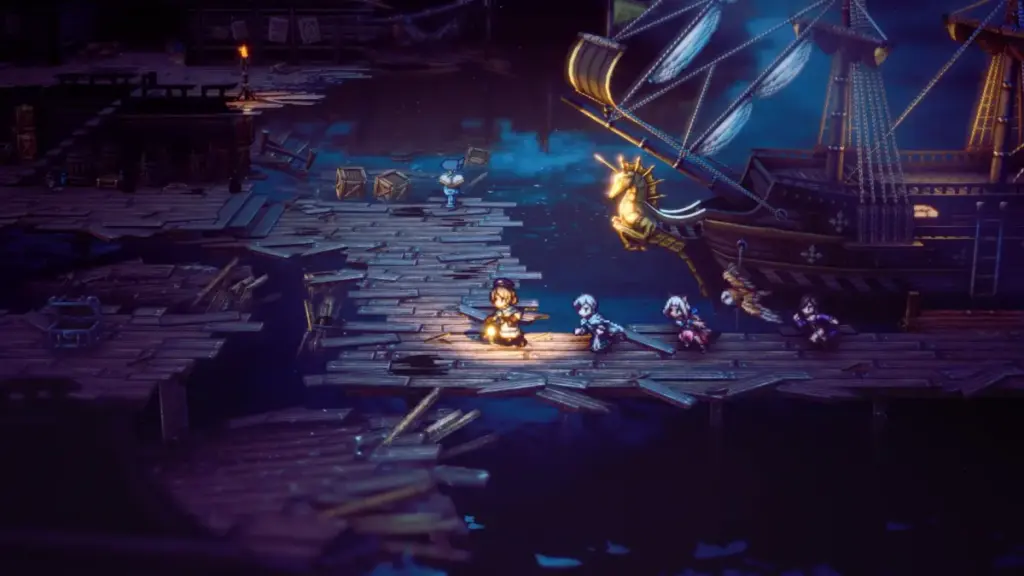
The Octopath Traveler franchise has carved out a distinct and revered niche within the modern role-playing game (RPG) landscape. Marrying nostalgic, 16-bit-inspired pixel art with cutting-edge visual effects, atmospheric soundtracks, and intricate, multi-layered narratives, Square Enix and Acquire’s proprietary "HD-2D" aesthetic has become a defining hallmark of contemporary video game design. Following the monumental critical and commercial success of both the 2018 original and its critically acclaimed 2023 successor, Octopath Traveler II, the inevitable question on the lips of the global gaming community has shifted from "Will there be another?" to "How can they possibly top this?"
In a recent, highly anticipated interview, members of the esteemed development unit Team Asano addressed the elephant in the room. Acknowledging the stratospheric expectations surrounding a potential Octopath Traveler III, the developers confirmed that while no official announcement is imminent, they are deeply attuned to the desires, hopes, and exacting standards of their fanbase. Rather than rushing to capitalize on the series’ momentum, Team Asano has signaled a commitment to deliberate craftsmanship—suggesting that any future installment must radically push the creative and technical boundaries of the HD-2D genre to justify its existence.
This comprehensive report examines the current state of the Octopath Traveler franchise, analyzes Team Asano’s recent statements regarding a third installment, explores the critical and commercial legacy of the series thus far, and evaluates what fans can realistically expect from the masters of modern retro-styled RPGs as they look toward the horizon.
Detailed Chronology: The Evolution of a Modern RPG Phenomenon
2018: The Genesis of HD-2D (Octopath Traveler)
When Octopath Traveler launched exclusively for the Nintendo Switch in July 2018, it arrived as a breath of fresh air for traditional JRPG purists and modern gamers alike. Developed by Acquire and published by Square Enix under the stewardship of producer Tomoya Asano, the game introduced the world to the "HD-2D" graphics engine—a breathtaking blend of retro sprite work, polygonal environments, dynamic lighting, and modern post-processing effects.
The game’s narrative structure was equally revolutionary and polarizing. Eschewing a single, unified protagonist, Octopath Traveler allowed players to choose one of eight distinct travelers, each possessing their own unique motivation, starting region, and episodic narrative arc spanning four chapters. While some critics noted that the character stories rarely intersected in meaningful ways during the main campaign, the combat system—centered around the "Boost" and "Break" mechanics—was universally praised for its tactical depth, speed, and rewarding synergy. Supported by Yasunori Nishiki’s unforgettable orchestral score, the game became a runaway sleeper hit, surpassing two million copies sold within its first year and proving that there was a massive, underserved market for high-budget, turn-based retro-style RPGs.
2020–2022: Expanding the Universe and Setting the Stage
Building upon the technical and artistic framework of the original game, Team Asano refined its pipeline, applying the HD-2D engine to other beloved properties, most notably Triangle Strategy (2022) and Live A Live (2022). These titles further cemented the engine’s versatility, proving that HD-2D was not merely a stylistic gimmick unique to a single game, but a viable, premium aesthetic platform capable of supporting diverse sub-genres, from tactical warfare to sci-fi/historical anthologies.
Concurrently, a mobile spin-off titled Octopath Traveler: Champions of the Continent launched in late 2020 (globally in 2022), serving as a prequel that expanded the lore and geography of the continent of Orsterra. Although operating within the live-service mobile ecosystem, the game maintained the core artistic and musical integrity of its console predecessors, keeping the IP active and relevant in the years leading up to the inevitable mainline sequel.
2023: Perfection Through Iteration (Octopath Traveler II)
Released in February 2023 across Nintendo Switch, PlayStation 4, PlayStation 5, and PC (with an Xbox release following later), Octopath Traveler II took everything that worked in the original game and systematically elevated it. Moving the setting from Orsterra to the distinct, maritime-influenced continent of Solistia, the sequel introduced eight entirely new protagonists, spanning an industrializing era marked by steam power, sprawling metropolises, and vast oceans.
Crucially, Octopath Traveler II directly addressed the primary criticism leveled against its predecessor: character interaction. The sequel introduced "Crossed Paths"—narrative vignettes that paired up specific travelers for multi-chapter collaborative adventures, allowing characters to bounce off one another’s personalities, philosophies, and quirks. Furthermore, the inclusion of day/night cycles drastically altered overworld exploration, town dynamics, and Path Actions, giving players unprecedented agency in how they interacted with the game’s inhabitants. Bolstered by refined combat mechanics (including Latent Powers), gorgeous dynamic lighting, and another masterclass soundtrack by Nishiki, Octopath Traveler II achieved even greater critical acclaim than the original, though its commercial trajectory faced the complex realities of multi-platform distribution and changing market appetites.
2024–Present: The Weight of Anticipation
Following the post-launch support and subsequent ports of Octopath Traveler II, Team Asano’s creative bandwidth shifted toward other upcoming projects, such as Dragon Quest III HD-2D Remake and entirely new intellectual properties. Yet, as the studio reflects on its catalog in retrospective interviews, the shadow cast by the Octopath Traveler name has only grown larger. With fans dissecting every quote, teaser, and industry rumor for hints about Octopath Traveler III, Team Asano has found itself in the enviable—yet daunting—position of managing sky-high expectations for a hypothetical trilogy closer.
Supporting Context & Metrics: The Business and Art of HD-2D
To fully understand why a potential Octopath Traveler III carries such immense pressure, one must examine the metrics, artistic innovations, and cultural footprint that have defined Team Asano’s output over the past decade.
Critical Reception and Sales Milestones
The Octopath Traveler franchise has consistently outperformed initial publisher expectations. When the original game launched in 2018, Square Enix executives famously underestimated demand, leading to widespread physical stock shortages in major markets across North America and Japan. By February 2023—coinciding with the launch of the sequel—Square Enix announced that the combined shipments and digital sales of the first game and Champions of the Continent had surpassed four million units globally.
Octopath Traveler II received critical praise across the board, holding a robust Metacritic score averaging around 84 to 86 depending on the platform. Reviewers lauded the game for respecting the traditions of the golden era of 16-bit JRPGs while boldly modernizing user interfaces, traversal options, and encounter pacing. This critical darling status transformed Team Asano from a niche development division into one of Square Enix’s most reliable and creatively respected internal pillars.
The Technical Blueprint of HD-2D
The term "HD-2D" was coined by Tomoya Asano and his team to describe a specific visual philosophy: combining retro-style pixel art characters and objects with three-dimensional environments rendered in high definition. However, the technical execution behind this deceptively simple descriptor is remarkably complex.
+-------------------------------------------------------------------+
                   THE PILLARS OF HD-2D DESIGN
+-----------------------+-------------------------------------------+
| Aesthetic Component   | Technical/Artistic Implementation         |
+-----------------------+-------------------------------------------+
| Pixel Art Sprites     | Hand-crafted 2D sprites with modern       |
|                       | lighting and shadow mapping interaction.  |
+-----------------------+-------------------------------------------+
| 3D Environments       | Unreal Engine-powered dioramas featuring  |
|                       | depth of field, tilt-shift, and physics.  |
+-----------------------+-------------------------------------------+
| Dynamic Lighting      | Real-time light sources that react with   |
|                       | transparent water, glass, and fog.        |
+-----------------------+-------------------------------------------+
| Orchestral Audio      | Dynamic musical arrangements shifting     |
|                       | seamlessly based on narrative context.    |
+-----------------------+-------------------------------------------+
As the engine has matured—evolving from Octopath Traveler (2018) to Triangle Strategy (2022), Live A Live (2022), Octopath Traveler II (2023), and the upcoming Dragon Quest III HD-2D Remake—the fidelity of the lighting engines, water shaders, and camera work has improved exponentially. Consequently, fans have come to expect not just a continuation of a story, but a visual feast that pushes the boundaries of what retro-styled graphics can achieve. If Octopath Traveler III is eventually greenlit and released, the audience will demand an evolutionary leap comparable to the jump from the first game to the second, if not greater.
Official Statements: Inside Team Asano’s Mindset
The recent discourse surrounding Octopath Traveler III originated from candid remarks made during interviews with Team Asano members, as reported by outlets such as Automaton Media. Rather than offering generic corporate boilerplate or shutting down speculation entirely, the developers chose to validate the community’s enthusiasm while managing timelines responsibly.
Addressing the Fanbase: "We Genuinely Feel It"
Speaking on the current perception of the franchise, representatives from Team Asano addressed the intense pressure cooker of fan expectations. The sentiment conveyed was one of profound gratitude mingled with a healthy dose of intimidation:
"We genuinely feel [fans’ expectations for Octopath Traveler III], I just wanted to convey that."
This acknowledgment highlights a healthy, communicative relationship between the studio and its audience. Unlike developers who remain aloof or dismissive of fan theories and sequel demands, Team Asano actively monitors community discourse. They are fully cognizant that Octopath Traveler II raised the bar so high that a mere "more of the same" approach would likely invite criticism from a discerning fanbase that values innovation and polish.
The Philosophy of Development: "Pushing the Limits"
Perhaps the most telling quote to emerge from the recent interviews is the studio’s stance on creative ambition versus routine franchise milking. Team Asano made it clear that they refuse to push out a third installment simply for the sake of quarterly earnings or portfolio padding:
"If we’re going to do it, we’re going to push the limits."
This declaration is a manifesto of quality over quantity. Developing an HD-2D game requires meticulous, painstaking art direction. Every single town, dungeon, NPC sprite, and boss encounter is crafted with an extraordinary level of individual care. By stating their intention to "push the limits," Team Asano is signaling that Octopath Traveler III—whenever it materializes—will need to introduce fundamental gameplay innovations, narrative structures, or technical feats that justify its existence as a true next-generation evolution of the formula, rather than an iterative expansion pack.
The Current Status: Managing Expectations
Despite the studio’s clear passion for the universe they have created, a reality check was issued to temper immediate speculation:
"The Octopath Traveler team doesn’t have anything to announce quite yet, but is aware of the sky-high expectations… keep looking forward to what comes next."
While frustrating for fans hungry for a teaser trailer or a logo reveal, this transparency prevents the fatigue and cynicism that often plague communities subjected to endless, unfounded rumors. Team Asano is currently occupied with other major commitments within Square Enix’s release schedule. However, by explicitly telling fans to "keep looking forward," they have left the door wide open, confirming that the franchise remains very much alive in their long-term strategic vision.
Future Outlook: What Could Octopath Traveler III Look Like?
As we look toward the future of the franchise, industry analysts and passionate fans alike have begun speculating on what a hypothetical Octopath Traveler III might entail. Drawing from the trajectory of the series thus far, several key areas emerge as prime candidates for innovation.
1. Narrative Evolution: True Unity vs. Anthology Structure
The defining structural debate of the Octopath Traveler series has always centered on narrative cohesion. While the first game featured completely isolated character stories, the second game introduced "Crossed Paths" and a secret true ending that tied the lore of the eight protagonists together.
For a third installment, the ultimate evolutionary step would be a fully unified narrative framework where all eight characters actively participate in every major story beat from chapter to chapter, akin to classic ensemble JRPGs like Final Fantasy VI or Chrono Trigger, while retaining their individual motivations and starting scenarios. Achieving this without losing the signature "choose your own adventure" pacing would be a monumental writing challenge, but it is precisely the kind of boundary-pushing endeavor Team Asano has hinted at.
2. Technological and Artistic Horizons
With modern hardware—including rumors and leaks surrounding Nintendo’s successor console and increasingly powerful PC/console ecosystems—Team Asano will have unprecedented technical headroom. Imagine an HD-2D world featuring fully volumetric weather systems, truly seamless transitions between indoor and outdoor spaces without load screens, complex verticality in dungeon design, and even richer multiplayer or asynchronous cooperative features.
Furthermore, as the studio gains more experience with the Unreal Engine and custom lighting pipelines, the visual identity of the franchise could evolve to incorporate new artistic interpretations of retro aesthetics, blending pixel art with dynamic particle simulations and cinematic camera direction that rivals high-budget 3D blockbusters.
3. Combat and Gameplay Innovation
While the Boost and Break system remains one of the most satisfying turn-based combat engines of the modern era, a third game would inevitably need to introduce fresh tactical layers to prevent combat fatigue. Whether through expanded environmental interaction during battles, real-time tactical positioning elements, or deeper customization trees for job combinations, Team Asano has consistently demonstrated a knack for refining mechanics. Integrating more cooperative party synergies and branching path consequences could elevate the gameplay loop from excellent to legendary.
Conclusion
The journey of the Octopath Traveler series is a testament to the power of artistic vision, respect for gaming heritage, and unwavering commitment to quality. Team Asano’s recent admissions regarding Octopath Traveler III—acknowledging the daunting, sky-high expectations of the global fanbase while promising to "push the limits" if and when the project moves forward—demonstrate a studio operating at the peak of its creative maturity.
While gamers must exercise patience and accept that no official announcement is imminent, the assurance that the creators are listening, caring, and planning with such deliberate care is deeply reassuring. The world of HD-2D has redefined what retro-inspired role-playing games can achieve in the modern era, and whenever Team Asano is finally ready to pull back the curtain on the next chapter of the journey, the gaming world will undoubtedly be watching, waiting, and ready to embark once more.