Beyond the Blockbuster: Take-Two CEO Dismisses Union-Busting Controversy as GTA 6 Marches Toward Historic Launch
Executive Overview
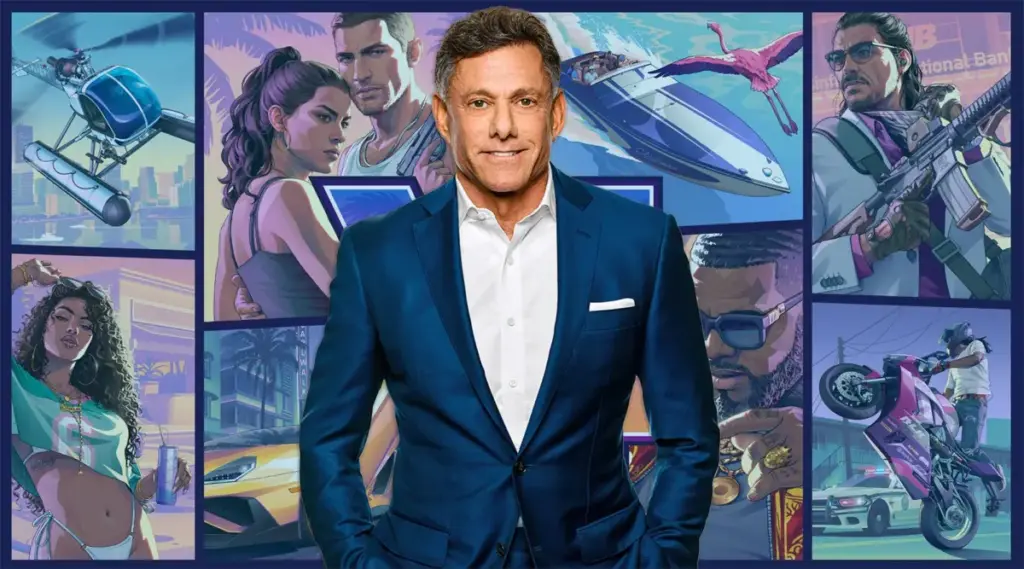
As the global video game industry gears up for what is widely projected to be the most commercially lucrative entertainment launch in history—Grand Theft Auto 6—controversy continues to swirl behind the scenes at Rockstar Games. In the crosshairs of ongoing labor disputes, employee dismissals, and allegations of union-busting, Take-Two Interactive CEO Strauss Zelnick remains entirely unfazed.
Speaking following Take-Two’s latest financial earnings report, Zelnick brushed off concerns that negative press regarding the firing of 31 employees at Rockstar North in Edinburgh would impact the blockbuster rollout of GTA 6. Asserting that development practices operate independently of corporate labor relations, Zelnick pointed to low employee attrition rates as proof of a healthy workplace culture.
However, the reality on the ground tells a vastly different story. The dismissal of these workers—all of whom were reportedly members of the Independent Workers’ Union of Great Britain (IWGB) Game Workers Union—has sparked an employment tribunal battle, ignited grassroots unionization efforts across the studio, and even escalated to the halls of the UK Parliament. With a legal showdown scheduled for September 10, the impending clash between corporate power and organized labor highlights a widening ideological chasm within the modern video game industry.
Detailed Chronology: The Escalating Labor Dispute at Rockstar North
The tension between Rockstar Games management and its workforce is not an isolated flashpoint; it is the culmination of years of mounting friction regarding crunch culture, remote work policies, and employee rights.
The Catalyst: The Edinburgh Firings
The current crisis gained serious momentum following the termination of 31 employees at Rockstar North’s Edinburgh headquarters. According to internal reports and testimonies gathered by labor advocates, these workers were fired en masse under the banner of "gross misconduct."
The justification provided by management centered on allegations that the employees had shared internal company messages on a secure, employee- and union-only Discord server. However, the IWGB Game Workers Union quickly contested this rationale, pointing out the glaring coincidence that every single worker terminated in the sweep was affiliated with the union. For labor organizers, the move was a textbook example of targeted union-busting designed to chill collective action within a notoriously secretive studio.
Retaliation and Resilience: The Rise of the Rockstar Union
Rather than silencing dissent, the firings galvanized the workforce. In direct response to the dismissals, a dedicated Rockstar Game Workers Union branch was officially established earlier this year.
Despite management pushback and the looming threat of further disciplinary actions, the union has experienced a surge in recruitment. By early last month, internal reports indicated that the Rockstar union had achieved "more members than it ever had before," signaling that the rank-and-file developers are increasingly willing to risk professional retaliation to secure collective bargaining rights and job security.
From the Office to Parliament
The gravity of the situation quickly transcended the boundaries of the gaming sector, evolving into a matter of national political discourse in the United Kingdom.

The controversy became so pronounced that it drew public condemnation from high-ranking political figures. Former UK Prime Minister Keir Starmer publicly addressed the firings, labeling the dismissals "deeply concerning." The issue subsequently made its way onto the floor of the UK Parliament, where lawmakers debated the adequacy of current labor laws in protecting video game industry professionals from retaliatory corporate actions.
This political visibility has placed unprecedented pressure on Rockstar Games and its parent company, Take-Two Interactive, transforming an internal human resources dispute into a high-profile test case for labor rights in the modern creative economy.
Supporting Context & Metrics: Zelnick’s Defense and Corporate Realities
Faced with mounting public scrutiny, Take-Two CEO Strauss Zelnick has doubled down on his defense of the company’s labor practices, offering a starkly different perspective during recent media engagements.
"Not in the Least Concerned"
In an interview with The Game Business, Zelnick was explicit when asked whether the ongoing labor controversy and negative press could dent the consumer appetite for GTA 6.
"[We’re] not in the least [concerned]," Zelnick stated. “How you develop the game is different from the nature of your labour relations. We are very proud of our labour relations. We have an extraordinary work force, 13,000 colleagues around the world, and we are proud of how people are treated and how people are compensated.”
To substantiate these claims, Zelnick leaned heavily on corporate retention metrics. He highlighted that Take-Two boasts some of the lowest attrition rates in the interactive entertainment sector, noting that Rockstar’s internal turnover is roughly half of that industry-wide average. From Zelnick’s vantage point, these statistics are empirical proof that the vast majority of employees are satisfied with their compensation and working conditions, rendering the union disputes an anomaly rather than a systemic failure.
Financial Health and Digital Dominance
Zelnick’s dismissive stance on the labor dispute came amid a broader financial health briefing for Take-Two, where the executive made several headline-grabbing projections regarding the future of the company:
- The Shift to Digital: Addressing consumer curiosity over why GTA 6 has not yet been confirmed for a physical disc release at launch, Zelnick pointed out that Take-Two’s business model is now "well over 90 percent digital," signaling a decisive industry-wide pivot away from physical media.
- Cloud Streaming Horizons: In a particularly bold forecast, Zelnick predicted that mainstream gaming will largely transition to cloud-streaming models within the next three years—a projection met with both skepticism and intrigue by industry analysts.
These financial pillars underscore why Take-Two leadership feels insulated from reputational fallout. With billions of dollars in projected revenue tied to digital ecosystems and global brand loyalty, corporate leadership appears confident that consumer demand will easily override ethical and labor concerns.
Official Statements & Legal Horizons
As the rhetoric from corporate leadership hardens, the battleground is shifting from the court of public opinion to a formal legal arena.

The central question facing the upcoming tribunal is whether Rockstar North’s decision to terminate the 31 unionized workers constitutes unlawful union-busting or a legitimate enforcement of company policy regarding confidential internal communications.
The Legal Showdown
The employment tribunal is officially set to begin on September 10. Legal experts note that the outcome could establish a critical legal precedent for the video game industry, particularly in regions like the UK where tech and gaming sectors have traditionally lacked robust union penetration.
- The Union’s Stance: The IWGB argues that Rockstar weaponized vague confidentiality clauses to purge union sympathizers, effectively denying workers their legal right to organize and communicate freely about workplace conditions.
- The Company’s Stance: Rockstar maintains that the dismissals were strictly performance- and policy-driven, citing the unauthorized dissemination of proprietary company data on external platforms as a breach of standard non-disclosure agreements.
Regardless of the verdict, the trial is expected to shed further light on the internal operational culture of one of the world’s most secretive and profitable development studios.
Future Outlook: Can a Blockbuster Fail on Morality Alone?
As the countdown to the release of Grand Theft Auto 6 continues, observers are left confronting a sobering economic and cultural reality: can consumer outrage over labor practices genuinely alter the trajectory of a historical commercial juggernaut?
Historically, the answer within the entertainment industry has leaned heavily toward cynicism. Massive intellectual properties—ranging from consumer electronics manufacturers plagued by overseas labor scandals to entertainment conglomerates facing chronic internal walkouts—frequently achieve record-breaking revenues regardless of behind-the-scenes controversies. GTA 6 is widely expected to shatter previous entertainment launch records, though it still faces an uphill battle if it ever hopes to challenge the multi-decade, cumulative sales titan that is Mojang’s Minecraft (which has surpassed 350 million copies sold).
Yet, framing the situation purely through the lens of box-office sales misses the broader point raised by labor advocates. For the developers at Rockstar North and the wider IWGB Game Workers Union, the fight is not necessarily about halting the unstoppable financial engine of GTA 6. Instead, it is about systemic accountability, fair compensation, and establishing a sustainable, respectful workplace culture in an industry long notorious for burnout and exploitation.
As Strauss Zelnick and Take-Two look toward a digital-first, high-streaming future, the upcoming September tribunal will determine whether the voices of organized labor can successfully demand a seat at the table—or if corporate behemoths will continue to operate unchecked in the shadow of their own multi-billion-dollar success.