Amphibious Anarchy: Inside Frog Sqwad, the Co-op Party Game Where Chaos Meets the Swamp King
Executive Overview
In the ever-expanding universe of chaotic multiplayer indie titles, few concepts manage to blend sheer absurdity with mechanical depth quite as effectively as Frog Sqwad. Developed for groups who thrive on frantic communication and physics-driven mishaps, this co-op party game tasks players with a singular, vital objective: appease the voracious Swamp King by any means necessary. Utilizing sticky tongues, momentum-based movement, and an array of stolen human comfort foods, players must navigate procedurally generated, hazard-laden environments that test both individual reflexes and team synergy.
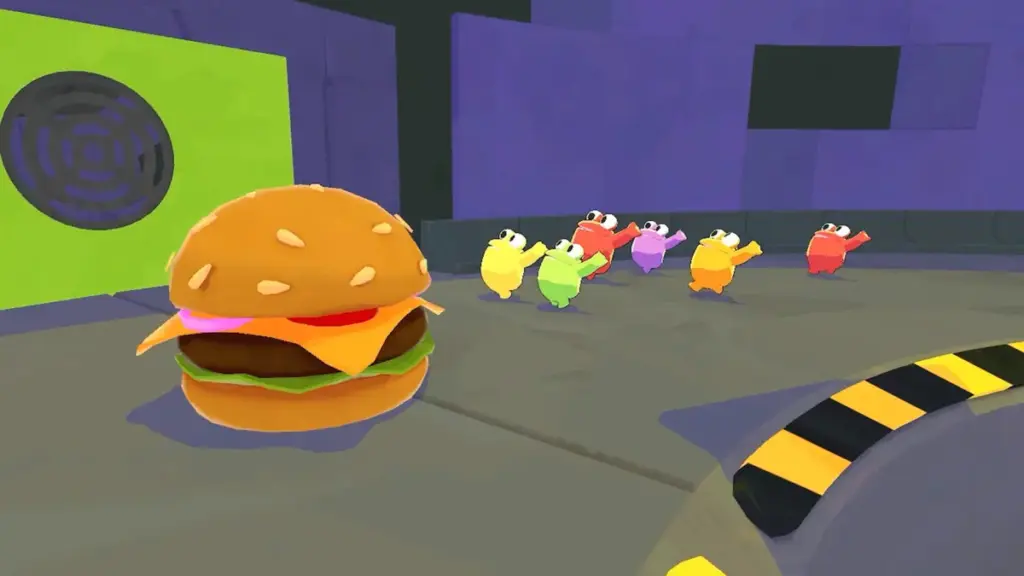
While Frog Sqwad accommodates solo adventurers, its true identity is forged in its multiplayer crucible. Supporting up to eight players simultaneously, the game transforms into a symphony of high-stakes tongue-slinging, frantic coordination, and accidental sabotage. From swallowing a cheeseburger whole to balloon into an unstoppable, wall-smashing spherical behemoth, the gameplay loop marries whimsical aesthetics with surprising tactical layers.
Following its hands-on debut at events like the New Game Plus showcase in London, Frog Sqwad has officially leaped onto Steam, drawing attention from streamers, couch-co-op enthusiasts, and fans of physics-based sandbox chaos alike. This report explores the core mechanics, level design philosophies, hands-on impressions, and the broader outlook for an indie title destined to become a staple of game nights everywhere.
Detailed Chronology of Development and Release
The journey of Frog Sqwad from a whimsical concept to a fully realized Steam release is a testament to the unpredictable nature of modern indie game development. While independent party games often rely on simple, repetitive loops, the creators behind Frog Sqwad aimed to construct a sandbox where physics, environmental hazard manipulation, and unpredictable multiplayer interactions collided organically.
From Concept to Code
The initial conception of Frog Sqwad centered around a universal mechanic: the tongue. In physics-based video games, traversal tools often define the entire identity of the experience. By choosing an amphibian protagonist, the development team unlocked a natural suite of movement options—grappling, pulling, swinging, and consuming.
As the project evolved, the developers realized that standard, linear levels would not do justice to the emergent chaos of a full squad of players. Consequently, the team implemented procedurally generated maps. This design choice ensured that no two runs toward satisfying the Swamp King’s daily food quota would ever feel identical. Players could no longer rely purely on muscle memory; instead, they had to adapt on the fly to new layouts, shifting hazards, and randomized food spawns.
The Public Debut and Steam Launch
The title gained significant traction within indie circles following its playable demo appearance at the prestigious New Game Plus event in London. It was here that journalists and public playtesters experienced the game’s steep learning curve and delightfully chaotic physics engine firsthand.
Following positive receptions to its chaotic multiplayer loop and distinctive aesthetic, the title officially launched on Steam. The release marked the beginning of a new chapter for the game, inviting global communities to test their coordination skills against the perils of the marshlands. Today, Frog Sqwad stands as a fully available commercial product, continuously drawing new players into its vibrant, sticky underworld.
Core Mechanics and Gameplay Systems: Feed the Swamp King
At its heart, Frog Sqwad is an exercise in resource management wrapped inside a frantic arcade-action shell. Players control colorful, highly expressive frogs whose primary tools are their hyper-adhesive tongues and bottomless stomachs.
The Hunt for Human Cuisine
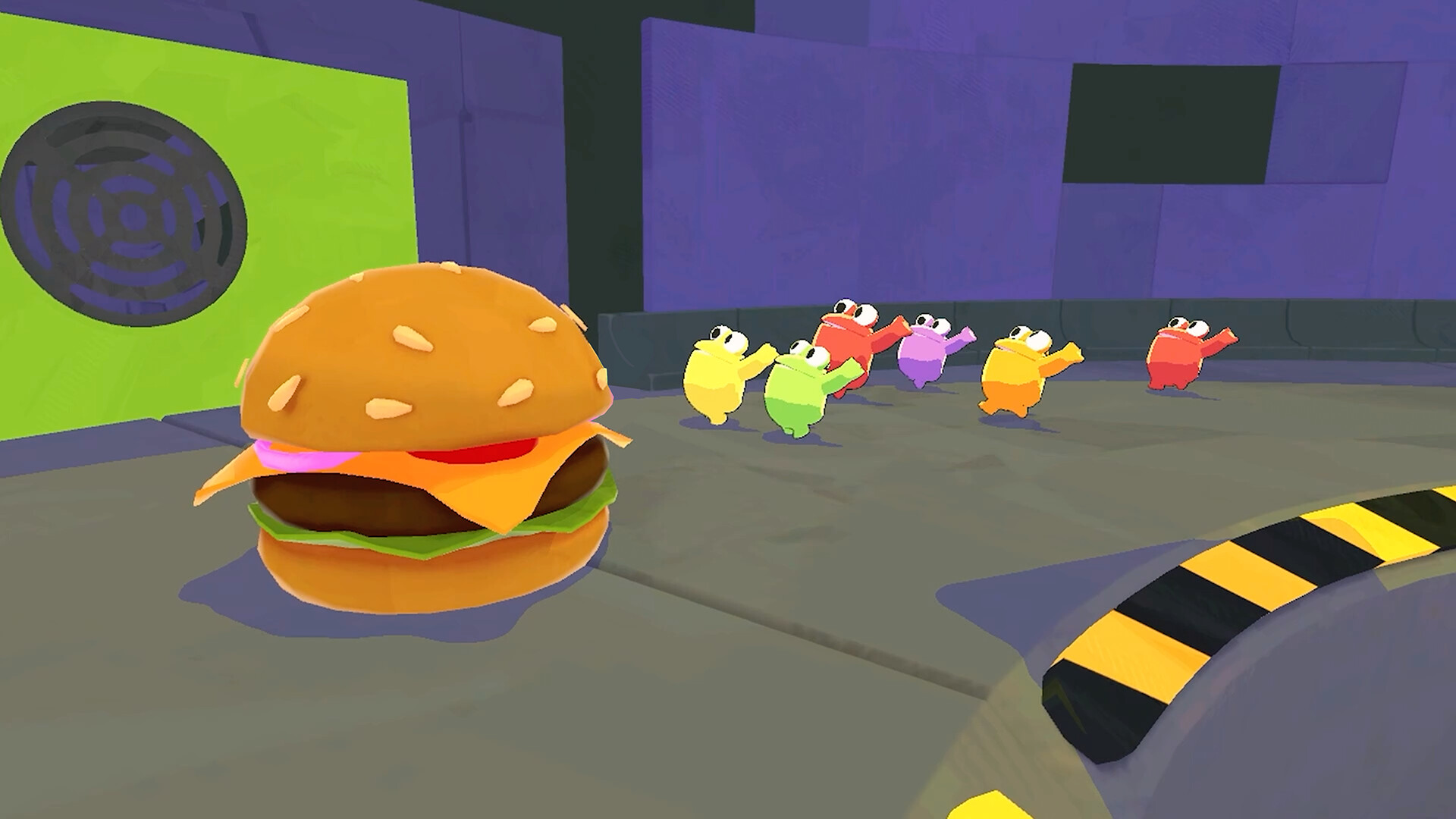
The central gameplay loop revolves around scavenging human food items scattered across hostile terrain. The Swamp King is a demanding monarch, requiring strict daily quotas of greasy and glorious delicacies. Players must hunt down:
- Juicy hamburgers
- Oversized giant eggs
- Fresh apples
- Crispy french fries
How players interact with these items dictates the flow of the game. Smaller items can be ingested immediately. Doing so provides a dual-purpose mechanic: it replenishes health, but it also physically alters the frog’s biology. As a frog consumes more food, it swells in size. Push this mechanic to its limit, and the frog transforms into a massive, bouncing ball of amphibian mass. In this spherical state, standard jumping and running are replaced by rolling momentum, allowing players to smash directly through fragile walls, clear paths for teammates, and crush obstacles.
Larger, more unwieldy items—such as the aforementioned giant eggs—cannot be swallowed. Instead, players must latch their tongues onto these heavy objects, dragging them across treacherous terrain while coordinating with teammates to ensure the offering safely reaches the collection bowl before time runs out. Because different items possess varying degrees of structural fragility, players must constantly calculate risk versus reward: do you rush a delicate item across a hazard-filled room, or do you take the safe, slow route?
Procedural Perils and Environmental Hazards
Surviving the world of Frog Sqwad requires more than just a good appetite; it demands situational awareness. The procedurally generated maps are actively hostile, filled with environmental hazards designed to test player reflexes:
- Slime Monsters: Hungry, roaming predators that view the frogs as appetizers just as easily as the frogs view the human food.
- Toxic Ooze: Ppools of glowing, hazardous liquid that spell instant doom for any frog foolish enough to take a dive.
- Spikes and Traps: Stationary hazards requiring precision movement and timing to bypass.
To counter these threats, levels incorporate cooperative puzzles and interactive buttons. Activating these mechanisms can alter the terrain, open safe pathways, or trigger drops of high-value food items. Mastery of Frog Sqwad is not merely about moving fast; it is about understanding how the environment works to your team’s ultimate advantage.
Supporting Context, Community Reception, and Hands-On Impressions
Every party game lives or dies by the quality of its movement and the joy of its multiplayer ecosystem. Early hands-on reports from events like the New Game Plus showcase highlight a fascinating dichotomy in Frog Sqwad’s design philosophy.
The Physics Paradox: Floatiness vs. Precision
When playing solo, Frog Sqwad presents a distinct challenge. Reviewers and players have noted that the movement system features a remarkably "floaty" physics model. In a game that demands precise platforming, careful jump calculations, and immediate evasion of environmental hazards, this floatiness can introduce a steep learning curve. Missing a jump over a pit of toxic ooze because momentum carried your frog slightly further than anticipated can be frustrating for a solitary player trying to manage everything at once.
However, this design quirk transforms entirely when the player count increases.
The Magic of Multiplayer Synergy
When experienced with up to seven friends, the floaty movement ceases to be an obstacle and instead becomes a source of emergent comedy and cooperative triumph. In a full lobby, individual shortcomings are mitigated by team distribution.
- One player might specialize in clearing out minor enemies and eating small snacks to grow into a bowling-ball tank.
- Another player with superior platforming control can focus on navigating precision-heavy rooms with fragile, high-value items.
- The rest of the squad can coordinate tongue-chains and distraction tactics to bypass roaming slime monsters.
This division of labor turns Frog Sqwad into a vibrant communication exercise. Shouting across the room, directing teammates away from toxic ooze, and celebrating the miraculous recovery of a dropped giant egg captures the purest essence of what makes couch and online co-op gaming enduringly popular. It is a title designed specifically to generate memorable, laugh-out-loud multiplayer moments.
Official Statements and Developer Vision
While indie game development often relies on organic community growth, the creative ethos behind Frog Sqwad centers heavily on delivering unadulterated, accessible fun. Although individual team members vary in their public commentary, the overarching design philosophy embedded within the game’s public announcements and promotional materials speaks volumes.
The development team set out to reject the overly serious, punishingly difficult trends seen in many modern indie titles, opting instead for a vibrant, tongue-in-cheek playground. By blending the frantic energy of classic arcade games with modern physics simulations, the creators aimed to build a virtual space where players could let loose, embrace failure, and laugh at the absurdity of physics-defying amphibian mechanics.
The integration of the "Swamp King" narrative framework provides just enough satirical context to tie the chaotic gameplay together, transforming a simple collection task into a mock-feudal obligation. This self-aware humor permeates the entire production, from the squishy sound design to the exaggerated character animations.
Future Outlook: What Lies Ahead for Frog Sqwad?
With Frog Sqwad now officially live on Steam, the immediate future hinges on community engagement, post-launch support, and the longevity of its multiplayer ecosystem.
Expanding the Marshlands
For a procedural party game to maintain long-term player retention, content variety is paramount. The community will undoubtedly look toward the developers for:
- Additional hazard types and biome variations
- New food items with unique physics interactions
- Expanded customization options for the frogs themselves
- Quality-of-life updates smoothing out network netcode for online sessions
Given the enthusiastic response from events like New Game Plus and the early traction on Valve’s platform, the foundation is firmly in place for a thriving community. Streamers and content creators, in particular, have found the game to be a goldmine for entertaining multiplayer clips, which will likely fuel ongoing discovery.
Final Verdict
Frog Sqwad proves that you do not need a multi-million-dollar budget to create a memorable multiplayer experience. By leaning into the sheer ridiculousness of sticky tongues, oversized meals, and bouncy physics, the developers have crafted a co-op party game with genuine heart and plenty of replay value. Whether you are diving in solo to test your endurance or rounding up a squad of eight friends for a chaotic evening of swamp-bound servitude, Frog Sqwad delivers an unforgettable, delightfully sticky adventure.