Pushing the Boundaries of Handheld Nostalgia: Developer m-cid and the ARK-5 Update Unlock Revolutionary PSP Overclocking Beyond 333MHz
Executive Overview
For over two decades, the PlayStation Portable (PSP) has occupied a legendary, almost untouchable status in the pantheon of gaming hardware. Released by Sony in late 2004 (Japan) and early 2005 (global markets), the system was a technological marvel for its time, successfully bringing near-PlayStation 2 quality 3D graphics into a portable form factor. Yet, like all hardware, the PSP eventually hit a hard ceiling defined by its physical limitations. For generations of homebrew developers, enthusiasts, and custom firmware (CFW) creators, that ceiling was firmly anchored at 333MHz—the official maximum CPU clock speed sanctioned by Sony.
That historical boundary has now been decisively shattered.
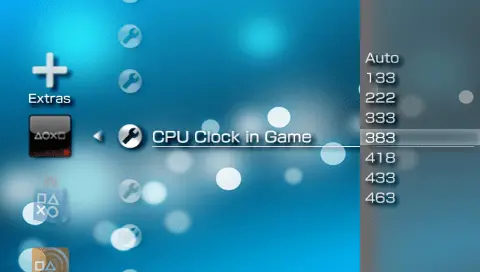
In a landmark development for the retro-gaming and console-modding communities, talented scene developer m-cid has engineered an open-source CPU overclocking solution that pushes the portable console far beyond its manufacturer-imposed limits. Integrated directly into the latest iterations of the acclaimed ARK-5 custom firmware, this breakthrough enables adventurous users to run their aging hardware at staggering clock speeds reaching up to 463MHz.
The implications of this breakthrough are profound. Historically, demanding technical showcases like Grand Theft Auto: Liberty City Stories, Grand Theft Auto: Vice City Stories, and Metal Gear Solid: Peace Walker often pushed the PSP hardware to its absolute breaking point. Players frequently had to endure frustrating performance compromises, including severe frame drops, inconsistent input latency, and locked 20 FPS caps or fluctuating unplayable framerates. With m-cid’s overclocking utility paired with appropriate frame-rate patches, these classic titles are experiencing a dramatic renaissance. Games that once stuttered along at cinematic yet sluggish framerates are now achieving stable, buttery-smooth 30 FPS performances.
However, hardware modification at this level is rarely a straightforward plug-and-play experience. Silicon lottery realities, model-specific thermal and electrical variations, and architectural anomalies mean that pushing a nearly twenty-year-old handheld past its factory specifications requires patience, rigorous testing, and an understanding of hardware limits. While newer iterations like the PSP-3000 and the sleek PSP Go are showing remarkable resilience at higher frequencies, budget models like the PSP Street find themselves entirely incompatible, revealing the fascinating and sometimes unpredictable nature of hardware preservation and evolution in the modern era.
Detailed Chronology: From Factory Limits to the ARK-5 Breakthrough
To fully understand the significance of m-cid’s contribution, one must trace the historical timeline of the PSP’s performance boundaries and the relentless efforts of the hacking community to push past them.
The Sony Era and the 333MHz Standard (2004–2011)
When Sony launched the PSP, its internal Media Engine (ME) and CPU core—based on the MIPS R4000 architecture—were officially specified to operate dynamically between 1X and 333MHz. Early on, developers quickly realized that running games at the maximum 333MHz frequency incurred a heavy penalty on battery life and generated noticeable thermal stress. Consequently, many titles shipped locked at 222MHz or even lower, reserving the 333MHz tier strictly for high-end titles that demanded heavy asset streaming or complex AI processing, such as God of War: Chains of Olympus or Daxter.
When custom firmware developers like Dark_Alex popularized recovery menus in the mid-to-late 2000s, one of the staple features introduced was the ability to manually force the CPU speed to 333MHz in the XMB (XrossMediaBar) and inside games that defaulted to lower speeds. For years, 333MHz was treated as the immutable absolute limit. Any attempt by early homebrew utilities to force higher frequencies universally resulted in immediate kernel panics, system crashes, or hardware lockups, reinforcing the belief that the physical architecture simply could not sustain higher clock cycles.
The Rise of Modern Custom Firmware and ARK-5
As the PSP hardware aged and transitioned from a commercial platform to a beloved retro darling, the custom firmware landscape evolved. The ARK (Advanced Replacement Kernel) ecosystem, maintained by a dedicated collective of developers, emerged as one of the most robust, feature-rich environments for running homebrew, emulators, and backups across virtually every PSP model.
Over the past year, whispers within underground developer circles began circulating regarding low-level kernel exploits and hardware timing adjustments. Enter m-cid, a developer well-known within niche emulation and hardware-hacking spaces. By meticulously analyzing the PSP’s internal clock generator, power management microchip (PMIC), and bus speeds, m-cid discovered that the CPU core was not strictly hardwired to a 333MHz ceiling by its silicon limitations, but rather by the software initialization parameters established by Sony’s initial OS kernel.
By rewriting these low-level initialization routines and building an open-source overclocking framework, m-cid successfully bypassed the software locks. Recognizing the massive potential of this discovery, the development team behind ARK-5 moved swiftly to integrate m-cid’s solution directly into the custom firmware ecosystem. Released in April 2026, the ARK-5 update democratized this capability, transforming what was once a proof-of-concept hardware hack into an accessible, menu-driven feature for anyone running the CFW.
Supporting Context & Metrics: Performance Gains, Silicon Lottery, and Model Variations
The integration of m-cid’s overclocking tool into ARK-5 is nothing short of a technical marvel, but unlocking its power requires a nuanced understanding of hardware variance. Not all PlayStation Portables are created equal; decades of manufacturing revisions, different motherboard iterations, and individual silicon quality dictate how each console reacts to being pushed past its design envelope.
The Silicon Lottery in Action
Overclocking—whether on a modern desktop gaming PC or a vintage handheld console—is governed by the "silicon lottery." Due to microscopic imperfections and variations during the semiconductor manufacturing process, some chips can handle higher voltages and frequencies with absolute stability, while others become unstable or throw memory faults at the slightest provocation.
Through extensive community testing led by early adopters and developers, a comprehensive breakdown of frequency stability across different PSP hardware revisions has begun to emerge:
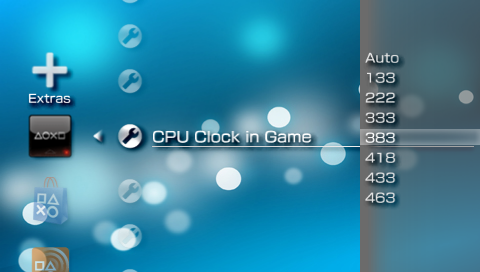
- The Gold Standard (PSP-3000 & PSP Go): Users operating the later revisions—specifically the PSP-3000 series and the slider-form-factor PSP Go—have reported the most astonishing results. These units utilize more modern, refined motherboard revisions and smaller manufacturing node refinements that handle electrical current and thermal output far more efficiently. Universally, 433MHz has been identified as the "sweet spot"—a frequency that offers maximum stability across the vast majority of tested devices. Even more impressively, many PSP-3000 and PSP Go units (such as developer test units operating at 463MHz) have successfully booted and maintained long-term stability at the absolute maximum frequencies offered by the ARK-5 utility. Interestingly, hardware quirks do exist; certain units may reject mid-tier overclocks like 418MHz while operating flawlessly at extreme frequencies like 433MHz or 463MHz, underscoring the necessity of individual testing.
- The Mid-Tier Pioneers (PSP-1000 & PSP-2000): The original "Fat" PSP-1000 and the slimmed-down PSP-2000 represent the backbone of early PSP development. While fully compatible with the ARK-5 overclocking suite, these older motherboard layouts tend to be slightly more conservative regarding extreme clock speeds. While 433MHz is achievable on exceptionally lucky units, many 1K and 2K models exhibit a preference for slightly more moderate frequencies, such as 418MHz or, in extreme cases of lower-tier silicon quality, 383MHz. Even at these lower overclocks, the performance delta over the stock 333MHz limit is substantial.
- The Outliers (PSP Street & PlayStation Vita ePSP): Unfortunately, hardware modifications cannot always salvage every device variant. The PSP-E1000 (PSP Street)—Sony’s budget-oriented, cost-reduced model released late in the system’s lifecycle—proves to be a notable casualty of this update. Applying the overclocking utility to a PSP Street yields a bizarre inverse effect: the system throttles drastically, dropping to speeds significantly lower than the minimum threshold allowed by the ARK-5 user interface (133MHz). Whether this is due to stripped-down power delivery circuits, missing voltage regulation components, or internal architectural differences remains under investigation, and it is currently unknown if a software patch can ever resolve this limitation. Similarly, users running homebrew via the backward-compatible ePSP (Emulated PSP) environment on the PlayStation Vita will find the utility has zero effect. The Vita’s hardware sandbox strictly walls off the ePSP environment, locking its effective clock speed firmly at the legacy 333MHz maximum.
Real-World Performance: Breaking the 20 FPS Barrier
For decades, playing open-world or complex 3D titles on the PSP meant accepting compromises. Rockstar Games’ Grand Theft Auto: Liberty City Stories and Vice City Stories are prime examples. Built on ambitious engines that pushed the hardware to render sprawling urban environments, heavy traffic, and pedestrian densities, these games famously suffered from framerate instability. On stock hardware, they frequently dipped into the high teens or hovered stubbornly at a locked, sluggish 20 FPS, creating noticeable input lag and motion blur.
With ARK-5’s overclocking enabled, paired with community-crafted framerate patches such as Freakler’s acclaimed CheatDeviceRemastered or traditional CWCheat plugin modifications, these titles are transformed. By unlocking the CPU to 433MHz or higher, the hardware finally possesses the raw processing overhead required to handle asset streaming, physics calculations, and drawing calls without choking. The result? A remarkably stable, fluid 30 FPS experience that makes these classics feel genuinely modern. Games that previously felt heavy and unresponsive now glide smoothly, breathing new life into catalogs of software that players thought they had experienced to their absolute limits.
Official Statements and Community Reception
The release of m-cid’s open-source overclocking solution and its integration into ARK-5 has sent shockwaves through online emulation forums, Reddit communities, and developer Discord servers. The reaction from the retro-gaming community has been a mixture of sheer disbelief, nostalgia, and profound gratitude.
In community discussions, lead figures within the ARK firmware development ecosystem emphasized the collaborative nature of the project. While m-cid engineered the core open-source low-level breakthrough, the swift integration into ARK-5 represents a testament to the open-source ethos that has kept the PSP scene alive for nearly twenty years.
"When we started working on ARK-5, our goals were focused on stability, compatibility, and expanding plugin support," noted a prominent scene developer speaking on condition of anonymity within the homebrew network. "The idea that someone would successfully break the 333MHz hardware wall that has stood since 2004 sounded like science fiction. M-cid’s work proves that even after two decades, brilliant minds are still finding ways to peel back the layers of this incredible machine. This isn’t just an incremental update; it’s a paradigm shift for what is possible on original PSP hardware."
Prominent content creators and community figures specializing in retro tech have similarly expressed awe. Reviewers testing the patch on vintage hardware have highlighted the tangible difference in titles like Kingdom Hearts Birth by Sleep, Midnight Club 3: DUB Edition, and Resistance: Retribution. While minor increases in battery drain and slight elevations in chassis temperature have been noted during prolonged sessions at 463MHz, the consensus remains overwhelmingly positive: the performance gains vastly outweigh the minor compromises.
Furthermore, the open-source nature of m-cid’s code has opened the floodgates for further peer review, optimization, and community contributions. By releasing the underlying mechanics publicly rather than locking them behind proprietary or closed-source gates, m-cid has invited other developers to inspect, refine, and potentially expand the overclocking framework to other custom firmware distributions in the near future.
Future Outlook: The Endless Horizon of Retro Hardware Preservation
As we look toward the future, the implications of m-cid’s overclocking breakthrough extend far beyond a simple framerate boost for Grand Theft Auto. This milestone marks a significant philosophical shift in how we approach retro hardware preservation and modification.
For years, the preservation community has focused heavily on emulation—running software on modern PCs, smartphones, and dedicated emulation handhelds like those from Retroid, Anbernic, or Ayn. While emulation offers convenience, high-resolution rendering filters, and modern creature comforts, it often sacrifices the authentic feel, exact timing precision, and tactile nostalgia of playing on original physical hardware.
Developments like the ARK-5 overclocking integration prove that original hardware ("real hardware") still has uncharted depths waiting to be discovered. By optimizing the original CPU architecture rather than relying on brute-force emulation emulation layers, enthusiasts can experience these classic titles in their purest form, enhanced rather than altered by modern ingenuity.
What Lies Ahead for the Scene?
Looking forward, several key questions and potential milestones lie on the horizon for the PSP modding community:
- Software Optimization for Difficult Models: While the PSP Street currently rejects overclocking utilities, the open-source nature of m-cid’s code means that hardware hackers will continue to analyze the E1000’s unique motherboard architecture. Whether a workaround can be engineered to safely introduce overclocking to the budget model remains an enticing, if challenging, prospect.
- Expanded Patch Ecosystem: With CPU headroom now liberated up to 463MHz, the demand for dedicated framerate patches, physics fixes, and engine modifications will undoubtedly skyrocket. Developers like Freakler have shown the way with CheatDeviceRemastered, but dozens of other demanding titles—ranging from complex Japanese RPGs to ambitious racing sims—are prime candidates for community-made patches designed to take full advantage of higher clock cycles.
- Cross-CFW Adoption: While currently integrated as a flagship feature of ARK-5, the open-source foundation laid by m-cid makes it highly probable that other prominent custom firmware projects (such as PRO-C or ME CFW variations) may look into adopting or adapting similar overclocking routines, ensuring that the entire PSP ecosystem benefits from this monumental discovery.
- Thermal and Power Modding: As enthusiasts push their PSP-3000 and PSP Go units to 433MHz and 463MHz for extended gaming sessions, we may begin to see secondary hardware mods emerge—such as custom high-capacity battery replacements optimized for higher power draws, or even experimental thermal mitigation techniques designed to safeguard aging silicon against long-term degradation.
Conclusion
The PlayStation Portable was never supposed to go this far. Released in an era when mobile gaming was in its absolute infancy, Sony’s revolutionary handheld captured the imaginations of millions, defining a golden age of portable entertainment. Yet, thanks to the relentless passion, technical brilliance, and unyielding dedication of independent developers like m-cid and the ARK team, the PSP’s story is still being written.
Two decades after its debut, the ultimate handheld is breaking its own limits. For retro gamers dusting off their old consoles, installing ARK-5, and experiencing their childhood favorites at a silky-smooth 30 FPS for the very first time, the message is clear: the golden age of PSP homebrew is not behind us—it is happening right now.