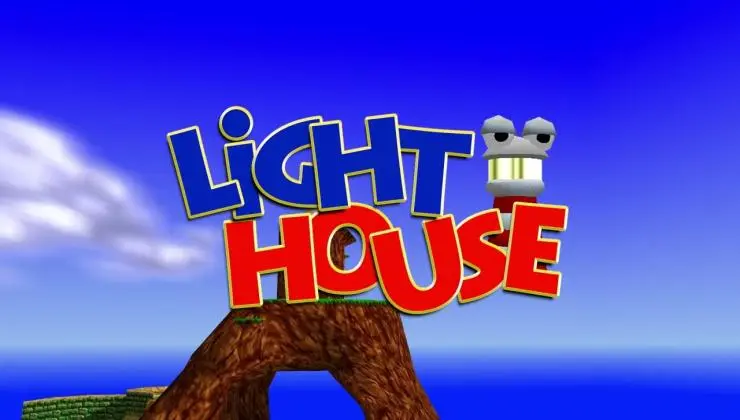
Lighthouse, the Harbour Masters PC port of Banjo Kazooie is out now
Executive Overview
The landscape of retro video game preservation and modern native porting has shifted dramatically over the last half-decade. Emulation, once the absolute pinnacle of playing classic console titles on modern hardware, is increasingly sharing the spotlight with reverse-engineered, native source ports. These projects—ranging from Super Mario 64 and The Legend of Zelda: Ocarina of Time to Jak and Daxter—transcend the limitations of traditional emulation by converting original game code into native binaries capable of running directly on modern operating systems.
The latest monumental achievement in this burgeoning community-driven movement comes from the prolific reverse-engineering collective known as Harbour Masters. Hot on the heels of previous high-profile efforts, the team has officially released Lighthouse: a brand-new, feature-rich native PC port of Rare’s legendary 1998 Nintendo 64 platformer, Banjo-Kazooie.
While PC players recently celebrated the release of Banjo: Recompiled, Lighthouse arrives as a formidable alternative, boasting an expansive suite of enhancements, broad multi-platform support spanning Windows, macOS, and Linux, and seamless compatibility with handheld gaming PCs like the Valve Steam Deck. True to the ethos of modern source porting, Lighthouse operates on the "bring-your-own-ROM" model, requiring users to legally supply their own game assets to construct the executable. This clever architectural approach shields the project from immediate copyright infringement claims while offering enthusiasts a pristine, high-performance way to experience the beloved bear-and-bird duo.
Beyond raw performance, Lighthouse introduces groundbreaking features that fundamentally transform how players interact with the classic title. From fully synchronized cooperative gameplay—dubbed "Anchor Co-op"—to a built-in Version 1.0 randomizer and native support for community-created ROM hacks, Lighthouse is not merely a port; it is an expansive platform designed to extend the lifespan of a 26-year-old masterpiece indefinitely. This article provides an exhaustive, multi-faceted investigation into the release of Lighthouse, exploring its technical architecture, community impact, feature set, and the evolving legal and cultural landscape of video game source ports.
Detailed Chronology: The Evolution of Banjo-Kazooie Source Porting
To understand the magnitude of the Lighthouse release, one must trace the winding historical trajectory of Banjo-Kazooie preservation and the broader evolution of the native source porting scene.
The Nintendo 64 Era and Rareware’s Pinnacle
Released in North America on June 29, 1998, Banjo-Kazooie was developed by Rare during their golden era under Nintendo’s second-party umbrella. Pushing the boundaries of the Nintendo 64 hardware, the game combined intricate 3D platforming, sprawling sandbox-style worlds, memorable character design, and a legendary musical score by Grant Kirkhope. It became a defining title of the fifth console generation, cementing the collectathon genre alongside its spiritual predecessor, Super Mario 64.
However, when Microsoft acquired Rare in 2002, the intellectual property rights shifted away from Nintendo platforms. For years, players hoping to experience the game were restricted to original hardware, the 2008 Xbox 360 remaster (which featured improved resolutions and framerates), or via backward compatibility on modern Xbox consoles. PC players, meanwhile, were entirely left out in the cold, forced to rely on emulator software like Project64 or Mupen64Plus. While these emulators allowed the game to run at higher resolutions, they frequently suffered from micro-stutters, audio synchronization quirks, and input latency inherent to hardware emulation.
The Reverse-Engineering Revolution
The paradigm shift began in earnest around 2020, catalyzed by the monumental reverse-engineering of Super Mario 64 into a native PC port (commonly known as sm64 pc). Developers realized that by painstakingly translating assembly code into readable C language, they could compile the game directly for x86 and ARM architectures. This unlocked unprecedented capabilities: native widescreen support, unthrottled framerates, modding pipelines, and high-resolution texture packs.
Following in these footsteps, the Banjo-Kazooie community began exploring similar avenues. Projects slowly materialized, dissecting the game’s microcode, physics engines, and asset management systems. Earlier this year, the community celebrated the arrival of Banjo: Recompiled. Just as enthusiasts were digesting the implications of that release, the Harbour Masters—a name already revered in the retro-modding community for their work on projects like Jak and Daxter (OpenGOAL)—announced and subsequently released Lighthouse.
The Unveiling of Lighthouse
Released via their official communications channels and hosted on GitHub, Lighthouse represents a culmination of months of rigorous reverse-engineering and software architecture design. Rather than serving as a quick hack or a wrapper, Lighthouse was built from the ground up to offer robust, multi-platform execution.
The announcement, dropped quietly within the Harbour Masters’ community Discord server, detailed a sprawling feature set designed to appeal to both casual nostalgic players and hardcore speedrunners alike. By prioritizing cross-platform compatibility from day one, the development team ensured that Linux users and Steam Deck owners—demographics historically underserved by proprietary software ports—were treated as first-class citizens.
Supporting Context & Metrics: Technical Architecture and Platform Support
The technical prowess of Lighthouse lies in its versatility and deep integration with modern operating systems. Transitioning a title designed for the MIPS-based architecture of the Nintendo 64—running with a mere 4MB of RAM (expandable via the Expansion Pak, though Banjo-Kazooie ran on the standard configuration)—to modern multi-core, 64-bit processors requires immense engineering precision.
Multi-Platform Parity: Windows, macOS, and Linux
One of the most remarkable aspects of Lighthouse is its comprehensive operating system support. While many independent PC ports focus exclusively on Windows due to market share dominance, the Harbour Masters have engineered Lighthouse to run natively across the trifecta of major desktop operating systems:
- Microsoft Windows: Utilizing modern graphics APIs, the Windows build offers seamless integration with standard Direct3D or Vulkan backends, ensuring maximum compatibility across diverse GPU configurations from NVIDIA, AMD, and Intel.
- macOS: By providing native builds for Apple’s desktop ecosystem, Lighthouse caters to Mac users, utilizing Apple Metal or cross-platform graphics wrappers to deliver smooth performance on both legacy Intel Macs and Apple Silicon (M1/M2/M3/M4) architectures.
- Linux & Steam Deck: Perhaps the most celebrated aspect of the release is its first-class Linux support. Packaged cleanly for modern Linux distributions, Lighthouse shines brightest on the Valve Steam Deck. Because the port compiles natively to Linux binaries rather than running through Proton (the compatibility layer used for Windows games on Steam), it achieves optimal battery efficiency, flawless controller mapping, and minimal CPU overhead.
The "Bring-Your-Own-ROM" Legal Framework
In the realm of video game preservation, legality is a perpetual tightrope walk. Distributing copyrighted game code, textures, audio files, and scripts constitutes blatant copyright infringement. To navigate this legal minefield safely, Lighthouse adopts the industry-standard "source port" legal model.
The repository hosted on GitHub contains strictly the reverse-engineered source code, build scripts, and enhancement logic. It does not contain a single byte of copyrighted Nintendo or Rare assets. Instead, upon launching Lighthouse for the first time, the application prompts the user to supply a legally obtained ROM file of the original Banjo-Kazooie (typically the US version). The executable then extracts the necessary assets—such as models, levels, music, and text—on the fly, packaging them into a format optimized for the native port.
While legal scholars note that copyright holders can still issue challenges, this architectural separation of engine code from game assets has historically provided strong defensive footing for projects like OpenMW, ScummVM, and the aforementioned Super Mario 64 PC ports.
Official Statements and Feature Breakdown
The official announcement shared within the Harbour Masters’ Discord server outlines a staggering array of features packaged into the initial 1.0 release of Lighthouse. Below is a detailed breakdown of the core pillars highlighted by the development team.
1. Anchor Co-op (Cooperative Multiplayer)
Perhaps the most ambitious feature introduced in Lighthouse is Anchor Co-op. Historically, Banjo-Kazooie was strictly a single-player experience, with multiplayer elements entirely absent from the original Nintendo 64 release (unlike its sequel, Banjo-Tooie, which featured distinct multiplayer minigames).
According to the developers’ official notes:
"Anchor co-op with vanilla is fully completable, though obviously not everything could be tested."
This system allows players to experience the entirety of the base campaign cooperatively. While the developers have exercised prudent caution by noting that edge cases may exist due to the sheer scale of the game, the confirmation that a full cooperative playthrough of the vanilla game is possible represents a watershed moment for the community. Imagine navigating Click Clock Wood or exploring Freezeezy Peak simultaneously with a friend, fundamentally altering the pacing, puzzle-solving mechanics, and exploration dynamics of the game.
2. Built-In Randomizer (Version 1.0)
Speedrunning and casual replayability have been revolutionized over the last decade by randomizer mods, which shuffle item locations, enemy placements, and world rules to create a fresh experience every time a game is booted up.
Lighthouse bypasses the need for external patching tools by baking a fully-fledged randomizer directly into the core engine. Version 1.0 of the Lighthouse randomizer includes:
- Item Shuffling: All empty honeycombs, musical notes, Jinjos, and puzzle pieces (Jiggies) are randomized amongst each other.
- Moehills and Moves: The progression logic is further shaken up by randomizing the molehills and the specific moves taught by Bottles across the various worlds.
This integration ensures that players cannot rely on muscle memory or predetermined optimal routes; every playthrough demands dynamic problem-solving and deep familiarity with game mechanics.
3. Comprehensive ROM Hack Support
The modding community surrounding Banjo-Kazooie has spent decades creating custom levels, campaigns, and total conversions using legacy ROM-patching tools. Recognizing this rich legacy, the Harbour Masters built native support for ROM hacks directly into Lighthouse.
The developers issued a measured disclaimer regarding this feature:
"As teased, we do have romhack support. Not every supported hack has been fully tested, so there may be some issues, but we’re pretty confident in the ones that don’t add any custom code."
While hacks utilizing complex, custom assembly code may require iterative patching and bug-fixing by the community, standard level hacks and vanilla-adjacent custom campaigns are poised to run with unprecedented stability, higher framerates, and enhanced visual fidelity compared to running them on traditional emulators.
Future Outlook: The Horizon of Retro Preservation
The release of Lighthouse is far more than a weekend distraction for nostalgic gamers; it is a bellwether for the future of interactive digital preservation. As official corporate entities—including Nintendo, Microsoft, Sony, and others—frequently struggle to maintain accessible, comprehensive catalogs of their legacy software on modern hardware, grassroots communities are stepping into the void.
The Superiority of Native Ports Over Emulation
While emulators remain vital engineering achievements, they are inherently burdened by the need to simulate hardware registers, CPU instruction pipelines, and graphics processors that differ wildly from modern PC architectures. Emulation is a simulation of the past; native source porting is a translation of the past into the vernacular of the present.
By compiling directly to modern machine code, projects like Lighthouse eliminate input lag, unlock limitless framerates, allow for seamless widescreen and ultra-wide aspect ratios, and open the floodgates for modders to inject high-resolution textures, ray-traced lighting, and gameplay overhauls.
What’s Next for Harbour Masters?
With Lighthouse now out in the wild and users actively testing its boundaries across Windows, macOS, Linux, and Steam Deck, the Harbour Masters community has turned its immediate attention to bug-fixing, community feedback integration, and expanding the limits of Anchor Co-op.
Furthermore, the success of Lighthouse naturally raises questions about the future. Could Banjo-Tooie—a notoriously complex game that pushed the Nintendo 64 hardware to its absolute breaking point with massive worlds and frantic framerate drops—be the next target for the Harbour Masters? While the team has remained tight-lipped regarding future projects, the methodologies established in porting Banjo-Kazooie provide a blueprint for tackling even more technically demanding titles.
Conclusion
Lighthouse is a triumph of reverse-engineering and community dedication. It takes a cherished piece of gaming history and meticulously polishes it, presenting it to modern audiences in the best possible light. Whether you are a veteran speedrunner looking to test your mettle against the built-in randomizer, a pair of friends eager to tackle the campaign via Anchor Co-op on a Steam Deck during a cross-country flight, or a purist wanting to experience Gruntilda’s Lair with silky-smooth frame pacing, Lighthouse delivers on every conceivable front.
As long as dedicated developers continue to honor gaming history through projects of this caliber, the classics of the past will never truly fade away—they will only continue to shine brighter.