The Zero-Dollar VR Revolution: An Investigative Guide to the Best Free Meta Quest Games, Apps, and Experiences
Executive Overview
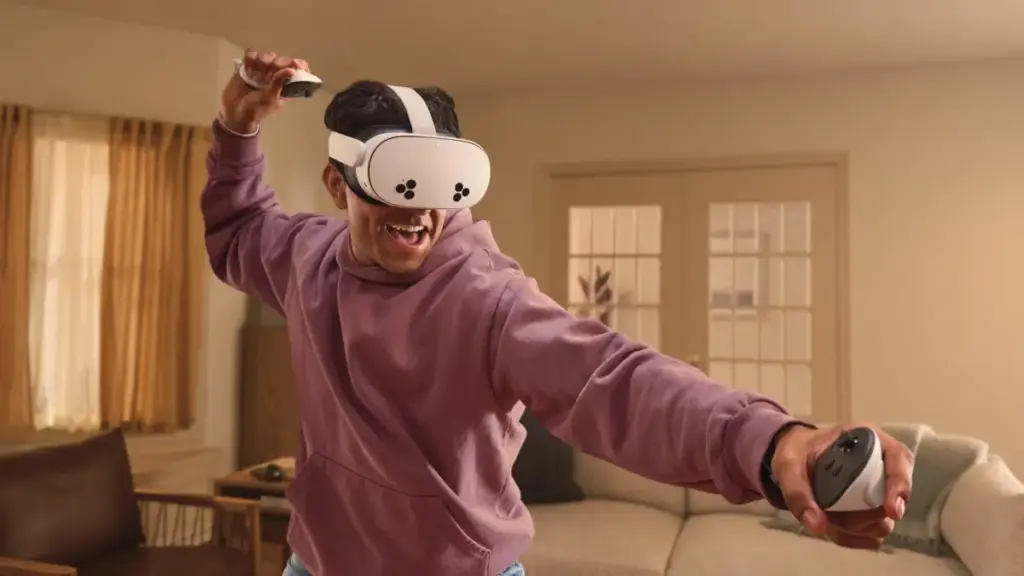
Diving into the immersive world of virtual reality no longer requires draining your bank account on day-one software purchases. While the temptation to plonk down your first $100 on high-profile Meta Quest releases is strong, the platform hosts an astonishingly rich ecosystem of completely free games, creative applications, interactive documentaries, and social VR hubs.
Whether you are unboxing a brand-new headset or looking to maximize the value of your hardware with essential Quest 3 accessories, the zero-dollar software library offers hundreds of hours of entertainment. This comprehensive guide investigates the top free-to-play multiplayer titles, single-player apps, educational experiences, and creative suites currently dominating the Meta Quest ecosystem. Far from being stripped-down demos or paywalled cash-grabs, many of these titles rival premium releases in sheer player engagement, community backing, and technical ingenuity.
Detailed Chronology: The Evolution of Free-to-Play on Meta Quest
The economic landscape of virtual reality has shifted dramatically since the early days of tethered headsets and rigid pricing models. Understanding how we arrived at today’s robust free-to-play ecosystem requires looking at the trajectory of software distribution on standalone hardware.
- The Early Premium Era (2016–2019): When modern consumer VR first emerged, developers heavily relied on upfront purchases to recoup high development costs. Free software was largely limited to tech demos, short promotional experiences, and basic video players.
- The Standalone Boom and Social Pioneers (2020–2022): With the launch of accessible standalone hardware, user bases exploded. Developers quickly realized that multiplayer games thrive on critical mass. Titles like Gorilla Tag and VRChat proved that free-to-play models sustained by cosmetics or pure community adoption could generate massive, self-sustaining ecosystems.
- The Transition of Former Premium Software (2023–2025): As the market matured, several developers of established titles—such as physics-driven motorcycling simulators and creative tools—pivoted away from traditional paywalls. By eliminating upfront costs, these studios successfully revitalized fading player counts and fostered vibrant active communities.
- The Modern Zero-Dollar Ecosystem (2026 and Beyond): Today, the Meta Quest platform boasts sophisticated multiplayer shooters, fully featured battle royales, physics sandboxes, and professional-grade creation tools that cost nothing to download. Regular curation ensures that defunct projects are pruned, making way for innovative updates and next-generation social applications.
Free Multiplayer Games: Community, Chaos, and Competition
Multiplayer titles form the beating heart of the Quest’s free-to-play library, relying on inventive locomotion mechanics and cross-play compatibility to keep servers packed.
Yeeps: Hide and Seek
For those seeking uninhibited creativity coupled with classic playground thrills, Yeeps: Hide and Seek delivers a unique loop. Players control a "Yeep"—a creature whose belly is packed with versatile stuffing. This material can be instantaneously crafted into anything from pillows for architectural building to explosive blocks for chaotic destruction. Featuring intuitive block-based building mechanics, the game lowers the barrier to entry, allowing users of any skill level to express themselves visually while playing an intense game of hide-and-seek.
Gorilla Tag and Its Successors: Animal Company and UG
No discussion of Quest multiplayer is complete without Gorilla Tag. Utilizing a primitive "grab-the-world" locomotion style, players lumber around tree-lined arenas like great apes, chasing and infecting one another. It is an intensely physical experience that demands fair warning: ensure your play space is clear of televisions, furniture, and pets, as the mad dash for low-poly freedom often results in flailing arms.
Capitalizing on this revolutionary movement mechanic, Animal Company blends Gorilla Tag’s physical locomotion with the cooperative looting loop of Lethal Company. Players navigate bizarre environments, scoop up strange loot, and dash back to base while avoiding monsters and traps through stealth and teamwork.
Similarly, UG embraces the knuckle-dragging social VR formula while carving out its own niche. Set in a prehistoric, dinosaur-filled world, the game allows groups of friends to explore, combat, catch, raise, and ride their own dino-beasties together.
Orion Drift and Sports Titles
Created by Gorilla Tag studio Another Axiom, Orion Drift leans heavily into social platform mechanics. Repurposing the studio’s signature locomotion scheme for high-speed action, it channels the spirit of the beloved, now-defunct sports title Echo VR. Up to 75 players inhabit a massive space station where they can compete in Rocket League-inspired "Drift Ball," parkour challenges, sword combat, and golf, or simply kick back in chill social zones.
For traditional sports fans, Gym Class – Basketball offers physics-based, full-body kinematics that let you shoot hoops and execute dunks that might be physically impossible on a real-world court. Meanwhile, Gods of Gravity serves up a fast-paced, arcade-style Real-Time Strategy (RTS) showdown for two to eight players, where celestial gods scoop up fleets, capture planets, mine asteroid resources, and battle for total solar supremacy.
Tactical Shooters and Action
- Population: One: As VR’s most successful battle royale, this title lets players climb, fly, and shoot across a massive map. Its free-to-play model restricts microtransactions strictly to cosmetics. Beyond the standard battle royale mode, users can dive into custom sandbox maps, team deathmatches, and massive 12v12 war modes.
- VAIL: A high-intensity 5v5 tactical shooter that feels remarkably full-featured for a free-to-play title. While advanced maps sit behind DLC paywalls, the free "Citadel" arena grants access to four maps for weapon mastery and intense multiplayer skirmishes.
- MotoX: Once a $20 title, this motocross simulator is now entirely free-to-play. While its visuals evoke the PS2 era and its physics can be a bit jittery, racing through muddy arenas and pulling off massive jumps with friends remains an undeniable blast.
- Hyper Dash: While official multiplayer servers are scheduled to sunset in November 2026—transitioning the shooter into a single-player experience—it remains a high-velocity playground for quick dashes, rail grinding, and cross-play action across various modes like Payload and Capture The Flag.
Social Card and Casino Hubs
- Cards & Tankards: A deeply addictive social collectible card game featuring over 180 cards. With full cross-play against free PC VR headsets via SteamVR, it serves as an ideal virtual substitute for a weekly game night inside a medieval fantasy tavern.
- PokerStars – Vegas Infinite: Offering a dopamine-fueled escape without financial risk, this virtual casino features Texas Hold’em alongside a full suite of table games and slot machines. In-game chips cannot be converted back into real currency, ensuring a guilt-free environment for casual gamblers.
- VRChat: The undisputed heavyweight of user-generated social VR. VRChat hosts millions of custom avatars—ranging from anime icons to classic cartoon characters—and recreation spaces where users can play virtual rounds of Among Us, Mario Kart, and custom rhythm games.
Supporting Context & Metrics: The Value Proposition of Free VR
To truly understand why millions of Quest users bypass paid storefronts in favor of zero-dollar applications, examining platform metrics reveals shifting consumer behavior. Industry data consistently indicates that user retention on standalone VR hardware is heavily driven by social connectivity and recurring multiplayer engagement rather than single-purchase narrative campaigns.
| Category | Top Free Titles | Key Mechanic / Feature | Primary Appeal |
|---|---|---|---|
| Multiplayer / Movement | Gorilla Tag, Orion Drift | "Grab-the-world" locomotion | High physical exertion & fast-paced social play |
| Social / Creative | VRChat, Open Brush, Gravity Sketch | User-generated content & 3D sculpting | Infinite replayability & professional-grade tools |
| Simulation / Strategy | Gods of Gravity, Wooorld | RTS arcade combat & global mapping | Tactical depth & educational exploration |
Platforms like Wooorld demonstrate how utility and entertainment merge. Its free tier offers a fully interactive 3D map and Google Street View integration, turning global exploration into a shared social event, while advanced puzzle modes remain locked behind premium options.
Official Statements and Industry Impact
Developers and platform holders alike have increasingly embraced the freemium and zero-dollar model to combat user churn. In recent developer roundtables, studio leads emphasize that lowering the initial barrier to entry is essential for healthy matchmaking pools in multiplayer environments.
"When you remove the financial friction of entry, you don’t just get more players; you build resilient, self-sustaining communities that generate their own culture, events, and longevity," notes industry software analysts tracking standalone VR adoption curves.
Furthermore, Meta’s continuous support of tools like BeamXR Live—which allows creators to stream Quest gameplay directly to Twitch and YouTube with native chat integration—proves that the platform views community-driven content as its strongest marketing asset.
Future Outlook: What Lies Ahead for Free Quest Software
As hardware iterations like the Quest 3S continue to expand the addressable market of budget-conscious consumers, the appetite for high-quality, free-to-play software will only intensify. Developers are increasingly utilizing episodic updates, cosmetic microtransactions, and cross-platform compatibility (such as Quest-PCVR cross-play) to monetize sustainable live-service models.
As evidenced by our August 2026 update—which pruned defunct servers and introduced fresh titles like Animal Company and UG—the free-to-play ecosystem is remarkably self-correcting. Old projects fade when upkeep becomes unsustainable, immediately replaced by innovative builders pushing the boundaries of standalone processing power. For new and veteran headset owners alike, the zero-dollar app library guarantees that your Quest will never gather dust in a closet, regardless of how much cash you are willing to spend.