The Rebirth of an 8-Bit Icon: How Ninja JaJaMaru: Yokai Night Parade Bridges Forty Years of Arcade History for the Next-Gen Era
Executive Overview
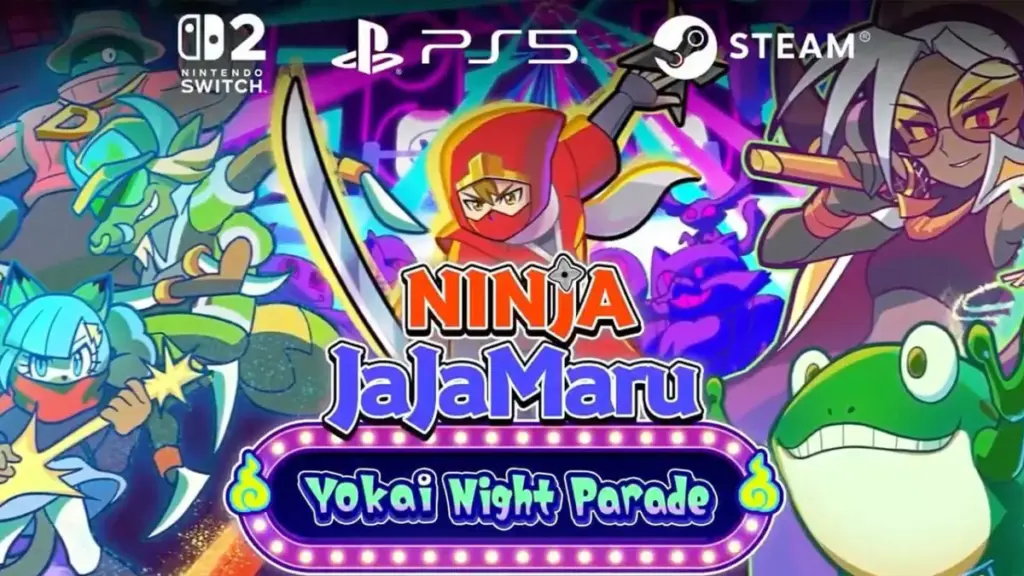
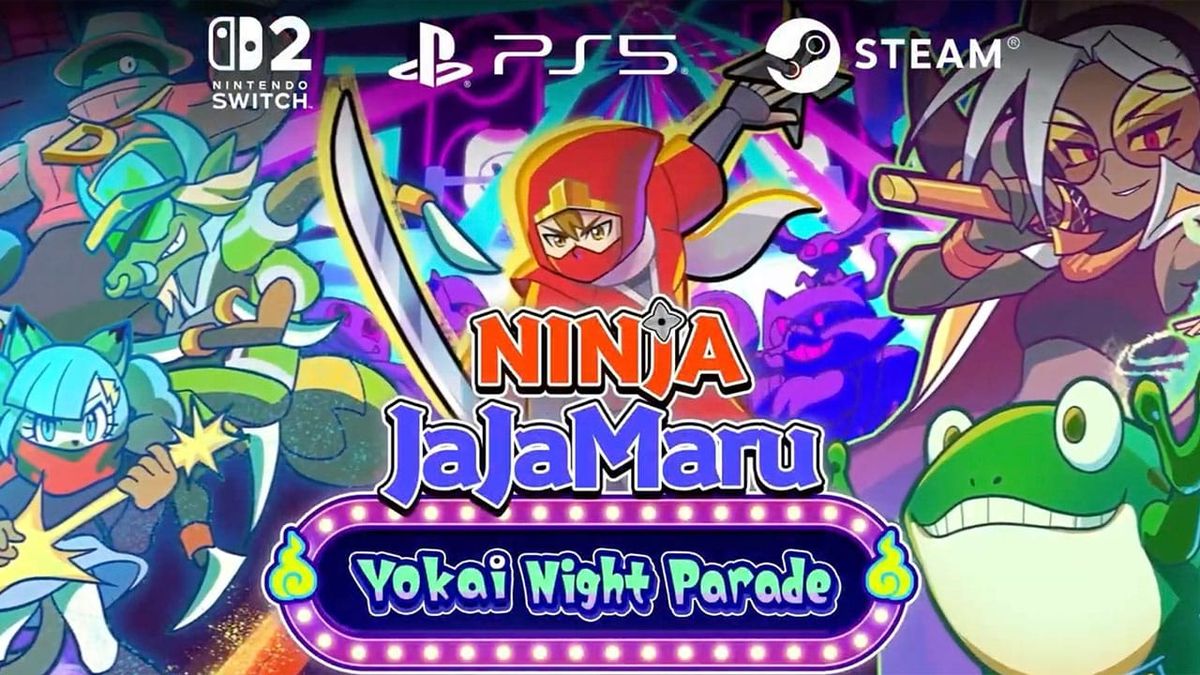
During the recently broadcasted Pixel Arcadia livestream, developer and publisher Clear River Games made a major announcement that caught the retro-gaming community by surprise. Ninja JaJaMaru: Yokai Night Parade, a modern reimagining of the classic 1980s Japanese arcade franchise, is officially in development. Scheduled for a multi-platform release, the title is slated to arrive on Steam, PlayStation 5, and Nintendo’s highly anticipated next-generation successor, the "Switch 2."
The announcement marks a significant milestone for an intellectual property that has largely remained a niche, Japan-exclusive curiosity for Western audiences. Originally conceived by the now-defunct studio Jaleco, the Ninja JaJaMaru franchise has undergone various iterations over the past forty years. However, Yokai Night Parade represents the most ambitious overhaul of the IP to date.
Abandoning the flat, pixelated aesthetics of its 8-bit ancestors, the new title introduces a vibrant, hand-drawn art style reminiscent of contemporary television animation, paired with a modern combat system designed to appeal to both veteran enthusiasts and younger demographics.
+-------------------------------------------------------------------------+
|                       NINJA JAJAMARU: YOKAI NIGHT PARADE                |
+-------------------------------------------------------------------------+
| Developer/Publisher | Clear River Games                                 |
| Target Platforms    | Nintendo Switch 2, PlayStation 5, PC (Steam)      |
| Original IP Debut   | 1985 (Ninja JaJaMaru-kun on Famicom/Arcade)       |
| Key Gameplay Focus  | Fluid 2D combat, aerial stomps, upgradeable skills|
| Visual Aesthetic    | Modern hand-drawn cartoon style (90s-inspired)    |
+-------------------------------------------------------------------------+
Detailed Chronology: From Famicom Foundations to Modern Platforms
To understand the significance of Yokai Night Parade, one must trace the long, winding history of the Ninja JaJaMaru intellectual property. The franchise’s evolution is a reflection of the broader shifts in the global video game market over the past four decades.
  1985: Ninja JaJaMaru-kun Debuts (Arcade & Famicom in Japan)
    │
    ▼
  1986–1997: Era of Sequels & Spin-offs (Jaleco expands the IP on NES/SNES/GB)
    │
    ▼
  2000s–2010s: Jaleco's Decline & IP Acquisition (City Connection acquires rights)
    │
    ▼
  2023: Ninja JaJaMaru: Retro Collection (Brings classic titles to Western consoles)
    │
    ▼
  2026 (August): Yokai Night Parade Announced (Next-gen revival via Clear River Games)
The 8-Bit Genesis (1985)
The character of JaJaMaru first appeared in 1985 with the release of Ninja JaJaMaru-kun in Japanese arcades and on the Nintendo Famicom. Developed by Jaleco, the game was a spin-off of their earlier 1984 title, Ninja-kun: Majou no Bouken.
The gameplay loop of the original JaJaMaru-kun was straightforward yet highly addictive:
- Players controlled the titular red-clad ninja, JaJaMaru, navigating vertically scrolling, multi-tiered stages.
- The primary objective was to defeat a variety of traditional Japanese folklore monsters (Yokai) and rescue Princess Sakura from the clutches of the pirate lord catfish, Namazu Dayu.
- Players broke ceiling blocks to uncover power-ups, rode giant frogs, and utilized simple throwing-star mechanics.
While the game became an instant classic in Japan—spawning numerous sequels on the Famicom, Super Famicom, and Game Boy—it remained largely unreleased in Western markets during the 8-bit and 16-bit eras. This lack of localization created a mystique around the title for Western retro importers.
The Era of Obscurity and Acquisition (2000–2020)
As the gaming industry transitioned to 3D graphics in the late 1990s and early 2000s, Jaleco struggled to adapt. The JaJaMaru franchise fell into a period of dormancy, save for occasional handheld compilations and obscure mobile phone releases in Japan.
Following Jaleco’s eventual dissolution, the rights to its intellectual property library were acquired by City Connection, a Japanese company dedicated to preserving and revitalizing retro video games. This acquisition paved the way for modern compilations, such as the Ninja JaJaMaru: Retro Collection released in 2023, which finally gave Western players officially localized access to the franchise’s historical catalog.
The August 2026 Announcement
The reveal of Ninja JaJaMaru: Yokai Night Parade during the Pixel Arcadia livestream represents a major shift from preservation to active modernization. Clear River Games, working in tandem with the IP holders, has taken the core elements of the 1985 classic—the platforming, the Yokai enemies, and the rescue of Princess Sakura—and rebuilt them from the ground up to match the standards of contemporary gaming platforms.
Supporting Context & Market Metrics: The Retro Revival Boom
The decision to greenlight a high-production-value sequel to a forty-year-old franchise is not an isolated creative choice; rather, it is a calculated response to broader macroeconomic and cultural trends within the interactive entertainment industry.
The Financial Viability of "Neo-Retro" Titles
Over the past decade, the gaming market has seen a massive surge in the commercial and critical success of "neo-retro" revivals. Titles that take classic 8-bit or 16-bit IPs and modernize them with contemporary design principles have consistently outperformed industry expectations.
+------------------------------------------+------------------------+
| Title                                    | Market Performance     |
+------------------------------------------+------------------------+
| TMNT: Shredder's Revenge                 | Over 1 million sold    |
|                                          | in its first week      |
+------------------------------------------+------------------------+
| Streets of Rage 4                        | Over 2.5 million       |
|                                          | copies sold globally   |
+------------------------------------------+------------------------+
| Wonder Boy: The Dragon's Trap            | Critically acclaimed   |
|                                          | multi-platform success |
+------------------------------------------+------------------------+
These metrics demonstrate that there is a highly lucrative, cross-generational demographic of players who seek the immediate, gameplay-first loop of classic arcade titles, packaged with modern quality-of-life improvements and high-definition visuals.
Visual Evolution: From Scanlines to Saturday Morning Cartoons
One of the most discussed aspects of the Yokai Night Parade reveal is its radical aesthetic shift. While previous modern entries in retro franchises have often opted for high-fidelity pixel art, Clear River Games has chosen a clean, vector-based 2D animation style.
This visual direction draws comparisons to modern animated series like Adventure Time or Steven Universe, presenting a bright, expressive palette that contrasts sharply with the flat, dark backgrounds of the 1985 Famicom original.
While this stylistic departure may polarize some hard-core retro purists who prefer traditional scanline-heavy pixel art, it serves a strategic purpose: it makes the game highly approachable for younger players who have no historical connection to the Famicom, while still retaining the character designs and folklore elements that older fans recognize.
Official Statements & Deep-Dive Technical Analysis
According to the official press release distributed by Clear River Games, Ninja JaJaMaru: Yokai Night Parade is designed to merge nostalgic gameplay mechanics with modern, fluid progression systems.
"Ninja JaJaMaru: Yokai Night Parade channels retro 90s vibes, allowing players to leap across platforms and crush foes with nostalgic aerial stomps, or make use of the fluid combat system. Execute multi-hit melee combos or fire off unlimited ranged attacks all featuring unique weapon types with distinct attack animations and actions. Then, finish off foes with nine rad ultimate skills, each with 5 tiers of upgrades."
Deconstructing the Gameplay Mechanics
A technical analysis of the gameplay footage and promotional details reveals several core systems that differentiate Yokai Night Parade from its predecessors:
1. Fluid Combat and Combo Systems
Unlike the stiff, single-frame attack animations of the 8-bit era, the new title features a physics-based, fluid combat engine. Players can chain together multi-hit melee combos, juggling enemies in the air before executing a finisher.

The "aerial stomp"—a direct mechanical homage to the jumping mechanics of early platformers—has been refined to serve as both an offensive move and a traversal tool, allowing skilled players to bounce across enemies to reach high-altitude platforms without touching the ground.
2. Ranged Weapon Variety
The original game limited JaJaMaru to throwing standard shurikens. Yokai Night Parade expands this system significantly by introducing multiple ranged weapon types. Each weapon features distinct attack animations, travel paths, and damage profiles, forcing players to dynamically switch their loadouts based on the specific Yokai types they are facing.
                       [ Player Actions ]
                               │
       ┌───────────────────────┼───────────────────────┐
       ▼                       ▼                       ▼
[ Melee Combos ]       [ Ranged Attacks ]      [ Aerial Stomps ]
 - Multi-hit chains     - Unique weapon types   - Traversal aid
 - Knockback effects    - Distinct animations   - Enemy bouncing
       │                       │                       │
       └───────────────────────┬───────────────────────┘
                               │
                               ▼
                    [ Nine Ultimate Skills ]
                    (Each with 5 Upgrade Tiers)
3. Progression and Customization
To appeal to modern expectations of gameplay longevity, the developers have integrated an upgrade system. The game features nine distinct "ultimate skills." Each of these skills contains five tiers of upgrades, allowing players to customize JaJaMaru’s combat capabilities. This introduces an RPG-lite progression loop that was entirely absent from the arcade-style, high-score-chasing design of the original games.
4. Audio and Sound Design
The announcement trailer highlights a high-energy, tempo-driven soundtrack that blends traditional Japanese instruments (such as the shamisen and shakuhachi) with upbeat 90s-style synth-pop and breakbeats. This aesthetic choice aims to evoke a nostalgic, energetic atmosphere reminiscent of classic Sega Saturn and PlayStation-era arcade ports, keeping the gameplay pace feeling rapid and engaging.
Future Outlook & Industry Implications
The announcement of Ninja JaJaMaru: Yokai Night Parade carries broader implications for the video game industry, particularly regarding platform lifecycles and IP management.
The Next-Gen Handheld Factor: Target Platforms
The inclusion of Nintendo’s "Switch 2" alongside Steam and the PlayStation 5 as a launch platform is highly strategic. The original Nintendo Switch became a premier destination for indie games and retro revivals due to its portable nature and vibrant screen.
By targeting the successor platform early, Clear River Games is positioning Yokai Night Parade to capture an audience of early adopters who are eager for high-quality, visually striking 2D platformers that leverage the improved processing power and display capabilities of Nintendo’s next-generation hardware.
The Preservation of Niche History
For decades, the intellectual property libraries of defunct developers like Jaleco, Data East, and Technōs Japan were at risk of fading into obscurity. The revival of Ninja JaJaMaru demonstrates a sustainable business model for niche IP preservation:
- Acquisition and Compilation: Niche catalog holders bundle original titles for modern platforms (as seen with the Retro Collection).
- Market Assessment: Publishers gauge Western interest and identify passionate communities.
- Full-Scale Modernization: If compilations prove successful, developers fund complete, modern sequels that leverage the classic IP’s identity while implementing contemporary game design.
Concluding Thoughts
Ninja JaJaMaru: Yokai Night Parade is a fascinating experiment in video game revitalization. It honors a forty-year-old legacy not by trapping it in amber, but by transforming it. By swapping rigid 8-bit grid movement for fluid combos, and trading pixelated sprites for Saturday-morning-cartoon aesthetics, Clear River Games is attempting to prove that classic arcade design is timeless.
As the game approaches its release on Steam, PlayStation 5, and the Switch 2, it stands as a testament to the enduring appeal of simple, high-energy gaming fun—proving that sometimes, all a player needs to be happy is a fast-paced jump, a well-timed stomp, and a horde of mythical monsters to defeat.