
The Epic Dilemma: Can the Epic Games Store Overcome Steam’s Iron Grip, or is the Battle Already Lost?
Executive Overview
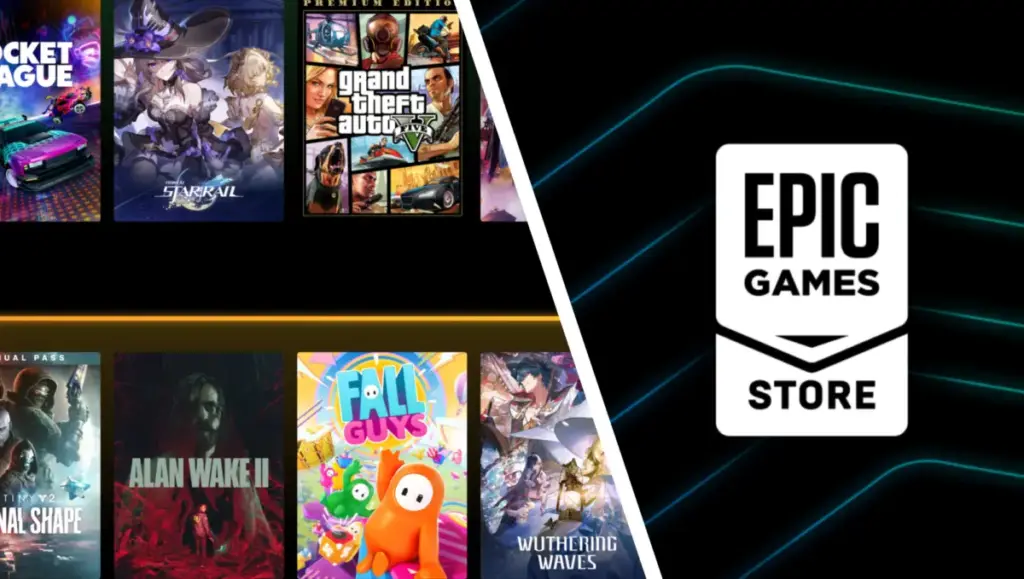
For years, Epic Games has positioned its digital storefront as the primary challenger to Valve’s ubiquitous platform, Steam. Backed by the astronomical revenue generated by Fortnite and a relentless strategy of aggressive financial incentives, exclusive distribution deals, and weekly free game giveaways, the Epic Games Store (EGS) has fundamentally reshaped how a segment of the PC gaming community acquires its software. Yet, despite immense capital investments and repeated promises of platform overhauls—including faster loading times, a cleaner interface, and tailored recommendation algorithms—industry analysts are increasingly sounding the alarm bells regarding the storefront’s long-term viability.
According to recent market intelligence reports, the future of the Epic Games Store looks grim. Emmanuel Rosier, Director of Market Intelligence at Newzoo, delivered a sobering assessment of the platform’s prospects in a recent interview, bluntly stating, "I don’t see how they can recover at this point." Rosier’s analysis cuts to the core of modern digital distribution economics: Valve’s Steam ecosystem has become so deeply entrenched in the habits, social networks, and libraries of PC gamers that alternative platforms struggle to establish genuine, active engagement.
While Epic Games continues to funnel resources into redesigning the EGS launcher and expanding its ecosystem—including ambitious plans to integrate with upcoming console hardware—the fundamental challenge remains unchanged. Epic is fighting a multi-front war against the most dominant player in PC gaming, alongside ongoing, high-stakes legal and commercial battles against mobile tech giants like Apple and Google. As the company attempts to stretch its resources across these massive battlegrounds, industry observers are left wondering whether the Epic Games Store can ever transform from a digital novelty used for collecting free handouts into a sustainable, profit-driving marketplace.
Detailed Chronology of a Digital Storefront Struggle
To understand the current precarious position of the Epic Games Store, one must look back at its turbulent and ambitious history since its inception in December 2018. Epic Games entered the digital distribution market with a singular, disruptive mission: to challenge Steam’s staggering 30% standard revenue cut by offering developers a much more generous 88/12 split.
Phase One: The Land Grab and Exclusive Wars (2018–2020)
In its early days, Epic made massive waves by aggressively securing third-party game exclusives. Rather than relying solely on organic growth, the company spent hundreds of millions of dollars securing timed exclusivity for high-profile titles like Metro Exodus, Control, and Borderlands 3. This strategy caused immediate friction within the PC gaming community. Players accustomed to Steam’s robust feature set—including community hubs, user reviews, built-in screenshot sharing, and integrated mod support via the Steam Workshop—resented being forced onto a bare-bones Epic launcher that lacked basic quality-of-life features.
Despite the consumer backlash, Epic’s checkbook strategy successfully onboarded millions of users. However, the conversion rate from account creation to active, spending customers remained a point of persistent friction.
Phase Two: The Free Game Flywheel (2021–2023)
Recognizing that exclusivity deals alone were not cultivating organic loyalty, Epic shifted into an unprecedented cadence of weekly free game giveaways. Ranging from indie darlings to massive blockbuster hits like Grand Theft Auto V and Control, these giveaways cost Epic tens of millions of dollars annually.
While the strategy drove headline-grabbing user acquisition metrics, it inadvertently cultivated a specific type of consumer behavior. As Newzoo’s Emmanuel Rosier points out, millions of players created accounts solely to claim free titles, adding them to sprawling digital backlogs that they rarely, if ever, booted up. The EGS became a digital equivalent of a bargain bin where items are collected out of habit rather than a destination where players congregate, socialize, and spend disposable income.
Phase Three: The Pivot to Launcher Overhauls and Ecosystem Expansion (2024–Present)
Entering 2024 and moving into 2025, Epic Games shifted its messaging toward technical remediation. Acknowledging years of user complaints regarding the sluggish performance and cluttered design of their desktop application, executives promised a comprehensive launcher overhaul. This redesign aimed to introduce a faster storefront, personalized content discovery, and streamlined browsing tools.
Furthermore, Epic began expanding its hardware and platform ambitions. In early 2025, Epic Games’ Steve Allison revealed that the company was actively collaborating with Microsoft, noting that Xbox had "welcomed" the integration of the Epic Games Store onto upcoming hardware, with plans for a day-one launch. Yet, despite these structural expansions, external market realities suggest that foundational user habits may be too deeply entrenched for software tweaks alone to alter.
Supporting Context & Metrics: The Steam Hegemony
The core issue facing the Epic Games Store is not necessarily a lack of effort or capital on Epic’s part; rather, it is the insurmountable gravity of Steam. Over two decades, Valve has built an ecosystem that goes far beyond a simple retail storefront.
The Network Effect and Library Lock-In
Steam is effectively a social network, a cloud-save repository, a community forum, a marketplace for virtual goods, and a comprehensive library manager all in one. For most PC gamers, the cost of switching—or even fragmenting one’s collection across multiple third-party launchers—is simply too high.
Data from market research firms consistently demonstrates that when users are given a choice, convenience and library consolidation win out. Rosier highlighted a fascinating paradox of Epic’s free game strategy: rather than drawing paying customers away from Steam, a high-profile free giveaway on Epic can occasionally serve as top-of-funnel marketing that ultimately boosts a game’s paid sales on Steam. Players who prefer keeping their libraries unified are willing to pay for a game on Steam rather than claim it for free on a competing launcher they rarely use.
The Multi-Front Resource Dilemma
Compounding the storefront challenge is Epic’s corporate bandwidth. Over the past half-decade, CEO Tim Sweeney and the leadership team at Epic have chosen to wage war on multiple fronts simultaneously.
- The Desktop Battle: Attempting to unseat Valve on PC via the Epic Games Store.
- The Mobile Battle: Engaging in protracted, multi-billion-dollar legal and regulatory battles against Apple and Google over mobile app store monopolies and revenue cuts.
- The Metaverse Push: Investing heavily in the Unreal Engine ecosystem, virtual reality initiatives, and user-generated content platforms.
As Rosier astutely observed, fighting these concurrent battles requires staggering financial and engineering resources. There is a growing sense within the industry that Epic may have "run out of steam"—ironically enough—by spreading its operational focus too thin, leaving the EGS without the singular, hyper-focused momentum required to dethrone an established titan.
Official Statements and Industry Analysis
The commentary from Newzoo’s Emmanuel Rosier has sparked widespread debate across the global gaming media. By quantifying the intangible hurdles of consumer habit and platform loyalty, Rosier has given voice to what many industry insiders have suspected for years: traditional market-share disruption through brute-force capital expenditure has hit a hard ceiling.
"I don’t really see how they can turn that around because Steam has become so inevitable," Emmanuel Rosier, Director of Market Intelligence at Newzoo, told PC Gamer. "The Epic Games Store, they get players by giving free games, but people just go, they log in, they get the free games, they don’t even play them. You know, it’s almost like collecting games rather than actually playing them."
Rosier further elaborated on the strategic overextension of the company:
"The challenge I think Epic is facing is that they try to win everywhere in the past few years. They try to win against Steam, they try to win against Apple, against Google Play, and probably they run out of steam on where they cannot fight all these battles at the same time."
However, it is crucial to note that analysts draw a sharp line between Epic’s performance as a third-party storefront operator and its unmatched success as a first-party game developer and technology provider. While the EGS struggles to generate organic user enthusiasm, Epic’s flagship cash cow, Fortnite, continues to serve as an untouchable cultural juggernaut.
Rosier pointed to Fortnite’s recent seasonal strategies as a masterclass in modern live-service maintenance. By seamlessly blending massive intellectual property crossovers—such as bringing Sonic the Hedgehog, Pac-Man, Kingdom Hearts’ Sora, and Persona 5’s Joker into the same digital ecosystem—Epic has demonstrated an acute understanding of modern gamer engagement.
"You can see they put a lot of thought in Fortnite right now," Rosier noted. "They are doing everything they can, and I think it’s working better when you look at the state of Fortnite today compared to six months or one year ago."
Future Outlook: Where Does Epic Go From Here?
As the Epic Games Store looks toward the horizon, its leadership faces existential strategic questions. Can a digital storefront survive purely as a secondary repository funded by corporate subsidies, or must it fundamentally reinvent its value proposition to the consumer?
1. The Console Expansion Gamble
Epic’s upcoming integration into upcoming Xbox hardware represents a major pivot in distribution philosophy. By bypassing traditional PC-centric strategies and embedding the EGS directly into living room hardware where storefront fragmentation is less historically entrenched, Epic may find a fresh demographic of users who view the launcher without the historical baggage of the early PC exclusivity wars.
2. Doubling Down on Developer-First Perks
While consumer loyalty remains difficult to buy, Epic maintains a massive structural advantage with developers and publishers. By maintaining its industry-leading 88/12 revenue split—while occasionally offering even more aggressive developer incentives—Epic ensures a steady stream of product. Yet, as publishers realize that visibility on EGS often pales in comparison to Steam’s algorithmic discovery feeds, retaining third-party commitments will require more than just financial subsidies.
3. The Reimagined Launcher Experience
The success of Epic’s promised launcher overhaul will be a critical litmus test. If the new storefront can genuinely match Steam in speed, social features, ease of use, and recommendation accuracy, it may finally convince "free-game collectors" to transition into active, paying customers. However, overcoming deep-seated consumer inertia will take more than a fresh coat of paint and optimized menu transitions.
Conclusion
The narrative of the Epic Games Store serves as a fascinating case study in the modern economics of digital distribution. It proves that even with near-infinite financial backing and the cultural phenomenon of Fortnite footing the bill, unseating a deeply entrenched market leader is one of the most difficult challenges in the technology sector. Whether Epic can defy the odds, stabilize its storefront operations, and carve out a profitable, sustainable niche remains one of the most compelling ongoing storylines in the gaming industry.