The Dawn of Android XR: XREAL Aura Surpasses 10,000 Global Reservations in Early Milestone for Next-Generation Augmented Reality
Executive Overview
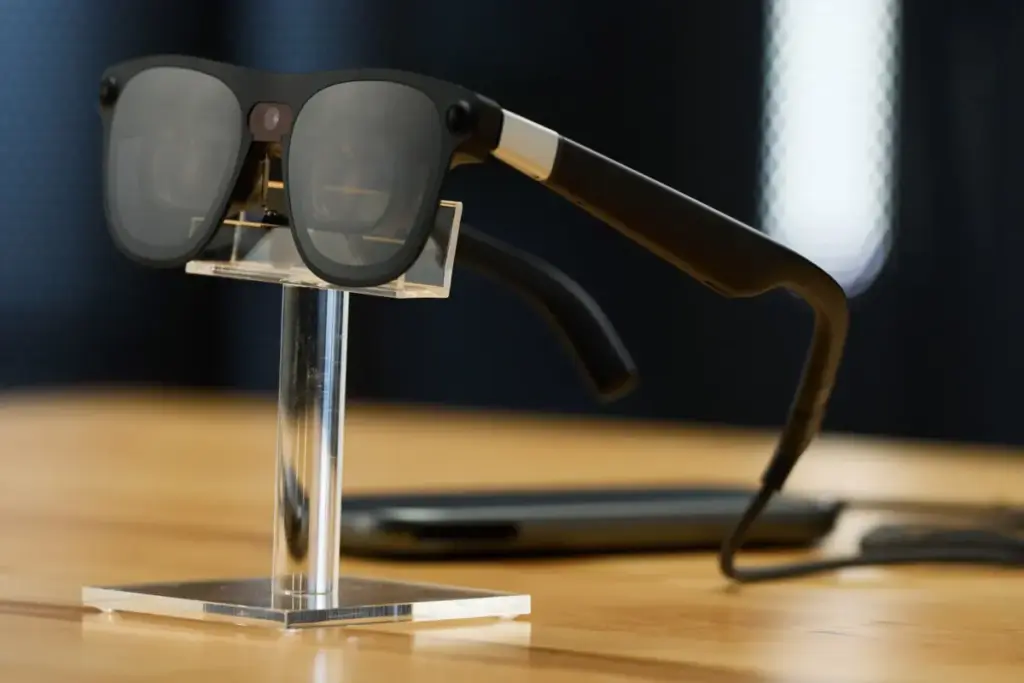
The augmented reality (AR) hardware landscape is undergoing a structural evolution, moving away from closed, proprietary ecosystems toward standardized, open platforms capable of bridging consumer electronics with enterprise productivity. At the vanguard of this paradigm shift is XREAL, a dominant player in the lightweight spatial computing market, which has officially announced a major early milestone for its flagship device: the XREAL Aura.
As the world’s first AR glasses powered by Google’s dedicated Android XR operating system, the XREAL Aura has officially surpassed 10,000 global reservations. This threshold was crossed faster than anticipated, driven heavily by an initial $99 reservation incentive that granted buyers a $199 launch credit—an offer that has now entirely sold out.
According to XREAL leadership, this early influx of interest demonstrates robust, cross-market demand spanning everyday technology consumers, independent software developers, and enterprise IT deployments. Yet, despite the enthusiasm, the device still lacks a definitive final price tag—a variable that could influence the final conversion rate of these fully refundable deposits. XREAL has previously stated that the retail price of the Aura will not exceed $1,500 (excluding applicable taxes).
Targeting an official rollout in Fall 2026, the XREAL Aura combines tried-and-true optical architectures with cutting-edge split-compute engineering, multimodal AI capabilities, and the vast software catalog of the Google Play Store. This comprehensive report explores the technological architecture, market implications, and strategic positioning of XREAL’s most ambitious spatial computing device to date.
Detailed Chronology of the XREAL Aura Announcement and Development
To fully understand the gravity of the 10,000-reservation milestone, it is essential to contextualize the timeline of the XREAL Aura’s development and its strategic integration into the broader mixed reality ecosystem.
The Hardware Genesis and Optical Foundation
XREAL has built its commercial success on "birdbath" optical engines—a reflective optical architecture that bounces light from an internal micro-OLED display off a curved combiner mirror into the user’s eye. While some industry competitors have shifted entirely toward complex diffractive waveguide technologies (which often suffer from lower brightness, rainbow artifacts, or limited fields of view), XREAL has refined birdbath optics to deliver exceptional image clarity, vibrant contrast, and high brightness levels.
The XREAL Aura continues this lineage by offering an expansive 70-degree field-of-view (FOV). Achieving this optical footprint while maintaining user comfort required aggressive weight optimization. On its own, the headset rests on the user’s face with less than 95 grams of on-head weight, ensuring that it avoids the notorious "front-heavy" fatigue associated with standalone spatial computers like the Apple Vision Pro or Meta Quest series.
Split-Compute Architecture and Silicon Strategy
The secret behind the Aura’s featherlight form factor lies in its architectural decoupling: the processing power is removed from the glasses chassis entirely and housed within a pocketable, tethered compute unit.
This split-compute design houses a powerful dual-chip processing array:
- Qualcomm Snapdragon Reality Elite Chipset: Responsible for heavy lifting, including complex XR rendering pipelines, spatial mapping, and intensive local multimodal AI workloads.
- XREAL X1S Spatial Coprocessor: An in-house proprietary silicon solution engineered specifically to manage display pipelines, sensor fusion, and low-latency tracking processing.
Software Integration: The Android XR Era
Perhaps the most transformative element of the Aura’s chronology is its software foundation. For years, the AR industry has been fractured by isolated operating systems, forcing developers to rewrite applications for specific hardware vendors.
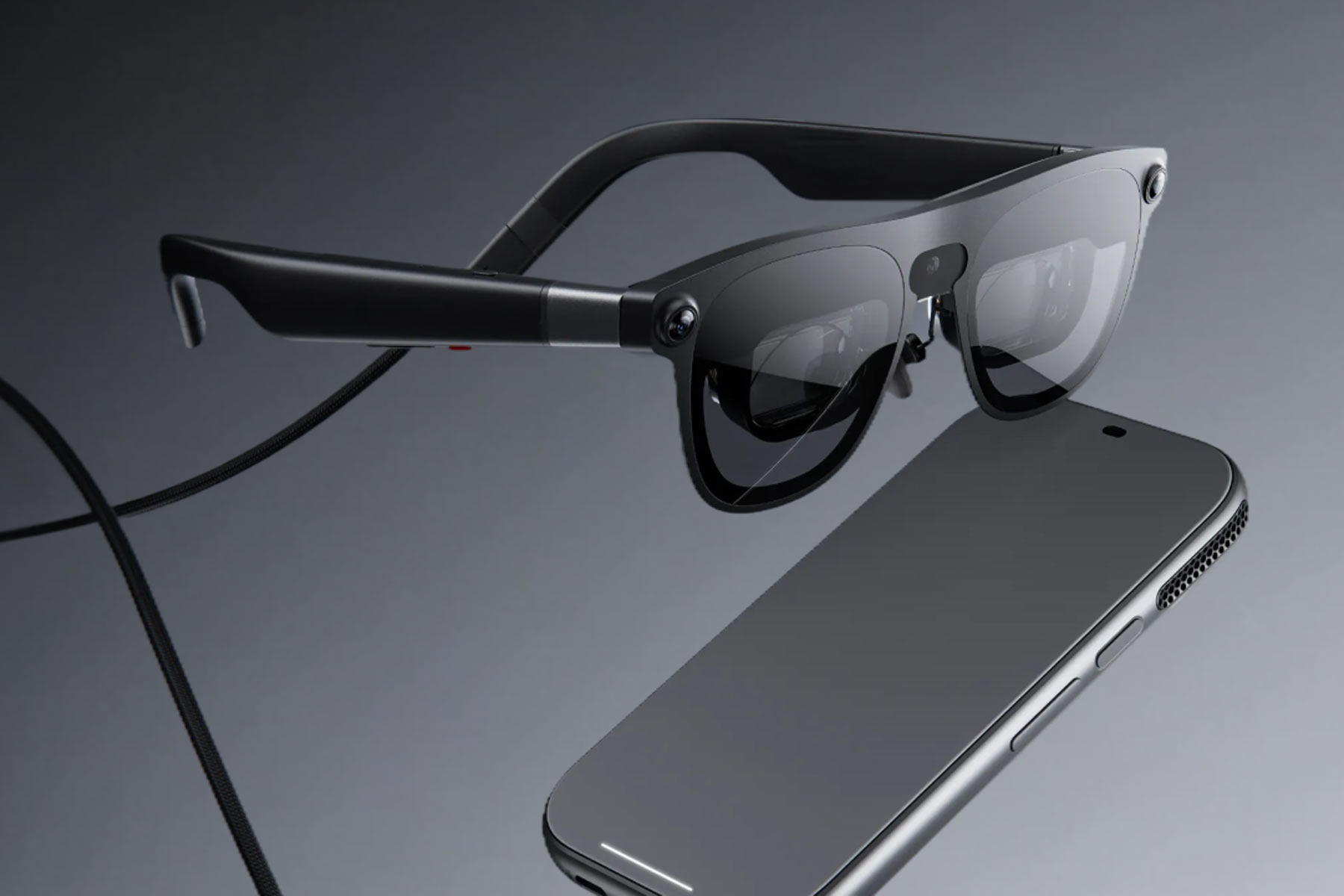
By integrating Google’s Android XR, XREAL has positioned the Aura as a cornerstone device for a unified spatial ecosystem. Users gain immediate access to legacy Android applications via the Google Play Store, alongside a rapidly expanding library of native XR applications built specifically for three-dimensional interfaces, spatial audio, and room-scale interaction.
Supporting Context, Metrics, and Hardware Specifications
Financial Variables and Reservation Dynamics
While crossing 10,000 reservations is a notable marketing and validation milestone, industry analysts note that the ultimate test for XREAL will be conversion rates. Because the reservations are fully refundable and the absolute price of the device remains unconfirmed, the final cost will dictate how many prospective buyers translate into actual unit sales.
- The Initial Incentive: The initial $99 deposit secured a $199 launch credit, an aggressive promotional strategy that quickly exhausted its initial allocation.
- The Price Ceiling: XREAL has publicly committed that the device will launch at a price point not exceeding $1,500 (exclusive of taxes).
- The Launch Window: Shipments and formal market availability are slated for Fall 2026, leaving a multi-month runway for software optimization and developer kit integration.
Technical Specifications Matrix
| Feature / Component | Specification Details |
|---|---|
| Operating System | Google Android XR |
| Optics | Birdbath Optical Engine |
| Field of View (FOV) | 70 Degrees |
| On-Head Weight | Under 95 grams |
| Compute Architecture | Pocketable tethered compute unit (Split-compute) |
| Primary Processor | Qualcomm Snapdragon Reality Elite (XR & AI) |
| Coprocessor | XREAL X1S Spatial Coprocessor (Display & Sensors) |
| Tracking Capabilities | Full 6 Degrees of Freedom (6DOF) & Hand Tracking |
| AI Integration | Multimodal AI experiences built into the OS layer |
| Ecosystem Access | Google Play Store (Android apps + native XR apps) |
| Estimated Launch | Fall 2026 |
| Price Ceiling | Up to $1,500 (Excluding taxes) |
Official Statements and Industry Reception
XREAL’s executive team has expressed immense satisfaction with the early reception of the device. In official press communications, the company highlighted that the 10,000-reservation milestone underscores "strong early demand across consumers, developers, and enterprise customers."
This tripartite market appeal is significant. Consumer markets demand comfort, media consumption fidelity, and app availability; developers require robust operating systems and open APIs; and enterprise customers demand secure data handling, ergonomic wearability for extended shifts, and reliable productivity integrations. By adopting Android XR, XREAL has effectively addressed the developer concern, while its lightweight birdbath design targets the consumer and enterprise comfort requirements.
Early hands-on evaluations from industry publications have generally praised the hardware balance. Reviewers who experienced prototype demonstrations in late 2025 and early 2026 highlighted the remarkable balance between the expansive 70-degree FOV and the remarkably low 95-gram facial weight. Furthermore, discussions surrounding electronic lens dimming—a feature allowing users to seamlessly transition between transparent augmented reality and fully opaque virtual reality immersion—have generated substantial excitement among productivity-focused users.
Future Outlook: What Lies Ahead for XREAL and Android XR
As the industry looks ahead to the Fall 2026 launch window, several critical milestones remain on the horizon for XREAL and the broader Android XR ecosystem.
1. Final Pricing Revelations
XREAL has promised to disclose final pricing and regional availability details in the coming weeks. How the company prices the Aura relative to the $1,500 ceiling will determine its market positioning. Will it target the premium consumer tier (akin to high-end smartphones and foldable devices), or will it price aggressively to capture enterprise market share from legacy spatial computing heavyweights?
2. Developer Ecosystem Maturity
The success of Android XR depends heavily on how rapidly developers optimize traditional Android applications for spatial interfaces. While having access to the Google Play Store provides an immediate library of millions of 2D apps, the true value of the XREAL Aura will be unlocked when developers build native, multimodal AI-driven 3D applications that leverage the 6DOF tracking and hand-gesture controls.
3. Competitive Landscape Pressures
As Google pushes Android XR into the mainstream, XREAL will face increasing competition from other hardware manufacturers licensing the operating system. However, XREAL’s deep expertise in lightweight optical engineering and its successful implementation of split-compute units give it a distinct engineering moat.
Conclusion
Surpassing 10,000 global reservations is more than just a vanity metric for XREAL; it is a clear signal that the market is hungry for lightweight, comfortable, and open-ecosystem augmented reality. By merging proven birdbath optics, a pocketable dual-chip compute unit, and the robust foundation of Google’s Android XR, the XREAL Aura stands poised to redefine what users expect from spatial computing when it arrives in the fall of 2026.