The Countdown to Steam Frame: Valve’s Standalone VR Ambitions Stand on the Precipice of Release Following Major Video Leaks
Executive Overview
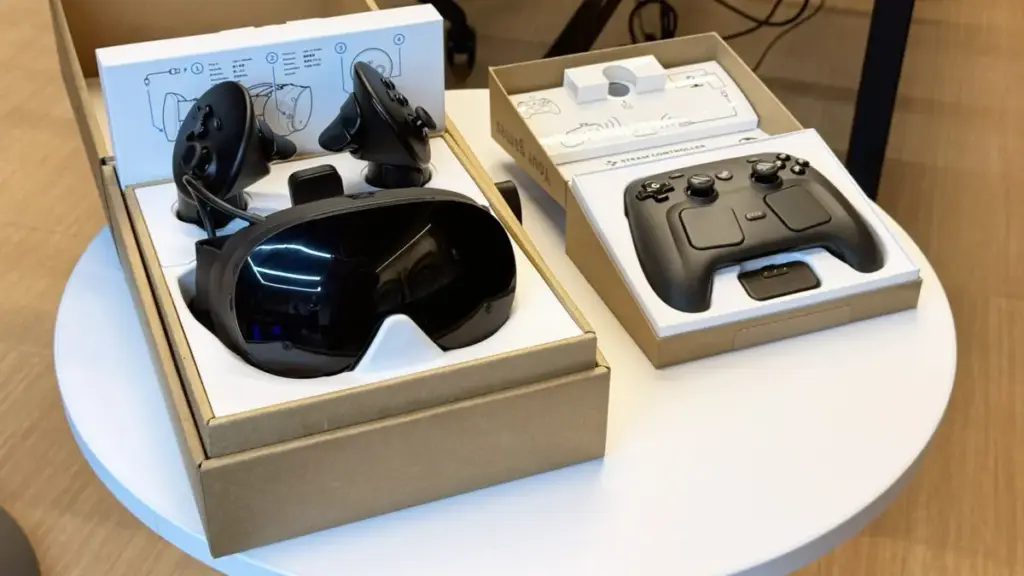
The long-awaited emergence of Valve’s first-ever standalone virtual reality headset, the Steam Frame, appears to be entering its final, inevitable phase. Following months of regulatory milestones, massive international supply chain imports, and escalating hardware anticipation, a fresh wave of data has surfaced directly from the source. A recent, unprompted update to the ARM Steam Client exposed a treasure trove of unlisted official guides, including complete unboxing procedures, sign-in tutorials, and first-time user experience (FTUE) walkthroughs.
Although Valve acted swiftly to scrub the asset files from the live build in a subsequent patch, the digital horse had already bolted. The instructional videos were rapidly captured, preserved, and disseminated across social media and video-sharing platforms, offering the VR community its clearest, most official look yet at the headset’s hardware footprint and onboarding process.
These leaks do not arrive in a vacuum. They cap off a tumultuous timeline marked by FCC certifications, massive logistics pushes into the United States, and significant macroeconomic pressures—including ongoing memory and storage crises alongside Qualcomm’s mobile chipset price hikes. Yet, as software storefronts adapt with dedicated "Great on Frame" hubs and relaxed developer porting requirements, the writing is clearly on the wall. The Steam Frame is coming. With its Qualcomm Snapdragon 8 Gen 3 engine, standalone SteamOS integration, and promises of high-performance wireless PC streaming, the industry now waits with bated breath for the final two missing pieces of the puzzle: official pricing and a definitive release date.
Detailed Chronology: How the Steam Frame Leaked and Developed
To understand the magnitude of the recent software leak, one must trace the breadcrumbs Valve has inadvertently—and sometimes deliberately—left behind over the past year. The journey toward the Steam Frame has been characteristically "Valve time" in execution: deliberate, secretive, prone to logistical delays, and yet intensely scrutinized by hardware enthusiasts.
The Breadcrumb Trail: Regulatory and Logistical Milestones
The acceleration toward a commercial release began ramping up noticeably during the middle of the year. In June, logistics data revealed that Valve had begun importing literal tons of Steam Frame hardware units into the United States, signaling that manufacturing lines were operating at scale and inventory was quietly building up in domestic distribution centers.
Shortly thereafter, the headset cleared a critical regulatory hurdle by securing Federal Communications Commission (FCC) certification late last month. FCC filings routinely serve as the penultimate indicator that a consumer electronic device is cleared for public sale within the U.S. market, usually preceding an official launch window by mere weeks or days.
The ARM Steam Client Slip-Up
Despite Valve’s notorious penchant for internal secrecy, the company’s sprawling software ecosystem occasionally betrays its hardware timelines. The latest slip occurred when an update pushed to the ARM Steam Client inadvertently contained a directory of pre-rollout media.
First spotted and broadcasted by the diligent tracker Steam Hardware Updates on X (formerly Twitter), the update included three highly sensitive operational videos:
- The Unboxing Experience: Showcasing the retail packaging, internal modular layout, and out-of-box hardware components.
- The Sign-In Procedure: Highlighting the integration of the user’s primary Steam account into the standalone device architecture.
- The Setup Guide: Demonstrating the initial environmental calibration, controller pairing, and Wi-Fi configuration essential for standalone functionality.
Though Valve moved quickly to pull the video assets in a subsequent client patch, the digital age proved unforgiving. Multiple mirrors and compilations quickly flooded YouTube and Reddit. Prominent tech and VR analysis channels, such as VRelity, rapidly archived and compiled the footage, giving the public an uninterrupted view of the headset’s polished, consumer-ready interface.
Supporting Context & Metrics: Hardware, Software, and Economic Headwinds
While the physical hardware design and onboarding flow are now effectively an open book, the economic and software backdrop tells a more complex story of how Valve has navigated a hostile global supply chain to bring the Steam Frame to life.
Navigating the Global Memory and Storage Crisis
Valve’s hardware ambitions this year have not been isolated to virtual reality. Alongside the Steam Frame, the company has been juggling the rollout of its console-style mini-PC, the Steam Machine, which officially launched in June. However, both devices have faced severe economic pressures stemming from an ongoing, industry-wide memory and storage crisis.
These component shortages forced Valve to confront difficult pricing realities. When the Steam Machine debuted at a steep $1,050 price point, it became readily apparent that macroeconomic factors were forcing hardware margins upward. For the Steam Frame, which relies heavily on high-density RAM and cutting-edge flash storage to ensure low-latency standalone performance, these supply constraints have played a significant role in elongating the development and release timeline.
The Qualcomm Snapdragon Factor and Chipset Inflation
Compounding the storage crisis is the escalating cost of core processing silicon. Chipmaker Qualcomm recently announced that it would be forced to raise prices on its mobile chipsets, a move that undoubtedly threw a wrench into Valve’s long-term financial modeling for the Steam Frame.
Under the hood, the Steam Frame is anchored by Qualcomm’s formidable Snapdragon 8 Gen 3 chipset. This high-performance mobile processor provides the computational heavy lifting required for standalone VR rendering, spatial tracking, and advanced video decoding for wireless PC streaming. Because Valve must price the Steam Frame competitively against incumbent market leaders like Meta’s Quest lineup, sudden price hikes on the Snapdragon 8 Gen 3 platform represent a challenging obstacle in balancing consumer affordability with high-end hardware specifications.
Preparing the Ecosystem: Storefronts and Developer Requirements
Hardware is only as good as its software ecosystem, and Valve has spent the past several weeks quietly readying Steam and SteamVR for the impending influx of mobile-class VR users:
- The "Great on Frame" Hub: Valve has spun up a dedicated storefront curation page modeled after its successful "Verified for Steam Deck" initiative. This page highlights fully compatible and optimized titles, ensuring users can instantly identify games that run smoothly on the standalone architecture.
- Lowering the Barrier to Entry: Recognizing that porting PC titles to a mobile ARM-based standalone architecture requires substantial developer overhead, Valve has quietly lowered the strict technical requirements for developers looking to deploy native content on the Frame. By easing these restrictions, Valve hopes to seed the platform with a healthy launch library of standalone titles rather than relying solely on wireless PC streaming.
Official Statements and Industry Context
Valve has historically maintained a tightly controlled communications strategy, rarely commenting directly on leaks or unannounced hardware roadmaps. However, the ripple effects of the Steam Frame’s impending release have forced shifts in how the company positions its broader ecosystem.
Through various developer briefings and ecosystem updates, Valve has signaled that the Steam Frame is intended to be a foundational pillar of its modern hardware strategy—one that bridges the gap between traditional desktop gaming and portable spatial computing. Unlike the tethered, enthusiast-tier Valve Index, which required external base stations and a robust PC tether, the Steam Frame represents a total paradigm shift toward untethered freedom and aggressive hardware accessibility.
Furthermore, industry analysts point out that the Steam Frame is uniquely positioned to challenge Meta’s dominance in the standalone sector by leveraging the unmatched goodwill, social infrastructure, and library depth of the Steam ecosystem. While Meta relies on its closed Horizon OS ecosystem, Valve’s open stance on SteamOS—including potential avenues for third-party headset adoption—suggests the Steam Frame is merely the vanguard of a broader Linux-powered spatial computing movement.
Future Outlook: What Remains Unanswered?
With unboxing videos circulating freely in the wild, regulatory approvals secured, and global logistics networks primed, the existential question of if the Steam Frame will launch has been definitively answered. The question is now strictly when and how much.
The Final Frontier: Price and Release Date
As consumers and industry observers dissect every frame of the leaked setup guides, attention now pivots entirely to Valve’s impending official announcement. The leaks confirm that the out-of-box experience is polished, the companion software pipelines are active, and the distribution pipelines are stocked.
What remains shrouded in mystery is the exact retail MSRP Valve will settle on, particularly in light of the Qualcomm price hikes and memory shortages that inflated the Steam Machine’s launch price to over a thousand dollars. Can Valve aggressively subsidize the Steam Frame hardware to capture market share, or will it position it as a premium, enthusiast-class mobile device?
A Generational Leap for Wireless VR
However the pricing lands, the Steam Frame is poised to redefine consumer expectations for mobile and wireless virtual reality. By combining the vast library of Steam with advanced standalone processing and elite streaming capabilities, Valve is preparing to offer an experience that feels generations ahead of legacy PC VR setups.
As we look toward the horizon, the appearance of these leaked setup guides serves as the ultimate smoke signal. The Steam Frame era is upon us, and the official unveiling is surely just around the corner.