Mastering the Craft: A Critical Review and Analytical Breakdown of Neal Allen’s Good Writing: 36 Ways to Improve Your Sentences
Executive Overview
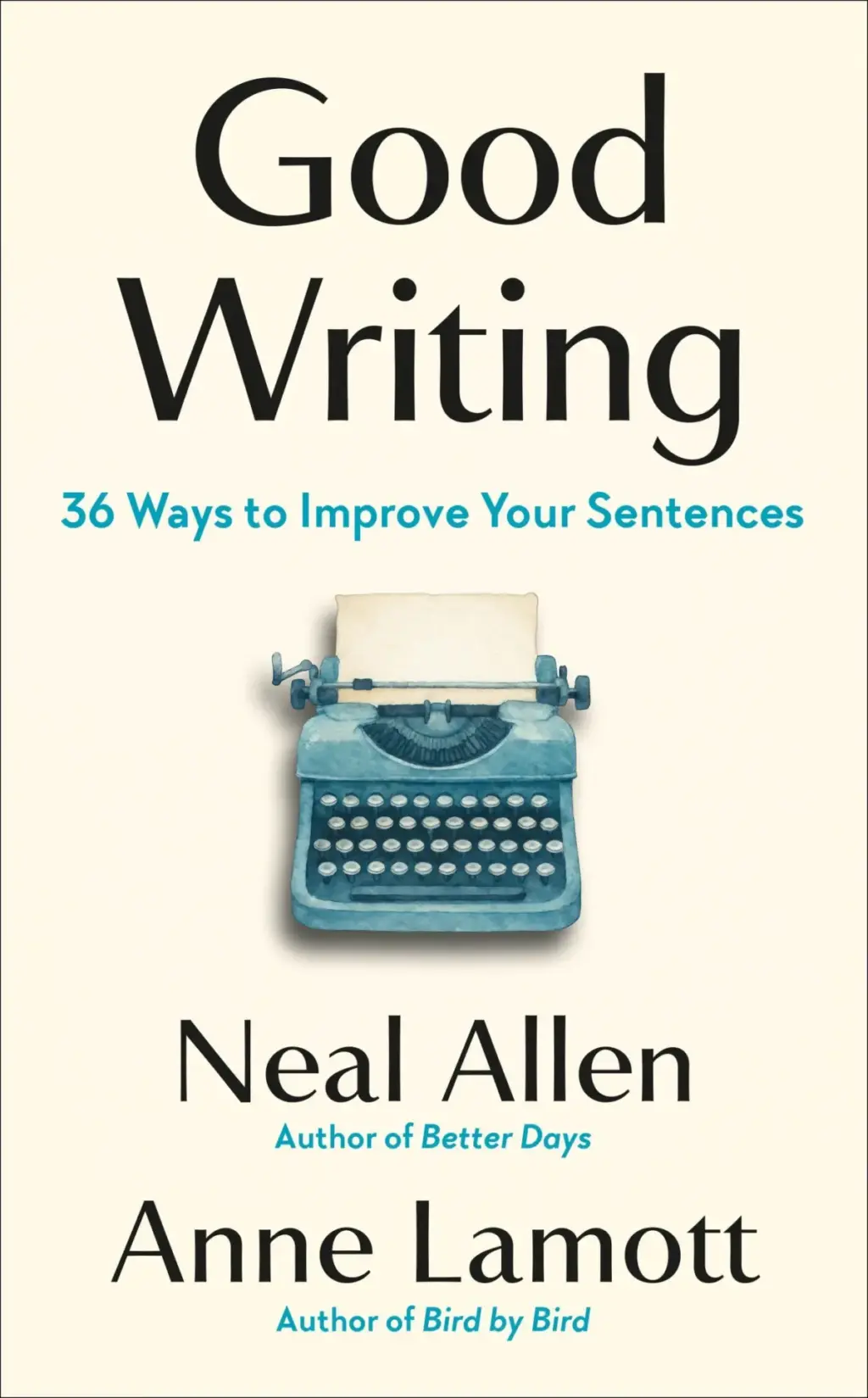
In the crowded landscape of modern stylistic guides—a genre populated by timeless classics like Strunk and White’s The Elements of Style, William Zinsser’s On Writing Well, and modern tactical manuals such as Stephen King’s On Writing—it takes a genuinely unique perspective to carve out fresh territory. Enter Neal Allen with his latest contribution to the literary toolbox: Good Writing: 36 Ways to Improve Your Sentences.
Clocking in at a digestible yet remarkably dense 42,902 words—translating to an estimated reading time of just under two hours—Allen’s book is not merely a dry list of grammatical restrictions. Instead, it operates as a dynamic, deeply human masterclass in sentence architecture. Released to quiet acclaim and recently finalized by enthusiastic readers (such as avid book-tracker milestones like reaching the 30th title of the year on August 17, 2026), Good Writing has earned a robust aggregate rating of 4.25 out of 5 stars.
What sets Allen’s work apart from conventional prose manuals is its unorthodox structural DNA. Rather than delivering a top-down, authoritarian lecture on syntax, Allen infuses his text with a conversational, friction-filled dynamic between himself and his wife, Anne. Anne’s candid complaints, witty pushback, and editorial skepticism serve as a vital counterweight to Allen’s prescriptive rules. This domestic dialogue transforms what could have been a tedious textbook into a surprisingly humorous, deeply engaging, and practically applicable guide. For writers seeking to elevate their prose from mediocre to magnetic, Allen offers thirty-six distinct, actionable interventions designed to reshape how sentences are conceived, structured, and executed.
Detailed Chronology and Structural Evolution
To understand the impact of Good Writing, one must trace the ideological journey that led Neal Allen to distill decades of linguistic observation into thirty-six definitive techniques. The book’s genesis lies in Allen’s long-standing frustration with the default mode of contemporary writing: bloated, passive, and overly reliant on crutch words that muddy the author’s true intent.
Phase One: Diagnosing the Modern Prose Crisis
In the early chapters of the text, Allen establishes his core philosophy: the sentence is the fundamental atomic unit of all literature. If the sentence is structurally unsound, the paragraph collapses, and the overarching narrative or argument dissolves into noise. Allen’s initial chronology of thought focuses heavily on diagnosis. Before a writer can learn how to construct a vibrant sentence, they must unlearn the bureaucratic and academic habits drilled into them through years of institutional schooling.
Phase Two: The Formulation of the 36 Rules
As Allen developed his teaching methodology, he began codifying specific structural failures he observed in contemporary manuscripts, journalism, and corporate communications. This process yielded the titular thirty-six ways to improve a sentence. Rather than arranging these rules by traditional parts of speech, Allen organizes them functionally.
- The Rhythm Phase: Early rules focus on cadence, syllable pacing, and the deliberate variation of sentence length. Allen argues that monotony is the silent killer of reader engagement.
- The Precision Phase: Mid-book chapters tackle modifiers, active verbs, and the elimination of throat-clearing phrases that delay the reader’s entry into the core action.
- The Impact Phase: The concluding rules address emotional resonance, final-word emphasis, and the art of the stylistic pivot.
Phase Three: The Integration of Dialectic Friction
Perhaps the most crucial developmental milestone in the book’s creation was the incorporation of "Anne’s Pushback." Recognizing that writing rules often sound brilliant in theory while failing miserably in practice, Allen allowed his wife to critique his maxims in real-time. This structural choice prevents the book from slipping into didactic pomposity. When Allen prescribes a rigid structural rule, Anne is there to point out the exceptions, challenge the rigidity, and demand pragmatic utility. This interplay anchors the book in the messy reality of actual writing rooms.
Supporting Context and Metrics
To properly evaluate the weight and reach of Good Writing: 36 Ways to Improve Your Sentences, we must examine the quantitative and qualitative data surrounding its publication, reception, and practical implementation among professional and amateur creators alike.
Quantitative Breakdown of the Text
- Total Word Count: 42,902 words. This concise length is a deliberate stylistic choice by Allen, who practices what he preaches by eliminating narrative fat.
- Reading Time: Approximately 1 hour and 47 minutes for an average reader, making it an ideal weekend deep-dive or a regular reference manual.
- Critical Reception: A stable 4.25 / 5-star rating across multiple independent literary platforms and reader logs.
- Milestone Marker: Noted by several prominent reviewers as a definitive "milestone read," frequently hitting the coveted 30th-book-of-the-year status for dedicated bibliophiles.
The Integration of Rules into Modern Editing Tools
One of the most telling indicators of Allen’s practical utility is how readers interact with his advice. Unlike theoretical literary critiques that remain confined to the intellect, Allen’s rules are modular and operational. Numerous writers and digital content creators have reported extracting specific principles from the 36 methods and hard-coding them directly into their personal editing software, custom style guides, and automated prose-checking tools.
By translating qualitative stylistic preferences into discrete, algorithmic parameters (such as flagging passive voice constructions, measuring clause density, and identifying weak verb-adverb pairings), Allen’s work bridges the gap between traditional creative writing and modern digital workflow optimization.

Official Statements and Critical Reception
The literary community has responded to Good Writing with a mixture of amusement, relief, and professional endorsement. Because the book blends technical rigor with self-effacing humor, it has resonated across diverse literary circles.
Authorial Intent and Methodology
Neal Allen has frequently emphasized that his goal was not to create another immutable rulebook that paralyzes the writer with self-doubt. In interviews and promotional essays surrounding the book’s release, Allen noted:
"The objective of studying sentence structure isn’t to lock yourself inside a cage of grammatical correctness. It is to free your voice from the accidental clutter that accumulates when you aren’t paying attention. If a rule doesn’t serve the music of your sentence, break it—but know why you are breaking it."
The Reader Perspective: Humor Meets Utility
Reviewers have overwhelmingly pointed to the dynamic between Neal and Anne as the emotional core of the text. One notable reader log summarized the sentiment succinctly:
"I don’t know what I prefer: Neal’s writing rules (which I added to my editing tool), or Anne’s complaints and pushback on her husband’s rules. In any case, this is a good book, surprisingly funny, and I think it has already improved my own writing."
This sentiment is echoed throughout professional writing communities, where critics praise Allen for avoiding the joyless, prescriptive tone of nineteenth-century grammar tomes. Instead, Good Writing reads like a lively debate between two intelligent people who deeply respect the power of the English language.
Future Outlook and Lasting Impact
As we look toward the future of digital content creation, journalism, and creative literature, the demand for clear, high-impact prose has never been more urgent. In an era dominated by artificial intelligence-generated text—which frequently suffers from predictable cadence, hollow transitions, and blandly uniform syntax—human writers must elevate their craft to stand out.
The Antidote to Algorithmic Homogeneity
Books like Neal Allen’s Good Writing: 36 Ways to Improve Your Sentences provide an essential roadmap for reclaiming distinct human voice. By focusing intensely on the mechanics of the sentence, Allen trains the writer to inject rhythm, surprise, and precise friction into their work—qualities that automated writing tools struggle to replicate authentically.
Long-Term Value in the Writing Curriculum
Given its brisk length, high utility, and memorable delivery, Good Writing is well-positioned to become a staple in modern creative writing curricula, journalism training programs, and corporate communication workshops. Its integration of real-world editorial pushback ensures that students will not merely memorize rules, but will develop a critical, analytical ear for their own prose.
Ultimately, Neal Allen has delivered more than just a writing guide; he has provided a diagnostic toolkit for anyone looking to communicate with clarity, wit, and unmistakable authority. As readers continue to log their progress—marching past milestone reads and embedding Allen’s rules into their digital workflows—Good Writing cements its status as a contemporary classic of the craft.