High-Stakes Extraction: Inside BR1 Infinite, the Real-Money Shooter Rewriting the "Pay-to-Play" Rulebook
Executive Overview
The video game industry has long experimented with monetization models—transitioning from arcade quarters to upfront retail purchases, subscription services, free-to-play microtransactions, and blockchain-based play-to-earn tokens. Yet, a new PC extraction shooter titled BR1 Infinite is aggressively pushing the envelope, redefining the concept of "pay-to-play" by introducing a direct, real-currency wager loop. Developed by Bravo Ready Studios, the game offers financial incentives in exchange for in-game performance, paying testers $10 per hour alongside a $1 reward for every enemy eliminated.
However, this financial upside comes with an immediate and literal downside: spawning into a match costs $1 of real-world cash. Consequently, a poorly executed match doesn’t just bruise a player’s digital ego; it actively drains their personal bank account.
While extraction shooters are already renowned for high-tension gameplay where players risk accumulated gear for high-tier loot, BR1 Infinite bridges the gap between traditional video gaming and direct financial gambling. Backed by prominent industry names—including PUBG publisher Krafton, Solana Ventures, and 6MV—the title has successfully drawn significant venture capital attention. Simultaneously, it has ignited fierce debates across community forums and regulatory watchdogs. As questions mount regarding consumer safety, the lack of robust age verification, and the inevitability of exploitative cheating networks, BR1 Infinite stands as a controversial milestone in the ongoing convergence of gaming, digital finance, and high-risk economic incentives.
Detailed Chronology & Mechanics: How BR1 Infinite Operates
To understand the mechanics of BR1 Infinite, one must examine the specific socioeconomic loop engineered by Bravo Ready Studios. Operating currently as an invite-only, PC-exclusive closed beta, the game requires prospective players to navigate a tightly controlled access pipeline, often sourcing restricted keys or entry slots via social media announcements and community channels.
The Financial Input-Output Loop
Upon successfully gaining access to the game, players are introduced to a starkly transactional environment:
- The Cost of Entry: Every deployment—or "spawn"—into the active warzone carries a mandatory $1 fee deducted from the player’s connected financial balance or wallet.
- The Payout Structure: To recoup losses and turn a profit, players must secure eliminations. Each confirmed kill yields a $1 return. Furthermore, active testers are reportedly eligible for an hourly baseline stipend of $10, which the development team utilizes to bootstrap initial player retention and ensure active server populations.
- The Loot & Trade Economy: Beyond direct kills, the game features traditional extraction mechanics. Players can scavenge cash drops scattered across the map, extract safely with their accumulated capital, and trade high-value operatives and cosmetic skins within the ecosystem.
Bravo Ready Studios has publicly claimed that it has already distributed upwards of $100,000 to early testers through this experimental payout structure, with these foundational players often receiving subsidized or free spawns as part of their testing agreements. Despite these incentives, the psychological and financial pressure of paying per life transforms standard gameplay into a high-stakes financial calculation. Every tactical retreat, missed shot, and sudden ambush carries direct monetary weight.
Supporting Context & Metrics: Investment, Community Growth, and Historical Shadows
The development and backing of BR1 Infinite reveal an intricate web of traditional gaming giants, venture capital firms, and digital asset advocates.
Institutional Backing
Bravo Ready Studios—a company whose corporate roots feature personnel with deep backgrounds in gambling technologies and consumer software—did not build this infrastructure in a vacuum. The project has attracted high-profile institutional backing. Major stakeholders include:
.png?width=1200&height=630&fit=crop&enable=upscale)
- Krafton: The South Korean gaming powerhouse universally recognized for PUBG: Battlegrounds, a pioneer of the modern battle royale genre.
- Solana Ventures: The investment arm tied to the Solana blockchain network, frequently associated with high-speed transaction ecosystems and digital asset initiatives.
- 6MV: A prominent venture capital fund specializing in early-stage technology, digital media, and interactive entertainment.
Community Traction Amid Skepticism
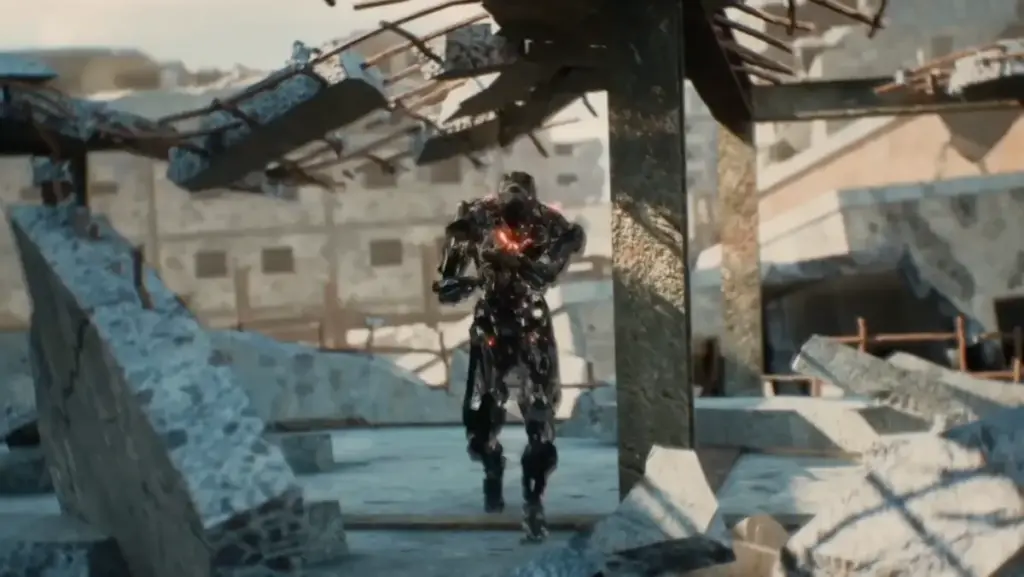
Despite the inherent financial risks and a distinctly bare-bones presentation—featuring simple urban maps, rudimentary environments, and playable character models consisting primarily of droids and apes—BR1 Infinite has managed to cultivate a massive digital footprint. The game’s official Discord server has ballooned to over 40,000 members, reflecting a potent mixture of genuine enthusiasts, crypto-speculators, and curious onlookers drawn by the allure of real-money returns.
However, forensic analysis of the project’s digital history has uncovered unusual anomalies. Digital sleuths have noted that the studio’s primary social media profiles trace back significantly further than the actual existence of the game. One prominent corporate profile dates back to 2011 and has undergone a staggering seven name changes—culminating in its current iteration around 2022, precisely when Bravo Ready Studios began aggressively pushing titles to market. While online skepticism and warnings regarding the project’s long-term viability have circulated within gaming circles for years, the recent surge in public visibility has thrust the title into a far harsher spotlight.
Official Statements and Industry Concerns
As BR1 Infinite gains traction across mainstream gaming news outlets and community hubs like Reddit and NeoGAF, the discourse has rapidly shifted from mild curiosity to severe concern. Industry analysts and veteran players have highlighted several critical vulnerabilities inherent to real-money extraction shooters:
The Cheating and Exploitation Epidemic
In a standard video game, cheating carries the risk of a hardware ban or account suspension. In a game where every kill translates directly to real-world currency, the incentive to cheat, use aimbots, engage in coordinated match-fixing ("boosting"), and exploit software vulnerabilities multiplies exponentially. Critics argue that BR1 Infinite is offering a financial bounty for malicious actors, creating an environment where sophisticated hacking rings could systematically siphon funds from casual players who are simply paying to play.
The Regulatory and Safety Vacuum
Perhaps the most alarming element of the BR1 Infinite rollout is the apparent absence of stringent consumer protection measures. Industry watchdogs have raised red flags regarding:
- Underage Access: With the game operating via digital distribution channels and invite systems, there are few, if any, robust, verified age-gating mechanisms to prevent minors from accessing a platform featuring direct financial wagers and mechanics closely mirroring pay-to-win gambling.
- Legal Classifications: Depending on regional jurisdictions, games that require real-money entry fees for gameplay coupled with cash-out mechanisms based on performance frequently drift into the legal gray area of online gambling rather than traditional video gaming. This exposes both the developers and users to complex regulatory challenges.
Future Outlook: A Sign of Things to Come or a Flash in the Pan?
The emergence of BR1 Infinite forces the video game industry to confront an uncomfortable question: How far down the path of financialization are players willing to go?
For decades, publishers have sought ways to extract greater value from their audiences, moving from $60 box prices to battle passes, loot boxes, and NFT-based cosmetics. Yet, BR1 Infinite bypasses the abstraction of digital tokens or virtual currency, linking gameplay loops directly to fiat cash balances.
Whether BR1 Infinite will serve as a foundational blueprint for a new genre of "wager-based extraction shooters" or flame out under the weight of regulatory scrutiny, security exploits, and consumer backlash remains to be seen. What is certain, however, is that the experiment has unlocked a new frontier in the ongoing debate over monetization, ethics, and safety in modern interactive entertainment. As institutional backers watch closely from the sidelines, the gaming community finds itself staring down a digital landscape where losing a match can cost more than just your pride—it can cost your wallet.