High-Stakes Delay: Why ByteDance’s Pico Postpones Its Flagship ‘Space Pro’ XR Headset Debut
Executive Overview
The high-stakes battle for dominance in the extended reality (XR) market has hit another major speed bump. ByteDance subsidiary Pico has abruptly announced the postponement of its flagship standalone XR headset, the Pico Space Pro, which was originally slated to make its grand debut in Beijing on September 2nd.
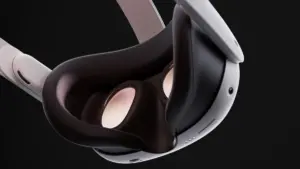
The device, previously teased under the codename “Project Swan,” represents Pico’s most ambitious hardware undertaking to date. Positioned directly as a high-end, prosumer competitor to the Apple Vision Pro and Samsung’s Android XR-powered Galaxy XR, the Space Pro was poised to redefine Pico’s standing in the global spatial computing landscape. Instead, the company has pump-faked the release, pushing the target window back to the fourth quarter of this year.
Officially, Pico cites the discovery of an “exciting new opportunity” during final experience verification, requiring additional time to deploy a major software upgrade before the hardware hits shelves. However, industry insiders and market analysts are reading between the lines. The delay is widely viewed as a strategic retreat to avoid going head-to-head with Valve’s imminent and heavily anticipated Steam Frame headset. As competition in the standalone ecosystem reaches a boiling point, Pico’s decision to step back, refine its software, and let the market digest upcoming rival releases may be its most calculated move yet.
Detailed Chronology: From ‘Project Swan’ to the Q4 Delay
To understand the weight of Pico’s announcement, one must look at the rapid timeline of leaks, teasers, and sudden reversals that have characterized the Pico Space Pro’s journey.
The Teasing Phase (Early 2026)
Earlier this year, rumors began circulating within supply chain circles and enthusiast forums regarding a mysterious next-generation headset developed by ByteDance’s Pico division. Codenamed “Project Swan,” the device quickly captured the attention of XR tech journalists. Leaked renders and preliminary specification sheets painted a picture of a device designed not merely to iterate on Pico’s existing consumer-grade line (such as the Pico 4 series), but to vault directly into the ultra-premium tier currently dominated by Apple’s spatial computing paradigm.
The Launch Announcement (Mid-August 2026)
Momentum peaked just last week when Pico officially confirmed plans for a major product launch event in Beijing scheduled for September 2nd. The company dropped the “Project Swan” moniker, officially christening the flagship device as the Pico Space Pro. Invitations and promotional teasers promised a comprehensive breakdown of the hardware’s pricing, global release roadmaps, and final technical specifications. Consumers and enterprise buyers alike braced themselves for what promised to be one of the most expensive and technologically advanced headsets ever released by the company.
The Abrupt Reversal (Late August 2026)
Just days before the invitation-only event was set to draw international attention, Pico pulled the plug on the September timeline. In an official communication translated from Chinese by noted XR analyst Antony “Skarred Ghost” Vitillo, the company announced that the release date had been pushed back to Q4.
Rather than framing the delay as a failure, Pico’s leadership leaned into a narrative of ambition. The company claimed that as hardware and software completion reached its final stages, an unexpected opportunity arose to deliver a vastly superior software experience at launch—a pivot that necessitated months of additional optimization and a widening of its early access beta testing pools.
Supporting Context & Metrics: Inside the Pico Space Pro Hardware
While the delay has thrown cold water on immediate hardware rollouts, the technical specifications slated for the Pico Space Pro remain deeply impressive. The device is engineered to punch well above its weight class, boasting components designed to satisfy both high-end prosumers and enterprise workflows.
Display and Visual Fidelity
At the core of the Space Pro’s visual delivery system are advanced microOLED displays. These panels push an extraordinary 4,000 pixels per inch (PPI), yielding an average of roughly 40 pixels per degree (PPD). This metric places the headset in the upper echelon of visual clarity, directly challenging the screen-door-free experiences offered by the Apple Vision Pro.
Dual-Chip Architecture
Performance bottlenecks have long plagued standalone headsets attempting to balance complex spatial tracking with high-end graphical rendering. Pico has addressed this via a sophisticated dual-chip architecture:
- Perception & Imaging Silicon: A custom-designed XR co-processor dedicated entirely to sensor fusion, environment mapping, and camera pass-through. Pico claims this chip achieves an ultra-low perception latency of approximately 12 milliseconds, ensuring that virtual overlays and spatial passthrough remain jitter-free and hyper-responsive.
- Flagship Processing SoC: A separate, top-tier application processor delivering more than double the CPU and GPU performance of Qualcomm’s Snapdragon XR2 Gen 2 platform.
Competitive Positioning
By targeting the prosumer and enterprise markets, the Space Pro places itself squarely in the crosshairs of two major industry heavyweights:
- Apple Vision Pro: The gold standard of luxury spatial computing, which relies on high-end materials, dual-chip processing, and visionOS.
- Samsung Galaxy XR: The vanguard of Google’s new Android XR ecosystem, designed to unify the mobile developer base with spatial hardware.
Official Statements and Industry Translation
Pico’s official rationale, distributed via its social channels and translated for international audiences, emphasizes quality control and the pursuit of a frictionless user experience.
"Hello everyone, to allow PICO Space Pro to be presented to you in a more complete state, we have decided to adjust the product release date to the fourth quarter of this year," the company stated. "Over the past period, the hardware and software of PICO Space Pro have reached a high level of completion, but during the final stage of experience verification, we saw an exciting new opportunity and wanted to bring it to everyone in the initial release. Therefore, we decided to spend more time on a major upgrade to the software experience."
Pico acknowledged the frustration of its user base, offering sincere apologies for the extended wait while highlighting plans to scale up its Pioneer Experience Program. This closed beta initiative will see pre-production units distributed to select applicants, allowing external developers and enthusiasts to stress-test the hardware and provide feedback during the software overhaul.
Despite these polished corporate explanations, seasoned industry observers remain skeptical that a routine software polish is the sole catalyst for an eleventh-hour delay.
Future Outlook: The Shadow of Steam Frame
To properly evaluate Pico’s tactical retreat, one must examine the broader macroeconomic and competitive currents shaping the XR space in late 2026. The real elephant in the room is not Apple or Samsung—it is Valve.
The Valve Factor
Valve’s long-rumored standalone headset, the Steam Frame, is hurtling toward a commercial launch. Recent weeks have seen unmistakable indicators of an imminent release:
- Massive Logistical Imports: Freight records document tons of Steam Frame units clearing customs and arriving in distribution centers across the United States.
- Regulatory Clearances: Official FCC certifications for the hardware have been successfully processed and published.
- Software Ecosystem Preparation: Valve has aggressively rolled out its “Great on Frame” storefront classification, priming its massive Steam library for standalone compatibility.
- Media Leaks: Unboxing videos, setup guides, and hardware walkthroughs have flooded public channels, signaling that review embargoes and official store pages are mere days away.
Why Pico Had to Blink
Valve commands a level of consumer loyalty and developer goodwill that few tech conglomerates can match. More importantly, Valve is poised to deliver something Pico historically struggles with on a global scale: a native, frictionless Steam user experience running directly on standalone hardware.
If Pico had pressed forward with the September 2nd launch of the Space Pro, it would have risked having its multi-thousand-dollar flagship completely overshadowed by the cultural tidal wave of the Steam Frame’s arrival. By pushing the Space Pro launch into Q4 2026, ByteDance achieves two critical objectives:
- Air Cover: It avoids a bruising direct clash with Valve in Western markets during the critical back-to-school and early autumn hype cycle.
- Ecosystem Observation: It allows Pico’s software engineering teams to observe how the market reacts to the Steam Frame, glean insights from Valve’s UI/UX deployment, and implement counter-features into their own delayed software upgrade.
Conclusion
The postponement of the Pico Space Pro is undoubtedly a bitter pill for ByteDance and early adopters eagerly anticipating a fresh alternative in the standalone XR race. However, in an industry as volatile and fast-moving as spatial computing, launching into the teeth of a major market disruption is a fatal error. By taking a tactical pause, Pico is betting that a polished, late-arriving product in Q4 2026 is infinitely better than a rushed masterpiece buried beneath the shadow of Valve’s next big thing.