
Executive Overview
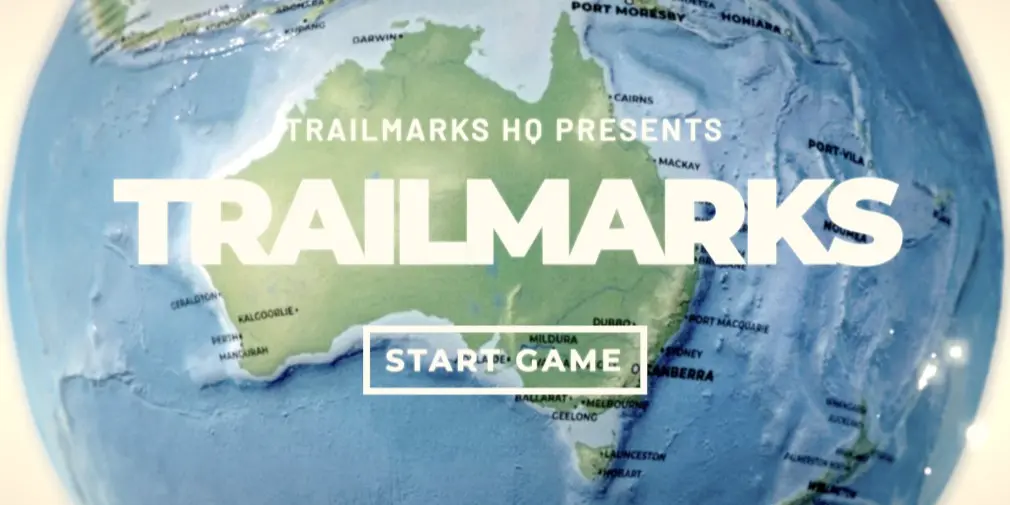
The intersection of geography, trivia, and survival simulation is set to expand in a compelling new direction with the upcoming release of Trailmarks for iOS. Slated to launch on September 4th, 2024, at a premium price point of $4.99, this unique mobile title challenges players to navigate real-world travel networks using little more than their wits, strategic resource management, and a vast repository of general knowledge.
Developed as a dedicated, one-handed card-based experience rather than a mere downscaled port of a desktop game, Trailmarks drops its precursor’s 3D globe in favor of streamlined, highly focused mobile mechanics. Players find themselves dropped into arbitrary corners of the globe—such as being stranded in Nuuk, Greenland, with dwindling funds and limited exit routes—and must answer true-or-false questions to earn the tickets required to keep moving.
What elevates Trailmarks above standard trivia fare is its rigorous integration of authentic logistical constraints. Spanning over 1,000 real-world cities and drawing from a massive database of 99,000 localized questions covering history, culture, and cuisine, the game treats travel as a delicate balancing act. Correct answers build up reward streaks that discount ticket prices, while a single misstep spikes fares and pushes destinations further out of reach. Furthermore, the developer has embraced radical transparency, explicitly disclosing the use of AI-generated city artwork and committing to a completely offline, privacy-first design featuring zero ads, accounts, analytics, or tracking.
Detailed Chronology and Gameplay Mechanics
To understand how Trailmarks functions on a tactical level, one must examine a standard gameplay run from its inception to its conclusion. The experience begins in a randomly assigned or carefully selected starting hub. Players choose their initial departure point, but the game introduces a sophisticated progression system: mastering easier starting cities unlocks significantly harder openings. For instance, launching a journey from a major, well-connected hub like Singapore is relatively forgiving, whereas starting in isolated or sparsely connected outposts severely curtails escape options.
Once a journey is underway, the core gameplay loop revolves around a binary question mechanic. Stranded with limited capital, the player is presented with a true-or-false query touching upon the history, culture, or culinary traditions of the region. A correct answer rewards the player with vital currency and keeps the momentum alive. Conversely, an incorrect answer penalizes the player, driving up the cost of subsequent travel tickets and threatening to bring the journey to an abrupt and premature end.
The journey itself is governed by strict geographical reality. Trailmarks does not permit whimsical, arbitrary hopping across continents; instead, routes adhere to genuine infrastructure:
- Flights follow established aviation corridors.
- Trains demand active railway tracks.
- Ocean crossings require reaching a legitimate port or saving up sufficient funds for expensive airfare.
As the player progresses, every successfully completed leg of the journey is dynamically drawn across a detailed digital map, transforming a string of trivia triumphs into a visually satisfying, sprawling travel log. The game ultimately scores performance based on the total kilometers accumulated over the course of the run.
[Start: Isolated Hub] ---> [True/False Trivia Challenge] ---> [Success: Earn Ticket / Failure: Price Hike] ---> [Logistical Check: Flight/Train/Port] ---> [Map Progression]Resource management extends far beyond simple finances. Players must also monitor their character’s "mood"—a psychological metric tied directly to travel stress. Declining a viable departure drains mood reserves, as do uncomfortable transit methods like long-distance buses. Conversely, securing comfortable passage via trains or boats can help stabilize the traveler’s mental state, provided the player can afford the fare. This psychological layer ensures that Trailmarks plays as much like a survival strategy game as it does a traditional quiz app.
Supporting Context & Metrics: Architecture and Privacy
In an era dominated by cloud-dependent applications, aggressive telemetry, and perpetual monetization via microtransactions, Trailmarks stands out through its uncompromising technical and architectural choices. The development team has engineered the game to operate entirely on-device, storing all questions, route databases, and visual assets locally within the application package.
This local-first storage model yields several notable benefits for mobile gamers:
- True Offline Functionality: Because all data resides on the iPhone, the game requires no active internet connection. Players can embark on runs mid-flight, turning an actual airplane journey into a meta-commentary on transit logistics.
- Zero Privacy Intrusion: The application features no user accounts, no analytics tracking, no data harvesting, and zero advertising SDKs.
- Uninterrupted Flow: Without pop-up ads or notification hooks demanding daily engagement, players can pause their run whenever their character’s mood—or their own schedule—demands a break.
Content and Visual Metrics
| Feature Category | Metric / Specification |
|---|---|
| Release Date | September 4th, 2024 |
| Platform | iOS (iPhone, optimized for one-handed play) |
| Pricing Model | Premium ($4.99, one-time purchase) |
| Scale | 1,000+ real-world cities |
| Content Volume | 99,000 local history, culture, and food questions |
| Privacy & Connectivity | 100% offline, zero ads, zero tracking, zero accounts |
Transparency in Visual Design
The development team has also addressed a modern point of contention in digital media: the use of artificial intelligence in asset generation. Rather than attempting to mask or obfuscate the origin of its visual assets, Trailmarks plainly states that its city artwork is AI-generated. In an app store ecosystem where players are increasingly forced to play detective regarding suspicious graphical elements, upfront disclosure removes ambiguity and establishes a refreshing level of developer candor.
Official Statements and Industry Reception
While Trailmarks prepares for its September 4th debut, early industry buzz highlights its unique positioning within the puzzle and trivia genres. Traditional trivia applications typically focus on rapid-fire multiple-choice questions divorced from spatial context, often relying on freemium mechanics, energy meters, and intrusive banner ads to extract revenue.

Critics and mobile gaming analysts have noted that Trailmarks subverts this formula by embedding trivia into a continuous, consequential journey. By framing knowledge acquisition as a survival tool—where failing a question directly impacts your financial ability to escape a remote location like Nuuk—the game introduces stakes that elevate it from a casual time-killer to an engaging intellectual challenge.
Furthermore, the decision to release as a $4.99 premium title rather than a free-to-play cash sink has garnered widespread praise from consumer advocacy circles. By rejecting the modern mobile standard of pay-to-win boosters and forced ad-watching, the developers are signaling a return to traditional gaming values: a complete, self-contained experience traded for a fair, upfront price.
Future Outlook
As the mobile gaming landscape continues to grapple with oversaturated subscription models and data-driven monetization strategies, titles like Trailmarks offer a glimpse into a healthier, more sustainable indie ecosystem. Its launch on September 4th will serve as a crucial test case for whether premium, single-player, narrative-adjacent trivia games can capture a dedicated audience on iOS.
Looking ahead, the modular nature of the game’s architecture opens up fascinating possibilities for post-launch expansion. While the initial release boasts an impressive 1,000 cities and nearly 100,000 questions, the localized database structure could theoretically accommodate further regional packs, specialized thematic expansions (such as deep-dives into specific historical eras or culinary traditions), or additional transit modalities.

For now, prospective players can pre-order Trailmarks on the App Store ahead of its September arrival. Whether users are seasoned trivia buffs looking to test the absolute limits of their general knowledge or strategy enthusiasts eager to manage the grueling logistical realities of global transit, Trailmarks promises a deeply engaging, refreshingly honest journey across the map—one correct answer at a time.