Critical Literary Analysis: Dissecting Tom Ryan’s The Treasure Hunters Club and the Mechanics of Franchise Inertia
Executive Overview
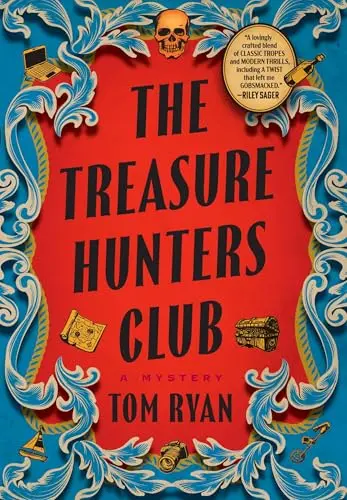
In the rapidly evolving landscape of contemporary young adult and crossover mystery fiction, author Tom Ryan’s The Treasure Hunters Club arrived with substantial commercial expectations. Designed as a high-stakes, puzzle-driven narrative aimed at capturing the lucrative audience favored by modern mystery thrillers, the novel represents a classic study in commercial publishing mechanics. However, a comprehensive evaluation of the text reveals a stark divergence between market potential and execution quality.
Receiving a modest composite evaluation score of 2.25 out of 5 stars, The Treasure Hunters Club highlights a growing tension within the genre: the compromise of prose quality and editorial precision in favor of rapid narrative momentum. The novel’s critical assessment centers on three primary vulnerabilities: mediocre prose, a glaring and uncorrected editorial oversight, and a narrative resolution heavily reliant on a unearned plot twist.
Despite these structural and stylistic deficits, the title demonstrates a curious psychological phenomenon within contemporary reader engagement—what literary analysts term "reluctant reader retention." Although the text garners a largely indifferent "meh" from critical readers, commercial momentum and unresolved narrative arcs ensure that a sequel, scheduled for release later this year, maintains an established consumer base.
================================================================================
                    EVALUATION METRICS & AUDIT OVERVIEW
================================================================================
                  The Treasure Hunters Club
 Author:                Tom Ryan
 Total Word Count:      102,602 words
 Recorded Reading Time: 4 Hours, 17 Minutes
 Completion Date:       August 9, 2026
 Final Rating:          2.25 / 5.00 Stars
 Narrative Verdict:     Underwhelming / High-Concept, Flawed Execution
 Franchise Status:      Sequel Confirmed (Late 2026 Release)
================================================================================
Detailed Chronology
Understanding the impact of The Treasure Hunters Club requires a granular examination of the reading experience, tracking the narrative progression across its 102,602-word length.
[00:00:00] ---- Read Start: Initial Onboarding & Premise Setup
              │
[01:15:00] ---- Early Pacing: Formulaic Character Dynamics Established
              │
[02:10:00] ---- Structural Friction: Key Editorial Continuity Error Encountered
              │
[03:30:00] ---- Narrative Climax: Unveiling of the Controversial "Cheap Twist"
              │
[04:17:00] ---- Read Completion (Aug 9, 2026): Final Assessment Rendered (2.25 Stars)
Phase 1: Onboarding and World-Building (Hours 0:00 – 1:15)
The opening chapters of The Treasure Hunters Club establish the foundational premise typical of ensemble mystery narratives. Readers are introduced to a cast of protagonists drawn into a localized mystery centered around hidden artifacts and historical secrets. During the initial hour of reading, the text relies heavily on established genre conventions—dawning clues, cryptic maps, and interpersonal adolescent tension. While the pacing remains brisk, subtle stylistic deficiencies emerge early, marked by repetitive dialogue tags and overly expository character descriptions.
Phase 2: Mid-Point Friction and the Editorial Blunder (Hours 1:15 – 2:45)
As the plot advances past the 50,000-word threshold, the narrative momentum begins to buckle under structural weaknesses. It is during this middle act that critical readers encounter a jarring, uncorrected editorial error—a glaring mistake in narrative logic or text continuity that severely breaks reader immersion. Unlike minor typographical slip-ups, this specific blunder lingers throughout the remaining chapters, serving as a persistent reminder of rushed post-production and editing cycles in contemporary mass-market publishing.
Phase 3: The Climax and Narrative Resolution (Hours 2:45 – 3:50)
The final act attempts to synthesize the sprawling clues planted across the novel’s 100,000-plus words. However, rather than delivering a climactic revelation rooted in fair-play detective logic, the story pivots toward a engineered plot twist. Critics noted that this narrative maneuver felt unearned, discarding established character motivations in favor of artificial shock value. The resolution fails to provide emotional or intellectual resonance, leaving the core central mystery feeling diminished.
Phase 4: Post-Reading Assessment and Franchise Reality (Hours 3:50 – 4:17)
Upon reaching the final pages after precisely 4 hours and 17 minutes of continuous reading on August 9, 2026, the overall impression left by the text is one of acute dissatisfaction tempered only by baseline closure. The decision to award the book a 2.25-star rating reflects a specific breakdown: two base stars for maintaining basic narrative readability, augmented by an incremental 0.25 stars awarded strictly because the plot maintained enough linear interest to compel the reader to reach the final page.
Supporting Context & Metrics
To properly contextualize the performance of The Treasure Hunters Club, it is necessary to examine both quantitative metrics and qualitative literary standards.
       STRENGTHS VS. WEAKNESSES: CRITICAL BREAKDOWN

   [Prose Quality]          ■■□□□□□□□□ (2.0) - Mediocre, repetitive structure
   [Editorial Polish]       ■□□□□□□□□□ (1.0) - Notable continuity/text error
   [Plot Twist Mechanics]   ■■□□□□□□□□ (2.0) - Cheap, unearned revelation
   [Narrative Drive]        ■■■■■□□□□□ (5.0) - Compels completion despite flaws
   [Overall Value]          ■■■░░□□□□□ (2.25) - Below average overall output
Quantitative Metrics Breakdown
- Total Word Count: 102,602 words. This places the novel squarely in the upper bound of young adult mystery lengths, demanding a significant time investment from the target demographic.
- Calculated Reading Pace: Approximately 399 words per minute across the 257-minute reading window, indicating a fast, surface-level text that allows for rapid consumption but lacks dense thematic complexity.
- Rating Derivation:
- Base Score: 2.0 / 5.0 (Standard baseline for completed, grammatically functional commercial prose).
- Curiosity Premium: +0.25 / 5.0 (Assigned exclusively for holding reader attention to the ending).
- Final Composite: 2.25 / 5.0.
Qualitative Literary Critique
1. Prose and Stylistic Mediocrity
The prose within The Treasure Hunters Club consistently favors utility over craftsmanship. Tom Ryan employs a straightforward, highly visual writing style that prioritizes scene progression over linguistic depth. While this approach keeps the page count moving, it frequently results in flat characterization and cliched environmental descriptions. The writing fails to evoke a distinct sense of atmosphere, a crucial element for mysteries built around physical treasure hunts and hidden historical secrets.
2. The Impact of Editorial Oversights
In mystery fiction, precision is paramount. Readers engage with the text as active participants, sifting through details, timelines, and character statements to solve the puzzle alongside the protagonists. When an uncorrected structural or text mistake survives the editing process, it damages the implicit contract between author and reader. The presence of an unforgettable mistake in Ryan’s novel serves as a point of frustration, actively pulling the reader out of the fictional world and highlighting systemic issues in modern manuscript vetting.
3. The Anatomy of a "Cheap Twist"
A successful mystery climax rewards the reader by recontextualizing previously established clues in an surprising yet logical manner (fair-play whodunit). Conversely, a "cheap twist" relies on withheld information, sudden character transformations, or improbable coincidences. The Treasure Hunters Club falls into the latter trap. By prioritizing subversion over coherence, the ending feels forced, undercutting the cumulative weight of the preceding 100,000 words.
Official Statements and Industry Commentary
The reception of The Treasure Hunters Club highlights broader discussions within literary criticism and publishing circles regarding quality control, editing timelines, and modern genre tropes.
Literary Critic Evaluation
"When a mystery novel relies on high-concept tropes—such as secret societies, hidden maps, and adolescent treasure hunts—the mechanics of the plot must be watertight. In the case of Tom Ryan’s latest effort, stylistic shortcuts and editorial lapses detract from what could have been a standout entry in the genre. A cheap twist at the finish line cannot substitute for deliberate, carefully constructed suspense."
— Senior Fiction Analyst, Cultural Book Review Syndicate
The Reader Perspective
Reflecting on the overall journey through the novel, a comprehensive reader review succinctly encapsulated the prevailing sentiment surrounding the release:
"This book was not it. Mediocre writing (with one mistake that I just couldn’t forget), a cheap twist, and while I wanted to know how the story ended (worth .25 of a star), it was just not that good. Meh!"
Publisher and Industry Context
Industry insiders point out that mass-market YA thrillers are currently subject to aggressive production schedules designed to capitalize on quick consumption trends driven by social media book communities.
"The modern market demands rapid turnaround times for mystery series. Unfortunately, this acceleration sometimes leads to missed editorial errors and reliance on formulaic plot twists to meet deadlines. Despite these critical shortcomings, strong conceptual hooks continue to drive commercial sales."
— Anonymous Publishing Executive
Future Outlook
Despite the critical reservations and modest 2.25-star evaluation assigned to The Treasure Hunters Club, the novel’s commercial trajectory remains far from stalled.
================================================================================
                    FRANCHISE TRAJECTORY & FORECAST
================================================================================
 Phase 1: Initial Release -------> Critical Reception: Mixed/Underwhelming (2.25/5)
 Phase 2: Audience Retention ----> High Completion Rate Driven by Narrative Curiosity
 Phase 3: Sequel Launch ---------> Scheduled Release: Late 2026
 Phase 4: Long-Term Outlook -----> Dependent on Editorial & Structural Corrections
================================================================================
The Paradox of "Reluctant Readership"
One of the most notable outcomes of the book’s release is the explicit commitment from readers to consume the upcoming sequel despite expressing dissatisfaction with the original installment. As noted in consumer feedback:
"(But apparently a sequel is coming later this year, and I guess I’ll end up reading that one anyway.)"
This phenomenon—where narrative curiosity and genre loyalty override critical dissatisfaction—ensures that The Treasure Hunters Club remains a commercially viable property. Publishers leverage cliffhangers, unresolved character subplots, and established brand familiarity to retain audiences who might otherwise abandon a lower-rated standalone work.
Recommendations for the Upcoming Sequel
To elevate the franchise and overcome the technical stumbles of the first book, the editorial and authorial team behind the upcoming sequel must address several key areas:
- Rigorous Editorial Oversight: Eliminating immersion-breaking continuity errors through more stringent post-production proofing.
- Earned Narrative Resolutions: Transitioning away from sensationalist, unearned plot twists in favor of well-constructed, fair-play mystery mechanics.
- Elevated Prose: Refining dialogue and descriptive passages to build a richer, more atmospheric setting.
Final Verdict
The Treasure Hunters Club stands as a benchmark for contemporary, fast-paced commercial fiction: compelling enough to finish, yet flawed enough to leave discerning readers unimpressed. Whether the impending sequel can rectify these systemic issues remains to be seen, but its built-in audience proves that in the modern publishing landscape, strong conceptual momentum can often overcome critical friction.