Bridging the Ecosystem Divide: Asobi Remote Play Brings PlayStation Cloud Streaming to the Steam Deck
Executive Overview
For years, the boundaries dividing the major gaming ecosystems have remained rigid and heavily guarded. If you wanted to experience Sony’s critically acclaimed catalogue of PlayStation exclusives, your options were clear: purchase a PlayStation 4, a PlayStation 5, or Sony’s dedicated handheld accessory, the PlayStation Portal. Meanwhile, Valve’s Steam Deck—a powerhouse in the handheld PC market—reigned supreme over PC gaming, leaving users to rely on cumbersome workarounds, unofficial builds, or remote-play configurations tethered directly to hardware they already owned at home.
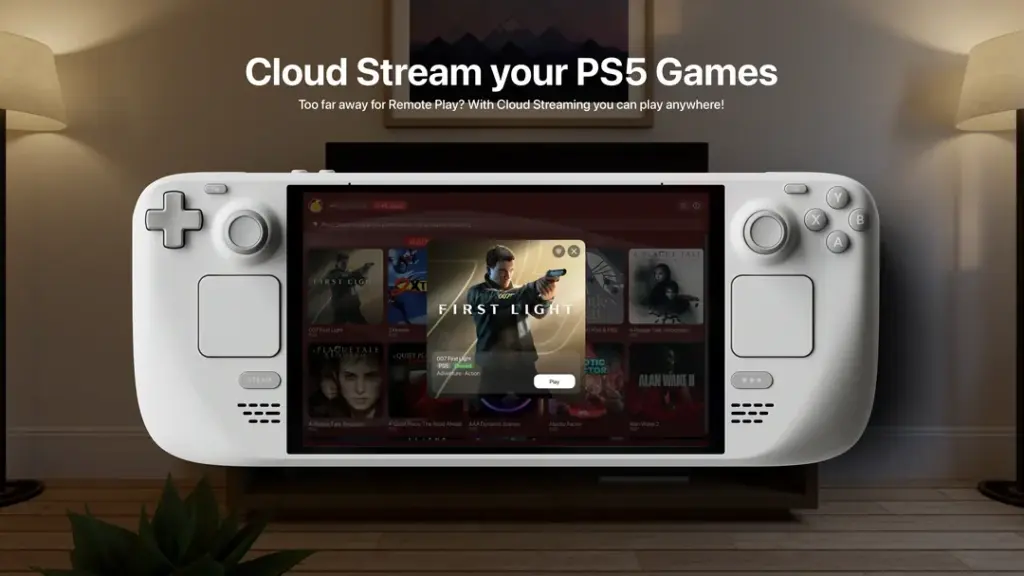
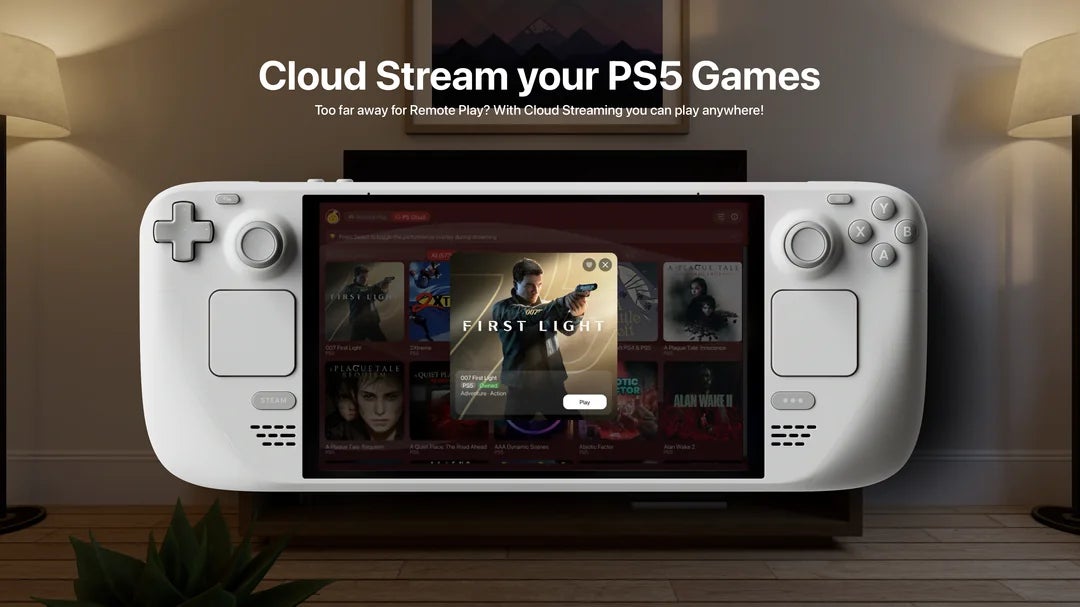
That dynamic is undergoing a profound shift. A new public playtest for an independent application known as Asobi: Remote Play has officially launched, introducing a feature long sought after by handheld enthusiasts: native PlayStation Plus Premium cloud streaming directly on the Steam Deck, Steam Machine, and other Linux-based SteamOS devices.
Spearheaded by developer Ichenzo, this unauthorized third-party application eliminates the traditional prerequisite of owning a physical PlayStation 5 console to access Sony’s cloud library. By combining an active PlayStation Network (PSN) account, a PlayStation Plus Premium subscription, and the Asobi app, users can now pull high-end PlayStation titles straight from the cloud onto Valve’s portable hardware.
While Asobi carries no official affiliation with Sony Interactive Entertainment or Valve Corporation, its arrival marks a monumental leap forward for cross-platform utility. It directly challenges the market dominance of dedicated streaming hardware like the PlayStation Portal—which currently retails for roughly £220—by offering an alternative path to PlayStation cloud streaming on hardware players likely already own. As public playtests roll out and all premium features are temporarily unlocked for testers, the gaming community is taking a hard look at what this means for device interoperability, hardware freedom, and the future of cloud gaming.
Detailed Chronology: From Local Streaming to Cloud Independence
To understand the significance of Asobi’s latest breakthrough, it is necessary to trace the evolutionary timeline of remote play and cloud-streaming solutions on non-PlayStation hardware.
The Era of Local Hardware Tethering
Long before the PlayStation Portal materialized, enthusiasts sought ways to stream console gameplay to alternative screens. Applications like Chiaki and early iterations of remote-play software allowed users to cast their personal PlayStation 4 or PlayStation 5 consoles onto tablets, smartphones, and eventually handheld PCs like the Steam Deck.
However, these solutions operated under a strict limitation: they were fundamentally tethered. To play a game via remote streaming, a physical console had to be plugged in, powered on (or resting in a low-power standby state), and connected to a robust local network or internet connection. For players on the go without access to their home console, remote play was a non-starter.
The Emergence of Asobi: Remote Play
Enter independent developer Ichenzo, who set out to refine and streamline the remote-play experience specifically for Linux and SteamOS architectures. Asobi quickly gained traction within the Steam Deck community for providing a smooth, reliable connection to local PlayStation hardware without requiring users to boot into Steam Deck’s Desktop Mode. It offered a clean integration that respected the Steam Deck’s user interface, positioning itself as a go-to utility for local streaming.
The Cloud Streaming Breakthrough
The current paradigm shift—spotted initially by hardware and tech analysts at VideoCardz—marks the transition from local console streaming to cloud-based streaming.
While Sony previously restricted its native cloud-streaming functionality to the PlayStation 5 console ecosystem and the PlayStation Portal, Asobi’s new public playtest bypasses the physical console requirement entirely. By tapping directly into the PlayStation Plus Premium cloud infrastructure, the app allows Steam Deck and Steam Machine users to stream games straight from Sony’s remote servers.
According to announcements made by Ichenzo on the official Asobi Reddit community, the playtest opened its virtual doors to eager applicants, with access keys rolling out systematically via email. Recognizing the massive surge in interest, the developer unlocked all premium features for the duration of the playtest period, giving early adopters a risk-free taste of the application’s maximum capabilities.
Supporting Context & Metrics: Technical Breakdown and Market Implications
The technical architecture underpinning Asobi’s latest update is as impressive as its commercial implications. Delivering high-performance cloud gaming to a non-native device requires sophisticated handling of bitrate, resolution, frame rates, and hardware inputs.
Decoding the Technical Features
During the ongoing public playtest, Ichenzo has made the application’s entire suite of premium features completely free to test. These technical specifications reveal a robust piece of software designed to match, and in some cases exceed, standard remote-play expectations:
- Frame Rate and Resolution Scaling: The full, unlocked version of Asobi supports high-fidelity streaming parameters, including performance targets of up to 60 frames per second (fps). Once the playtest concludes, the free tier of the app will revert to a capped ceiling of 1080p at 30fps, while the pricing structure for permanent premium access remains undisclosed.
- High Dynamic Range (HDR) Support: Visual fidelity is preserved through HDR streaming capabilities, ensuring that vibrant color profiles and deep contrast ratios translate effectively to compatible displays.
- Controller Haptics: One of the most praised aspects of modern PlayStation gaming is the immersive haptic feedback and adaptive trigger technology built into the DualSense controller. Asobi maintains support for advanced controller features, ensuring players do not lose tactile immersion when playing on alternative hardware.
- Advanced Visual Enhancements: The app features 4K upscaling capabilities and manual bitrate control, allowing users to fine-tune their streaming performance based on their specific network stability and bandwidth availability.
- Seamless SteamOS Integration: True to the philosophy of the Steam Deck, Asobi operates fluidly within the standard gaming mode environment. Users are not forced to exit into Desktop Mode or execute complex terminal commands to launch and maintain their streaming sessions.
The Windows Frontier
While the current playtest is strictly optimized for Steam Deck, Steam Machine, and other Linux-based environments, the developer has confirmed that a Windows-compatible version is actively in development. Described by Ichenzo as arriving "soonish," a Windows port would vastly expand Asobi’s potential user base, bringing PlayStation cloud streaming to millions of traditional PC gamers and Windows-based handhelds like the ASUS ROG Ally and Lenovo Legion Go.
Market Disruption and the PlayStation Portal Dilemma
To fully grasp the disruptive nature of Asobi’s development, one must examine Sony’s own hardware strategy. Sony currently markets the PlayStation Portal—a dedicated handheld device designed explicitly for remote and cloud play.
Recent updates to the PlayStation Portal enabled direct cloud streaming for PlayStation Plus Premium subscribers, allowing users to dive into major titles without needing a physical PS5 console at home. However, this official hardware solution comes with a notable financial barrier: the PlayStation Portal retails for approximately £220.
For consumers who already own a Steam Deck—a versatile, high-end portable gaming PC valued anywhere from £349 to well over £500—investing an additional £220 in a single-purpose streaming accessory is a difficult pill to swallow. Asobi effectively bridges this gap. It transforms existing PC hardware into a functional equivalent of the PlayStation Portal, maximizing the utility of the Steam Deck while undercutting the need for specialized secondary hardware.
Official Statements and Community Reception
The announcement of the Asobi public playtest has generated significant enthusiasm across digital storefront forums, subreddits, and technical news outlets.
In his official launch statement shared via the r/Asobi subreddit, developer Ichenzo addressed the community with both optimism and a request for patience:
"Good news everyone! The PlayTest for Asobi: Remote Play on Steam Deck, Steam Machine, and Linux is live now. All premium features are unlocked until the full release becomes available on the Steam Store. Cloud gaming will require a PSN account with an active PS Plus Premium Subscription. Invites are going out by email to everyone who signed up. There are a lot of you, so give it a little time."
The response from the community was immediate. Thousands of Steam Deck owners rushed to sign up for the playtest, eager to test the boundaries of cross-platform accessibility.
However, industry analysts and legal commentators have been quick to point out the precarious nature of third-party applications interacting with proprietary corporate infrastructure. Because Asobi is entirely independent of Sony Interactive Entertainment, Valve Corporation, and PlayStation Network services, it exists in a gray area of software development. While remote play apps that interface with user-owned hardware have historically enjoyed a measure of tolerance, bridging directly into a subscription-locked cloud service (PS Plus Premium) crosses into more sensitive territory. To date, Sony has not issued an official statement regarding Asobi, nor have they taken explicit action to block third-party streaming clients of this nature, but the app’s long-term viability remains subject to corporate policy shifts.
Future Outlook: What Next for Cross-Platform Cloud Streaming?
As the Asobi public playtest progresses and early adopters put the software through its paces, several key questions remain regarding the future of handheld gaming and cloud architecture.
The Software Roadmap
The immediate priority for Ichenzo and the Asobi development team is stabilizing the Linux and SteamOS playtest, processing feedback from thousands of concurrent users, and refining network stability protocols. Once the bugs are ironed out and the playtest concludes, the community will be watching closely to see what pricing model is established for the full premium unlock, and how severe the feature restrictions will be for the free tier (such as the drop from 60fps/1080p to 30fps/1080p).
Following the stabilization of the Linux build, the rollout of the Windows-compatible version will serve as the next major milestone. Bringing Asobi to Windows will test the application’s scalability against a vastly broader hardware ecosystem, opening up direct competition with official PC-based cloud apps.
The Broader Industry Impact
Asobi’s emergence highlights a growing consumer demand for hardware agnosticism. Modern gamers increasingly expect their digital libraries, subscriptions, and saves to follow them regardless of the plastic chassis they hold in their hands. When a user pays for a PlayStation Plus Premium subscription, the hardware barrier to entry—whether it be a PS5, a PlayStation Portal, or a Steam Deck—feels increasingly arbitrary to the end user.
Whether Sony will view applications like Asobi as a welcome expansion of their subscriber base or as a threat to their proprietary hardware sales (such as the PlayStation Portal) remains to be seen. For now, the ball is rolling, and the boundaries separating the PlayStation ecosystem from the open architecture of the Steam Deck have never been more porous.
As cloud gaming infrastructure matures, projects like Asobi demonstrate that the future of portable gaming may not lie in locking consumers into closed ecosystems, but in empowering them to play high-end titles wherever, and on whatever device, they choose.