
All Aboard the Cozy Track: An In-Depth Look at Locomochi, the Train Puzzle Game Redefining the Genre

Executive Overview
The puzzle genre has long had a love affair with locomotives, track-switching mechanics, and logistical routing. From classic grid-based routing titles to frantic multiplayer conductors trying to avoid fiery derailments, the virtual railway is a well-trodden destination. When approaching yet another train-themed puzzle game, seasoned players and critics alike often brace themselves for familiar mechanics: linear tracks, rigid directional grids, and the inevitable trial-and-error frustration of strict time limits.
Enter Locomochi, an upcoming indie title that quietly subverts these expectations. First showcased to attendees at Pocket Gamer Connects Barcelona, Locomochi immediately catches the eye with its vibrant aesthetic, unique physics, and an unhurried, cozy approach to problem-solving. Rather than forcing players into rigid forward-facing trajectories or penalizing them for taking the scenic route, this charming indie project invites players to experiment freely.
Characterized by backward-driving maneuvers, emoji-based communication systems, interactive switches, and an entirely stress-free environment free of timers or dead ends, Locomochi stands out in a crowded market. Developed with a distinct emphasis on wholesome exploration and tactile interaction, the game challenges conventional wisdom about how a virtual train should move, couple with carriages, and navigate its environment. While a definitive release date has yet to be announced by the development team, the title is currently available for players to wishlist on Steam, signaling growing anticipation within the cozy gaming community.
Detailed Chronology: From Concept to Convention Floor
The journey of Locomochi from an abstract concept on a drawing board to a playable, head-turning demo on the international gaming conference circuit highlights the methodical pacing typical of passionate indie development. While the precise origins of the project remain closely guarded by its creators, the game’s public footprint offers a clear timeline of its ascent into the spotlight.
Early Development and Conceptualization
In the early phases of conceptualization, the development team sought to tackle a common pitfall in puzzle game design: the sensation of being railroaded into a single, predetermined solution. Many puzzle titles rely on strict logic gates where deviation equals failure. The creators of Locomochi pivoted away from this philosophy, asking a fundamental question: What if operating a train was less about strict adherence to a timetable and more about playful tinkering?
This question birthed the core pillars of the game: bidirectional movement, flexible carriage coupling, and an interactive world filled with levers, switches, and responsive environments. By removing time constraints and fail states, the developers freed themselves to design intricate, beautiful levels where the joy is found in exploration rather than optimization.
The Pocket Gamer Connects Barcelona Debut
The true turning point for Locomochi occurred on the exhibition floor at Pocket Gamer Connects Barcelona. Amidst a sea of hyper-competitive mobile titles, service-driven games, and high-octane action pitches, Locomochi offered a tranquil oasis for weary conference-goers.
Placed in the hands of journalists, developers, and industry veterans, the playable demo instantly generated positive word-of-mouth. Players accustomed to rigid rail simulators or frantic logistics managers were initially disoriented by the freedom to reverse their engines and experiment with track layouts without penalty. This playful confusion quickly gave way to delight as players discovered the intuitive nature of the mechanics. The Barcelona showcase served as validation for the developers, proving that their unique blend of cozy aesthetics and flexible puzzle design resonated universally across diverse gaming demographics.
The Steam Reveal and Digital Presence
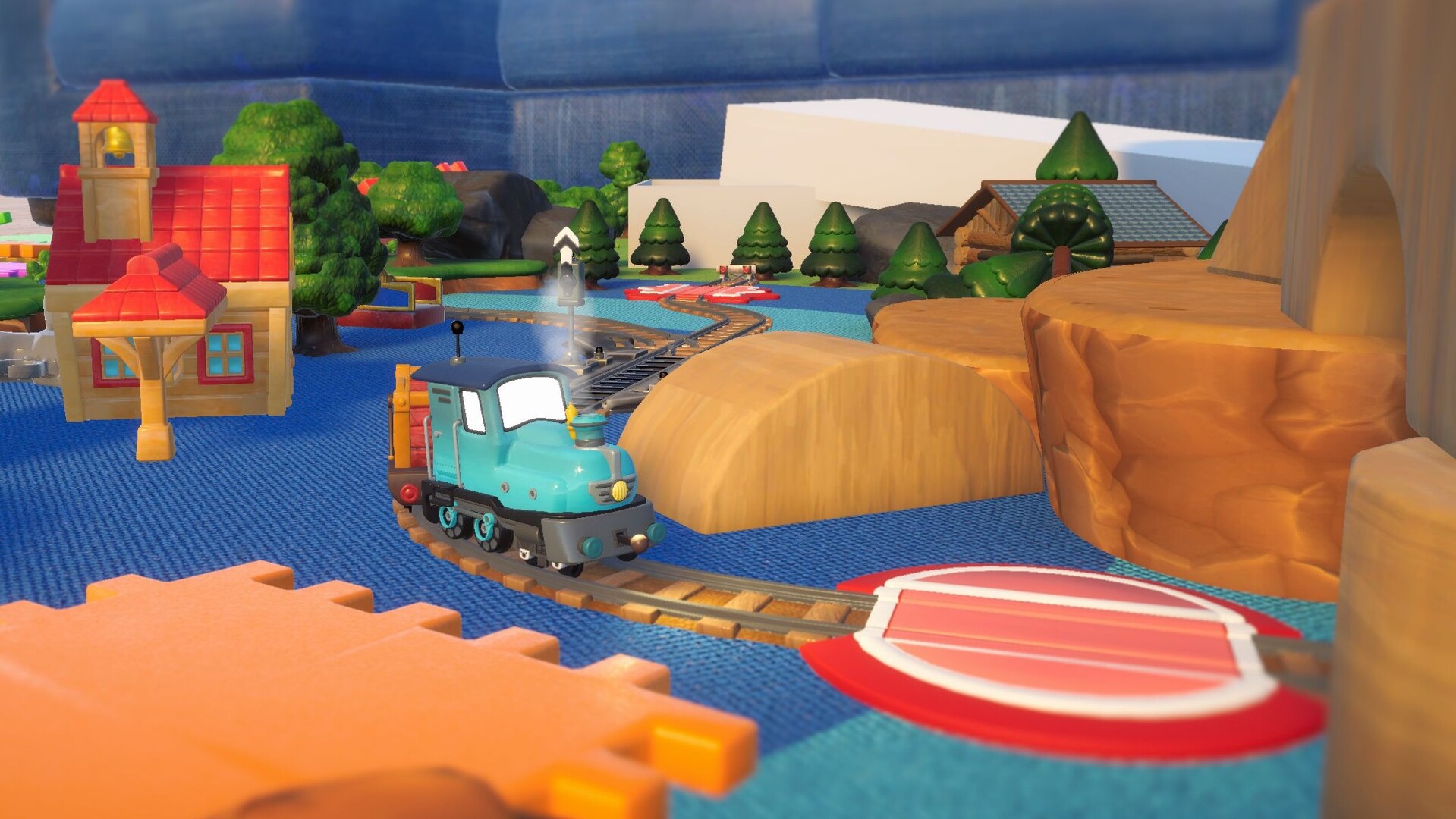
Following the positive reception in Spain, the development team stepped up their public outreach by releasing the game’s official reveal trailer via platforms like Gamflix and launching its dedicated Steam store page. This digital rollout provided the broader gaming public with their first sustained look at the pastoral landscapes, charming character interactions, and satisfying mechanical loops that define the Locomochi experience. As wishlists began to tick upward, the game firmly established its position as one of the most anticipated upcoming entries in the cozy puzzle sub-genre.
Supporting Context & Mechanics: Deconstructing the Gameplay Loop
To fully understand why Locomochi is generating excitement, one must examine its core mechanics and how they diverge from traditional puzzle-train archetypes. The game successfully marries relaxing atmospheric design with genuinely clever spatial puzzles.
[ Train Engine ] <---> [ Reversible Drive ] <---> [ Flexible Coupling ] <---> [ Emoji-Based Quests ]
       |                                                                               |
       v                                                                               v
[ Interactive Levers ] -----------------------------------------------------> [ Zero-Timer Sandbox ]
1. Bidirectional Movement and Flexible Coupling
In most rail-based puzzles, the engine moves forward, pulling carriages behind it in a strict hierarchical chain. Obstacles are cleared by ensuring the front of the train reaches the destination first. Locomochi completely abandons this paradigm.
Players can drive their train engine backward with the same ease as moving forward. This opens up entirely new spatial dimensions for puzzle resolution. Instead of constantly looping the entire track to reposition your engine, you can simply reverse into sidings, back up to orphaned wagons, and couple them from the rear. This mechanic shifts the player’s spatial awareness, forcing them to think about their train not as a rigid arrow, but as a flexible, articulated snake capable of dynamic reconfiguration.
2. Discarding the "Right" Way to Drive
A hallmark of Locomochi is its philosophical rejection of orthodox track navigation. In traditional games, there is almost always an optimal path designated by the level designer. In Locomochi, the tracks are treated more like an open-ended playground. Players are actively encouraged to explore dead ends, backtrack through previously visited stations, and experiment with unorthodox routing. This freedom transforms puzzle-solving from a tense intellectual test into a relaxing exercise in spatial tinkering.
3. The Emoji-Based Communication System
Narrative delivery in puzzle games often falls into two traps: excessive, text-heavy dialogue that bogs down the pacing, or a complete absence of narrative context that leaves the player feeling disconnected from their actions. Locomochi strikes a brilliant middle ground through its unique character interaction system.
The inhabitants of the various train stations that pepper the game’s world communicate entirely through emojis. When a station resident requires assistance—whether they need a specific type of cargo delivered, a carriage shunted to a siding, or a passenger picked up—their needs are broadcasted via expressive, universally understood iconography. This design choice infuses the game with a whimsical, lighthearted charm while ensuring that objectives remain crystal clear across language barriers. It keeps the game breezy, cheerful, and free of unnecessary linguistic clutter.
4. Zero Timers and Stress-Free Design
Perhaps the most defining feature of Locomochi is its commitment to the "cozy" ethos. There are no ticking clocks counting down to a game over, no point deductions for taking too many moves, and crucially, no way to become permanently stuck.
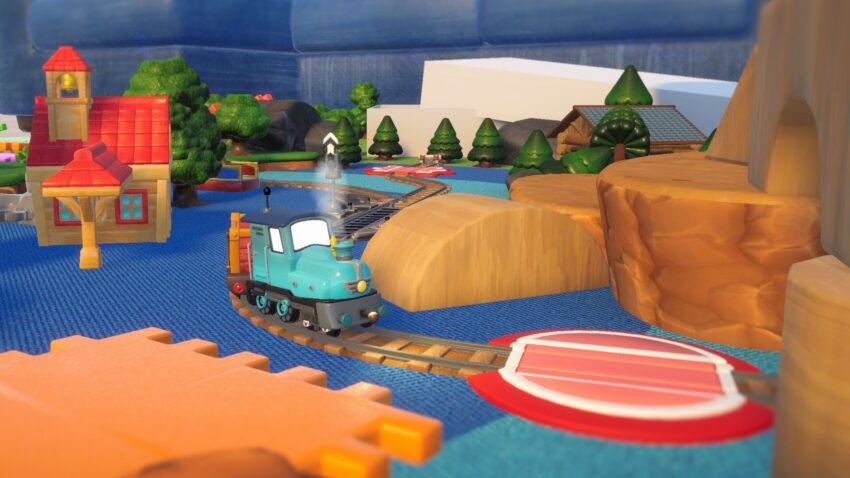
If a player makes a mistake—such as dropping a carriage in the wrong spot or heading down an unproductive branch of the track—they can simply reverse, uncouple, or reroute without penalty. Interspersed throughout the environments are responsive levers, switches, and track toggles that can be activated at will. These tools allow players to reshape the immediate environment on the fly, creating new pathways or uncovering hidden dead-end secrets that reward curiosity.
Official Insights and Community Reception
While full-scale developer deep-dives are still rolling out as production continues, initial hands-on reports and early promotional materials paint a vivid picture of a team deeply committed to player comfort and mechanical innovation.
Bridging the Casual and Hardcore Divide
Industry analysts observing the title’s trajectory note that Locomochi occupies a sweet spot in the modern gaming landscape. The market has seen an unprecedented surge in demand for cozy, low-stress games—titles that allow players to unwind after a demanding workday without sacrificing intellectual engagement.
By taking a genre traditionally associated with rigid logistics and management stress (such as Railroads! or Unpacking-style organizational logic) and injecting it with sandbox-style freedom, the developers have created an experience that appeals equally to hardcore puzzle enthusiasts and casual gamers looking for a wholesome escape.
The Power of Tactile Interaction
Playtest feedback from events like Pocket Gamer Connects consistently highlights the satisfaction of the game’s tactile elements. Clicking physical levers, watching track switches snap into place, and feeling the responsive snap of a successful carriage coupling provide a dopamine hit that purely digital, abstract puzzle games often miss. The game treats the act of operating a train as a physical, playful hobby rather than a clerical chore.
Future Outlook: What Lies Ahead for Locomochi
As Locomochi looks toward its eventual launch, several key milestones remain on the horizon. With the game page live and actively accumulating wishlists on Steam, the development community is watching closely to see how the core concept scales into a full, feature-complete commercial release.
Anticipated Features and Expansion Potential
- Diverse Biomes and Environments: The initial reveals showcase charming countryside tracks and quaint rural stations, but the potential for future biome expansions—such as snowy mountain passes, bustling industrial yards, or nocturnal twilight routes—offers immense potential for visual and mechanical variety.
- Deepening Puzzle Complexity: While maintaining its signature stress-free philosophy, the full game is expected to introduce increasingly intricate track networks that test the player’s spatial reasoning without ever resorting to punitive timers.
- Release Date Speculation: As of now, the developers have maintained an open-ended release window, prioritizing polish and player experience over a rushed launch date. Gamers are encouraged to add the title to their Steam wishlists to receive direct notifications regarding beta tests, launch windows, and developer deep-dives.
Final Verdict on the Horizon
Locomochi proves that even the most well-explored gaming genres still harbor room for genuine innovation. By stripping away the anxiety of timers, eliminating the frustration of dead ends, and reimagining how a train interacts with its tracks, the developers have crafted something genuinely refreshing. For anyone weary of high-stress competitive loops or rigid puzzle constraints, Locomochi represents a welcome destination on the horizon. Be sure to add it to your Steam wishlist today and prepare to experience the most relaxing railway journey of the coming year.