Horizon Shift: HoYoverse Unveils Coziness and Combat in Major Gamescom Showcases
Executive Overview
The video game industry converges annually on Cologne, Germany, for Gamescom, an event celebrated for major announcements, developer deep-dives, and community reveals. At this year’s convention, HoYoverse—globally recognized for high-octane, open-world action role-playing games such as Genshin Impact, Honkai: Star Rail, and Zenless Zone Zero—captured headlines by stepping significantly outside its comfort zone. Alongside the surprise reveal of Nodusfall, a gritty tactical project that shifts away from the studio’s signature colorful anime aesthetic, HoYoverse officially confirmed the upcoming winter release window for Petit Planet.
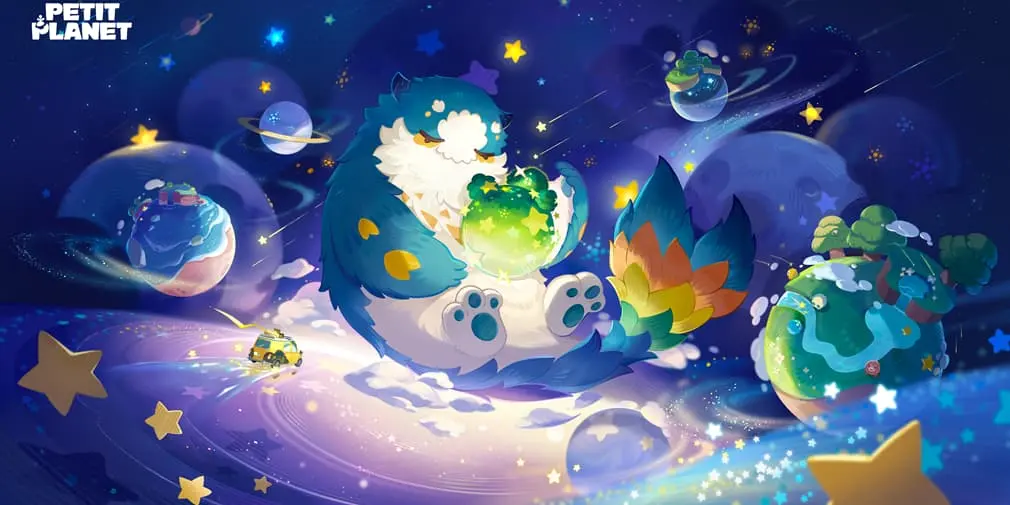
Slated to arrive on iOS, Android, and PC, Petit Planet positions itself as a direct competitor in the burgeoning "cozy gaming" ecosystem. Players take on the mantle of a "Planet Tender," tasked with nurturing a celestial body, gathering resources, crafting home furnishings, and socializing with neighbors. Supported by cross-platform availability, cooperative multiplayer features, and a free-to-play model driven by in-app purchases, Petit Planet aims to capture the hearts of lifestyle-game enthusiasts. This report provides a comprehensive examination of the game’s announcement, structural mechanics, early critical impressions, and broader market implications ahead of its impending winter launch.
Detailed Chronology: From Concept to Gamescom Reveal
The Build-Up and Early Playtests
The trajectory of Petit Planet did not begin on the convention stages of Gamescom. Months prior to the official title confirmation, HoYoverse quietly initiated closed beta testing phases under codenames and limited distribution keys, signaling a divergence from their traditional action-oriented development pipelines.
During these early closed tests, select media outlets and community members received hands-on access to the title. Reviewers noted that while the fundamental mechanics mirrored established farming and lifestyle simulators, the execution carried the polished user interface and stylistic cleanliness typical of HoYoverse productions. Early evaluations suggested that while the build lacked complete optimization, its foundational concept held notable promise for players seeking a lower-stress interactive experience.
The Gamescom Breakthrough
The official announcement at Gamescom marked a pivotal marketing pivot. HoYoverse utilized the global stage to present a dual narrative: demonstrating their versatility by introducing the darker, grittier Nodusfall, while simultaneously appealing to casual, community-driven gamers with Petit Planet.
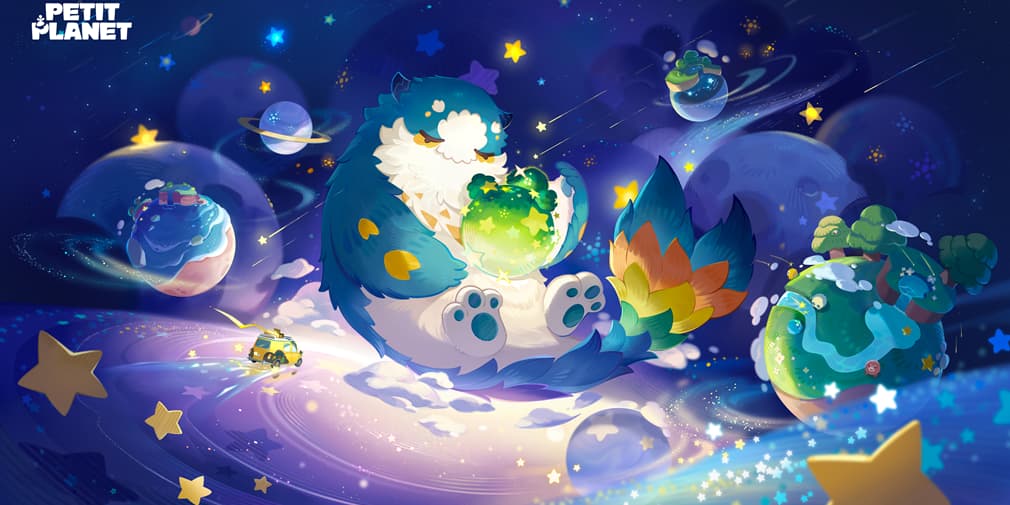
Accompanied by a freshly minted promotional trailer showcasing lush environments, soothing piano compositions, and whimsical character designs, the winter release window was officially carved into stone. Simultaneously, HoYoverse opened global pre-registrations across the App Store, Google Play, and PC platforms, accompanied by milestone rewards designed to incentivize early adopter sign-ups.
Supporting Context & Metrics: Mechanics and Market Positioning
Gameplay Architecture: What is a Planet Tender?
At its core, Petit Planet functions as a life simulation game structured around home-building, environmental stewardship, and social interaction. Players assume the role of a Planet Tender, an individual responsible for the ecological and aesthetic development of their very own micro-world.
The gameplay loop emphasizes resource management and iterative crafting. Players spend their in-game days gathering natural materials scattered across their terrain, transforming raw items into bespoke furniture, and constructing personalized domestic spaces. Unlike traditional survival titles, the pressure of failure is entirely removed, framing the experience as a tranquil exercise in spatial design and micro-management.
+-----------------------------------------------------------------+
|                    PETIT PLANET GAMEPLAY CORE                   |
+-----------------------------------------------------------------+
|                                                                 |
|   [Planet Tending] ---> [Resource Gathering] ---> [Crafting]    |
|         ^                                              |        |
|         |                                              v        |
|   [Starsea Exploration] <--- [Social Play / Neighbors]          |
|                                                                 |
+-----------------------------------------------------------------+
Multiplayer Dynamics and Starsea Exploration
Beyond solitary world-building, Petit Planet incorporates robust cooperative elements. Players can invite "Neighbors"—friends or online acquaintances—onto their planets to assist with daily chores, share design concepts, and participate in collaborative activities.
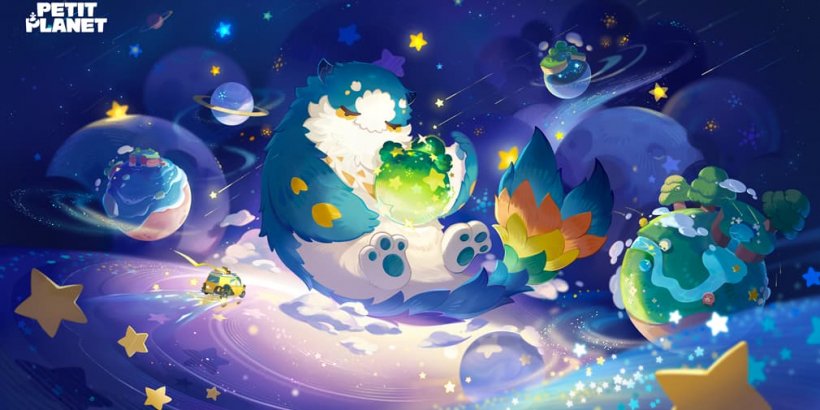
Furthermore, the game extends beyond a single localized sphere. Players can pilot vessels out into the Starsea, an interstellar expanse filled with diverse islands waiting to be charted. These expeditions serve as the primary vehicle for acquiring rarer crafting components and discovering unique environmental aesthetics, ensuring that the gameplay loop retains variety beyond the boundaries of the player’s home world.
The Mobile and PC Ecosystem
Petit Planet is engineered from the ground up as a cross-platform experience. By launching simultaneously on iOS, Android, and PC, HoYoverse ensures seamless progression tracking and high accessibility. The distribution model follows a free-to-play framework, utilizing optional in-app purchases. Industry analysts anticipate these monetization vectors will center on cosmetic items, architectural elements, seasonal outfits, and convenience-based upgrades rather than aggressive pay-to-win mechanics, aligning with standard monetization practices for contemporary cozy titles.
Comparative Analysis: Filling the Lifestyle Void
Escaping the Tom Nook Paradigm
In the contemporary gaming landscape, life simulation titles have carved out a multibillion-dollar market, largely popularized by franchises like Nintendo’s Animal Crossing. However, players frequently voice frustration regarding specific economic pressures within those ecosystems—such as managing escalating mortgages dictated by characters like Tom Nook.
Petit Planet deliberately positions itself as an alternative to this formula. By focusing the narrative on stewardship, planetary cultivation, and exploration without punitive debt mechanics, HoYoverse targets the exact psychological demographic that cherishes relaxation-driven software. The game offers a familiar loop—decorating, collecting, and socializing—while introducing distinct cosmic aesthetics that differentiate it from pastoral rivals like Stardew Valley or Disney Dreamlight Valley.
Addressing Early Critiques
Early preview coverage from industry journalists highlighted certain structural hurdles during the closed testing phases. Critics observed that the initial onboarding sequence felt overly familiar, occasionally leaning too heavily on established genre tropes without introducing immediate innovation.
However, industry veterans have pointed out HoYoverse’s established corporate methodology: the studio possesses an aggressive post-launch support framework, regularly deploying hotfixes, quality-of-life patches, and community-driven content updates. Consequently, early structural critiques are viewed not as permanent deficiencies, but as baseline areas slated for refinement ahead of the winter commercial deployment.

Official Statements and Industry Reception
While top-level corporate executives at HoYoverse focused their primary Gamescom keynotes on the studio’s technical expansion, development leads emphasized that Petit Planet represents a conscious effort to diversify their demographic reach.
"We wanted to build a space where our community could decompress," noted a representative close to the development team during post-reveal interviews. "Action RPGs demand sharp reflexes and tactical planning. Petit Planet is our invitation to step back, slow down, and share a quiet digital horizon with friends."
Industry analysts have reacted positively to the strategic maneuver. By hedging their blockbuster action portfolio with a dedicated cozy title, HoYoverse successfully hedges against genre fatigue, capturing segments of the gaming population that traditionally bypass gacha-driven action titles.
Future Outlook: The Road to Winter and Beyond
As the video game industry marches toward the winter release window, anticipation surrounding Petit Planet continues to build. Pre-registration milestones will serve as a primary indicator of market demand, while subsequent beta updates or developer diaries are expected to shed light on the exact economic structure of the in-app purchase system.
Key Milestones Ahead:
- Pre-Registration Tier Unlocks: Tracking community engagement metrics leading up to launch day.
- Technical Optimization Trials: Ensuring smooth cross-play compatibility between low-end mobile devices and high-end gaming PCs.
- Post-Launch Roadmap Reveal: Anticipating seasonal events, Starsea expansion updates, and cooperative housing features.
Ultimately, Petit Planet represents more than just a seasonal release for HoYoverse—it is a strategic diversification test. If the studio can successfully translate its renowned production values into the cozy life-sim genre, Petit Planet may well become a dominant fixture in mobile and PC leisure gaming for years to come.