Breathing New Life into a Handheld Legend: Major Architectural Overhauls Announced for PSP Custom Firmwares ARK and Adrenaline
Executive Overview
Nearly two decades after its initial retail rollout by Sony Computer Entertainment, the PlayStation Portable (PSP) continues to defy expectations, maintaining a remarkably resilient, deeply dedicated homebrew development community. In what can only be described as a renaissance for the aging handheld platform, prominent figures within the scene have confirmed massive, paradigm-shifting updates for two of the ecosystem’s most critical software pillars: ARK (Advanced Revival Kernel) and Adrenaline.
The upcoming releases—ARK-5 and Adrenaline Version 8—are far from your standard maintenance patches. Instead, these landmark updates represent a radical restructuring of the foundational codebases that govern modern PSP hacking and emulation. Through a synergistic collaborative effort, the respective development teams have unified their APIs, streamlined core system components, eliminated years of redundant code, and modernized plugin ecosystems. Furthermore, the introduction of hardware-accelerated XMB (XrossMediaBar) rendering courtesy of developer m-cid, combined with structural alignment to modern coding standards, guarantees that both physical PSP hardware and PlayStation Vita emulation environments will operate with unprecedented efficiency, performance, and stability.
This comprehensive report explores the technical underpinnings of these monumental updates, charting the shared codebases, deep refactoring processes, interface overhauls, and the broader implications for the future of PSP homebrew development.
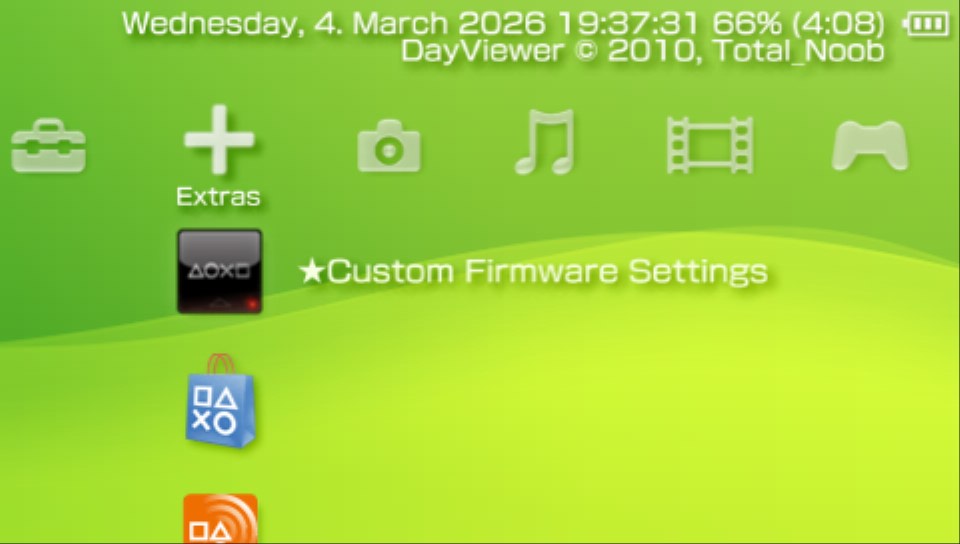
Detailed Chronology: The Evolution of ARK and Adrenaline
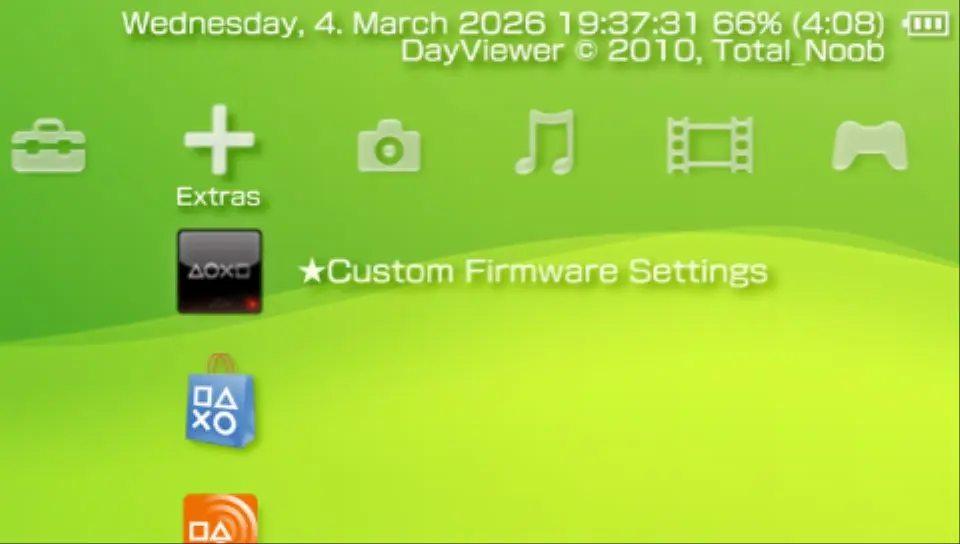
To fully comprehend the gravity of ARK-5 and Adrenaline v8, one must first examine the developmental trajectory of PSP Custom Firmware (CFW) and Custom Emulated Firmware (CEF). For years, ARK and Adrenaline evolved along parallel, occasionally intersecting paths. While Adrenaline dominated the PlayStation Vita landscape by allowing native PSP software execution within a secure sandbox environment (via the ePSP exploit chain), ARK established itself as the premier standalone CFW for physical PSP hardware across all motherboard revisions, later expanding its reach to the Vita as well.
The Fragmented Past and the Necessity of Synergy
Historically, developing software for PSP custom firmware required navigating a maze of disparate SDKs and extensions. The original PSPSDK was extended via the M33SDK during the height of the Dark_AleX era, setting a fragmented precedent. Over time, as individual developers drifted away and returned, codebase divergence became a persistent hurdle.
The turning point arrived when developers behind both projects recognized that maintaining separate compatibility layers was unsustainable. ARK previously relied on a module called Pentazemin—a compatibility layer engineered specifically to allow ARK to execute under the Adrenaline framework on the PS Vita. However, Pentazemin was effectively a snapshot of an older iteration of Adrenaline’s SystemControl module. As Adrenaline continued to receive underlying optimizations over the years, Pentazemin languished as an outdated, isolated relic of code.

The Codebase Unification and Pentazemin Migration
In a masterclass of structural refactoring, the development teams confronted this technical debt head-on. Pentazemin has now been officially relocated and integrated directly back into Adrenaline itself.
This architectural shift achieves two vital objectives:
- Elimination of Code Duplication: By folding Pentazemin back into the central Adrenaline source tree, developers have purged redundant, conflicting routines from both platforms.
- Guaranteed Up-to-Date Synchronization: Because Adrenaline now natively houses the logic previously sequestered in Pentazemin, ARK is fundamentally incapable of running on outdated code. Every execution relies directly on the bleeding-edge iteration of Adrenaline’s core infrastructure.
The Birth of "EPI" (Epinephrine)
Perhaps the most striking change in Adrenaline v8 is its newfound ability to load ARK completely from scratch, eliminating the reliance on external loaders. Users can now seamlessly toggle between the native Custom Emulated Firmware and ARK directly from the updated Adrenaline Settings Menu.

To reflect this massive overhaul, Adrenaline’s proprietary CEF—historically built upon the legacy TN-CEF framework originally authored by Total_Noob and utilized all the way through Adrenaline v7—has been officially rebranded as EPI (short for Epinephrine, the primary chemical compound associated with adrenaline).
The EPI framework has been stripped down, heavily modernized, and rebuilt to match the rigorous, contemporary standards established by ARK-4. Most notably, EPI adopts ARK’s modern PLUGINS.TXT parsing format and internal API structure. The result is total plugin parity: developers can now write plugins knowing with absolute certainty that they will execute identically and without error on both ARK and Adrenaline environments.
Supporting Context & Metrics: Architecture and Technical Specifications
The technical leap from previous firmware iterations to ARK-5 and Adrenaline v8 is underpinned by deliberate modernization of development toolchains and low-level system graphics manipulation.

The Modernized PSPSDK and psp-cfw-sdk
At the heart of any native or custom firmware development is the Software Development Kit. For the upcoming releases, developers have standardized on the newest, actively maintained iteration of the PSPSDK.
Crucially, the legacy extensions previously required to compile custom firmware and complex plugins (descendants of the M33SDK) have been formally consolidated into psp-cfw-sdk. In a major boon for aspiring homebrew creators and legacy developers alike, this extension package is now installed by default alongside the core PSPSDK. This lowers the barrier to entry for new developers looking to compile plugins, kernel modules, and custom patches.
Breaking the Software-Drawing Paradigm: Hardware-Accelerated XMB
For nearly two decades, the interface between the user and the PSP’s operating system—the XrossMediaBar (XMB)—has been governed by a familiar convention: the VSH Menu.

Summoned by pressing the Select button, the traditional VSH Menu relied on slow, CPU-intensive software-based drawing routines. These legacy menus were notoriously limited in visual fidelity, sluggish in execution, and structurally incapable of handling advanced graphical overlays without introducing severe performance bottlenecks.
A historical breakthrough occurred when Total_Noob (subsequently known within the hacking community as TheFl0w) conceptualized XMBControl, proving that custom configuration modules could be integrated natively and cleanly into the XMB environment rather than relying on clumsy overlay pop-ups. Taking this concept to its logical evolutionary extreme, developer m-cid has achieved a monumental breakthrough: hardware-accelerated drawing directly on top of the XMB.
[ Traditional VSH Menu ]
  └── CPU-bound software rendering -> Limited graphics, sluggish updates, high resource overhead.

[ ARK-5 / Adrenaline v8 Advanced VSH ]
  └── Hardware-accelerated GPU pipeline -> Smooth 3D overlays, rich plugins, minimal performance drag.
Instead of a static text overlay, ARK-5 utilizes hardware acceleration to render complex 3D graphical demonstrations—such as a fully interactive, spinning 3D cube—directly within the XMB interface as a spiritual successor to the archaic VSH menu. By exposing this rendering pipeline via a simplified API, developers can now craft lightweight plugins that draw graphics, custom HUDs, and advanced menus directly onto the XMB utilizing the PSP’s powerful, dedicated hardware graphics processor (Gu/Ge) rather than taxing the MIPS R4000 primary CPU core.

Official Statements & Community Perspectives
The announcement of these updates has sent ripples across retro-gaming forums, GitHub repositories, and preservation communities. Speaking on the architectural philosophy behind the unified API, lead architects emphasized the importance of lowering maintenance burdens while expanding creative freedom.
"For years, the PSP homebrew scene operated in fragmented silos where individual projects reinvented the wheel," noted a core contributor close to the development of ARK-4 and Adrenaline v8. "By merging our efforts, standardizing our SDKs, and bringing Adrenaline and ARK under a shared operational umbrella, we aren’t just patching bugs—we are future-proofing the platform. Code written today will run seamlessly across physical hardware and emulated environments without requiring tedious, platform-specific hacks."
Industry observers and long-time community curators, such as Wololo, have highlighted how this unexpected collaboration underscores the tenacity of the PSP ecosystem. While contemporary consoles are locked down by aggressive digital rights management and closed ecosystems, the PSP remains an open sandbox where enthusiasts can continuously rewrite and optimize twenty-year-old firmware.

Future Outlook: Beyond Firmware v8 and v5
While the immediate focus remains on the rollout of Adrenaline v8 and ARK-5, the horizon for PSP software engineering has never looked more vibrant. The collaborative breakthroughs achieved in these updates have unlocked doors to avenues of research that were previously thought to be exhausted.
Among the speculative and active fronts currently being explored by advanced developers are:
- Accelerated XMB Scanning: New algorithmic plugins designed to radically reduce game and homebrew scanning times on the XMB, dramatically improving user experience for memory sticks containing hundreds of ISOs and homebrew titles.
- Ambitious Software Ports: Ongoing, sophisticated community ports of complex N64 titles—such as Perfect Dark and Ocarina of Time—pushing the PSP hardware to its absolute limit.
- Co-Processor Research: Fresh deep-dives into the architecture of the PSP’s mysterious Media Engine (ME) and Virtual Mobile Engine (VME) co-processors, unlocking computational headroom previously inaccessible to standard homebrew applications.
- CPU Overclocking Horizons: Renewed investigations into stable, reliable CPU frequency scaling pushing well beyond the traditional 333MHz maximum threshold that has capped PSP performance since 2005.
As ARK-5 and Adrenaline v8 prepare for public deployment, they serve as a powerful reminder that hardware may age, but passionate engineering communities are timeless. The PSP remains not merely a relic of gaming history, but a living, breathing canvas for open-source innovation.