The Digital Arms Race: Cody Wilson’s "Hochulization" Tool and the Battle Over 3D-Printed Gun Detection
Executive Overview
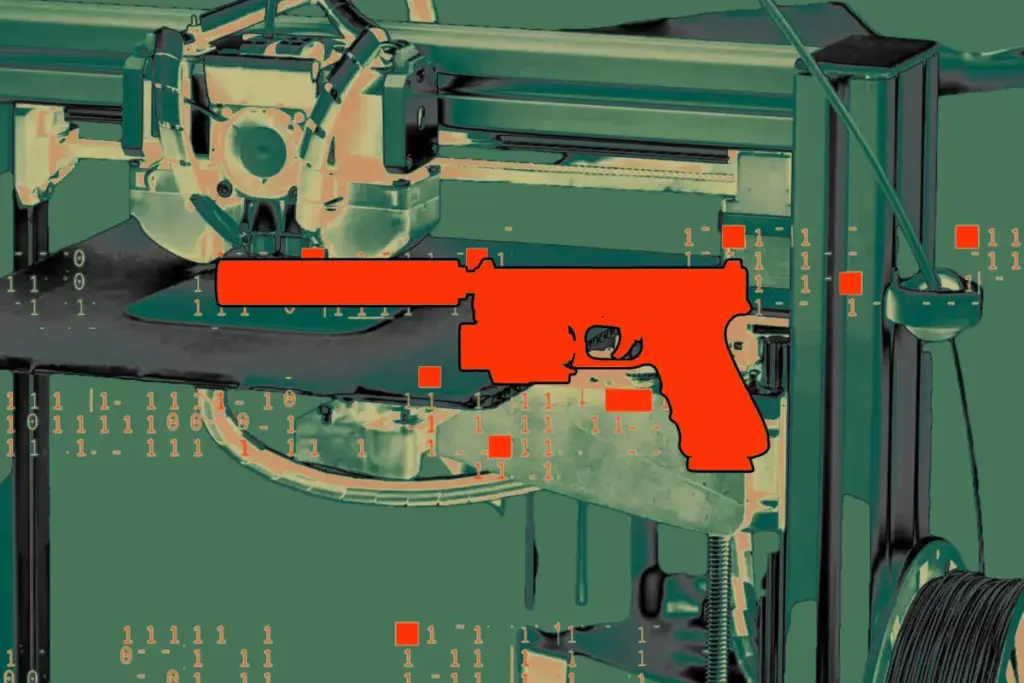
The landscape of modern manufacturing is colliding with the Second Amendment, digital rights activism, and cybersecurity policy in an unfolding regulatory conflict. Cody Wilson, the polarizing figure who made international headlines a decade ago as the creator of the world’s first completely 3D-printed gun, has unveiled a new technological countermeasure. Dubbed "Hochulization," Wilson’s latest software innovation is designed to systematically bypass government-mandated digital filters intended to block 3D printers from manufacturing unauthorized firearms.
This development marks a crucial escalation in an increasingly sophisticated arms race between state regulators attempting to stem the tide of untraceable "ghost guns" and open-source advocates determined to protect the uninhibited flow of digital blueprints. Wilson’s software directly targets a new wave of state-level legislation—pioneered by New York and gaining momentum in states like California—that requires new 3D printers to come equipped with pre-installed file-scanning and blocking software.
By automatically scrambling the underlying digital signatures, or "hashes," of files hosted on his massive repository, DEFCAD, Wilson aims to render simple database-matching security measures obsolete. While proponents of printer-blocking software argue that even rudimentary filters provide a necessary barrier against casual lawbreaking, critics ranging from crypto-anarchists to mainstream digital rights groups warn that mandated monitoring tools represent an invasive form of digital surveillance. These systems, critics contend, threaten creative freedom, introduce unacceptable rates of false positives, and set a dangerous precedent for government overreach into open-source hardware.
Detailed Chronology: From the "Liberator" to "Hochulization"
To understand the gravity of Wilson’s latest maneuver, it is necessary to trace the trajectory of 3D-printed firearm technology and the legal battles that have accompanied it over the past decade.
2013–2018: The Genesis of Printable Firearms and First Amendment Battles
- May 2013: Cody Wilson and his organization, Defense Distributed, successfully design, test, and publish online the blueprints for the "Liberator," a single-shot, plastic handgun largely manufactured on consumer-grade 3D printers.
- The State Department Intervenes: Shortly after the files are published, the US Department of State orders Wilson to remove them, citing violations of the International Traffic in Arms Regulations (ITAR) and threatening him with federal prosecution.
- The Free Speech Defense: Wilson and Defense Distributed launch a sprawling multi-year lawsuit against the federal government. They argue that computer code—including CAD files for firearms—constitutes constitutionally protected free speech under the First Amendment.
- The Hatreon Era: Capitalizing on his notoriety, Wilson launches Hatreon, a crowdfunding platform intended as a "free-speech" alternative to mainstream sites. The platform attracts extremist organizations, white supremacists, and neo-Nazis before it is completely shut down by service providers in 2018.
2021–2026: The Rise of Ghost Guns and Legislative Pushback
- Exponential Growth in Confiscations: As 3D printer accessibility increases, the proliferation of ghost guns accelerates dramatically. In 2021, the New York Police Department recovers only a single 3D-printed firearm; by 2024, that figure surges to 109. Similar spikes are documented by crime-gun recovery databases across dozens of major American cities.
- Advanced Weaponry: Moving far beyond the rudimentary Liberator, designs like the FGC-9 emerge. Capable of firing multiple high-velocity rounds without structural failure, these weapons are subsequently recovered by law enforcement from extremist cells in Europe and anti-junta resistance fighters in Myanmar. Furthermore, the availability of 3D-printed components—such as auto-sears that convert semi-automatic firearms into illegal machine guns and easily concealable suppressors—presents compounding public safety challenges. Notably, investigators allege that Luigi Mangione utilized a partially 3D-printed Glock-style frame and a printed suppressor during the high-profile killing of UnitedHealthcare CEO Brian Thompson.
- Legislative Action: In response to the growing black-market pipeline, New York Governor Kathy Hochul successfully pushes through the nation’s first statutory mandate requiring new 3D printers sold within the state to include gun-file detection software as part of the state’s fiscal budget. Concurrently, California lawmakers advance Assembly Bill 2047 (AB 2047), mirroring New York’s approach and setting a December 2029 deadline to ban non-compliant printers.
Present Day: The Introduction of "Hochulization"
- The Counter-Offensive: Operating out of Austin, Texas, Wilson develops "Hochulization"—a deliberate jab at New York’s governor—designed to automatically alter the unique cryptographic hashes of every file downloaded from DEFCAD. By adding innocuous bytes of data without disrupting the mechanical integrity of the printed object, Wilson’s tool breaks the fundamental mechanism by which hash-matching detection software identifies banned firearm blueprints.
Supporting Context & Metrics: The Technical Reality and Scale of the Threat
The debate over printer-blocking technology rests on a complex intersection of hardware, software, and public safety data. Policymakers face the daunting task of assessing a threat that, while culturally and politically explosive, exists within a much broader ecosystem of conventional firearms.
The Scale of 3D-Printed Firearms
Statistically, 3D-printed firearms still represent a small fraction of the total gun inventory in the United States, where federally estimated firearm ownership routinely outnumbers the human population. However, law enforcement agencies emphasize that the danger lies in accessibility. Unlike traditional firearms, which require background checks, serialized manufacturing, and licensed dealers, ghost guns bypass traditional regulatory choke points entirely. This allows individuals legally prohibited from possessing firearms—such as convicted felons—to circumvent federal and state laws effortlessly.
How Detection Systems Work (and Fail)
Current legislative proposals leave the exact architecture of printer-blocking software undefined, leaving industry working groups to debate two primary technological approaches:
-
Cryptographic Hash Matching:

- Mechanism: Files are passed through an algorithm to generate a unique digital signature (a hash). Detection software maintained by printer manufacturers checks downloaded files against a blacklist database of known gun hashes.
- Pros: Computationally lightweight; minimizes the risk of false positives (mistakenly identifying non-weapon items as guns).
- Cons: Extremely fragile. As demonstrated by Wilson’s "Hochulization" tool, simple programmatic modifications—such as appending extraneous bytes or altering a digital mesh—completely change the file’s hash without affecting its physical output, rendering static databases instantly obsolete.
-
Artificial Intelligence and Geometric Analysis:
- Mechanism: Using AI models trained on public and private CAD repositories, the software analyzes the three-dimensional geometry of a file to predict whether its intended output is a firearm or weapon component.
- Pros: Far more resilient to basic file manipulation, such as changing hashes or renaming files.
- Cons: Prone to high error rates. Wilson’s internal testing of an AI detection model revealed a staggering 30 percent false-positive rate. Such systemic inaccuracies risk blocking hobbyists from printing benign items—such as electronic device cases, custom mechanical parts, or artistic sculptures—thereby chilling creative expression.
The Expert Perspective
Weighing in on the efficacy of these measures, Dartmouth College Associate Professor of Engineering Solomon Diamond noted that while "Hochulization" technically circumvents hash-based models, policy implementation is about layered friction rather than absolute perfection. Not every casual user possesses the technical know-how or motivation to strip or alter a hash. Furthermore, platforms like DEFCAD require account creation and email verification, establishing initial barriers to entry. From this perspective, even rudimentary hash matching serves as a functional speed bump against casual piracy, though it remains inadequate against determined actors.
Beyond simple hash manipulation, Wilson’s team experimented with "adversarial noise"—introducing minor geometric variations or "lumps" into digital meshes—to confuse AI-driven classifiers, highlighting the inherent cat-and-mouse dynamic that defines digital rights management (DRM) conflicts.
Official Statements and Industry Reactions
The introduction of "Hochulization" has exposed deep ideological fractures among lawmakers, civil liberties advocates, and technology developers.
- Cody Wilson, Founder of Defense Distributed:
Framing his software as an act of digital self-defense, Wilson contends that state-mandated monitoring transforms everyday household appliances into instruments of invasive surveillance. "New York is trying to reach into the internet and police how open-source 3D printing is done," Wilson told The Verge. He confirmed that DEFCAD will apply the Hochulization process to all hosting files by default, effectively turning open-source distribution into a moving target for regulators. "You are going to have to do more than create a database of known files and check against hashes because that’s too easy to defeat." - New York Governor Kathy Hochul:
Proponents of the state’s pioneering legislation view printer-blocking technology as a vital tool to choke off the black-market "plastic pipeline." Governor Hochul’s administration has consistently argued that closing legal loopholes at the manufacturing stage is essential to curbing violent crime involving untraceable ghost guns. As of publication, Governor Hochul’s office has declined to issue a direct statement responding to Wilson’s "Hochulization" workaround. - California Assembly and Digital Rights Groups:
In California, Assemblymember Rebecca Bauer-Kahan—author of AB 2047—and her legislative staff have similarly declined to comment on Wilson’s countermeasures. However, external organizations have been vocal. Civil liberties watchdogs, including the Electronic Frontier Foundation (EFF), alongside maker communities and representatives from the creative and entertainment industries, have raised alarms. These groups fear that mandating file-scanning architecture inside 3D printers establishes a dangerous surveillance infrastructure. Critics argue that mechanisms built to intercept gun designs can easily be co-opted by corporate entities to enforce aggressive intellectual property, copyright, and digital restrictions management (DRM) on ordinary makers and hobbyists.
Future Outlook
The standoff between Cody Wilson and state regulators portends a complex and contentious future for additive manufacturing, cybersecurity, and constitutional law.
As legislation like California’s AB 2047 advances toward final votes and implementation deadlines approach toward the end of the decade, the technology sector faces a profound architectural dilemma. Policymakers are being forced to choose between two unpalatable paths: maintaining toothless, hash-based databases that can be trivialized by scripts like "Hochulization," or adopting aggressive, AI-driven geometric scanning systems that threaten high false-positive rates and infringe upon user privacy.
For open-source advocates and decentralized tech developers, Wilson’s latest maneuver serves as a rallying cry against government overreach. For law enforcement agencies and gun-control advocates, it underscores the persistent difficulty of regulating physical objects transmitted through digital networks. Ultimately, the battle over "Hochulization" is not merely about 3D-printed firearms—it is a foundational testing ground for who controls the digital frontier, establishing precedents that will reverberate across software development, privacy rights, and hardware manufacturing for years to come.